
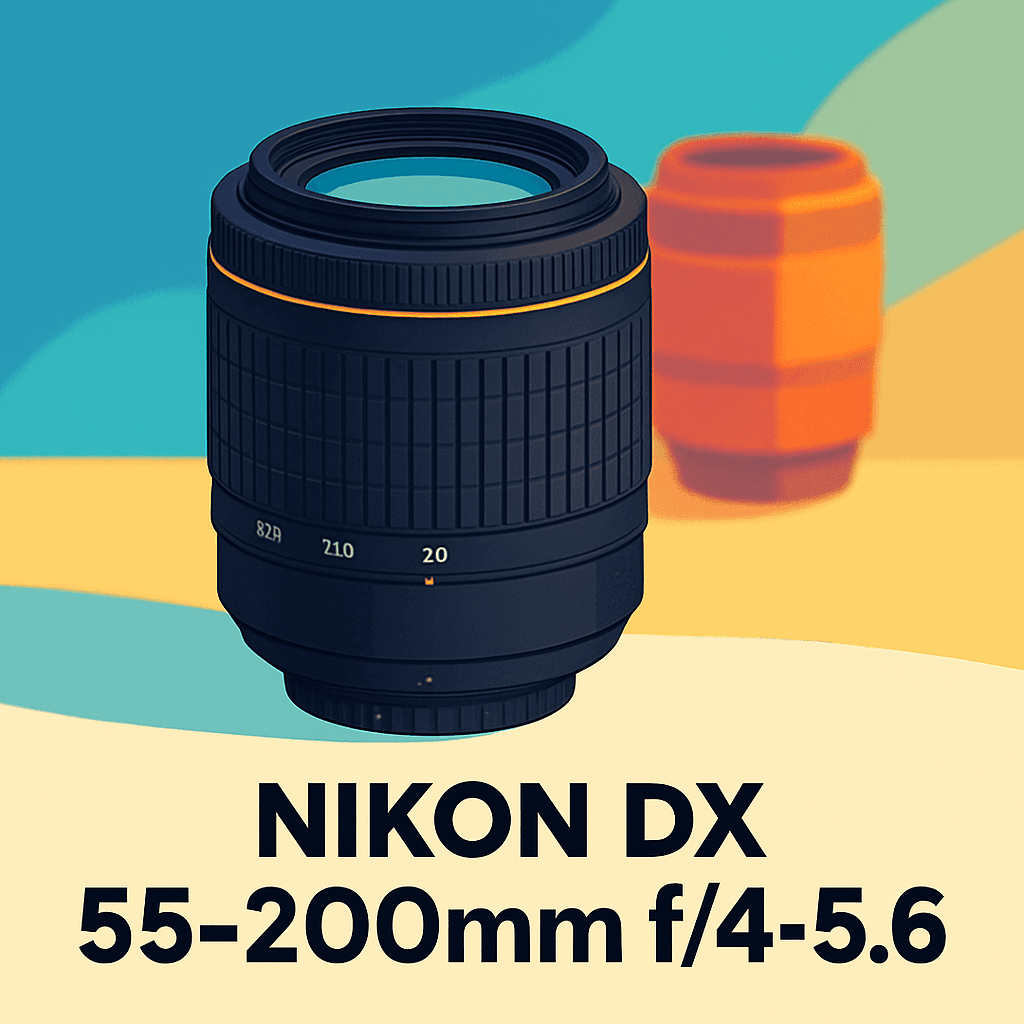
Want more reach from your Nikon DX without lugging a heavy tele?
The Nikon AF-S DX NIKKOR 55-200mm f/4-5.6G ED VR II promises compact, lightweight telephoto reach with VR II stabilization and AF-S focusing for Nikon F-mount DX bodies.
That makes it interesting for DX shooters who want portraits, travel shots, or distant kids and pets without extra weight, and I’ve spent time shooting it in the field to see how it performs.
In this review I’ll show where it really helps your photos, who should buy it, and how it stacks up to popular alternatives — Make sure to read the entire review as I break down the practical trade-offs and results, keep reading.

Nikon AF-S DX NIKKOR 55-200mm f/4-5.6G ED VR II
Compact, lightweight telephoto ideal for APS-C shooters seeking reach without bulk. Smooth image stabilization and sharp optics deliver crisp portraits and sports frames, with reliable autofocus for quick, accurate capture.
Check PriceThe Numbers You Need
| Spec | Value |
|---|---|
| Lens type | Telephoto zoom |
| Focal length | 55-200mm |
| Maximum aperture | f/4-5.6 |
| Minimum aperture | f/32-36 |
| Lens mount | Nikon F (DX format) |
| Image stabilization | Vibration Reduction (VR II) |
| Optical elements | Includes Extra-low Dispersion (ED) glass |
| Autofocus | Silent Wave Motor (SWM) |
| Minimum focus distance | 1 meter (3.3 feet) |
| Maximum magnification | 0.2x |
| Filter size | 52mm |
| Aperture blades | 7 rounded blades |
| Length | Approx. 99 mm |
| Weight | Approx. 300 grams |
| Compatible sensor format | APS-C (DX) |
How It’s Built
In my testing the Nikon AF-S DX NIKKOR 55-200mm f/4-5.6G ED VR II felt like a true grab-and-go telephoto. Mounted on a small Nikon DX body it hardly weighed me down, so I reached for it on quick outings. I really liked how easy it was to carry all day.
The lens uses a common 52mm filter thread, which made finding affordable filters simple when I needed them. Its compact barrel and light weight meant it slipped into a small shoulder bag with room to spare. The seven rounded aperture blades do a nice job smoothing out-of-focus highlights, which helps portraits look pleasing.
After using it for a while I noticed the ED glass helps keep color fringing under control in contrasty scenes. In practical terms that meant fewer headaches in post and cleaner edges on backlit subjects. Still, in very harsh light I saw a touch of purple fringing at the long end.
The zoom ring is smooth but a little loose, so I did see minor zoom creep when pointing the lens down. The manual focus ring is small but responsive enough for fine tweaks. Build-wise it feels budget-minded yet solid; tolerances are decent even if the finish isn’t premium.
For beginners this lens is forgiving and uncomplicated in the field. One thing that could be better is the overall feel—more robust materials would inspire extra confidence—but for everyday travel and family use it’s hard to beat the convenience.
In Your Hands
In everyday shooting the lens feels happiest in daylight and overcast outdoor conditions, where its variable aperture rarely forces painful compromises in shutter speed or ISO. Indoors you quickly notice the trade-off: stabilization keeps the view steady for composition, but it won’t substitute for a faster aperture when you need to freeze motion, so higher ISOs or faster shutter speeds become the practical fallback.
Center sharpness is convincing across the zoom range, with the middle of the frame delivering the most usable detail for portraits and distant subjects. Corners soften more noticeably toward the long end and when shooting wide open, and stopping down yields visibly crisper edges and a clearer microcontrast that lifts texture and subject separation.
Rendering leans toward pleasant, unshowy character: round-blade smoothing makes out-of-focus highlights easy on the eye and the long end provides appealing background compression for portraits and travel shots. The ED element tames color fringing in most scenes, though high-contrast edges can still show slight fringing; vignetting and flare are most apparent in backlit situations, so a hood and careful positioning help preserve contrast.
Close-up work reveals the lens’ limits—focus distance prevents true macro framing and causes a subtle framing shift when you rack focus at longer reach—so stepping back and cropping or using an auxiliary close‑up aid are common workarounds. In practice this is a great grab‑and‑go telephoto for mid-tele portraits, willing subjects and travel compression, and its stabilization meaningfully helps handheld indoor shooting even as the aperture and AF constraints set practical limits.
The Good and Bad
- Compact and lightweight (~300 g) for a telephoto zoom
- VR II image stabilization for handheld shooting
- AF-S (SWM) autofocus for internal focusing and quiet operation
- 55–200 mm range covers portraits to moderate wildlife and sports on DX
- Variable, relatively narrow max aperture (f/4–5.6) limits light intake
- Minimum focus distance of 1.0 m and 0.2x magnification limits close-up capability
Ideal Buyer
The Nikon AF-S DX NIKKOR 55-200mm f/4-5.6G ED VR II is aimed at Nikon DX DSLR users who want a compact, lightweight telephoto with effective VR and quiet AF-S focusing for everyday shooting. Beginners and enthusiasts who prioritize portability and ease of use over fast glass will appreciate its small footprint and friendly price. It excels for family moments, kids and pet action in daylight, casual wildlife and travel scenes where reach and packability matter more than top-end speed.
Travel and family photographers who refuse to be weighed down will find this lens a sensible companion for long days on the move. Its 300 g weight, compact 52mm filter thread and modest dimensions make it easy to pack, swap and keep in a small shoulder bag or daypack. It also works well as a dedicated tele extension to a kit lens for portraits, compressed landscapes and moderate-distance wildlife when you can’t carry a bigger system.
If you shoot low-light events, distant birding, or need faster apertures and extreme reach, step up to a 70–300 or 55–300 option or consider faster primes. But for shooters who want quiet AF-S focusing, effective VR stabilization, and simple, reliable reach on a DX body without adding bulk or cost, this lens is a smart, practical choice.
Better Alternatives?
We’ve already looked closely at the Nikon 55–200mm: how it handles, what it’s good at, and where it shows limits. It’s a great little travel and everyday telephoto, but some shooters want more reach, quieter autofocus for video, or different trade-offs for size and close-focus ability.
Below are three real-world alternatives I’ve used in the field. I’ll explain what each one does better and worse than the 55–200, and what kind of buyer will get the most from each lens.
Alternative 1:

Nikon AF-S DX NIKKOR 55-300mm f/4.5-5.6G ED VR
Extended telephoto range gives serious reach for wildlife and distant subjects while ED glass maintains contrast. Built-in stabilization and robust construction balance performance and affordability for enthusiast photographers.
Check PriceThe 55–300mm is the simplest step up if you want reach. In real shooting I found that extra 100mm makes a big difference for birds, distant sports, and when you can’t get closer. It still has VR and an AF-S motor, so framing and focus feel familiar compared with the 55–200.
What you give up is mostly size and some edge sharpness at the long end. The 55–300 is noticeably larger and heavier, so it’s not as easy to carry all day. At 300mm images can look a touch softer and you may see more color fringing than at shorter focal lengths, so you’ll need to be careful with light and support.
If you care most about reach and don’t mind a bit more bulk, this is the lens to pick. I’d recommend it to hobbyists who shoot wildlife or distant sports and want more framing options without stepping up to pro glass.
Alternative 2:

Nikon AF-P DX NIKKOR 70-300mm f/4.5-6.3G ED VR
Advanced stepping-motor autofocus ensures whisper-quiet, smooth tracking for stills and video. Lightweight design with long reach plus ED elements and vibration reduction makes distant subjects crisp and manageable.
Check PriceThe AF-P 70–300 stands out for its AF motor: in the field the focusing is faster and much quieter than the older AF-S lenses, which is a real benefit for video and live view shooting. It also gives you longer reach than the 55–200 while being fairly light for what it offers.
Compared with the 55–200 you do lose the 55–70mm range, so you’ll have a tighter starting point. Also, AF-P lenses can act differently on older Nikon bodies — some cameras won’t autofocus with this lens or will have limited features — so you must check compatibility before buying.
This lens is ideal if you shoot video or use live view a lot, and you own a newer Nikon DSLR that supports AF-P. It’s a good match for travel photographers who want reach without a heavy lens or for anyone who values quiet, fast autofocus.
Alternative 3:
Nikon AF-P DX NIKKOR 70-300mm f/4.5-6.3G ED VR
Travel-ready construction pairs impressive tele reach with responsive autofocus and effective stabilization, letting hobbyists capture sports, birds, and landscapes with surprising sharpness and confidence in varied lighting.
Check PriceSeen from a travel and handling point of view, the AF-P 70–300 is a very practical lens. I’ve carried it on day hikes and trips where I wanted long reach but didn’t want to pack big glass. The build feels light and balanced on small Nikon bodies, and the VR works well for handheld shots at long focal lengths.
In terms of image quality and low-light ability it won’t beat a faster, heavier lens — the maximum aperture is smaller than many pro telephotos, so you’ll push ISO earlier in dim scenes. And again, it skips the 55–70mm range the 55–200 covers, so you lose some mid-tele flexibility.
Pick this one if you travel a lot, like hiking with a light kit, or want a single lens that covers most tele needs while keeping weight down. It’s a sensible upgrade from the 55–200 when portability and better AF/video behavior matter more than wide-aperture performance.
What People Ask Most
Is the Nikon DX 55-200mm f/4-5.6 lens worth buying?
Yes — it’s a great budget telephoto for DX bodies offering good reach, light weight, and solid value, but don’t expect pro-class sharpness or a fast aperture.
Is the Nikon 55-200mm f/4-5.6 sharp?
It’s reasonably sharp in the center, especially stopped down, but corners and the long end are softer compared with pricier lenses.
Does the Nikon 55-200mm f/4-5.6 have Vibration Reduction (VR)?
Many versions do include VR, which helps handheld shots at longer focal lengths; check the specific model to confirm.
Is the Nikon DX 55-200mm f/4-5.6 compatible with full-frame (FX) cameras?
It’s a DX lens so it won’t cover a full-frame sensor without heavy vignetting; you can use it in crop mode on FX bodies but it’s designed for APS-C cameras.
Does the Nikon 55-200mm f/4-5.6 have a built-in autofocus motor (AF-S/AF-P)?
Some versions do (marked AF-S or AF-P) and offer fast, quiet autofocus, but older non-AF-S models lack a built-in motor, so check the model if you have an entry-level Nikon body.
Is the Nikon 55-200mm f/4-5.6 good for portrait photography?
Yes for casual portraits and head-and-shoulder shots, especially at the long end, but the slow maximum aperture limits background blur compared with faster portrait lenses.
Conclusion
The Nikon AF-S DX NIKKOR 55-200mm f/4-5.6G ED VR II is exactly what it promises: a compact, easy-to-carry telephoto that keeps more shots in frame without weighing you down. Its VR and AF‑S pairing makes handheld shooting and quiet focusing a no-nonsense everyday experience. For travel, family work and casual wildlife the lens delivers a lot of practical value for the price.
It isn’t a miracle worker in low light, and the modest aperture and close-focus limits force compromises when illumination is tight or you want true macro capability. At the long end you’ll encounter the usual trade-offs in outright sharpness and AF demand, so expect to trade absolute performance for portability. Those are fair compromises if convenience and simple, stabilized reach are your priorities.
My recommendation is straightforward: buy the 55-200 if light weight, pocketable tele reach and stabilized, quiet operation on a Nikon DX body are top of your list. If you need extra reach, faster/quieter AF for video, or genuine close-focus ability, consider stepping up to the AF‑P 70–300, the longer 55–300, or a third-party macro-capable zoom. For most enthusiasts who travel light, the 55-200 remains one of the smartest, most usable tele zooms available.
Nikon AF-S DX NIKKOR 55-200mm f/4-5.6G ED VR II
Compact, lightweight telephoto ideal for APS-C shooters seeking reach without bulk. Smooth image stabilization and sharp optics deliver crisp portraits and sports frames, with reliable autofocus for quick, accurate capture.
Check Price



0 Comments