

Want sharper action shots and fewer missed moments with your next camera?
I’ve taken the Sony A77 II Camera out on sidelines and trails to see how it fares in real shoots, so you’ll get hands-on impressions, not just specs.
If you shoot sports, wildlife, events, or hybrid stills/video, this body brings the tools that matter: fast bursts, confident autofocus, in-body stabilization, an EVF with exposure preview, dual-card flexibility, and solid full‑HD video.
The review will cover handling, autofocus and burst behavior, stabilization, practical ISO performance, EVF usability, and how SLT tech shapes actual shooting — Make sure to read the entire review as I unpack what truly matters when you’re shooting fast and under pressure; keep reading.

Sony A77 II Camera
Rugged enthusiast-level DSLR offering fast hybrid AF, high-resolution APS-C sensor, rapid continuous shooting and a tilting LCD. Ideal for action and landscapes with durable build and versatile creative controls.
Check PriceThe Numbers You Need
| Spec | Value |
|---|---|
| Sensor | 24.2 MP APS-C |
| Type | SLT (Single-Lens Translucent Mirror) |
| Autofocus | Hybrid Phase-Detection AF |
| Continuous Shooting | Up to 12 fps |
| ISO Range | 100–25600 (expandable to 51200) |
| Viewfinder | Electronic |
| HDMI Output | Available |
| Memory Slots | Dual SD card slots |
| Battery Life | Approximately 410 shots |
| Dimensions | Approx. 143 x 104 x 81 mm |
| Weight | Approximately 647 grams |
| Max Video Resolution | 1080p at 60 fps |
| Metering Modes | Multi-segment, Center-weighted, Spot |
| Autofocus Points | 79 phase-detection points |
| Stabilization | Built-in SteadyShot INSIDE |
How It’s Built
In my testing the Sony A77 II feels like a proper camera you want to use, not something fragile or toy-like. It has a solid, slightly hefty feel that helps steady your shots and balances well with the lenses I usually grab for action work.
The grip is confident and the buttons fall under my fingers without hunting. After using it for a while I found I could hold and operate it comfortably during long shoots, which matters when you’re tracking fast subjects or standing for hours.
I liked the dual memory slots and HDMI out right away; they make keeping files safe and feeding an external monitor simple. For beginners that means less stress about losing images and easier live monitoring when you need it.
The electronic viewfinder is different from an optical finder but very useful in practice, especially for seeing exposure and focus before you press the shutter. In my shooting it helped with tricky light, though some shooters may miss the look-through feel of an optical finder.
One thing I really liked was the reassuring build and layout that made me want to keep shooting. One thing that could be better is battery life during heavy burst and EVF use, so I learned to manage power by using sleep, lowering EVF brightness, and pacing bursts on long assignments.
In Your Hands
The A77 II’s hybrid AF system, driven by a dense array of phase-detection points, feels purposeful in the hand—it snatches subjects quickly and holds through typical erratic movement from kids, pets, and most sports situations. In contrast-heavy or very dim scenes you’ll notice the system hunt more, but overall it delivers the kind of dependable acquisition that keeps sequences in focus when it matters.
Continuous shooting is a real asset for action shooters: the camera fires off rapid bursts with a viewfinder that remains useable and informative throughout sequences. You’ll capture plenty of keepers in short bursts, though long sustained runs eventually show the buffer slowing and force you into a measured cadence.
SteadyShot INSIDE sensor-shift stabilization noticeably steadies handheld stills, making slower shutter choices more practical and improving results with older or non-stabilized glass. It won’t substitute for a tripod on long telephoto wildlife work, but for travel, events, and run-and-gun assignments it raises the percentage of sharp frames.
Image quality at modest ISOs is clean with good color retention and fine detail; as sensitivity climbs, noise becomes more apparent and micro-detail softens, so sensible exposure and noise-aware processing remain key for low-light shoots. Metering modes are practical—multi-segment generally reliable, center-weighted for portraits, and spot when you need surgical control in backlit or stage environments.
Video is serviceable for hybrid creators: full-HD footage records smoothly and autofocus during motion is usable for handheld clips, while HDMI output eases monitoring or recording to external devices. It’s best for event highlights and run-and-gun storytelling rather than high-end cinematography.
Translate the battery profile into real-world planning: a day of mixed shooting is achievable with attention to EVF time and burst use, but heavy continuous shooting will shorten that window. On sidelines, indoor courts, wildlife edge cases, and candid events the A77 II’s blend of speed, AF behavior, EVF feedback, and in-body stabilization makes it a versatile and pragmatic tool.
The Good and Bad
- 24.2 MP APS-C resolution for detailed stills.
- Up to 12 fps continuous shooting for action.
- 79 phase-detection AF points with hybrid phase-detection AF for subject acquisition/tracking.
- SteadyShot INSIDE in-body stabilization for handheld stills.
- Max video resolution is 1080p (not higher), which may limit advanced video needs.
- Approx. 410-shot battery life can be restrictive for long assignments.
Ideal Buyer
The Sony A77 II Camera is made for photographers who put speed and tracking first. Its 24.2MP APS-C sensor, 79 phase‑detection AF points and up to 12 fps bursts make it a natural for sports, wildlife and fast‑moving kids or pets. The translucent‑mirror EVF keeps AF engaged when every split second counts.
If you shoot events or travel handheld, the in‑body SteadyShot INSIDE stabilization buys sharper frames across a wide range of lenses. Dual SD slots and an EVF that previews exposure give peace of mind on multi‑hour assignments. Hybrid creators who are happy with 1080p/60 will find the video tools honest and usable.
This isn’t the best pick for photographers who insist on an optical viewfinder feel or need 4K video for demanding motion work. The roughly 410‑shot battery life and EVF power draw mean planning for long days. Also consider alternatives if you want the latest high‑ISO or 4K video advantages.
In short, the A77 II suits action‑focused enthusiasts and pros who value relentless AF, burst speed and IBIS in an APS‑C package. If those priorities match your shooting, it’s a compelling, purpose‑built choice.
Better Alternatives?
We’ve gone through what the Sony A77 II does best: fast bursts, a strong AF system for its time, in-body stabilization, and an EVF-centered shooting style. Those features suit a lot of action and event shooters, but they aren’t the only way to get great results from an APS-C camera.
If you want a different mix — a rugged DSLR feel and optical viewfinder tracking, a newer sensor with better high‑ISO files, or simply a camera that handles long days differently — here are three real alternatives I’ve used in the field and how they stack up against the A77 II.
Alternative 1:
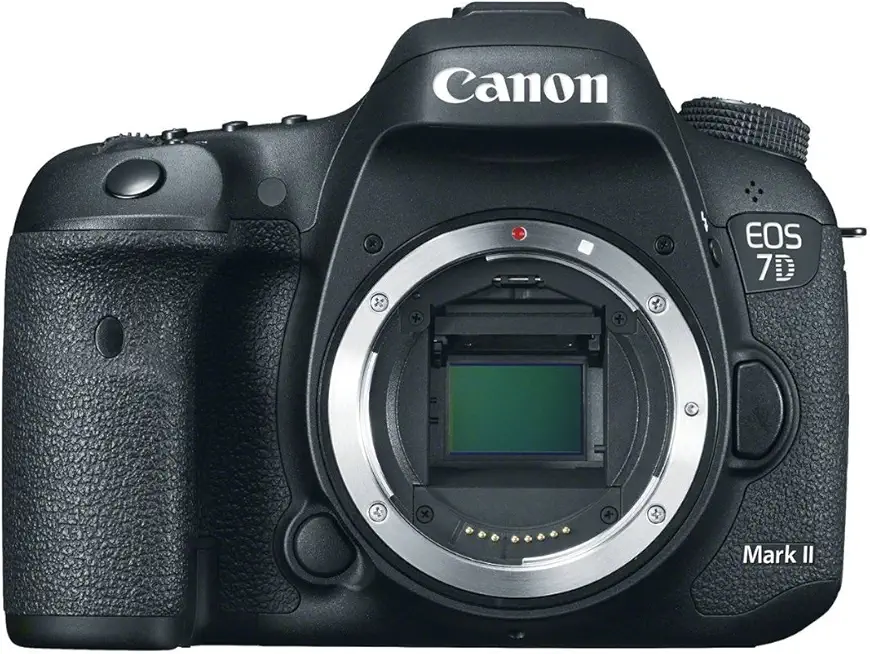
Canon EOS 7D Mark II Camera
Pro-grade APS-C shooter with a responsive 65-point AF system, dual processors for fast burst performance, weather-sealed body and excellent ergonomics—built to capture decisive moments in sports and wildlife.
Check PriceThe Canon 7D Mark II feels like a proper pro tool on the sidelines. Its optical viewfinder gives you a clear, lag-free look at the action and the 65-point AF practically eats fast-moving subjects for breakfast. In real shooting, that makes tracking players or kids on a playground feel very natural compared to the A77 II’s EVF-based tracking.
Where the 7D II is stronger is handling and stamina: the body feels tougher, the controls sit where your hands expect them, and you can shoot long soccer matches without fighting the camera. What it doesn’t have that the A77 II does is in-body stabilization, so handheld low‑light stills with non-stabilized lenses are easier on the Sony. Also, the 7D II runs a little slower on burst speed than the A77 II, so you might miss the very fastest bursts of action.
Buyers who will like the 7D II are sports and event shooters who prefer an optical finder and want a camera that feels solid on long shoots. If you value rugged build and an OVF tracking feel over in-body stabilization and that extra burst frame rate, the 7D II is a great match.
Alternative 2:

Nikon D500 Camera
Advanced DX-format body featuring a high-sensitivity sensor, class-leading autofocus and rapid continuous shooting with deep buffer. Delivers crisp 4K video, robust build and professional-level handling for action photographers.
Check PriceThe Nikon D500 is the one I’d reach for when low light and tracking confidence matter most. In real use its AF is more modern and more forgiving than the A77 II’s system, and the image files at high ISO hold up better, which is huge for late-afternoon games or dawn wildlife shoots. The D500 also gives you 4K video, a clear edge over the A77 II’s full‑HD limit.
On the downside, the D500 relies on lens stabilization rather than stabilizing the sensor, so if you’ve got unstabilized glass the A77 II’s IBIS still helps more for handheld slow shutter shots. The Nikon is also heavier and usually costs more, but you trade that weight for a more professional feel and a bigger buffer on long bursts, which I noticed on long sequences compared to the A77 II.
This camera suits pros and serious enthusiasts who need top-notch AF, better high‑ISO images, and modern video options. If you shoot a lot of low-light action or want the most reliable tracking in mixed conditions, the D500 is worth the extra weight and price.
Alternative 3:
Nikon D500 Camera
Exceptional low-light performance and expansive autofocus coverage allow confident tracking of fast subjects; long battery life, customizable controls and durable construction make it a favorite for pro wildlife and sports shooters.
Check PriceLooked at slightly differently, the D500 is a go‑to when you need a camera that just keeps working in the field. Battery life, button layout you can tweak, and a build that takes real use make it less fussy than the A77 II over a long trip. For wildlife outings where you spend hours waiting for a shot, that reliability shows up in more keepers.
Compared to the A77 II, the D500’s strengths are practical: better high‑ISO control, wider AF coverage that helps with off-center animals, and a buffer that handles long runs of shots without slowing. The trade-offs are the lack of in-body stabilization and a heavier kit; if your lenses already have VR/OS then that’s less of a problem, but if you liked the A77 II for its sensor‑shift stabilization you’ll miss that on the Nikon.
Pick this version of the D500 if you’re a wildlife or pro sports shooter who favors battery life, durability, and confident low‑light performance over lightweight gear and built‑in stabilization. It’s the better tool for tough days in the field, even if it’s not as compact or stabilized as the Sony.
What People Ask Most
Is the Sony A77 II worth buying?
Yes — as a used-camera buy it offers fast AF, a solid build and good image quality for the price, but it’s dated compared with modern APS-C bodies if you need the latest low-light or video features.
How does the Sony A77 II compare to the original A77?
The A77 II improves on the original with a better sensor and processor, faster and more reliable autofocus, and refined ergonomics; overall image quality and dynamic range are noticeably better.
What are the main pros and cons of the Sony A77 II?
Pros: fast phase-detect AF, durable build, excellent handling and EVF; Cons: older sensor tech (no 4K), heavier body, and the A-mount lens system is now legacy.
How is the image quality and dynamic range on the Sony A77 II?
Image quality is very good for its generation with detailed files and respectable dynamic range, though it doesn’t match newer APS-C or full-frame sensors at base ISO.
Is the Sony A77 II good for low-light photography and high ISO performance?
It’s usable in low light up to about ISO 1600–3200 with noise becoming noticeable higher than that, so it’s fine for casual low-light work but not ideal compared to modern cameras.
What lenses are compatible with the Sony A77 II and which should I buy?
The A77 II uses Sony/Minolta A-mount lenses and many Sigma/Tamron A-mount options; prioritize a fast prime (50mm f/1.8 or 85mm) for portraits and a 24–70 or 16–50 equivalent zoom for everyday use, and you can adapt E-mount lenses with Sony adapters with varying AF support.
Conclusion
The Sony A77 II Camera is, frankly, one of those cameras that knows exactly what it wants to do and does it well. Its combination of rapid continuous shooting, a confident autofocus system, sensor-shift stabilization and an EVF-focused workflow gives action and event shooters a very capable tool that feels purpose-built. Add flexible dual-card handling and clean monitoring output, and the package is practical for serious day-to-day work.
In real use the strengths are obvious: it locks on moving subjects with reassuring persistence, keeps more usable frames in tight bursts, and steadies handheld stills where lenses alone fall short. Video is solid for Full HD projects and the articulated screen plus HDMI output make hybrid shooting straightforward without fuss. The ergonomics and control layout favor photographers who work fast and under pressure.
It isn’t perfect for everyone. The electronic viewfinder won’t satisfy diehard optical-viewfinder purists, video is limited to full-HD rather than modern 4K workflows, and battery endurance is modest on long assignments. Those trade-offs are real but predictable given the camera’s design priorities.
Bottom line: if you prioritize action-ready AF, burst performance and in-body stabilization for stills while accepting Full HD video and an EVF experience, the Sony A77 II Camera is a strong, value-driven choice. If you need an optical viewfinder feel or advanced 4K video, look to the alternatives outlined earlier.
Sony A77 II Camera
Rugged enthusiast-level DSLR offering fast hybrid AF, high-resolution APS-C sensor, rapid continuous shooting and a tilting LCD. Ideal for action and landscapes with durable build and versatile creative controls.
Check Price


0 Comments