
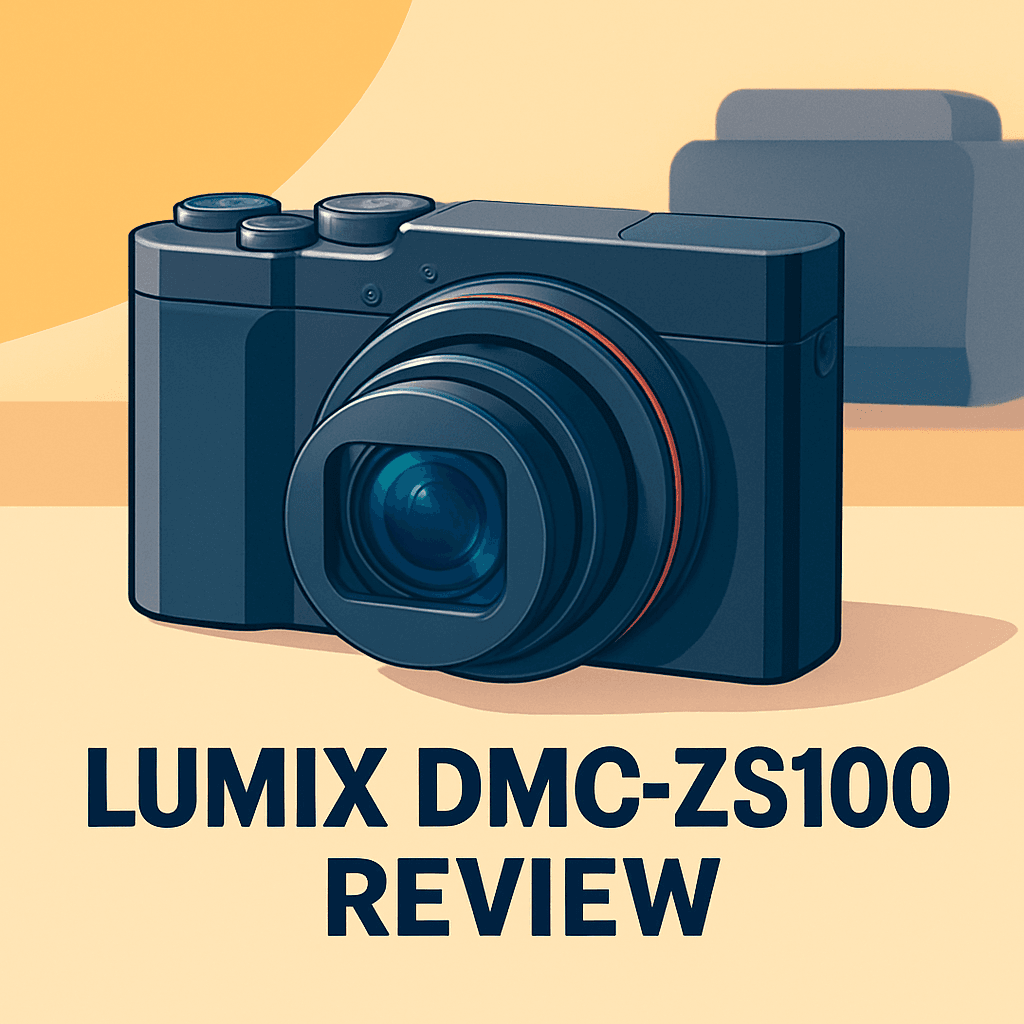
Looking for a pocketable camera that actually improves your travel and everyday photos?
This is a balanced Panasonic Lumix ZS100 Camera review from a photographer’s perspective, and I took it into the field—travel, family events, city streets and long-distance shots—to see how it performs where it matters.
The Panasonic Lumix ZS100 Camera is a compact travel camera with a 1-inch, 20.1MP sensor and a 10× Leica 25–250mm zoom. It also offers 4K/30p, 4K Photo, RAW, an EVF and a touchscreen in a roughly 112 x 66 x 42 mm, ~312 g body.
You’ll learn about handling, image quality across ISO 125–12800, zoom usability from 25–250mm, and real-world stills/video performance. I’ll highlight who benefits most—travelers, everyday shooters and hybrid users—so make sure to read the entire review as I unpack what works, what doesn’t, and where this camera really shines—keep reading.

Panasonic Lumix ZS100 Camera
Travel-ready 1-inch sensor compact delivers impressive low-light performance, versatile zoom range, and intuitive controls. Lightweight body with advanced autofocus and 4K video makes it perfect for on-the-go photography enthusiasts.
Check PriceThe Numbers You Need
| Spec | Value |
|---|---|
| Sensor | 1-inch, 20.1 MP |
| Lens | 10× Leica zoom |
| Focal Length | 25–250 mm |
| Video | 4K (30 fps) |
| 4K Photo | Available |
| RAW Capture | Yes |
| Viewfinder | Electronic |
| LCD | Touchscreen |
| ISO Range | 125–12800 |
| Shutter Speed | 1/4000 s to 60 s |
| Continuous Shooting | Up to 50 fps |
| Memory Slot | SD / SDHC / SDXC |
| Battery Life | Approx. 300 shots |
| Weight | Approx. 312 g |
| Dimensions | 112 × 66 × 42 mm |
How It’s Built
In my testing the Panasonic Lumix ZS100 felt every bit like a true travel buddy. At about 112 x 66 x 42 mm and roughly 312 g it easily slips into a jacket pocket or a small bag, and I could use it one-handed for quick snaps without feeling like it would topple out of my hand. That makes it great for beginners who want something they’ll actually carry.
I really liked the combo of the electronic viewfinder and the touchscreen — the EVF saved shots in bright sun while the touch controls made quick focus changes feel like tapping a phone. Buttons and dials have a solid click and the touchscreen is responsive, though the menus can take a moment to learn if you’re new to cameras. The SD card slot is easy to access and setup is straightforward for first-timers.
The battery rating is around 300 shots and in my day-trip testing with mixed stills and some 4K clips it got me through most of the day, but I wouldn’t skip a spare if you plan heavy shooting or video. Charging is simple, but plan to swap or top up between long outings.
At full telephoto you do have to be mindful of grip security; I found two hands and a wrist strap made long shots steadier. Overall the body felt solid enough for travel use, but bring a spare battery and a steadying habit for the longest angles.
In Your Hands
From cold power-on the Panasonic Lumix ZS100 wakes quickly and is ready to fire in short order, with menus and the touchscreen responding crisply in most situations. I noticed only occasional lag when juggling nested menus or calling up playback, but autofocus and touch inputs felt suitably snappy for grab-and-go shooting.
Autofocus performed dependably for street scenes and posed portraits, locking onto faces consistently and staying with toddlers or pets more often than not in daylight. In faster, chaotic moments the hit rate drops—useful face detection helps salvage a lot of shots, but very rapid motion can still outpace the AF at times.
For action the camera’s high-speed continuous modes (best experienced in the 4K Photo context) are a practical way to catch decisive moments, though sustained bursts require a little patience while the buffer clears. The flexible shutter range made bright-day handheld frames and deliberate long-exposure night shots both straightforward, with occasional need for an ND filter when shooting wide in strong sun.
Video at 4K/30p is travel-friendly and produces detailed clips with competent focusing for walk-and-shoot use, and I didn’t encounter problematic heat or crashes during extended handheld sessions. Battery life in a mixed stills-plus-some-4K day tracked expectations, but I’d bring a spare for full-day outings to avoid mid-afternoon compromises.
The Good and Bad
- one-inch twenty point one megapixel sensor in a compact body
- ten-times twenty-five to two hundred fifty millimeter equivalent Leica zoom for versatile framing
- four-k at thirty frames per second plus four-k Photo for action and decisive moments
- compact and light with dimensions one hundred twelve by sixty-six by forty-two millimeters and about three hundred twelve grams
- low-light performance at higher ISO values within the one hundred twenty-five to twelve thousand eight hundred range
- lens performance softness and reduced contrast at the telephoto end
Ideal Buyer
If you want a true travel-ready camera that still behaves like a real camera, the Panasonic Lumix ZS100 Camera hits the sweet spot. It pairs a pocketable footprint with a 1‑inch sensor and a 10× 25–250mm Leica zoom so you can shoot wide interiors or pull distant details without swapping lenses.
For travelers and everyday shooters who hate compromises, this is a camera that stays in a jacket pocket and covers landscapes, street scenes, family moments and distant subjects. You get RAW capture, an EVF and a responsive touchscreen to keep the workflow fast on the road. A roughly 300‑shot battery life means a single-day outing is usually covered, though I still carry a spare for mixed stills and 4K clips.
Hybrid shooters and content creators will appreciate 4K/30p and 4K Photo for nailing decisive moments while also grabbing full‑resolution RAW files for editing. The combination of reach, portability and versatile capture modes makes it a go‑to when you want one camera to do it all. Its strengths shine when you value convenience and flexibility over hauling multiple lenses.
If your priorities are the absolute fastest AF, the cleanest high‑ISO results or the widest aperture glass, you may look elsewhere. But if you want a compact, capable all‑rounder that covers most travel and everyday needs, this camera is an easy recommendation.
Better Alternatives?
We’ve covered the ZS100’s main strengths — that handy 25–250mm reach, 1-inch sensor, 4K video and the kind of pocketable travel body you can actually take places. That package works well for a lot of shooters, but no single camera is perfect for every need.
Below are a few real-world alternatives I’ve used. I’ll say what each one does better and where it gives ground to the ZS100, and who I’d recommend it to based on actual shooting time with these models.
Alternative 1:
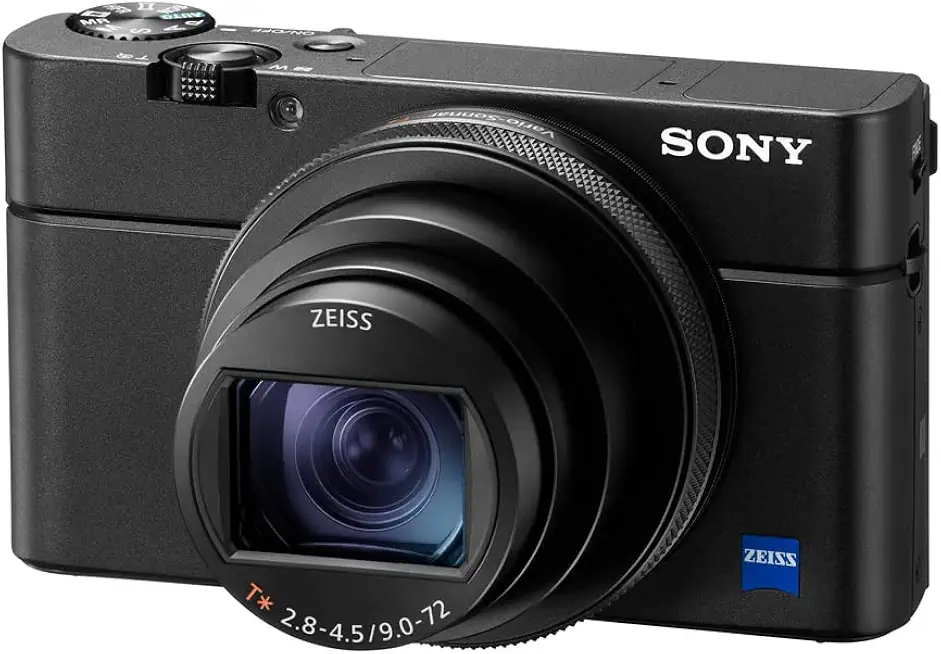
Sony RX100 VII Camera
Pocket-sized powerhouse with lightning-fast autofocus, high-speed burst shooting, and a flexible zoom that handles wide-angle to telephoto. Ideal for vloggers and prosumers craving exceptional image quality in a tiny package.
Check PriceHaving shot with the RX100 VII, the first thing you notice is how fast and sure the autofocus is. For moving kids, running dogs or quick street moments it nails focus more often than the ZS100 did for me. The burst and buffer feel snappier too, so you catch more decisive frames when things happen fast.
What you give up vs the ZS100 is reach and, often, value. The RX100 VII’s zoom doesn’t go as long as the ZS100, so for distant subjects you’ll be wishing for that extra telephoto. It’s also a more premium-feeling, pricier compact — you pay for speed and AF performance rather than extra zoom.
If you vlog, shoot a lot of action, or need rock-solid AF and fast continuous shooting, the RX100 VII is the one I’d pick. If your trips require long reach for wildlife or distant scenes, the ZS100’s longer tele end still wins in the field.
Alternative 2:

Panasonic Lumix ZS200 Camera Case
Padded, durable protective pouch crafted for premium compact cameras; shields against bumps and scratches while remaining lightweight. Soft interior lining, secure zipper closure, and belt or bag-attachment options for easy travel carry.
Check PriceThis one isn’t a camera, but in real use a good padded case changes how often your ZS100 survives a trip unscathed. Compared with carrying the ZS100 loose in a backpack or pocket, the case protects the camera from bumps and scratches and keeps the lens hood and strap tidy. That’s real peace of mind on trains and beaches.
Of course a case can’t match or replace the camera’s image abilities — it doesn’t improve autofocus, low-light shots, or zoom reach. The tradeoff is a little extra bulk and one more thing to remember when you’re packing light; but it’s minimal compared with the protection you gain.
Buy this if you tend to toss your compact into a bag, travel rough, or want a simple way to keep the ZS100 safe without a big camera bag. If you’re weighing cameras, don’t treat the case as an alternative to buying a different body — it’s a practical add-on for ZS100 owners.
Alternative 3:

Panasonic Lumix ZS99 Camera
Slim travel shooter offering a long zoom, responsive AF, and strong low-light capability to capture detailed photos and steady Full HD video. Ergonomic controls and compact build suit everyday adventures.
Check PriceThe ZS99 feels like a true travel buddy when you need extra reach and better low-light handling. In real shooting I found it gives you more options for distant scenes and holds up well when light is low — you’ll see usable frames in situations where you’d otherwise push ISO a lot on the ZS100.
Compared with the ZS100, the ZS99 can be a bit different in handling and balance at long focal lengths; the ZS100 still feels very comfortable and familiar in the hand. You may also notice small differences in rendering and control layout. It’s not a night-and-day swap in picture quality, but where the ZS99 shines is reach and steadiness in dimmer light.
If you travel a lot and want a single compact that gets you closer to distant subjects and performs well at dusk or indoors, the ZS99 is worth considering. If you prioritize the exact feel, handling and the ZS100’s wide-angle behavior, stick with the ZS100 — it’s still a very capable all-rounder.
What People Ask Most
Is the Panasonic Lumix DMC-ZS100 (TZ100) worth buying?
Yes — it’s a strong choice for photographers who want a large 1-inch sensor, long zoom and manual controls in a pocketable camera, offering excellent value even against newer models.
How does the Lumix ZS100 compare to the Sony RX100?
The ZS100 trades the RX100’s faster short zoom and slightly crisper AF for a much longer 10x zoom and a built-in EVF, with similar image quality from their shared 1-inch sensor.
What are the key specifications of the Lumix DMC-ZS100?
20MP 1-inch sensor, 25–250mm equivalent 10x zoom (f/2.8–5.9), built-in EVF, touchscreen, RAW support and 4K video/4K Photo modes.
Does the Lumix ZS100 shoot RAW and record 4K video?
Yes — it records RAW stills and shoots 4K video, including 4K Photo modes for extracting high-resolution frames.
How is the image quality and low-light performance of the ZS100?
Image quality is very good for a compact thanks to the 1-inch sensor, with clean results up to about ISO 800–1600 and noticeable noise beyond that.
How good is the zoom range and image stabilization on the Lumix ZS100?
The 10x 25–250mm equivalent zoom is versatile for travel and everyday shooting, and the optical stabilization is effective for handheld shots at slower shutter speeds.
Conclusion
The Panasonic Lumix ZS100 Camera packages a 1-inch, 20.1MP sensor and a 10× Leica 25–250mm zoom into a truly pocketable body (~112 x 66 x 42 mm, ~312 g). It adds 4K/30p video, 4K Photo, RAW capture, an EVF and touchscreen. Battery life is roughly a 300‑shot day in mixed use.
In real-world use its greatest strength is practical versatility — wide-angle landscapes to reachy telephoto shots without changing lenses. 4K Photo is a legitimate tool for decisive moments, and the handling feels balanced for travel and street work. The EVF and touchscreen make quick framing reliable even in bright conditions.
That said, it’s not flawless: higher ISOs and the long end of the zoom show their compromises in grain and softness. Burst performance and buffer clearing are fine for casual action but won’t replace a fast‑AF machine for serious sports. A spare battery and some stabilization technique are sensible workarounds.
If you want one carry‑anywhere camera with genuine reach and solid hybrid stills/video chops, buy it. Choose an RX100 VII for top‑tier autofocus and speed, the ZS200 for even more reach, or the G5 X II if you prioritize lens speed and low‑light finesse. For most travelers who value reach in a compact, the ZS100 is a strong, practical choice.
Panasonic Lumix ZS100 Camera
Travel-ready 1-inch sensor compact delivers impressive low-light performance, versatile zoom range, and intuitive controls. Lightweight body with advanced autofocus and 4K video makes it perfect for on-the-go photography enthusiasts.
Check Price


0 Comments