
Looking for one lens that widens your view for landscapes, interiors, and travel without breaking the bank?
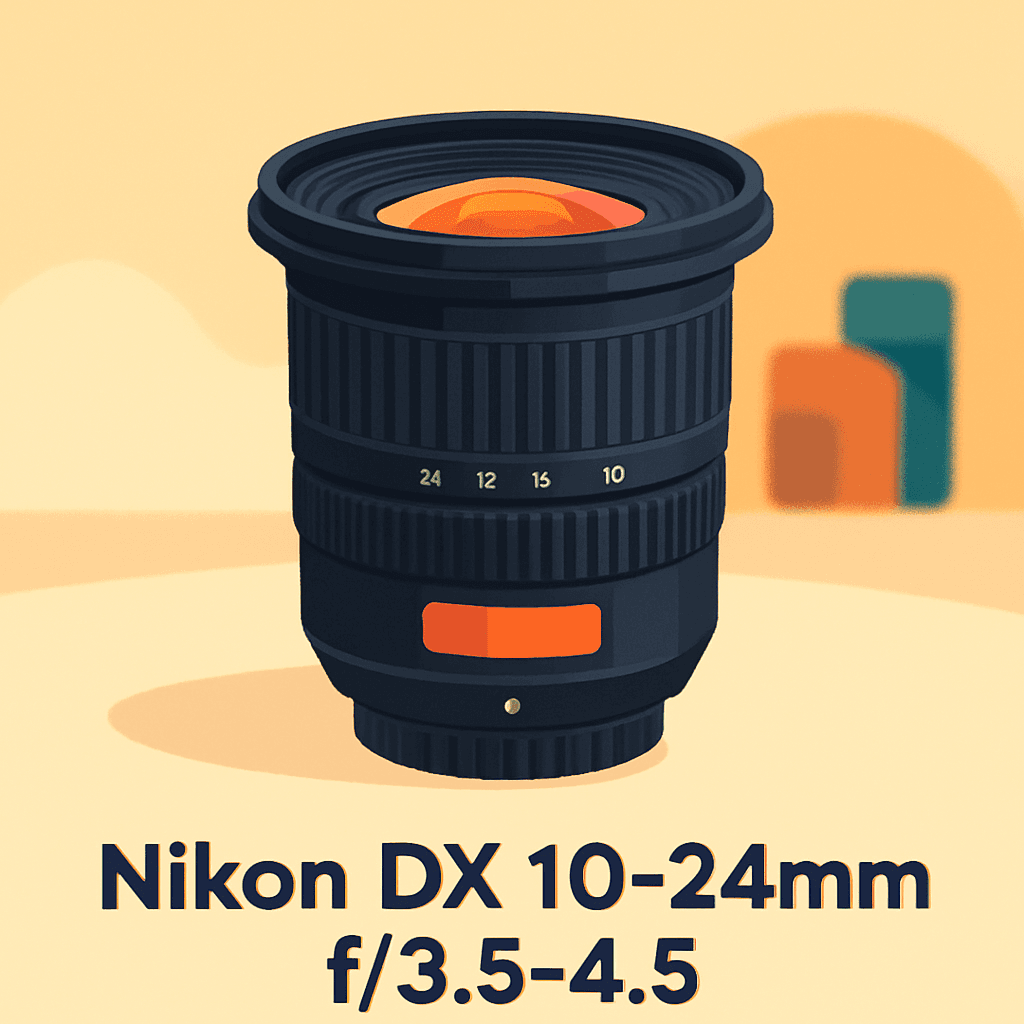
The Nikon AF-S DX NIKKOR 10-24mm f/3.5-4.5G is an ultra-wide zoom for Nikon DX bodies that promises dramatic perspectives and flexible framing for real-world shoots. Having taken it into the field on landscapes and tight interiors, I’ll share how it handles the demands you actually shoot in.
If you shoot landscapes, architecture, real estate, or travel and want a dependable ultra-wide on a DX body, this review will walk you through who benefits and why it matters. Make sure to read the entire review as I break down handling, optics, and who should buy—keep reading.

Nikon AF-S DX NIKKOR 10-24mm f/3.5-4.5G
Ultra-wide DX-format zoom delivers expansive perspectives with edge-to-edge sharpness, perfect for landscapes, architecture and vlogging. Smooth, quiet autofocus and lightweight, durable construction for comfortable all-day shooting.
Check PriceThe Numbers You Need
| Spec | Value |
|---|---|
| Mount | Nikon F (DX) |
| Focal Length | 10–24mm (DX crop ~15–36mm equivalent) |
| Maximum Aperture | f/3.5–4.5 |
| Minimum Aperture | f/22–29 |
| Lens Construction | 14 elements in 9 groups (2 ED, 3 aspherical) |
| Extra-low Dispersion (ED) Elements | 2 |
| Super Integrated Coating | Yes |
| Minimum Focus Distance | 0.24m |
| Maximum Magnification | 0.2x |
| Diaphragm Blades | 7 |
| Filter Size | 77mm |
| AF Motor | Silent Wave (SWM), supports AF and manual override |
| Weight | 490g |
| Dimensions | 77 x 87mm |
| Weather Sealing | No |
How It’s Built
Holding the Nikon AF-S DX NIKKOR 10-24mm f/3.5-4.5G on a D3500 or D7500 felt right — compact, light, and well balanced for small DX bodies. It never made the kit front-heavy, so hiking and handheld travel shooting stayed comfortable. The build feels solid without being bulky.
The zoom and focus rings have a reassuring, slightly damped feel that’s easy to control. Full-time manual override lets me nudge focus instantly without flipping switches, which is handy for foreground work. Beginners will find the controls predictable and simple to use.
It accepts common 77 mm filters, which is convenient, but watch polarizers at the widest angle — I saw uneven polarization and now prefer slim or square filters for interiors and skies. The optical design with ED and aspherical elements plus Nikon’s coating aims to reduce fringing and flare, and the hood did help cut side glare in my shooting, though very strong sun can still cause slight veiling.
What I really liked was how portable and balanced the lens is for real-world shooting. What could be better is the lack of weather sealing, so I avoided dusty beaches and light rain without extra protection. Mounting is simple on DX bodies thanks to the AF-S motor, so you can get shooting fast.
In Your Hands
The AF-S Silent Wave Motor locks reliably for stills, offering confident subject acquisition across landscapes and architecture. In live view and video it’s relatively quiet and smooth, and full‑time manual override lets you fine‑tune focus at ultra‑wide angles.
The variable maximum aperture means exposure shifts as you zoom, requiring small ISO or shutter adjustments when shooting handheld in mixed light. On a tripod this is a non‑issue, but handheld travel work benefits from a bit more attention to settings.
There’s no optical stabilization, so interiors and low‑light architecture are best approached with a tripod or steady‑hand technique and slightly higher ISOs. For handheld travel and landscapes I relied on bracing and faster shutter speeds to keep shots sharp.
The close‑focusing ability is genuinely useful—foreground elements gain scale and texture, bringing depth to wide‑angle landscapes and detail frames. Close‑up rendition held up well in actual field use, making layered compositions more compelling.
At the wide end the lens produces immersive vistas ideal for coastlines and city panoramas, though perspective exaggeration demands careful composition; tight interiors are manageable but often needed tripod‑mounted correction to keep verticals straight. At the long end environmental portraits feel cinematic, yet subject placement matters to avoid unflattering distortion.
For video the AF is serviceable with smooth pans, modest motor noise, and a touch of focus breathing during close shifts. Stacking filters at the widest angle increased vignetting—slim filters or a square‑holder worked better—and the lens proved reliable in normal use, though the lack of weather sealing calls for extra care in dusty or wet conditions.
The Good and Bad
- Ultra-wide 10–24mm range on DX (approx. 15–36mm equivalent)
- AF-S Silent Wave Motor with full-time manual override; compatible with entry-level DX bodies
- 0.24 m minimum focus distance; 0.2x magnification
- Accepts 77 mm front filters
- No weather sealing
- No optical stabilization (VR)
Ideal Buyer
If you shoot on a Nikon DX body and crave dramatic, rectilinear ultrawide frames, the Nikon AF-S DX NIKKOR 10‑24mm f/3.5‑4.5G is aimed at landscape, travel, interior, architecture and real estate shooters. It delivers the field of view most DX shooters want without exotic handling. It’s a practical, workhorse optic rather than a novelty statement.
Buyers who value broad 10–24mm coverage (about 15–36mm full‑frame equivalent) and the convenience of a 77mm filter thread will find a lot to like. The AF‑S Silent Wave Motor keeps autofocus compatible across entry‑level bodies while full‑time manual override helps fine tuning close focus to 0.24 m. That close‑focus 0.2× capability is handy for foreground‑led compositions.
Use it on a tripod for architecture and interiors or handheld for sweeping landscapes and travel photography. The variable f/3.5–4.5 aperture and lack of VR mean low‑light handheld shooting is a trade‑off. Photographers who prioritize optical quality and consistent performance on Nikon bodies will appreciate its balanced handling and control.
Avoid this lens if you need weather sealing, in‑lens stabilization, or a constant aperture and ultra‑quiet AF optimized for video. If stabilization or a constant T‑stop is essential, consider alternatives like the Tamron 10‑24 VC or Sigma 10‑20mm f/3.5. For lighter travel and video with VR, the AF‑P 10‑20mm is worth a look.
Better Alternatives?
We’ve gone through the Nikon DX 10-24mm and what it does well. It’s a solid, versatile ultra-wide for landscapes, interiors and travel, but it’s not the only way to get that look. Depending on what you shoot most—handheld low-light, video, or night sky—you might prefer a lens that trades a few things the Nikon does well for other real-world benefits.
Below I’ll point out three practical alternatives I’ve used in the field, what each one does better or worse than the Nikon 10–24, and the kind of shooter who will get the most from each choice.
Alternative 1:

Tamron 10-24mm f/3.5-4.5 Di II VC HLD Nikon
Optically stabilized wide-angle zoom with vibration compensation and responsive HLD motor for steady handheld shooting. Compact optics deliver excellent distortion control, rich color and versatile performance for travel and interiors.
Check PriceHaving used the Tamron 10–24 VC on trips and inside tight interiors, the biggest real-world win over the Nikon is stabilization. VC helps a lot when you’re handheld in low light or moving while filming—fewer blurred shots and smoother video without needing a gimbal or higher ISO. The HLD focus motor is quiet and felt responsive on my D7xxx body when tracking buildings and close-up foregrounds.
Where the Tamron doesn’t beat the Nikon is in corner clarity wide open and in AF consistency on every Nikon body. I noticed the Tamron’s corners can be softer at 10mm until you stop down, and on some older entry-level bodies the AF felt a touch less predictable than the Nikon’s AF‑S. Build-wise it’s a little heavier and it doesn’t add weather sealing that changes field behavior.
If you handhold a lot—real estate walkthroughs, travel photos at dusk, or casual run-and-gun video—the Tamron is the practical choice. It’s for shooters who want steadier handheld results without carrying a tripod and who value VC more than the Nikon’s slightly more consistent corner sharpness.
Alternative 2:
Sigma 10-20mm f/3.5 EX DC HSM Nikon
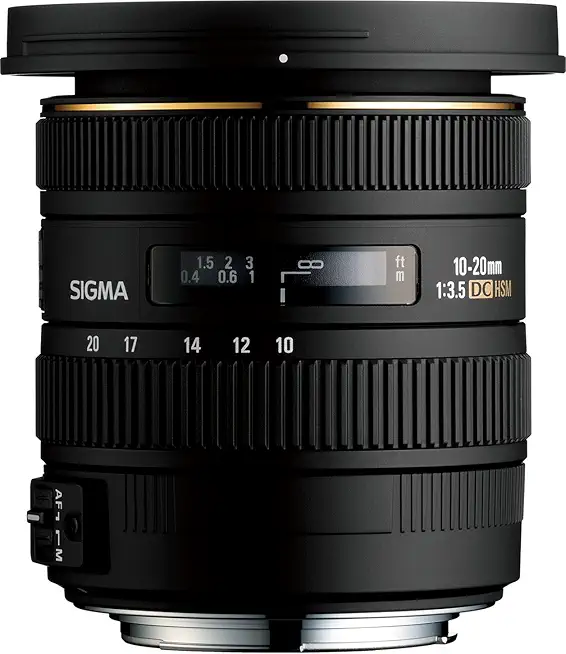
Constant f/3.5 ultra-wide zoom gives dramatic perspective and consistent exposure across the range. Fast HSM autofocus, solid construction and high-resolution rendering make it ideal for landscapes and creative interiors.
Check PriceI’ve used the Sigma 10–20 f/3.5 on night shoots and long-exposure landscapes, and the constant f/3.5 makes a real difference. Compared to the Nikon’s variable f/3.5–4.5 you keep more light at the long end, so you can use lower ISO or faster shutter for stars and city nights. The lens gives bold perspective and strong center detail when you stop down.
On the downside, the Sigma has no stabilization either—so in very low light you still need a tripod or higher ISO. In the field I also found the very widest corners can need stopping down to look their best, and the older build feels a bit bulkier than the Nikon. AF is quick with HSM, but for quiet, buttery live‑view video the Nikon AF-S (or newer AF-P designs) can be a touch smoother.
This Sigma suits landscape and astro shooters who want the same look across the whole zoom and who work from a tripod more than handheld. If you shoot a lot of nightscapes or want consistent exposure while zooming, this is the lens I reach for instead of the Nikon.
Alternative 3:
Sigma 10-20mm f/3.5 EX DC HSM Nikon
Bright, constant-aperture wide-angle lens excels in low light and delivers punchy contrast with controlled coma and flare. Close-focus capability and robust build offer creative flexibility for architecture and nightscapes.
Check PriceTo add from hands-on use, the Sigma’s constant aperture also helps with depth-of-field control and repeatable exposures when you’re composing interiors or creative environmental portraits at wide angles. The lens handles flare and contrast well in backlit scenes I shot at dawn, and the build feels solid for field work.
Compared to the Nikon 10–24, the Sigma gives that brighter aperture across the range, which is a clear plus for low-light creative work. It still loses out on in-lens stabilization and, for some shooters, the Nikon’s AF-S can feel slightly more predictable on every Nikon body I tried. Also, you’ll want to stop down a touch for edge-to-edge sharpness in demanding architectural shots.
Pick this Sigma if you’re focused on creative night shots, astro, or architecture and prefer a constant aperture and robust feel. If you don’t need VR and you value the extra light and consistent exposure more than the Nikon’s corner performance wide open, this is a smart swap.
What People Ask Most
What is the Nikon DX 10‑24mm f/3.5‑4.5 lens best used for?
It’s an ultra‑wide zoom ideal for landscapes, architecture, interiors and environmental portraits on DX bodies where you need a very wide field of view.
Is the Nikon 10‑24mm f/3.5‑4.5 a DX lens or full‑frame compatible?
It’s a DX lens designed for APS‑C sensors and will vignette on full‑frame cameras unless used in crop mode.
Does the Nikon 10‑24mm f/3.5‑4.5 have Vibration Reduction (VR)?
No, this lens does not have VR, so use a tripod or higher ISO for low‑light shots.
Is the Nikon 10‑24mm f/3.5‑4.5 a good lens for landscape and architecture photography?
Yes, its wide coverage and reasonable control of distortion make it a strong, affordable choice for those genres.
How sharp is the Nikon 10‑24mm f/3.5‑4.5 at different focal lengths?
Sharpness is best toward the mid to long end (around 15–24mm); the extreme 10mm end is a bit softer with more vignetting, especially wide open.
Which Nikon cameras are compatible with the 10‑24mm f/3.5‑4.5 lens?
It’s compatible with Nikon DX DSLRs like the D300/D500/D7000 series and entry‑level DX bodies; on FX bodies it will require crop mode or show heavy vignetting.
Conclusion
The Nikon AF-S DX NIKKOR 10-24mm f/3.5-4.5G sits squarely as a workhorse ultra-wide for Nikon DX shooters, offering the useful 10–24mm (≈15–36mm equiv) reach paired with an AF-S Silent Wave Motor and full-time manual override. Its 14-element/9-group optical layout with two ED and three aspherical elements, 77mm filter thread, 0.24m close-focus and modest weight (490 g; 77×87 mm) make it a capable, confidence-inspiring tool. The tradeoffs are plain: a variable f/3.5–4.5 max aperture, no VR and no weather sealing.
For landscapes, travel, interiors, architecture and real-estate work it delivers practical framing and control. Expect to favor a tripod or careful technique in low light because there’s no stabilization and the aperture narrows as you zoom. Handheld daytime shooting and creative foreground emphasis play to its strengths.
If you need in-lens stabilization or better handheld/video low-light, consider the Tamron 10–24mm VC. For a constant aperture and astro work the Sigma 10–20mm f/3.5 is the alternative, and if compactness, price and video-friendly AF/VR matter the Nikon AF-P 10–20mm VR is the travel option. Each trades the 10–24’s balance of aperture, coverage and build for different strengths.
In short, this Nikon earns a recommendation if you value rectilinear ultra-wide coverage, dependable AF-S and close-focus flexibility more than VR or weather sealing. If those priorities line up, buy it; otherwise choose the alternative that fills your gap.
Nikon AF-S DX NIKKOR 10-24mm f/3.5-4.5G
Ultra-wide DX-format zoom delivers expansive perspectives with edge-to-edge sharpness, perfect for landscapes, architecture and vlogging. Smooth, quiet autofocus and lightweight, durable construction for comfortable all-day shooting.
Check Price




0 Comments