
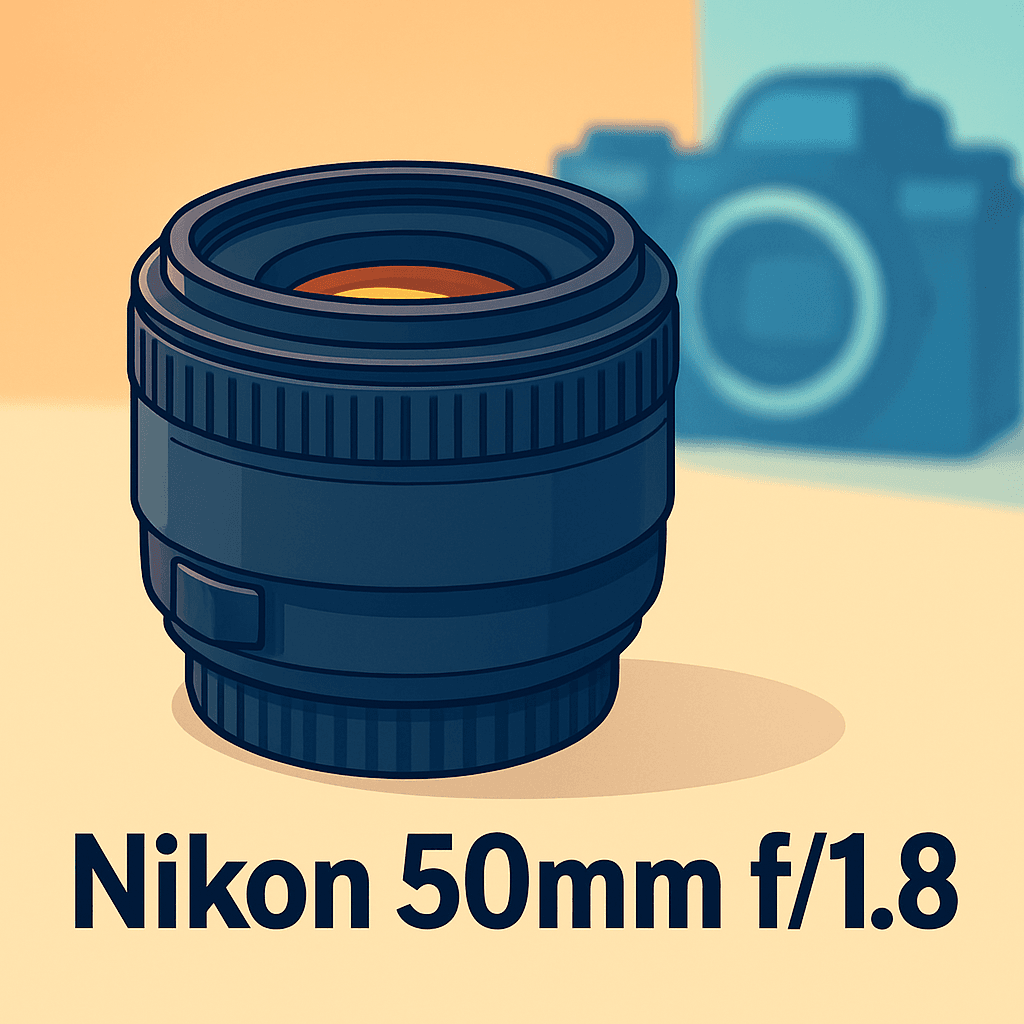
Want sharper, more cinematic photos without replacing your camera?
The Nikon AF-S FX NIKKOR 50mm f/1.8G’s a compact, bright 50mm prime that aims to deliver that everyday boost in image-making.
I’ve field-tested it on assignments and street shoots, so you’ll get practical, hands-on impressions rather than lab numbers.
If you’re a traveler, street shooter, or portrait shooter on a DX body, this lens could be a great fit.
Make sure to read the entire review as I break down handling, autofocus, sharpness, real-world payoffs, and how it stacks against rivals — keep reading.
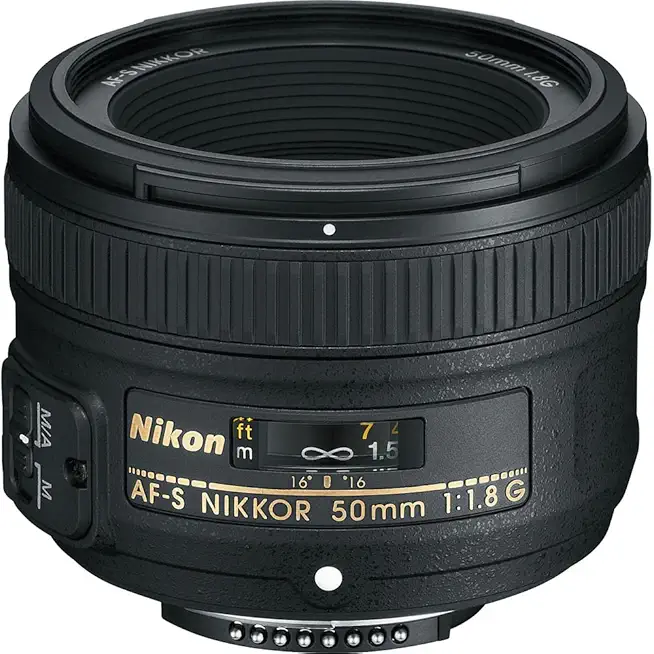
Nikon AF-S FX NIKKOR 50mm f/1.8G
Compact, fast 50mm prime delivering crisp center sharpness, smooth out-of-focus backgrounds, and quiet autofocus. Ideal for everyday portraits and low-light shooting — lightweight, reliable, and excellent value for image-makers.
Check PriceThe Numbers You Need
| Spec | Value |
|---|---|
| Focal length | 50mm |
| Maximum aperture | f/1.8 |
| Lens mount | Nikon F-mount (FX format) |
| Autofocus | AF-S with Silent Wave Motor |
| Minimum aperture | f/16 |
| Lens construction | 7 elements in 6 groups |
| Diaphragm blades | 7, rounded |
| Minimum focus distance | 0.45 m (1.48 ft) |
| Maximum reproduction ratio | 1:6.1 |
| Filter size | 58mm |
| Dimensions (diameter x length) | approximately 72 x 52.5 mm |
| Weight | approximately 185 grams |
| Compatible format | Full-frame (FX) and APS-C (DX) — 75mm equivalent on DX |
| Lens type | Standard prime lens |
| Coating | Super Integrated Coating (reduces flare and ghosting) |
How It’s Built
In my testing the Nikon AF-S FX NIKKOR 50mm f/1.8G felt like a true everyday lens. It’s compact and light, so I tossed it in my bag without thinking about it. The small size and common 58 mm filter thread make it easy to carry and share filters with other glass.
Mounted on a typical Nikon DSLR it balances nicely and never felt front-heavy. The F-mount seating was secure during shoots, which made handheld work relaxed. After using it for a while the camera+lens combo stayed comfortable during long walks and city shoots.
I really liked the rounded diaphragm blades and Super Integrated Coating. In my testing highlights stayed smooth at wide apertures and flare was kept in check when shooting into bright backlight. One thing that could be better is the close-focus range, which limits tight detail shots compared with macro-capable lenses.
For beginners this lens is forgiving and straightforward to handle. The focus ring is predictable in manual use and the overall feel tells you where everything is by touch. In short, it’s a friendly, portable lens that’s easy to learn on and handy to carry everywhere.
In Your Hands
On a full-frame body the Nikon 50mm f/1.8G delivers a natural, normal perspective that feels intuitive for everyday shooting—street, documentary, and environmental portraiture. Mounted on crop-sensor bodies it shifts toward a short-telephoto character that flatters head-and-shoulder portraits and tightens compositions without changing your step. That versatility makes it an all-day carry lens whether you’re roaming city blocks or framing people in cluttered environments.
The bright f/1.8 aperture is the real-world story: it lets you pull subjects away from backgrounds, shoot confidently in available light, and achieve pleasing subject isolation without exotic technique. Close-focus capability is useful for casual product, food, and detail work, but it won’t replace a true macro if you’re chasing extreme close-up reproduction. Stopping down sharpens rendering and increases depth where you want more context without losing that classic 50mm look.
Nikon’s coatings tame flare and ghosting more often than not, so backlit portraits and late-day cityscapes hold contrast and color well; still, a modest change in angle or a hood makes a noticeable difference when light is aggressive. The lens’ compact footprint and balanced feel on Nikon DSLR bodies encourage discrete, handheld shooting and make it easy to carry all day. Filters and handling are straightforward, and the overall experience favors photographers who prioritize simplicity and speed in the field.
The Good and Bad
- Compact and lightweight (approx. 185 g; approx. 72 x 52.5 mm) for daily carry
- Bright f/1.8 maximum aperture for subject separation and low light
- AF-S Silent Wave Motor for quiet autofocus
- Super Integrated Coating to reduce flare and ghosting
- Minimum focus distance 0.45 m and 1:6.1 magnification limit close-up capability
- No claims about weather sealing or stabilization
Ideal Buyer
If you want a true grab-and-go normal for Nikon bodies, the Nikon AF-S FX NIKKOR 50mm f/1.8G fits the bill. It’s small and light enough to live on your camera while delivering that classic 50mm perspective on FX and a portrait-leaning ~75mm feel on DX.
This lens is ideal for shooters who value a bright f/1.8 for subject separation and practical low-light performance. The built‑in AF‑S Silent Wave Motor keeps autofocus quiet and unobtrusive, while the Super Integrated Coating and rounded blades help tame flare and smooth highlights.
Think street, travel, casual portraits, environmental work, and available‑light event shooting. Its compact footprint and discreet handling make it great for candid moments and day‑to‑day storytelling without calling attention to yourself.
Choose this 50mm if you prioritize portability, straightforward optics, and dependable AF over extreme shallow‑depth capabilities or specialist close‑up performance. If you want uncomplicated results from a versatile standard prime that’s easy to carry and easy to use, this is the one to consider.
Better Alternatives?
We’ve looked closely at the Nikon 50mm f/1.8G — its size, handling, and where it fits in a kit. It’s a great, light 50mm that gives you a lot for the money: nice background blur, quiet focusing, and easy carry for street and travel work.
If you need different trade-offs — a faster aperture, a smaller budget body-friendly option, or the more pro feel — there are a few clear alternatives to consider. Below I’ll explain how each one shoots differently in real life and who is most likely to prefer it.
Alternative 1:

Nikon AF-S FX NIKKOR 50mm f/1.4G
Bright-aperture portrait lens offering exceptional subject separation, velvety bokeh, and superior low-light capability. Robust optics and fast focusing create professional-grade results for wedding, portrait, and creative photographers.
Check PriceI’ve used the 50mm f/1.4G a lot for portraits and low-light gigs. Compared to the 1.8G, it gives you noticeably shallower depth of field and creamier bokeh at f/1.4. That wider aperture means you can isolate subjects more easily in dim light and get a more “cinematic” look without pushing ISO up.
That extra speed comes with trade-offs. The 1.4G is bigger, heavier, and more expensive than the 1.8G, so it isn’t as easy to carry all day. Wide open I also saw stronger vignetting and a touch more softness in the extreme corners than the 1.8G; stopping down sharpens things up. Autofocus feels solid and quiet, but the lens changes the balance of the camera on a small body.
If you shoot portraits, weddings, or creative work where very shallow depth of field matters and you don’t mind the extra size or cost, this is the obvious pick. If you want a small, light everyday lens or shoot a lot of run-and-gun street, the 1.8G is still the better practical choice.
Alternative 2:

Nikon AF FX NIKKOR 50mm f/1.8D
Classic affordable 50mm design that balances sharp optics with compact portability. Characterful rendering and reliable performance; pairs well with vintage bodies or modern cameras for deliberate shooting and learning technique.
Check PriceThe older 50mm f/1.8D is a classic I’ve used on both old film bodies and modern Nikons. Versus the 1.8G it’s even smaller and usually cheaper, and it has a straightforward look that many people like. Stopped down a bit it gets very sharp and gives you a punchy, characterful image without fuss.
The downside is practical: it doesn’t have the built-in silent motor the 1.8G has. On newer entry-level Nikon DSLRs that lack a body AF motor you’ll lose autofocus and have to focus by hand. Even when it does autofocus via the camera’s screw-drive motor, it’s noisier and feels less smooth than the 1.8G. Coatings and flare control are also older — I noticed a bit more flare in strong backlight.
Choose the 1.8D if you’re on a tight budget, you like a compact, light lens, or you already own a Nikon body with an internal AF motor. It’s a good picking-up-and-learning lens or a low-cost backup. If you want quiet AF and modern handling, stick with the 1.8G instead.
Alternative 3:
Nikon AF-S FX NIKKOR 50mm f/1.8G
Everyday workhorse lens delivering natural perspective, pleasing background blur, and quick autofocus in a lightweight package. Perfect for street, travel, and portrait photography—dependable image quality for daily creative use.
Check PriceThis is the lens we’ve been reviewing — so when comparing it to itself there’s nothing it does “better” or “worse.” In real shooting, the 1.8G strikes a balance: small and light for daily carry, with a fast enough aperture for low light and good subject separation.
Compared to the 1.4G it is lighter and easier to use all day; compared to the older 1.8D it has quieter, faster autofocus and newer coatings that handle flare better. In practice you get dependable focus, pleasant bokeh for most uses, and an overall friendly shooting experience without the size or price penalty of the faster 1.4.
If you want a true all-rounder — a lens you’ll leave on the camera for travel, street, and casual portraits — this is the choice. Pick it when you want modern handling, low weight, and good image quality without needing the absolute shallowest depth of field or the lowest price.
What People Ask Most
Is the Nikon 50mm f/1.8 a good lens?
Yes — it’s an affordable, sharp, lightweight standard lens with excellent low-light performance and subject isolation for the price.
What is the difference between the Nikon 50mm f/1.8G and the 50mm f/1.8D?
The G lacks an aperture ring and has a built‑in AF motor (AF‑S) so it autofocuses on entry‑level bodies, while the D has an aperture ring and relies on the camera’s screw‑drive motor for autofocus.
Is the Nikon 50mm f/1.8 good for portrait photography?
Yes — on full‑frame it gives a natural perspective for portraits, and on DX it becomes about a 75mm equivalent which is excellent for headshots.
Does the Nikon 50mm f/1.8 autofocus on all Nikon camera bodies?
The AF‑S (f/1.8G) version will autofocus on modern Nikon DSLRs, but the f/1.8D only autofocuses on bodies with a screw‑drive motor (not D3xxx/D5xxx entry models).
How sharp is the Nikon 50mm f/1.8 wide open at f/1.8?
Center sharpness is good wide open, but edges are softer with some vignetting and fringing; stopping down to f/2–f/4 noticeably improves overall sharpness.
Can you use the Nikon 50mm f/1.8 on DX (crop sensor) Nikon cameras?
Yes — it works fine on DX bodies and gives roughly a 75mm equivalent field of view, making it a very useful portrait lens on crop cameras.
Conclusion
The Nikon AF-S FX NIKKOR 50mm f/1.8G is a sharply focused everyday lens that nails the balance between brightness, portability and straightforward performance. It excels where you need a neutral, reliable 50mm look with quiet AF and smart flare control. Its compromises—limited close‑focus reach and a simple diaphragm profile when stopped down—are honest tradeoffs for its size and price.
Buy this if you prize lightweight handling, a fast aperture for subject separation, and dependable autofocus on Nikon bodies. Street shooters, travelers and casual portrait photographers will find it especially compelling. If you routinely demand the softest wide‑open bokeh or the tightest close‑up magnification, look elsewhere.
Compare it against f/1.4 options for deeper background blur, the older D variant for a compact budget choice with AF caveats, or Sigma Art for maximum resolution and heft. Those alternatives cost you portability, higher price or occasional AF tuning to gain their advantages. Weigh those tradeoffs against how you shoot most days.
In practice, most users will be happiest with this lens as a go‑to, carry‑everywhere optic. Decide on aperture needs, portability and handling first; the rest follows.
Nikon AF-S FX NIKKOR 50mm f/1.8G
Compact, fast 50mm prime delivering crisp center sharpness, smooth out-of-focus backgrounds, and quiet autofocus. Ideal for everyday portraits and low-light shooting — lightweight, reliable, and excellent value for image-makers.
Check Price



0 Comments