
Want a single lens that can straighten building lines and render tiny product details with the same tool?
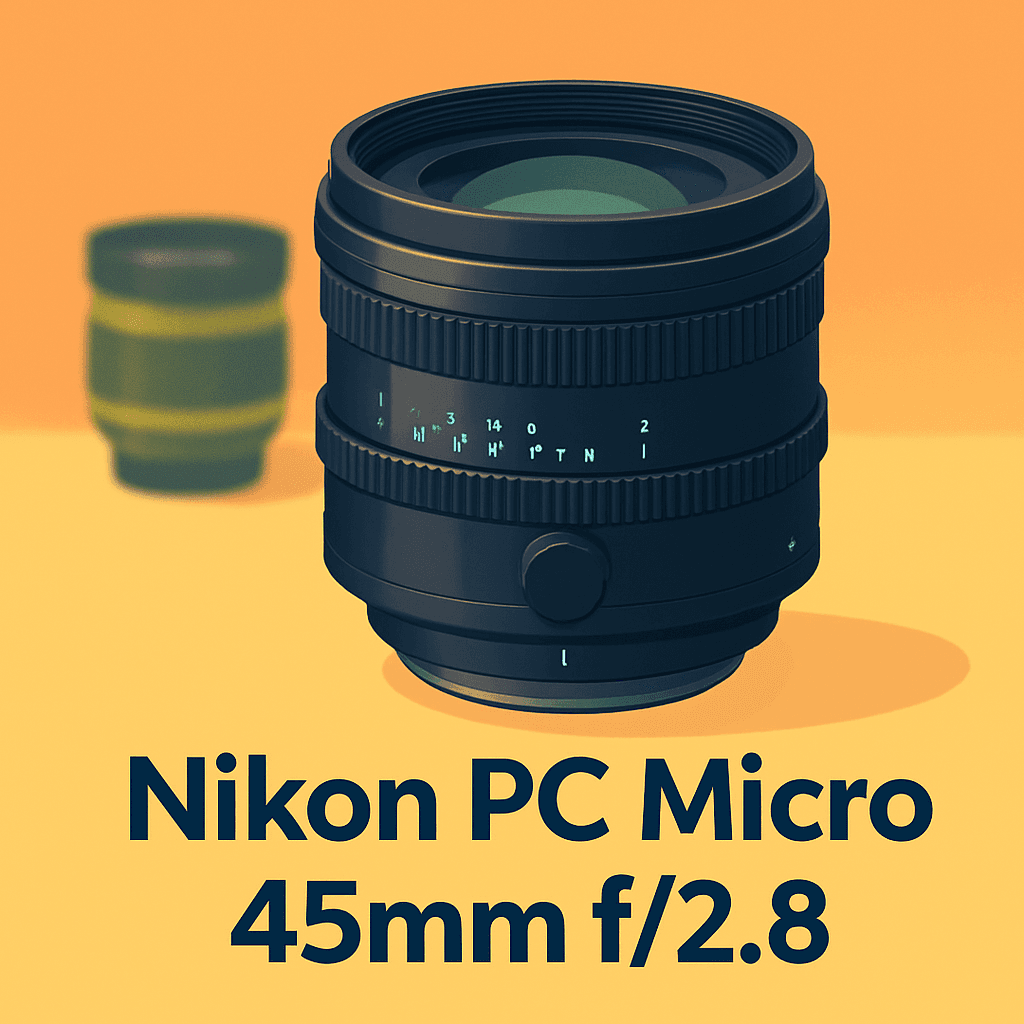
The Nikon F PC-E Micro NIKKOR 45mm f/2.8 pairs tilt and shift movements with close-focus capability, sitting at a versatile midpoint between ultra-wide and longer macro lenses. Having worked with tilt–shift glass in the field, I was keen to see how this one handles real architecture and tabletop shoots.
It’s a deliberate, technique-driven lens that rewards patience with precise perspective and plane-of-focus control, but there’s a learning curve. If you shoot architecture, product, or macro and want to know whether this lens fits your workflow, keep reading.

Nikon F PC-E Micro NIKKOR 45mm f/2.8
Precision tilt‑shift macro optic delivers unrivaled close‑up detail and perspective control for product and architectural photography. Smooth movement, outstanding edge‑to‑edge sharpness, and refined bokeh for creative compositions.
Check PriceThe Numbers You Need
| Spec | Value |
|---|---|
| Lens Type | Tilt-shift macro |
| Focal Length | 45 mm |
| Aperture | f/2.8 |
| Mount | Nikon F-mount |
| Field of View | Standard |
| Close Focus | Enabled |
| Tilt Capability | Yes |
| Shift Capability | Yes |
| ED Glass | Yes |
| Lens Design | Perspective-control |
| Macro Capability | Yes |
| Ideal Use | Architecture, product, macro photography |
How It’s Built
In my testing the Nikon F PC-E Micro NIKKOR 45mm f/2.8 felt like a proper precision tool right out of the box. The tilt-and-shift design with ED glass and close-focus ability is obvious the moment you pick it up, and mounting it on any Nikon F body was effortless. After using it for a while I appreciated how purposeful it feels for architecture, product, and macro work.
The tilt and shift actions move smoothly and with a reassuringly precise click when you lock them down. I found the locking knobs give good feedback, and the markings are clear enough to make repeatable adjustments without guessing. That matters in real shoots when you need to reproduce the same frame for stitching or focus stacks.
On a tripod the lens balances well and leaves the camera controls accessible while you compose. One thing I really liked was the solid feel of the knobs and barrel—those parts held their position under normal loads during long sessions. That gave me confidence when I was stitching multiple frames.
One thing that could be better is the learning curve; reorienting axes and dialing in tiny tweaks can be fiddly at first. Beginners should expect to slow down, practice, and use a tripod until the motions become second nature.
Overall the build feels durable and precise in day-to-day use, but I’d still double-check movement ranges and close-focus behavior for your specific needs before buying. In real terms that means plan for methodical, tripod-based shooting and you’ll get the most out of this lens.
In Your Hands
In use the Nikon F PC-E Micro NIKKOR 45mm f/2.8 renders images with pleasing punch—colors sit true without becoming oversaturated, contrast feels balanced straight out of camera, and flare is well controlled in most backlit scenarios. Chromatic aberration is modest and manageable in post, while shooting wide-open at f/2.8 delivers a clean, sculpted separation that’s useful for product and macro isolation without turning backgrounds into mush.
The 45mm field of view proves most comfortable for exteriors, façades and moderate-sized interiors where you can step back to frame scenes thoughtfully; in tighter rooms it’s less forgiving than wider tilt‑shift options, so you’ll find yourself composing with more movement—stepping back, stitching lateral shifts, or using partial shifts to preserve perspective. Those workarounds are practical but require time and a methodical approach to composition.
As a close‑focus tool the lens shines: macro capability combined with tilt allows you to lay the plane of focus along a product or specimen, keeping critical details sharp without extreme stopping down. Working distance is predictable enough for tabletop setups, though careful lighting and access around the subject remain essential to avoid hotspots and shadows when you’re inches from the target.
Field workflow rewards patience—dialing in tilt and shift quickly takes practice, and the lens begs for a tripod when precision matters. Locks and detents feel solid enough that once set, framing and level remain repeatable across multiple shots or stitched plates, but allow a moment to verify alignment when pushing movements to their limits.
The Good and Bad
- Tilt and shift movements for precision perspective and focus control
- Macro capability with close focusing for product and detail work
- Versatile standard 45mm field of view
- Nikon F-mount compatibility for a wide body ecosystem
- Standard FoV can be limiting for tight interiors versus wider tilt-shift options
- Steeper learning curve and slower workflow than conventional primes
Ideal Buyer
The Nikon F PC-E Micro NIKKOR 45mm f/2.8 is for shooters who split time between architecture exteriors, product tables and close‑up detail work, whether on commission or for personal projects. Its standard field of view and tilt‑shift/macro combo make it a single‑lens solution for varied briefs, from façade correction to tabletop texture studies. Expect to trade speed for control when framing and focusing precisely; patience and a tripod pay dividends.
Nikon F owners who want one versatile perspective‑control lens will appreciate how the 45mm sits between ultra‑wide architectural tools and longer macro primes. Studio photographers who need to shape the plane of focus rather than simply stopping down will find the tilt function indispensable for product lines, food shoots and scientific documentation. Product and tabletop pros gain the ability to keep textures pin‑sharp across a slanted plane without heavy diffraction, saving time in retouching and focus stacking.
This lens rewards deliberate, tripod‑based workflows and technicians comfortable with mechanical dials, repeatable markings and careful calibration for multi‑shot panoramas. It’s less suited to crouched interior work or fast handheld assignments where a wider or faster solution wins, and it comes with a learning curve for axis alignment. Buy it if precision, stitching‑friendly shifts, and macro flexibility matter more than immediate speed, and if you value a single, highly capable tool that bridges exterior architecture and studio detail work.
Better Alternatives?
We’ve already dug into what the Nikon PC Micro 45mm f/2.8 does well: versatile standard view, true tilt‑shift control, and honest close‑focus macro ability. It’s a special tool when you need both perspective control and fine plane‑of‑focus tweaks. That said, not every job needs a 45mm tilt‑shift that doubles as a macro — other lenses can be better fits depending on the space, subject, or workflow.
Below are a few lenses I often reach for instead of the 45mm, with hands‑on notes about where each outshines the 45 and where it falls short. I’ll say who I’d pick each one for, so you can match a lens to the kind of work you actually shoot.
Alternative 1:

Nikon F PC-E NIKKOR 24mm f/3.5
Wide‑angle perspective-control lens crafted for interiors and cityscapes, offering precise tilt and shift adjustments to correct converging lines, plus crisp, distortion‑resistant rendering across the frame for dramatic architectural images.
Check PriceWhat it does better: The 24mm PC‑E is my go‑to when I need wide coverage. In tight interiors and cityscapes the wider field of view and the same tilt/shift control let me straighten tall buildings and include more of a room without stepping back. The visual effect of shift is much stronger, so you can fix vertical lines and still keep foreground detail — something the 45mm simply can’t do as easily in cramped spaces.
What it does worse: The 24mm is slower at f/3.5 and you don’t get the same close‑up reach the 45mm gives for product work. Shifting heavily on the 24mm also makes corner softness and vignetting more obvious, so you often have to stop down and compromise low‑light performance. It’s also a heavier, more demanding lens to compose with — the tilt/shift movements feel more dramatic, and getting the framing right takes more experience.
Who would prefer it: Pick the 24mm if you mainly shoot interiors, real‑estate, or large architecture and you need strong perspective correction. If you spend a lot of time inside tight rooms or on city facades and rarely need the 45mm’s macro reach, the 24mm will feel more useful in real shoots.
Alternative 2:

Nikon DX AF-S Micro NIKKOR 85mm f/3.5 VR
Telephoto macro with vibration reduction enables handheld close‑up work, delivering impressive sharpness, silent autofocus, and flattering compression ideal for insects, small studio subjects, and detailed field photography.
Check PriceWhat it does better: On a crop body the 85mm gives much more reach and working distance for tight macro subjects. In the field I can handhold this lens for insect work and get subject isolation that’s hard to achieve with the 45mm. The VR helps a lot for handheld close‑ups, and autofocus is quicker and quieter — useful when you need speed or are shooting moving subjects.
What it does worse: This lens doesn’t give you tilt or shift controls, so you lose the perspective and plane‑of‑focus tricks that make the 45mm special for product and architecture. It’s a different tool — great for reach and isolation, but it won’t replace the 45mm when you need to correct converging lines or use Scheimpflug plane control for shallow depth‑of‑field on flat subjects.
Who would prefer it: If you do lots of handheld macro, nature, or tight product work on a DX camera and you want reach and ease in the field, this 85mm VR is a better match. Choose it if you need portability and quick results more than tilt/shift precision.
Alternative 3:
Nikon DX AF-S Micro NIKKOR 85mm f/3.5 VR
Designed for crop‑sensor cameras, this compact macro offers extended reach, smooth VR stabilization, precise manual focus control, and high contrast micro‑detail—perfect for nature, product, and close‑focus portrait work.
Check PriceWhat it does better: The compact 85mm VR is handy when you need a small, reliable macro that handles well on a tripod or in hand. In studio product shoots I liked the contrast and micro‑detail without fussing with tilt; it’s fast to set up and forgiving if you need to move quickly between subjects. On DX bodies it gives the sort of reach that makes small subjects fill the frame without crowding them.
What it does worse: Again, no perspective control. For tabletop products where keeping an entire plane in focus without stopping way down is important, the 45mm’s tilt is superior. The 85mm also has a narrower field, so for larger objects or room shots you’ll be stepping back or stitching to get coverage similar to the 45mm.
Who would prefer it: This is the lens I recommend to crop‑sensor shooters who want a compact, easy macro for nature, product detail, or close portraits, and who value handheld VR and quick AF. If tilt/shift work is rare in your job, the 85mm mixes practicality with very usable macro performance.
What People Ask Most
What is the Nikon PC Micro 45mm f/2.8 used for?
It’s used for close-up macro work, product and still-life photography, and for perspective control or creative plane-of-focus effects with its tilt‑shift design.
Does the Nikon PC Micro 45mm f/2.8 have autofocus?
No, it is manual-focus only to give precise control when working with tilt, shift, and close focusing.
Is the Nikon PC Micro 45mm f/2.8 compatible with full-frame (FX) and mirrorless cameras?
Yes, it’s an F‑mount lens that works on FX and DX DSLRs, and it can be used on Nikon mirrorless bodies with a compatible adapter.
What is the maximum magnification and minimum focusing distance of the Nikon PC Micro 45mm f/2.8?
Maximum magnification is 1:2 (0.5x) and the minimum focusing distance is about 0.235 meters (9.3 inches).
How do you use the tilt and shift controls on the Nikon PC Micro 45mm f/2.8?
Use shift to correct or recompose perspective without moving the camera and use tilt to change the plane of focus (Scheimpflug) for extended or selective focus, adjusting each control manually and then fine‑tuning focus.
Is the Nikon PC Micro 45mm f/2.8 worth buying and how much does it cost?
It’s worth buying if you need true tilt‑shift macro capabilities for professional work; expect prices around $1,700–$2,200 depending on condition and market.
Conclusion
The Nikon F PC-E Micro NIKKOR 45mm f/2.8 marries tilt-and-shift precision with true macro capability in a standard field of view. It’s a rare tool that lets you control perspective and plane of focus without switching lens families.
Optically and mechanically it rewards thoughtful technique with excellent control over composition, perspective correction and selective focus, and its handling feels purpose-built for tripod work. The trade-offs are clear: there’s a steep learning curve, slower setup and practical limits for tight interiors where a wider tilt-shift is a better fit. Pros who value exacting results will accept that deliberate pace; casual shooters may not.
Buy it if your work splits between architecture exteriors, tabletop product shots and close‑up detail where Scheimpflug control or fine perspective tweaks make the difference. It’s especially strong for Nikon F shooters who want one versatile PC-E that covers multiple studio and location needs.
Before committing, confirm the movement ranges and close‑focus behavior fit your workflow and be ready to shoot methodically. Bottom line: the Nikon F PC-E Micro NIKKOR 45mm f/2.8 is a specialized, high‑value tool for photographers who prioritize precision control over speed and want a single lens that does architecture, product and macro work well.
Nikon F PC-E Micro NIKKOR 45mm f/2.8
Precision tilt‑shift macro optic delivers unrivaled close‑up detail and perspective control for product and architectural photography. Smooth movement, outstanding edge‑to‑edge sharpness, and refined bokeh for creative compositions.
Check Price



0 Comments