

Want to lift your image quality without buying the newest, priciest body?
The Sony Alpha A7 II still turns up in many kit bags because it delivers tangible stabilization and great full‑frame stills in everyday shooting.
I’ve field-tested this body on real shoots, and in this review I focus on practical payoffs: handling, 5‑axis stabilization, high‑ISO behavior, autofocus reliability, battery endurance, and on‑the-go workflow.
If you’re a budget‑minded full‑frame seeker, a stills‑first shooter, or you rely on IBIS for handheld work, this review is for you — Make sure to read the entire review as I break down how it performs in the field, so keep reading.

Sony Alpha A7 II Camera
Classic full-frame mirrorless with 5-axis in-body stabilization, reliable low-light performance and ergonomic control. Ideal for handheld shooting, travel, and portrait work with smooth image quality and intuitive handling.
Check PriceThe Numbers You Need
| Spec | Value |
|---|---|
| Sensor | 24.3 MP full-frame CMOS |
| Image stabilization | 5-axis in-body |
| Lens mount | Sony E-mount |
| AF points | 117 |
| ISO range | 100–25600 (expandable 50–51200) |
| Shutter speed | 1/8000–30 sec, Bulb |
| Continuous shooting | 5 fps |
| Video | Full HD 1920×1080 60p |
| Viewfinder | XGA OLED, 2.4M dots |
| LCD | 3.0″ tilting, 1.23M dots |
| Weather sealing | Yes |
| Weight | Approx. 556 g (body only) |
| Dimensions | 126.9 x 95.7 x 59.7 mm |
| Wi-Fi | Yes |
| Battery life | Approx. 350 shots (CIPA) |
How It’s Built
In my testing the Sony Alpha A7 II Camera feels solid and reassuring in hand. The grip is comfortable and the body sits naturally when I’m shooting all day. That comfort translates to fewer sore hands and steadier shots with heavier lenses.
One thing I really liked was the tough-feeling build and weather sealing. I shot in light rain and dusty trails without worry, which means you can work outdoors without freaking out at the first sprinkle. I’d still avoid full storms, but it adds real confidence on location.
The electronic viewfinder is clear and makes manual focusing usable in real work. I relied on focus peaking and magnification a lot, and it made adapted lenses a pleasure to use. For beginners, that clarity makes learning to nail focus way less frustrating.
The tilting rear screen is handy for low and high angles but it can be reflective and a touch dim in bright sun. Controls are generally well placed, though some buttons are small and the menus take time to learn. One thing that could be better is the screen brightness and button layout for fast tweaks on the fly.
Sony’s E-mount gives real lens flexibility and the camera handled my mix of primes and zooms without fuss. Wi‑Fi and NFC paired easily for quick client previews, but full transfers felt slow — great for instant checks, not bulk workflow.
In Your Hands
Out in the field the Sony Alpha A7 II Camera feels like a compact workhorse for stills-first shooters: its in-body stabilization genuinely widens the envelope for handheld shooting, rescuing shots at slower shutter speeds and making vintage or non-stabilized lenses far more usable. With careful technique I routinely pulled off shots that would have needed a tripod on unstabilized bodies, and portraits and low-light city scenes benefited most from the steadiness.
The camera’s speed characteristics are practical rather than sports-pro level—continuous capture is solid for moderate action but the buffer and tracking behavior show their age when things get frantic. Single-shot focus with good glass is reliable and accurate; continuous AF and subject tracking require patience and careful framing if your subject is erratic.
High-ISO performance is forgiving for editorial and client work when managed conservatively, and IBIS helps keep ISO choices lower in dim environments. Battery life is on the modest side for full days of shooting, so I bring at least one spare cell and tend to charge between jobs to avoid interruptions.
For video the A7 II provides usable full-HD footage with the same stabilization benefits you get for stills, though it lacks the higher-resolution video options of newer bodies. Connectivity tools work well enough for quick client previews and social delivery, with pairing occasionaly fussy but transfers practical on-set; weather sealing also gave me confidence in light rain without any reliability issues across trips.
The Good and Bad
- 24.3 MP full-frame sensor produces detailed files
- 5-axis in-body stabilization is valuable for handheld stills and 1080p video
- Weather sealing adds confidence outdoors
- XGA OLED EVF and tilting 3.0″ LCD aid composition in varied angles
- Video limited to 1080p; no 4K
- Modest 5 fps burst and older-gen buffer behavior for action
Ideal Buyer
If you want an affordable entry into full‑frame mirrorless without chasing the latest specs, the Sony Alpha A7 II Camera still makes a lot of sense. It’s a practical way to access a 24.3MP sensor and reliable 5‑axis IBIS in a compact, weather‑sealed body. Expect clear trade‑offs versus newer models, but excellent stills and stabilization for the price.
This camera suits stills‑first shooters who put image quality and handheld sharpness above fast, modern autofocus or 4K video. Portrait, travel, and documentary photographers will appreciate the tonal rendering and the IBIS help for low‑light interiors and dusk cityscapes. Moderate action and street work are fine, provided you accept a modest 5 fps burst and older tracking behavior.
It’s also a good fit for photographers comfortable with a practical workflow: swapping spare batteries on long days, pairing gear manually, and grading RAW files to taste. If you rely on on‑camera 4K, instantaneous subject tracking or all‑day battery life, the A7 II will feel like a compromise. For many shooters, though, that compromise buys a lot of full‑frame capability for a reduced budget.
If your work demands cutting‑edge AF, high‑frame‑rate bursts, or hybrid video performance, look to newer bodies instead. For anyone prioritizing stills quality, ergonomics you can live with, and dependable IBIS, the A7 II remains a compelling, budget‑minded pick.
Better Alternatives?
We’ve gone through what the Sony A7 II does well and where it falls short. It’s still a solid, stabilized full‑frame camera for stills, but its autofocus, battery life, and video features show their age compared with newer bodies.
If you’re thinking beyond the A7 II, here are a few real-world alternatives I’ve used that give you clearer upgrades in autofocus, battery, handling, and video — at different price points and for different kinds of shooters.
Alternative 1:

Sony Alpha A7 III Camera
Versatile full-frame powerhouse offering outstanding low-light sensitivity, fast hybrid autofocus, and impressive battery life. Great for photo and video creators who need speed, dynamic range, and dependable performance.
Check PriceI’ve used the A7 III a lot, and in real shoots it feels like a proper step up from the A7 II. The autofocus locks on faster and keeps tracking subjects far better, so I get more keepers when people or kids move. Low‑light shots come out cleaner and the bigger battery means I rarely change cells mid‑day like I did with the A7 II.
Where it beats the A7 II is clear: better AF, usable 4K video, longer battery life, dual card slots and a snappier feel overall. What it doesn’t do as much differently is the basic handling — if you loved the A7 II’s size and lens choices, the A7 III keeps that same E‑mount flexibility but with modern guts. The trade‑off is cost — it’s pricier than used A7 II bodies.
This is the camera I’d pick if you want a more reliable all‑round tool: wedding shooters who need better AF and battery, travel shooters who want 4K for quick clips, or anyone who wants modern performance without switching systems. If you only need a cheap full‑frame body for simple portraits and don’t care about video or tracking, the A7 II can still do the job.
Alternative 2:
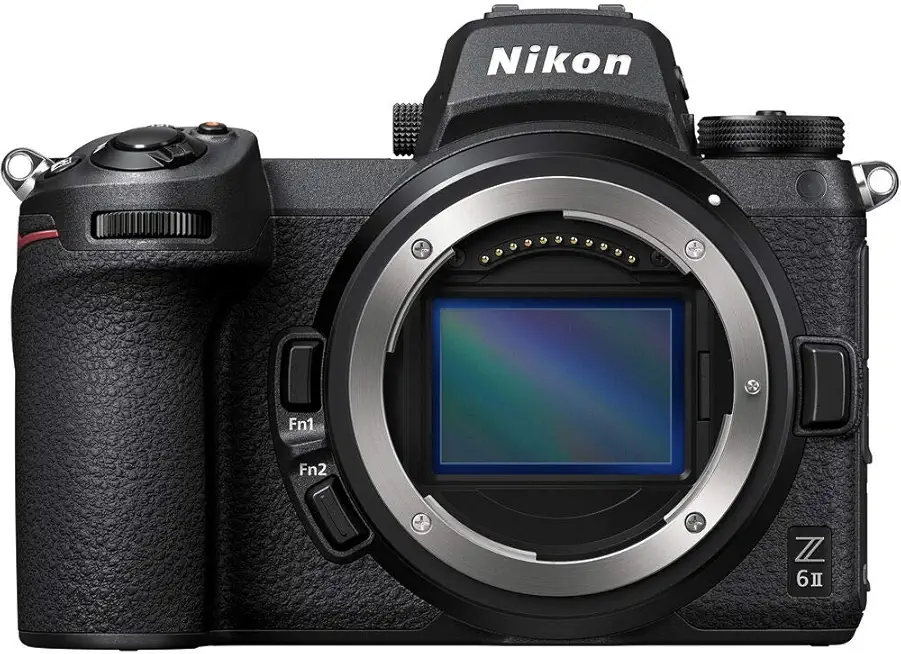
Nikon Z6 II Camera
Cutting-edge mirrorless body with dual processors for faster autofocus, improved continuous shooting and enhanced video capabilities. Robust build, refined ergonomics, and reliable low-light image quality for hybrid shooters.
Check PriceThe Z6 II feels modern in hand — the menus, the grip, and the viewfinder make long shoots less tiring compared to the older A7 II. In practice its autofocus and in‑body stabilization are solid, and I noticed cleaner files at high ISO when I shot events and interiors. Dual card slots and faster buffer handling mean I don’t worry about long bursts like I had to with the A7 II.
Compared to the A7 II, the Z6 II gives you better video options and a more comfortable shooting experience. Where it doesn’t always beat Sony is in the absolute edge of subject tracking — Sony’s newer AF systems can still be a touch quicker at the hardest tracking jobs. Lens choice is improving for Nikon Z, but if you already own many Sony E lenses the switch requires adapters or new glass.
Pick the Z6 II if you value ergonomics and a camera that behaves well for mixed photo and video days. It’s a good fit for studio shooters who need reliable files, or wedding and event shooters who want modern handling and dual cards without jumping straight into Sony’s latest bodies.
Alternative 3:
Nikon Z6 II Camera
Feature-rich professional tool offering in-body stabilization, dual memory card slots, and seamless video/photography workflows. Balanced handling, excellent color science, and versatile performance for demanding studio and location assignments.
Check PriceOn multi-day shoots I found the Z6 II’s color and skin‑tone rendering pleasant straight out of camera, which cuts time in post compared with images from the A7 II that I usually had to tweak more. The in‑body stabilization plus good lens stabilization let me handhold slower shutter speeds more often than I could with the A7 II without raising ISO too much.
The Z6 II’s real advantage over the A7 II is workflow: dual cards, smoother tethering and a responsive buffer make studio and location work feel calmer. It’s not perfect — if your work depends on the widest possible lens range without adapters, Sony’s E‑mount still has more native options — but for many pros the Z6 II’s balance of features and handling is easier to live with day to day.
This camera is for shooters who run long assignments and value reliability and color straight out of the camera — portrait studios, small commercial teams, and hybrid shooters who want good video and stills without changing lens systems overnight. If you’re on a tight budget and mainly need basic stills, the A7 II still holds value, but the Z6 II is the nicer tool if you can spend a bit more.
What People Ask Most
Is the Sony A7 II worth buying in 2026?
Yes if you want an inexpensive full‑frame body with 5‑axis IBIS and can live without modern AF and video features; otherwise spend a bit more for an A7 III or newer for better performance.
How good is the autofocus on the Sony A7 II?
It’s fine for stills and slow subjects but is noticeably slower and less reliable on moving subjects than newer Sony bodies with advanced AF systems.
How does the Sony A7 II compare to the Sony A7 III?
The A7 III has far better autofocus, low‑light performance, battery life, and 4K video, while the A7 II is older but cheaper and still has useful IBIS and good image quality.
Is the Sony A7 II good for video recording?
It can record clean 1080p video and is fine for casual use, but it lacks internal 4K and many modern video conveniences, so it’s not ideal for serious videographers.
What lenses are best for the Sony A7 II?
Go with Sony FE glass: the affordable FE 50mm f/1.8 and 35mm f/1.8 for general shooting, a 24‑70mm for versatility, and the 85mm f/1.8 or GM primes for portraits.
How long does the battery last on the Sony A7 II?
Using the NP‑FW50 battery you’ll typically get around 300–350 shots per charge in real use, with video and EVF use reducing that number further.
Conclusion
The Sony Alpha A7 II Camera remains a compelling stills tool because its full‑frame imaging and 5‑axis in‑body stabilization deliver the kind of handheld detail and low‑light freedom many shooters prize. Build quality, weather resistance and a practical EVF/LCD make it a camera you can rely on in everyday assignments. In my experience it still makes polished, gradeable files with a compact, familiar handling feel.
That said, the A7 II shows its age where it matters for modern workflows: autofocus responsiveness, burst capability, video options and battery endurance all lag current bodies. If you need snappy subject tracking, high‑resolution video or marathon shooting without battery swaps, the camera will frustrate you. These are real trade‑offs, not minor inconveniences.
I recommend this body for budget‑minded photographers who shoot primarily stills — portrait, travel and documentary shooters who value IBIS and full‑frame look over cutting‑edge AF or 4K. Pros who demand fast continuous shooting, best‑in‑class AF or hybrid video should seriously consider more recent alternatives instead.
Bottom line: the A7 II still delivers meaningful value as a used or lower‑cost full‑frame option for image‑first shooters, but it’s no longer the Swiss‑army upgrade for everyone. Buy it for its image character and stabilization, not for modern autofocus or video ambitions.
Sony Alpha A7 II Camera
Classic full-frame mirrorless with 5-axis in-body stabilization, reliable low-light performance and ergonomic control. Ideal for handheld shooting, travel, and portrait work with smooth image quality and intuitive handling.
Check Price

0 Comments