
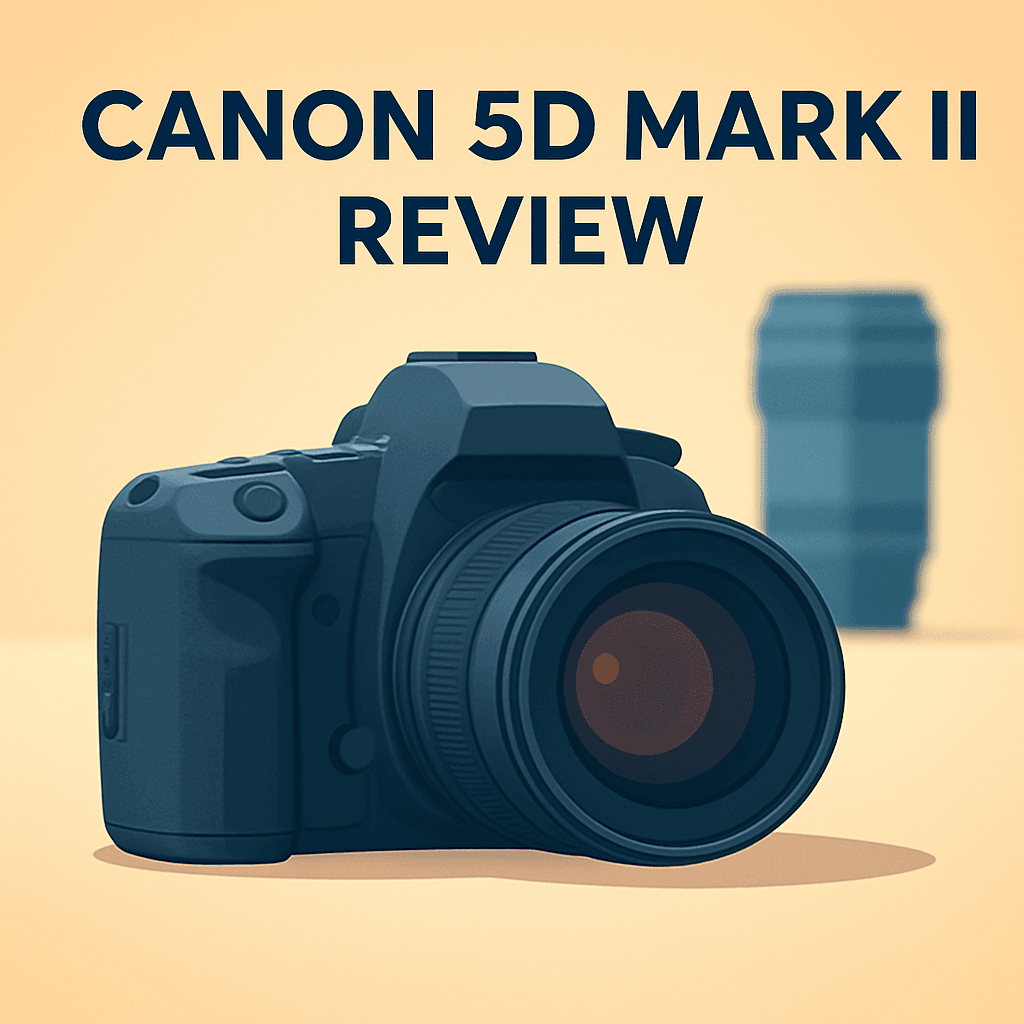
Want to know if a full-frame classic can still lift your photos and video?
The Canon EOS 5D Mark II Camera helped redefine full-frame shooting, and I spent days with one on real shoots.
I’ll focus on handling, real-world performance, and where it still shines or struggles for working photographers. If you shoot portraits, landscapes, or studio work, make sure to read the entire review — keep reading.

Canon EOS 5D Mark II Camera
Full-frame 21.1MP sensor, cinematic-video-capable DSLR delivering rich detail and dynamic range; ideal for photographers and videographers seeking professional stills and impressive HD video performance in a rugged, intuitive body.
Check PriceThe Numbers You Need
| Spec | Value |
|---|---|
| Sensor | 21.1 MP full-frame CMOS |
| ISO Range | 100–6400 (expandable to 50–25600) |
| Processor | DIGIC 4+ image processor |
| Autofocus | 9-point AF system with 6 cross-type points |
| Continuous Shooting | Up to 3.9 fps |
| Video | Full HD 1080p at 30 fps (no 4K) |
| LCD Screen | 3.0-inch, 920,000-dot fixed LCD |
| Viewfinder | Optical pentaprism, 98% coverage |
| Shutter Speed | 1/8000 to 30 seconds |
| Storage | CompactFlash (CF) card slot |
| Weight | Approx. 810 grams (body only) |
| Dimensions | 152 x 113 x 75 mm |
| Built-In Flash | Yes |
| Lens Mount | Canon EF mount (full compatibility with EF lenses) |
| Battery | LP-E6 rechargeable lithium-ion battery |
How It’s Built
In my testing the Canon EOS 5D Mark II Camera feels like a proper professional body—solid and confident in the hand. It’s not a tiny travel camera, so when you pair it with heavier EF lenses you’ll notice the weight on long shoots. For real-world work that means you’ll want a good strap or a supportive bag for back-to-back sessions.
The viewfinder is bright and easy to use, but I found a small framing margin at the edges, so I double-check my composition when things are tight. The fixed rear screen is sharp and helpful for playback, but it won’t flip out for low or high angles, which can be a pain for creative framing. For beginners, that means you’ll learn to move your body instead of relying on the screen.
The camera uses a CompactFlash slot, so I paid a bit more attention to card management and backups during shoots. The battery type is familiar and in my testing it comfortably lasted through a full shoot day with a spare handy. Tethering and card readers are straightforward but plan your workflow ahead of time.
I really liked the deep, grippy feel and solid button layout—everything sits where my thumb and fingers expect. One thing that could be better is that fixed LCD; a tilting screen would make everyday shooting more flexible. Overall the build inspires confidence for portraits, studio work, and landscapes.
In Your Hands
The Canon EOS 5D Mark II feels deliberately paced in real-world shooting — its modest continuous shooting rate and deliberate AF response make it a natural for portraits, studio work, landscapes and deliberate editorial workflows, but it’s not the tool you reach for when subject motion is frantic. In everyday use the camera rewards patience: compose, fine-tune, and you get rich, usable frames rather than a spray-and-pray harvest. Its responsiveness is steady rather than snappy, which suits thoughtful assignments more than fast-paced sports.
The shutter and metering combo is versatile; the curtain is capable enough to take advantage of fast optics in bright conditions and to produce long-exposure results when you slow things down. The multi-zone TTL metering is generally trustworthy with a subtle bias toward preserving highlights, so I often favor a slightly conservative exposure strategy or selective metering in contrasty scenes. That approach keeps recoverable shadow detail and avoids clipped highlights in high-contrast environments.
For hybrid shooters the camera’s Full HD video remains serviceable for client work and personal projects, though it shows its age when subjected to aggressive pans where rolling-shutter skew can appear. Audio is practical with an external microphone and manual level control, but capturing broadcast-ready sound still requires the usual external monitoring and a clean workflow. Overall the video side is useful but rooted in an earlier generation of features.
A single CompactFlash slot shapes on-set card management and backup habits, and reliable tethering options help studio workflows. The battery performs dependably across full days when paired with a rotation of spares and a sensible charging routine, so stamina rarely surprises you mid-shoot. Planning cards and batteries is part of the rhythm with this body.
Ergonomically the Mark II is a reassuring, pro-grade instrument: balanced on common EF zooms and primes, comfortable in hand, with well-placed controls that let experienced shooters work fast without hunting through menus. The fixed rear screen and near-full-frame viewfinder keep you rooted in traditional DSLR habits, and in practice the camera is a durable, dependable workhorse for controlled, professional shoots.
The Good and Bad
- 21.1 MP full-frame sensor delivers detailed files
- ISO 100–6400 (expandable to 50–25600) offers flexibility in varied light
- Full HD 1080p at 30 fps still usable for many projects
- Canon EF mount with wide lens ecosystem
- 9-point AF system is basic by today’s standards; limited for action and tracking
- 3.9 fps burst speed not ideal for sports or wildlife
Ideal Buyer
If you prize full-frame image quality and classic Canon color over the latest autofocus bells and faster burst rates, the Canon EOS 5D Mark II is for you. Its 21.1MP sensor produces detailed files ideal for portraits, studio work, landscapes, architecture and product photography where framing and tone matter more than chasing a moving subject. Working pros and serious enthusiasts who craft images in controlled environments will appreciate the tonal range and print-friendly resolution.
Hybrid shooters who need reliable Full HD video without 4K complexity will find the 5D Mark II still useful for client reels, interviews and online portrait pieces. Owners invested in Canon EF glass get seamless compatibility and balanced handling with L-series zooms and primes, which makes long shoots and tethered studio days comfortable and predictable. The camera’s solid pro-grade build and familiar ergonomics reward photographers who prioritize feel and system continuity over the latest touchscreen conveniences.
Avoid this body if your work depends on fast-action AF, high-frame-rate burst shooting, or modern video features like 4K and advanced codec options. Wedding shooters who depend on reliable subject tracking and wildlife or sports photographers should look to later bodies with denser AF arrays and faster fps. Match the 5D Mark II to assignments where image quality, color fidelity and lens compatibility matter most, and it will still be a quietly powerful tool.
Better Alternatives?
We’ve gone through what makes the Canon 5D Mark II still useful: great full‑frame files, solid 1080p video, and that classic Canon color. But it’s also fair to say its autofocus, burst speed and some modern conveniences lag behind newer bodies. If those are priorities for your work, there are clear alternatives worth considering.
Below are three real-world choices I’ve used in the field. I’ll explain where each one beats the Mark II, where it falls short, and what kind of shooter will get the most from it.
Alternative 1:

Canon EOS 5D Mark III Camera
Advanced full-frame DSLR offering refined autofocus, superior noise control and tonal depth; built for demanding shoots with robust weather sealing, fast continuous shooting and versatile image quality for professionals.
Check PriceI used the 5D Mark III for weddings and run-and-gun assignments, and its autofocus and responsiveness are night-and-day compared with the Mark II. The AF locks faster and tracks moving subjects more reliably, so you catch moments you’d likely miss with the older 9‑point system. In mixed lighting the higher usable ISO and cleaner files mean I spend less time fighting noise in post.
The trade-offs are practical: the Mark III is a bit heavier, and the files and workflow feel more “professional” — larger files, dual card management, and a body that costs more. You also lose some of the Mark II’s slightly warmer, older color character if you prefer that look out of camera. But for reliability on long shoots, the Mark III is simply less stressful to work with.
Pick the 5D Mark III if you’re a working pro or serious event shooter who needs dependable autofocus, better high‑ISO performance and pro features like dual cards and stronger sealing. If you primarily shoot studio portraits or landscapes and love the Mark II’s look, the upgrade may be less urgent.
Alternative 2:

Nikon D700 Camera
Professional-grade full-frame DSLR delivering exceptional high-ISO performance and robust build; perfect for documentary and event photographers who need reliable autofocus, responsive handling and clean, punchy images in challenging light.
Check PriceThe Nikon D700 is a workhorse I’ve taken into low‑light weddings and newsroom runs. It really shines where the Mark II can struggle: clean files at high ISO and very dependable handling when the light gets tough. The body feels very solid and its burst rate and AF make it easier to nail erratic action compared with the Mark II’s slower capture.
Where it loses to the Canon 5D Mark II is in resolution and video. The D700’s lower megapixel count means less room to crop or print huge files, and it doesn’t give you the Mark II’s built‑in 1080p movie option if you need video. Also, moving systems means different lenses and color rendering — something to consider if you have a Canon kit already.
If you’re a photojournalist, documentary photographer, or anyone who mostly shoots stills in low light and needs durable handling, the D700 is a great pick. Avoid it if you rely on high resolution for big prints or if hybrid photo/video work is part of your regular job.
Alternative 3:

Nikon D750 Camera
Versatile, lightweight full-frame body combining excellent dynamic range, low-light clarity and a tilting LCD for flexible composition; delivers fast shooting and refined color rendering for hybrid photo/video creators.
Check PriceThe D750 felt like an immediate upgrade when I switched from older full‑frame bodies. It gives you noticeably better dynamic range and low‑light clarity than the Mark II, and the tilting screen makes tricky angles and quick video framing much easier in real shoots. Autofocus and burst feel more modern, so handheld work, travel shoots and events all become less fiddly.
On the down side, you’ll lose Canon’s color and the feel of the EF system if you’re already invested there. The D750 is not a perfect one-for-one replacement for Canon lenses and menus, and for some studio photographers the slightly different color and rendering take time to get used to. Also, if you want a totally rugged pro shell, there are heavier pro bodies that feel tougher in extreme conditions.
Choose the D750 if you want a lighter, more modern full‑frame that handles low light and mixed shoots well — ideal for travel, weddings, and hybrid shooters who shoot both stills and video. If you’re deeply invested in Canon glass and color, the benefits may not outweigh switching systems for everyone.
What People Ask Most
Is the Canon 5D Mark II worth buying?
Yes, if you want an inexpensive full-frame DSLR for stills and basic video and can accept older tech; if you need modern autofocus, speed, or low-light performance, a newer used model is a better buy.
What are the main specifications of the Canon 5D Mark II?
It has a 21.1MP full-frame CMOS sensor, ISO 100–6400 (expandable), 9-point AF, 3 fps continuous shooting, 1080p video, and a 3.0″ LCD; released in 2008.
How does the Canon 5D Mark II compare to the Canon 5D Mark III?
The Mark III is a clear upgrade with far better autofocus (61 points), faster 6 fps shooting, improved noise handling and build quality, while the Mark II is cheaper but older and slower.
Can the Canon 5D Mark II record video?
Yes — it records full HD 1080p (up to 30fps) and was a landmark for DSLR video, but it has limited autofocus during video and lacks modern video codecs and features.
How is the low-light performance and image quality of the Canon 5D Mark II?
Image quality is still very good at base and moderate ISOs with pleasing dynamic range, but noise becomes noticeable above ISO 1600 compared with newer sensors.
What are the common problems or drawbacks of the Canon 5D Mark II?
Typical drawbacks are slow and limited AF, no advanced weather sealing or modern connectivity, potential shutter wear on used units, and older battery life and performance compared to newer bodies.
Conclusion
The Canon EOS 5D Mark II Camera remains a very strong choice when ultimate full‑frame image quality and solid HD video matter more than modern bells and whistles. It delivers the kind of file fidelity, color response and build that made it a pro workhorse. For many photographers those strengths still translate to beautiful portraits and large prints.
That said, its limitations are plain and unavoidable. The autofocus and continuous‑shooting behavior feel dated for fast‑paced work, and the fixed rear screen plus older storage options complicate some workflows. Hybrid shooters should also note the lack of 4K and the more pedestrian processing speed.
Where it fits best is clear: photographers who control the scene — studio, portraits, landscapes, architecture and product — and owners already invested in Canon EF glass. If you value pristine stills and usable HD video over tracking speed you’ll find satisfying results. It still makes sense as a secondary body on a well‑rounded kit.
If your priorities tilt toward fast AF, cleaner high‑ISO performance or modern video, consider newer Canon bodies or rivals that address those gaps. Otherwise the 5D Mark II Camera remains a pragmatic, characterful tool whose image quality keeps it relevant. Match your shooting style to its strengths and it will earn a place in the bag.
Canon EOS 5D Mark II Camera
Full-frame 21.1MP sensor, cinematic-video-capable DSLR delivering rich detail and dynamic range; ideal for photographers and videographers seeking professional stills and impressive HD video performance in a rugged, intuitive body.
Check Price



0 Comments