
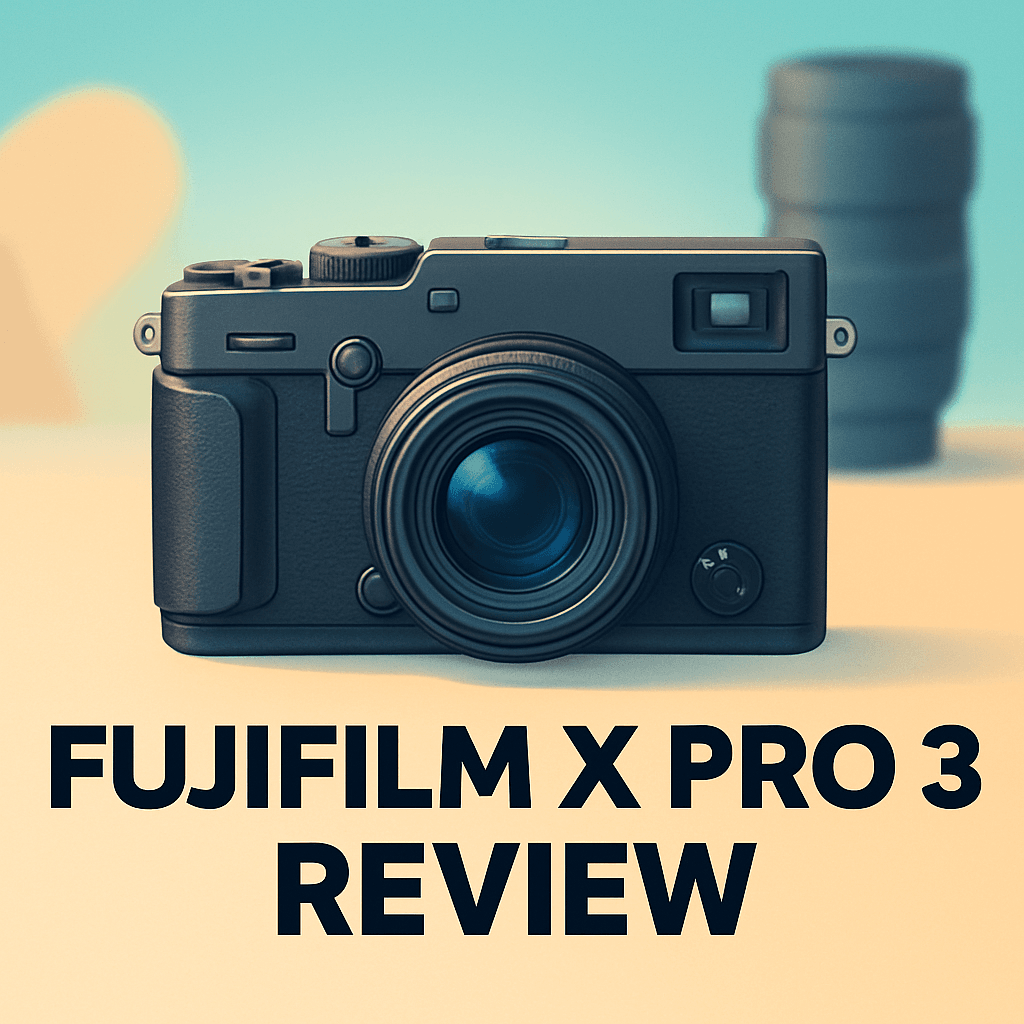
Want a camera that makes your street and travel photos feel more deliberate and alive?
This fujifilm x pro 3 review strips away specs to show whether the Fujifilm X-Pro3 Camera really delivers where it counts in real shoots. I’ve field-tested it on rain-soaked streets and long travel days, so you’ll get practical answers, not marketing copy.
If you care about tactile handling, a rangefinder-style OVF/EVF, hidden tilt screen, rugged titanium build and Fuji’s film-like color, this review is for you. We’ll also cover the tradeoffs you’re buying into — make sure to read the entire review as I break down how it performs day-to-day — keep reading.

Fujifilm X-Pro3 Camera
Rangefinder-style mirrorless offering a discreet, tactile shooting experience with film-simulation color profiles, hybrid viewfinder and rugged titanium-clad body. Ideal for street and travel photographers seeking classic handling and rich tones.
Check PriceThe Numbers You Need
| Spec | Value |
|---|---|
| Sensor | 26.1 MP X-Trans CMOS 4 |
| Sensor size | APS-C (23.5 x 15.6 mm) |
| Lens mount | Fujifilm X-mount |
| Viewfinder | Hybrid optical/electronic viewfinder (OVF and EVF) |
| Viewfinder resolution | 3.69 million dots electronic |
| Rear LCD | Hidden 1.62 million dots touchscreen, 3-inch, tilt-out sideways (not fully articulating) |
| ISO range | 160–12800 (expandable to 80–51200) |
| Image stabilization | No in-body image stabilization (IBIS) |
| Autofocus points | 425-point hybrid AF system |
| Burst shooting | Up to 11 fps continuous shooting |
| Video | 4K UHD at 30p, Full HD at 60p |
| Shutter speed | Electronic up to 1/32000 sec; mechanical up to 1/8000 sec |
| Weather resistance | Dust and moisture resistant, freeze-proof to -10°C |
| Battery life | Approx. 370 shots per charge (CIPA standard) |
| Weight | Approx. 497 g (with battery and memory card) |
How It’s Built
In my testing the Fujifilm X-Pro3 Camera feels built to last. Titanium top and bottom plates give it a solid, premium feel and the finish resists scuffs. It’s dust- and moisture-resistant and rated for freezing days, so I reach for it in bad weather.
The rangefinder layout and hybrid OVF/EVF change how you hold it. Very discreet on the street and balanced with small primes in my hands, but bigger zooms can make it feel front-heavy. That balance matters on long walks and quick grabs.
The hidden tilt touchscreen is a love-it-or-hate-it. One thing I really liked: it forces you to use the viewfinder and stay present. One thing that could be better: image review and menus feel slower and waist-level angles are limited.
The dials and buttons are firm and clicky, making changes easy for beginners. The X-mount means you can grow into Fuji’s lens lineup without switching systems or feeling boxed in. The build gives confidence for daily carry and travel.
I shot with it in rain and near-freezing temps and it never missed a beat. Buttons worked with gloves and the seals kept moisture out, so you worry less and shoot more. That reliability is huge when you’re out chasing light.
In Your Hands
The X-Pro3’s image quality is its most persuasive trait: the APS-C sensor yields crisp files with a pleasing dynamic range and the kind of color rendering that makes Fuji’s film simulations genuinely useful. Those simulations produce SOOC JPEGs that often need minimal adjustment, speeding a shoot-to-deliver workflow for street and travel work. In higher-sensitivity situations the camera holds onto color and texture in a way that feels mature for a compact, rangefinder-style body.
In practice the camera is responsive and confident; the shutter snaps without fuss, viewfinder transitions are immediate, and burst shooting captures decisive moments reliably for most documentary pacing. You will notice the system’s practical limits during very long, sustained bursts, but day-to-day responsiveness supports a nimble, anticipatory shooting style. The electronic shutter is a boon for discretion, though it can show artifacting with fast panning or certain artificial lights.
Because there’s no in-body stabilization the X-Pro3 rewards deliberate technique: fast primes, bracing, or a support will lift keeper rates in low light more than hoping for stabilization to rescue a shaky frame. Handheld night work is certainly achievable but benefits from thoughtful exposure choices and lens selection. Using optically stabilized glass or a tripod simply widens what’s possible.
Battery life is adequate for a full day with conservative habits, though long shoots often mean carrying a spare for peace of mind. Video works well for casual, hybrid clips, but limited frame-rate flexibility and the sideways-tilt hidden screen make solo-monitoring and vlogging less fluid. In the field the weather-sealed, cold-tolerant construction inspires confidence; controls remain tactile and usable even with gloves in wet or chilly conditions.
The Good and Bad
- Hybrid OVF/EVF with 3.69M-dot EVF for flexible framing experiences
- Titanium top and bottom plates; weather resistant and freeze-proof to -10°C
- 26.1MP X-Trans CMOS 4 APS-C sensor with Fujifilm film simulations for compelling SOOC color
- Hidden tilt touchscreen supports viewfinder-focused shooting and discretion
- No in-body image stabilization (IBIS)
- Hidden screen and lack of full articulation slow vlogging, self-record, and quick menu access
Ideal Buyer
If you prize a rangefinder-style shooting experience, the Fujifilm X-Pro3 Camera is made for you. Its hybrid OVF/EVF and discreet profile favor street, documentary and travel photographers who want anticipation over constant screen-checking. The hidden tilt LCD nudges a viewfinder-first rhythm that speeds decisive stills work and keeps distractions down.
Shooters who chase straight-out-of-camera color will love Fuji’s film simulations baked into the X-Pro3. Titanium build and weather-sealing make it a dependable tool for long days in rain or cold, and the tactile dials reward hands-on control. Expect to carry one or two spare batteries for full-day shoots, but otherwise you get rugged reliability in a compact package.
This camera is not for video-first creators or vloggers who need a fully articulating screen and high-frame-rate 4K. It also isn’t the best fit for photographers who require in-body stabilization for slow-shutter handheld work. Choose the X-Pro3 if you put craft, discretion and color-first stills above hybrid video conveniences.
Better Alternatives?
We’ve gone through the Fujifilm X-Pro3 and its rangefinder-style approach, so you know where it shines and where it asks you to compromise. If you like the X-Pro3’s look and image quality but want different tools — like better stabilization, more video options, or a friendlier layout for vlogging — there are solid choices that change those trade-offs.
Below are three practical alternatives I’ve used in the field. I’ll say plainly what each one does better and worse than the X-Pro3, and what kind of shooter will prefer it. Think of these as real-world choices, not a spec race.
Alternative 1:

Fujifilm X-T4 Camera
Advanced APS-C powerhouse with in-body image stabilization, fast autofocus and cinema-grade video capabilities. Vari-angle touchscreen, long battery life and robust build make it perfect for hybrid shooters and action photography.
Check PriceThe X-T4 is the closest sibling to the X-Pro3 in color and image feel, but it solves two practical pains I had with the X-Pro3: no IBIS and limited video ergonomics. In real shoots I could handhold slower shutter speeds and still get keepers thanks to the in-body stabilization, and the fully articulating screen makes framing clips and checking angles much faster when I’m working solo.
What it loses compared to the X-Pro3 is the whole rangefinder experience. The X-T4 is bulkier and more obvious on the street, so it doesn’t offer the same low-profile, viewfinder-first workflow. If you loved the hidden screen and the hybrid OVF/EVF decision-making, you’ll miss that quiet, deliberate pace on the X-T4.
Who should pick it: photographers who want Fujifilm color but need practical help for low-light handheld shooting, more robust video tools, or a bigger grip for long days. It’s great for hybrid shooters, wedding and event photographers, and anyone who trades a bit of stealth for steadier, more versatile shooting.
Alternative 2:

Nikon Z fc Camera
Retro-styled mirrorless blending classic controls with modern imaging: crisp APS-C sensor performance, responsive autofocus and a tactile control layout. Compact, stylish and ideal for everyday, travel and street photography.
Check PriceThe Nikon Z fc gives you retro looks and easy, tactile controls that feel great when you’re dialing exposure on the fly. In daily shooting it’s lighter and more approachable than the X-Pro3, and the screen tilts out for easy selfies and vlogging — which the X-Pro3’s hidden tilt doesn’t do as conveniently.
On the downside, the Z fc won’t match the Fujifilm in straight-out-of-camera color and that rangefinder-like, viewfinder-first habit the X-Pro3 encourages. It doesn’t offer the hybrid OVF/EVF experience, so if you value the quiet anticipation and framing style the X-Pro3 gives you, the Z fc feels different and a bit less discreet in a crowd.
Who should pick it: shooters who want a stylish, easy-to-use camera for travel, street, and social work — especially if you like manual dials and a lighter rig. It’s a good move for someone coming from Nikon or a photographer who wants retro looks with modern autofocus and a friendlier screen for video.
Alternative 3:
Nikon Z fc Camera
Stylish compact body featuring vibrant retro aesthetics, 4K-capable imaging and intuitive dials for hands-on exposure control. Lightweight and customizable, it is perfect for content creators and photographers on the move.
Check PriceLooked at from a content-creator angle, the Z fc’s compact size, tilting screen and simple button layout make it quicker to set up for short clips than the X-Pro3. In real shoots I found it easier to switch between stills and handheld social video without changing rigs, and it’s lighter to carry for a full day of roaming and shooting.
Where it falls short versus the X-Pro3 is in that tactile, film-like shooting feeling and Fujifilm’s film simulations that many photographers prefer straight out of the camera. The Z fc is friendly and fast, but it won’t give you the same viewfinder-led discipline or the same SOOC color that pushes many to the X-Pro3.
Who should pick it: creators and travelers who want a compact, attractive camera that’s easy to use for quick videos and everyday photos. If you prize portability, style, and ease of use over the X-Pro3’s rangefinder character and Fuji color science, the Z fc is a solid alternative.
What People Ask Most
Is the Fujifilm X-Pro3 worth buying?
Yes—if you want a compact, rangefinder-style camera with stellar JPEGs and film simulations and can accept fewer video features and a small learning curve.
What are the main differences between the Fujifilm X-Pro3 and the X-T3/X-T4?
The X-Pro3 has a hybrid rangefinder EVF, hidden tilting LCD and a more discreet, rugged body, while the X-T4 adds IBIS and stronger video/continuous-AF performance; the X-T3 is closer but still more conventional in layout.
How good is the autofocus performance on the Fujifilm X-Pro3?
The AF is reliable for portraits, street and general shooting, but it’s not as fast or as strong at continuous tracking as the X-T4 for fast action or sports.
How is the image quality and color reproduction of the Fujifilm X-Pro3?
Image quality is excellent from the X-Trans sensor, with rich colors and Fujifilm’s film simulations producing beautiful JPEGs straight from camera.
What is the battery life like on the Fujifilm X-Pro3?
Battery life is modest—expect roughly 300–400 shots per charge in typical use—so bring a spare for long outings.
Does the hidden tilting LCD on the Fujifilm X-Pro3 affect usability for street and travel photography?
The hidden LCD keeps the camera discreet and protected—which is great for street shooting—but it can slow quick framing and is less convenient for vlogging or selfies.
Conclusion
The Fujifilm X-Pro3 Camera is a rangefinder-styled APS-C body built for photographers who prioritize stills and the viewfinder experience. Its hybrid OVF/EVF, discreet hidden LCD and tactile controls steer you toward a deliberate shooting rhythm. The titanium finish and weather sealing make it feel ready for the road and the rain.
That focus comes with clear trade-offs: no in-body stabilization, video capped at limited frame rates, and a screen that won’t swing out for easy vlogging. Battery life is serviceable but not generous on long shoots, and the hidden LCD slows rapid image review. For street and documentary work those compromises are acceptable; for hybrid video or stabilization-dependent shooters they are not.
If you crave tactile controls, classic framing options and Fujifilm’s much-loved color straight out of camera, this camera rewards with a singular shooting experience. If you need IBIS, high-frame-rate video, or a flip-out selfie screen, consider alternatives that favor those needs. In this fujifilm x pro 3 review my verdict is simple: buy the Fujifilm X-Pro3 Camera if a viewfinder-first, rangefinder ethos drives your photography; otherwise look to a body that prioritizes stabilization and video.
Fujifilm X-Pro3 Camera
Rangefinder-style mirrorless offering a discreet, tactile shooting experience with film-simulation color profiles, hybrid viewfinder and rugged titanium-clad body. Ideal for street and travel photographers seeking classic handling and rich tones.
Check Price



0 Comments