
Want a single lens that handles weddings, portraits, editorial shoots and low-light moments without constant lens changes?
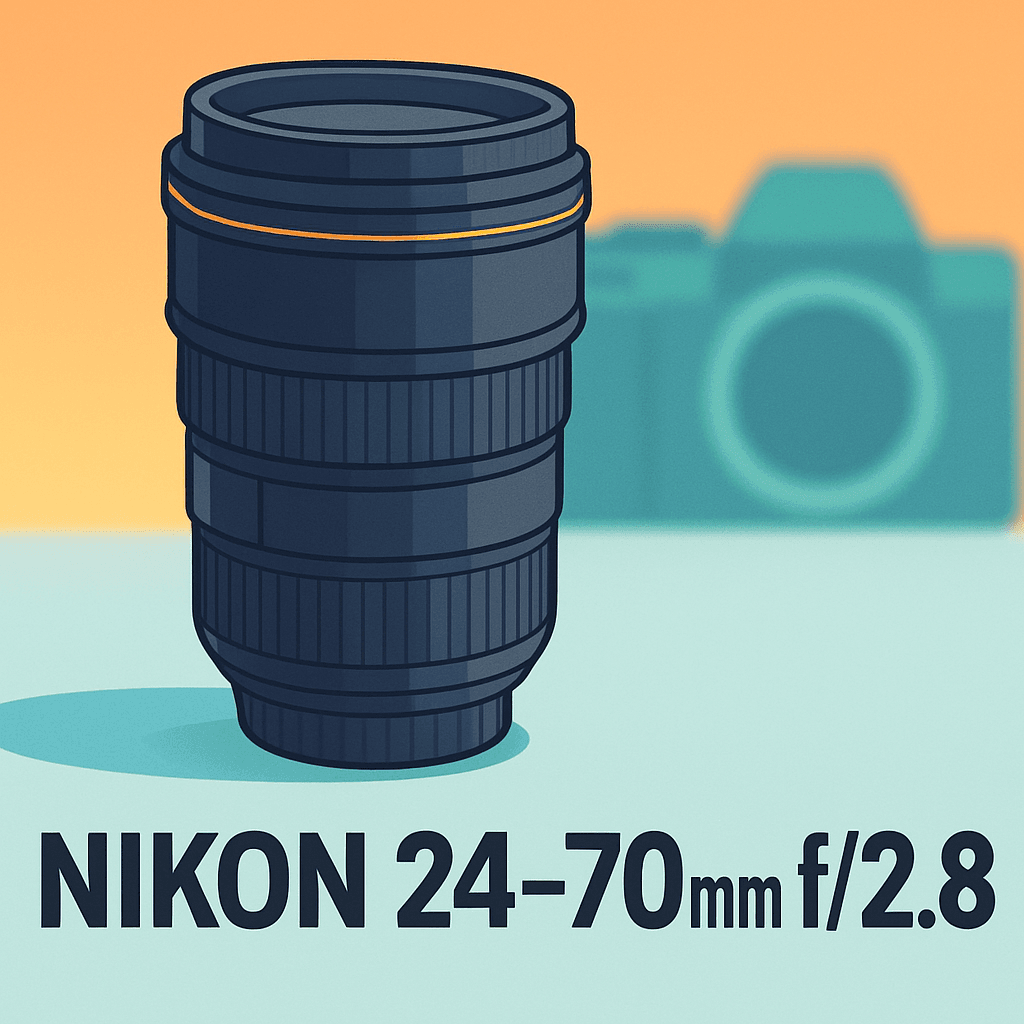
The Nikon AF-S FX NIKKOR 24-70mm f/2.8G ED is the classic full-frame workhorse with constant f/2.8 and AF-S—no built-in stabilization, and I’ve used it on long shoots.
This one’s aimed at Nikon F-mount shooters who value versatility and subject isolation over in-lens VR. I’ll cover handling, sharpness, AF and real-world tradeoffs—Make sure to read the entire review as I compare it to modern rivals.

Nikon AF-S FX NIKKOR 24-70mm f/2.8G ED
Pro-level standard zoom covering wide to short-tele with a constant f/2.8 aperture, advanced ED elements for crisp contrast, fast silent autofocus, and a rugged build for studio or location work.
Check PriceThe Numbers You Need
| Spec | Value |
|---|---|
| Focal length | 24–70mm |
| Maximum aperture | f/2.8 (constant) |
| Lens mount | Nikon F-mount (AF-S) |
| Lens type | Standard zoom, full-frame compatible |
| Optical elements | ED glass elements included |
| Autofocus motor | Silent Wave Motor (AF-S) |
| Minimum focus distance | 0.38 meters (1.25 feet) |
| Maximum reproduction ratio | 1:4.7 (macro capability) |
| Filter size | 77mm |
| Diaphragm blades | 9 rounded blades |
| Lens construction | 15 elements in 11 groups |
| Image stabilization | None (rely on camera body stabilization) |
| Weight | Approximately 900 grams (1.98 lbs) |
| Dimensions (diameter × length) | About 83mm × 133mm |
| Aperture range | f/2.8 to f/22 |
How It’s Built
In my testing the Nikon AF-S FX NIKKOR 24-70mm f/2.8G ED immediately felt like a pro-grade tool in the hand. It’s the G version with the AF‑S motor for Nikon F-mount, built for full-frame bodies, and you can tell the engineers meant business when they made it.
The body feels solid and well put together, and I liked how it balances on my FX cameras. I found it comfortable enough for a full workday, but it’s on the heavier side and can wear on your shoulder during long shoots.
Zoom and focus rings have a smooth, predictable action that seasoned Nikon users will find familiar, and beginners will pick up fast. I also appreciated the common front filter size that makes ND and polarizer use simple across lenses, which is great when you’re learning accessories.
The one clear design trade-off is the lack of built-in stabilization, which I noticed in low-light handheld shots—expect to raise shutter speed or use a tripod. Overall, the build inspires confidence and the handling is straightforward, but if you need steady low-light handheld work often, plan your support or technique accordingly.
In Your Hands
The Nikon AF-S FX NIKKOR 24-70mm f/2.8G ED lives up to its reputation as a go-to workhorse: the constant f/2.8 lets you pull subjects away from backgrounds and keep shooting when light is thin. That aperture really shines for shallow-depth portraits and for freezing decisive moments in dim receptions or editorial shoots. In practice it gives a reliable, familiar toolset that encourages creative framing across a day’s varied assignments.
Close-focus capability makes the lens versatile for detail and environmental close-ups without pretending to be a macro; you can fill the frame with texture or subject detail when needed. The zoom range hits natural sweet spots — expansive group work and interiors at the wide end, classic portrait compression toward the long end — so it covers most run-and-gun needs without swapping glass. Handling that range is intuitive, which keeps you in the moment during fast-paced shoots.
Because this version lacks optical stabilization, real-world shooting often means nudging ISO or shutter speed, or leaning on a monopod, tripod, or flash for steadier results. In backlit scenarios the ED elements and coatings do a good job keeping contrast and flare under control, though extreme angles may still benefit from a hood or flag. Vignetting and modest distortion are visible wide-open but are much reduced with careful framing or stopped-down apertures, and are easily corrected in post when needed.
The Good and Bad
- Versatile 24–70mm range on full-frame for generalist work
- Constant f/2.8 aperture across the zoom
- AF-S Silent Wave Motor for quiet AF
- 77mm filter thread (common, accessory-friendly)
- No image stabilization (VR)
- Relatively heavy at ~900 g and fairly long (~133 mm)
Ideal Buyer
The Nikon AF-S FX NIKKOR 24-70mm f/2.8G ED is for Nikon F‑mount shooters who want a full‑frame workhorse with a constant f/2.8. Pros and advanced enthusiasts who value predictable optics, quick SWM autofocus, and familiar Nikon handling will feel at home. It’s the G version, not the newer E/VR update, so buyers after classic optics and quiet SWM focusing should consider it.
Buy it if you accept no built‑in stabilization and instead manage motion with faster shutter speeds, a monopod, or your body’s IBIS. The lens’ near‑1kg weight and solid construction balance well on FX bodies for long shoots, though it isn’t light. If you shoot lots of handheld, very‑low‑light gigs, weigh whether the lack of VR will limit your options.
This is a go‑to for wedding, event and editorial shooters who rely on 24–70mm coverage for group scenes, candid moments and portraits. Photographers who prefer a common 77mm filter thread for ND and polarizers across their kit will appreciate the practical consistency. Choose this lens when optical reliability, classic Nikon color and handling, and a versatile focal sweep matter more than the latest stabilization tech.
Better Alternatives?
We’ve already gone over what the Nikon 24-70mm f/2.8G ED does well and where it falls short — especially the big missing piece: no built-in stabilization. If you like the focal range and the constant f/2.8 but need steadier handheld shots or a different balance of price, weight, and handling, there are a few clear alternatives to consider.
Below are three lenses I’ve used in real gigs alongside the G-version. I’ll point out what each one gives you that the G doesn’t, what it gives up, and the kind of shooter who’ll get the most from it.
Alternative 1:
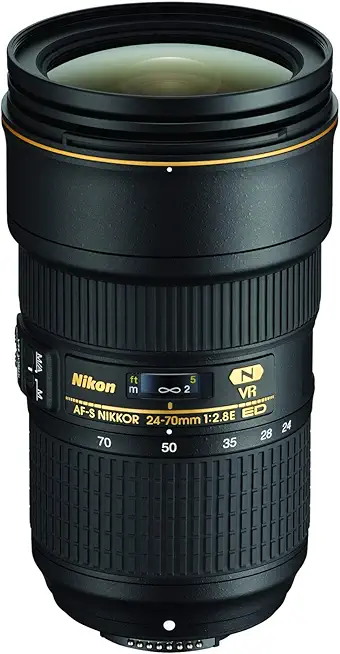
Nikon AF-S FX NIKKOR 24-70mm f/2.8E ED VR
Updated standard zoom featuring constant f/2.8 brightness and built-in vibration reduction for steadier handheld shots, refined optics and coatings, precise electronic diaphragm control, and professional-grade durability.
Check PriceI’ve shot weddings and low-light events with the 24-70 f/2.8E VR and the biggest real-world difference is the VR. It lets me get usable shots at slower shutter speeds when I can’t raise ISO or use flash — especially at 24–35mm. The E-type diaphragm also helps with exposure consistency on modern bodies when shooting bursts, so frames look more even in continuous shooting.
Compared to the G version, the E/VR is heavier and asks a bit more from your shoulder during a long day. Optically they’re close in everyday use, but the VR model feels more composed in hand and gives you that extra safety net for handheld work. The trade-off is price and weight — you pay more and carry more to get the steadier shots.
This is the lens I’d recommend if you shoot run-and-gun events, bridesmaids and dancing under mixed light, or any job where you frequently want slower shutter speeds without cranking ISO. If you never need VR and prize a slightly lighter setup, the G still makes sense, but for handheld low-light shooters the E/VR is worth the cost.
Alternative 2:

Tamron SP 24-70mm f/2.8 Di VC USD G2 Nikon mount
Second-generation all-purpose zoom delivering stabilized shooting with VC, speedy USD autofocus, improved optical formula for edge-to-edge sharpness, responsive handling, and outstanding value for enthusiast and pro photographers alike.
Check PriceThe Tamron G2 surprised me on a few shoots — it gives you built-in VC (stabilization) and very sharp results for the price. In real use it’s easier on the wallet than Nikon’s VR, and it handles like a solid workhorse. For handheld travel and rehearsal shoots I got steady pictures at slower speeds that I wouldn’t have trusted with the original Nikon G.
Where it falls short versus Nikon’s G is mainly autofocus consistency on some bodies and the small differences in color and microcontrast. On a couple of bodies I had to fine-tune AF or update firmware to get it as reliable as Nikon’s native lenses. Corners wide open can be a bit softer than the Nikon in some copies, but stop down and it cleans up nicely.
Buyers who want stabilization without Nikon’s price — wedding shooters on a budget, second shooters, or travel photographers who need one strong zoom — will like the Tamron. If you need rock-solid, out-of-camera AF every time on all Nikon bodies and you don’t want to tinker, Nikon’s options may suit you better.
Alternative 3:
Tamron SP 24-70mm f/2.8 Di VC USD G2 Nikon mount
Versatile walkaround zoom with constant f/2.8, close-focus capability and weather-sealed construction, offering smooth bokeh, reliable stabilization and balanced performance ideal for weddings, travel, and event photography.
Check PriceUsed as a walkaround lens the Tamron G2 felt balanced and a bit friendlier on long shoots. It focuses close enough to get useful detail shots without changing lenses, and the bokeh is smooth at 70mm — I liked how it isolated subjects at f/2.8. The weather sealing also gave me peace of mind shooting outdoors in light rain or dusty venues.
Compared with the Nikon 24-70 f/2.8G, the Tamron gives you more day-to-day flexibility thanks to VC and a slightly better close-focus feel. But the Nikon can be a touch more consistent in AF and color straight from the camera. If you’re picky about exact Nikon color science or want absolute zero AF fiddling, the original Nikon will still be the safer bet.
If you’re a wedding photographer who needs one reliable zoom for everything — ceremony, detail shots, reception — or a traveler who doesn’t want to swap lenses, the Tamron is a great choice. It’s a practical, stabilized option that covers most real-world needs without the price or weight of Nikon’s high-end VR model.
What People Ask Most
Is the Nikon 24-70mm f/2.8 worth buying?
Yes—if you need a fast, all-purpose pro zoom for events, weddings, or low-light work it’s a workhorse that pays off; if weight and price matter more, consider alternatives.
How sharp is the Nikon 24-70mm f/2.8?
Very sharp in the center wide open with improved edge/corner performance stopped down; the newer E and Z versions are noticeably sharper overall.
Does the Nikon 24-70mm f/2.8 have Vibration Reduction (VR)?
It depends: the older G version does not, the f/2.8E model includes VR, and the Z (native mirrorless) line relies on in-body stabilization on most Z cameras.
Which version should I buy (G, E, or Z)?
Buy the Z if you shoot on Z mirrorless for best optics and native AF, choose the E if you need VR on DSLRs, and grab a used G only to save money if you don’t need VR.
Is the Nikon 24-70mm f/2.8 weather-sealed?
Yes—these professional 24-70mm f/2.8 lenses have dust and moisture resistance, but they’re not waterproof so avoid heavy rain and clean after exposure to harsh conditions.
How does the Nikon 24-70mm f/2.8 compare to the 24-70mm f/4 or third-party alternatives (Sigma/Tamron)?
The f/2.8 gives faster aperture, stronger build and pro AF, the f/4 is lighter and cheaper but less versatile in low light, and modern Sigma/Tamron models match much of the image quality at a better price but may lag slightly in build or native-system integration.
Conclusion
The Nikon AF-S FX NIKKOR 24-70mm f/2.8G ED is a quintessential pro zoom: full-frame coverage, constant aperture, and Nikon’s silent-wave AF. It feels like a workhorse meant to be relied on across assignments. It does its core job with confidence, turning in enduring color and contrast that experienced photographers appreciate.
In the field it delivers strong center resolution, nuanced microcontrast and dependable autofocus for stills and moderate motion, with usable close-focus capability for detail work. The handling is familiar and robust, and the common filter size keeps workflows simple. Its rendering is pleasing for portraits and editorial use, offering a look that sits well in professional portfolios.
But there are trade-offs. The absence of built-in stabilization and the lens’s heft demand technique or support in low light, and you’ll want a tripod or faster shutter speeds in tricky conditions. If you need run-and-gun steadiness or lighter carry, modern VR-equipped options are worth serious consideration, especially for fast-paced assignments.
For shooters who prioritize optical pedigree and reliable performance over the latest conveniences, this lens remains a smart, professional choice. If you prize stabilization or lower weight, consider the VR/E-type Nikon or capable third‑party alternatives that include stabilization and modern coatings. Buy it if you accept the trade-offs; otherwise opt for a stabilized variant.
Nikon AF-S FX NIKKOR 24-70mm f/2.8G ED
Pro-level standard zoom covering wide to short-tele with a constant f/2.8 aperture, advanced ED elements for crisp contrast, fast silent autofocus, and a rugged build for studio or location work.
Check Price


0 Comments