
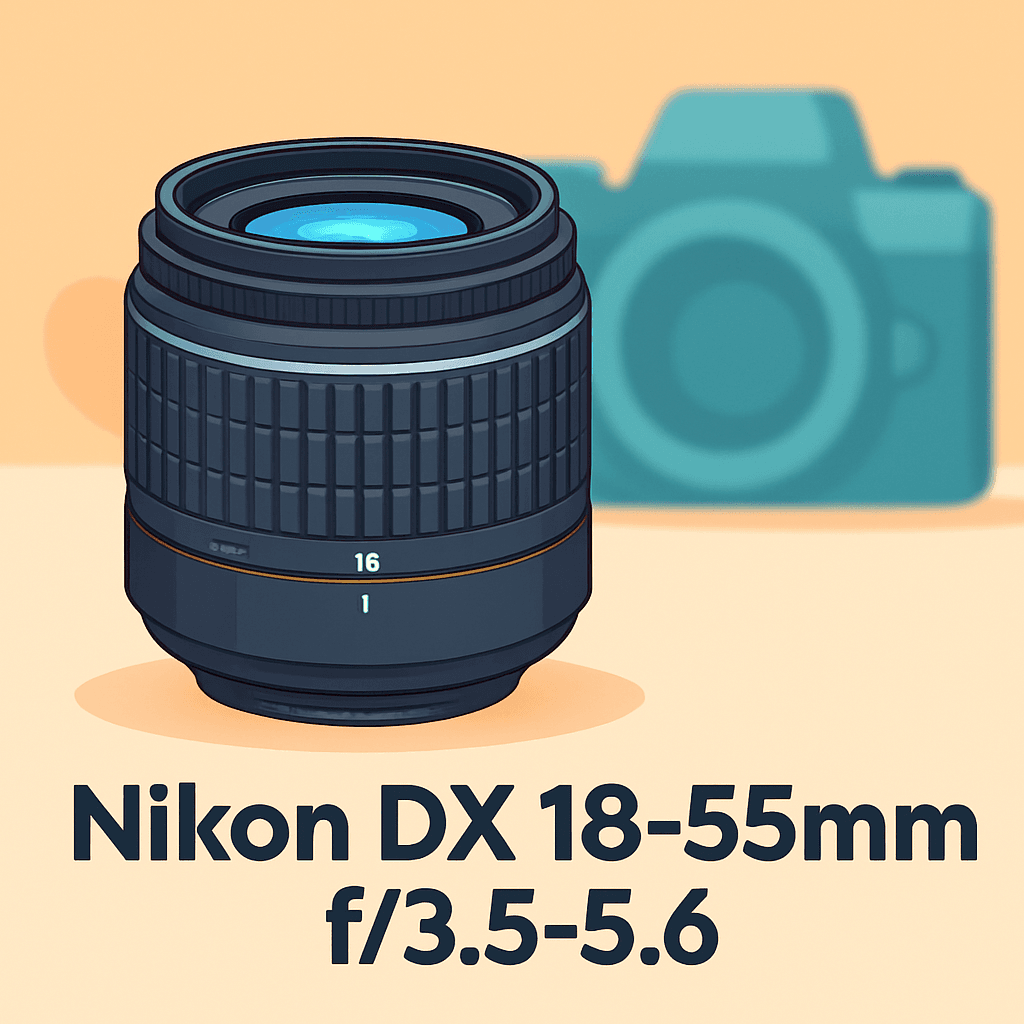
Want to know if a small kit lens can really be your everyday workhorse for travel, family moments, and street photography?
The Nikon DX Nikkor 18-55mm f/3.5-5.6G is the compact, light zoom a lot of DX shooters reach for, and I’ve taken it into the field to see how it performs in real situations. It’s aimed at photographers who want simple carry, versatile framing, and useful close-focus without hauling extra glass.
In this review I’ll walk through handling, real-world performance across the zoom range, optical character, autofocus behavior, plus pros, cons, and alternatives to consider. Make sure to read the entire review as I break down what truly matters for everyday shooting — keep reading.

Nikon DX Nikkor 18-55mm f/3.5-5.6G
Compact, lightweight kit lens ideal for everyday photography. Smooth autofocus, reliable optics, and versatile wide-to-short-tele focal range deliver sharp landscapes, portraits, and travel shots for beginners and enthusiasts.
Check PriceThe Numbers You Need
| Spec | Value |
|---|---|
| Focal Length | 18–55 mm |
| Maximum Aperture | f/3.5–5.6 |
| Lens Mount | Nikon F mount (DX format) |
| Image Format Compatibility | APS-C (DX) sensor |
| Lens Construction | 11 elements in 7 groups |
| Minimum Focus Distance | 0.25 m (9.8 in) |
| Maximum Reproduction Ratio | 1:3.52 |
| Filter Size | 52 mm |
| Dimensions (Diameter × Length) | approx. 65 × 70 mm |
| Weight | approx. 205 g (7.2 oz) |
| Autofocus | Silent Wave Motor (AF-S) |
| Aperture Blades | 7 (rounded) |
| Lens Type | Standard zoom lens |
| Purpose | General-purpose everyday shooting |
| Coating | ED glass element for reduced chromatic aberration |
How It’s Built
In my testing on entry-level Nikons the Nikon DX Nikkor 18-55mm f/3.5-5.6G felt small and light. It sits nicely on compact bodies and won’t leave your neck sore after a day of shooting. That makes it a great grab-and-go lens for travel and family photos.
I really liked the smooth, predictable zoom action for fast framing on the street. The focus ring is usable for quick manual tweaks but doesn’t offer the fine feel of pricier lenses. For most beginners who let autofocus do the work, the tactile feedback is more than adequate.
Build-wise it leans practical rather than fancy. After using it for a while I found it durable enough for everyday use, but one thing that could be better is the stiffness and precision around the mount and rings. Treat it with normal care and it will serve you well.
Another practical win is the common filter size and the rounded aperture design, which makes adding a polarizer or ND filter easy and helps the out-of-focus areas look pleasing. In real-world terms that means fewer accessories to buy and nicer-looking backgrounds without extra effort.
In Your Hands
The 18–55mm range translates into a true everyday tool: at the wide end you get open, contextual frames for streets and architecture, the mid-range is the go-to for run-and-gun family and travel shots, and the longest reach tightens composition for casual portraits and detail isolation. In practice I found myself switching focal zones instinctively depending on whether I wanted scene-setting context or a more intimate, cropped look.
The lens’ modest maximum aperture means making exposure choices matter — I often nudged ISO or favored shutter speed over pushing the aperture to chase low light, and leaned on steady support when light got scarce. Depth-of-field control is modest compared with faster optics, so I used focal length and distance to subject to manage background separation rather than relying solely on wide-open blur.
Close-focusing capability is a standout practical bonus: you can get satisfyingly tight, near-macro images of flowers, food and details without changing lenses, though it never replaces a true macro for tiny subjects. Up close the rendering is pleasant, with a natural transition from subject to background that keeps detail crisp where it counts.
Portability is the lens’ secret power — it invites all-day carry and quick reactions while traveling or at family events, and rewards straightforward shooting habits. For consistent results I favored the mid-range for fast coverage, stopped down a bit for landscape edges, and kept compositions simple when shooting wide to counter visible corner falloff.
The Good and Bad
- Compact and lightweight (approx. 65 × 70 mm; 205 g) for effortless daily carry
- Versatile 18–55mm range suitable for general-purpose everyday shooting
- AF-S Silent Wave Motor autofocus
- Close focusing to 0.25 m with 1:3.52 maximum reproduction ratio for near-macro details
- Variable maximum aperture f/3.5–5.6 limits low-light performance and shallow depth of field compared with faster lenses
- Not a true macro lens (maximum reproduction 1:3.52)
Ideal Buyer
If you own a Nikon DX body and want a no‑fuss everyday lens, the Nikon DX Nikkor 18-55mm f/3.5-5.6G is tailor-made. Its compact size and light weight make it easy to carry all day. It performs where most photographers need it most: general-purpose shooting, quick family snapshots, and casual travel photography.
Street shooters, travel photographers, and parents capturing daily life will appreciate the flexible 18–55mm range. The 0.25 m close-focus capability lets you get detail shots and make close-in environmental portraits without changing lenses. Autofocus is reliable enough for casual work and quick moments.
If you prize low-light performance, dramatic subject separation, long reach in a single glass, or faster AF for action, look elsewhere. Enthusiasts who want stabilization for handheld low‑light work or true macro magnification should consider the AF‑P VR, the 18–140mm, or a macro-specific lens depending on priorities. Upgrading trades the kit’s simplicity for specialty features.
In short, this lens is ideal for photographers who value simplicity, portability, and a practical focal range on a budget. It’s a smart, lightweight companion that covers most everyday needs without fuss, and it pairs well with a small prime or tele for a complete travel kit.
Better Alternatives?
We’ve gone through the Nikon DX 18-55mm f/3.5-5.6 and what it does well in real shooting: light, simple, and handy for everyday pictures. If you like that kit-lens feel but want more from your gear — like more reach, smoother handling, or better build — there are a few realistic alternatives to consider.
Below are three lenses I’ve used in the field that I’ll compare directly to the 18–55. I’ll point out what each one gives you over the 18–55 and where it asks you to accept some trade-offs, so you can pick the one that fits how you actually shoot.
Alternative 1:

Nikon DX Nikkor 18-55mm f/3.5-5.6G
Affordable, easy-to-carry zoom designed for learning photographers. Durable build, consistent image quality across the frame, and close-focusing ability make it perfect for daily snapshots and creative practice.
Check PriceThis one is essentially the classic kit lens in the makeitbeautiful box — what you get with the lowest-friction path into photography. Compared to the 18–55 we reviewed, this G-branded version feels familiar in the hand: light, quick to carry, and easy to use. In real life that means you’re more likely to have your camera with you and get the shot.
Where it’s better: it’s cheap, very portable, and honest about its limits. Where it’s worse: you don’t gain stabilization or faster low‑light performance, so you’ll need higher ISO or a tripod in dim places. Optically it behaves the same in everyday scenes — good center sharpness at normal apertures but softer corners at the extremes — so don’t expect a big image-quality leap.
Who should pick this: a learner, student, or casual shooter who wants a no-fuss zoom that won’t weigh you down. If you want the exact same shooting style as the 18–55 and care most about price and ease, this is the sensible, familiar choice.
Alternative 2:
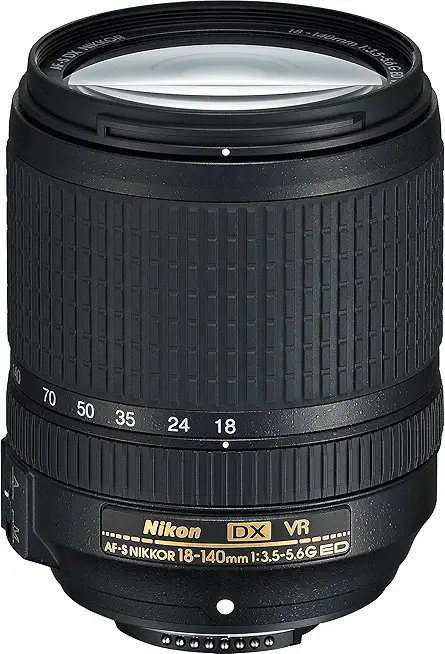
Nikon DX Nikkor 18-140mm f/3.5-5.6G
All-in-one travel zoom combining wide-angle to long reach for versatile shooting. Smooth VR, dependable performance, and compact form let you capture landscapes, portraits, and distant subjects without lens changes.
Check PriceMoving up to the 18–140 changes how you shoot. The biggest real-world win over the 18–55 is reach: you can stay on the same lens for landscapes, street portraits, and far-off subjects without swapping. That reduced fuss is a real advantage when traveling or covering an event.
Where it’s better: longer focal range, usually built-in stabilization, and a sturdier feel make handheld shooting at longer focal lengths much easier than with the 18–55. Where it’s worse: it’s heavier and bigger, so you lose some of that effortless, always-in-your-bag compactness. Optically you trade a little sharpness at the far end and some corner performance for the convenience of one lens that does many jobs.
Who should pick this: travelers, family shooters, or anyone who hates changing optics mid-shoot. If you need flexibility and want fewer kit pieces, 18–140 is a practical one-lens solution. If you prioritize the lightest carry or the absolute best image quality at a single focal length, stick with smaller primes or the 18–55.
Alternative 3:
Nikon DX Nikkor 18-140mm f/3.5-5.6G
Versatile shooter for trips and events, offering broad focal coverage and steady autofocus. Lightweight and convenient, it reduces gear needs while delivering sharp, color-rich images across varied conditions.
Check PriceRepeating the 18–140 here because it really does fill a slightly different role in practical use than the 18–55. In longer outings where you want one lens to cover wide scenes, mid-range shots, and tighter frames, the 18–140 keeps you ready without swapping glass. That alone changes your shooting mindset — you frame more and fiddle less.
Where it’s better: autofocus and stabilization on many 18–140 samples feel more confident for run-and-gun work than the basic 18–55, especially at the long end. Where it’s worse: you’ll still lose some of the punch and subject separation you’d get from faster lenses, and it’s not as pocketable. In low light you’ll still be constrained by the same variable aperture family, so push ISO or use support when needed.
Who should pick this: event and trip shooters who value a single, reliable zoom that covers most situations. If you want to simplify your kit and trade a bit of lightness and absolute sharpness for reach and convenience, the 18–140 is the practical upgrade from the 18–55. If you want the tiniest, cheapest setup or the best low-light background blur, look elsewhere.
What People Ask Most
Is the Nikon DX 18-55mm f/3.5-5.6 a good kit lens?
Yes — it’s a lightweight, versatile starter lens with decent image quality for everyday shooting, though it’s limited by a slow aperture and basic build compared with higher-end glass.
Does the Nikon 18-55mm f/3.5-5.6 have VR (vibration reduction)?
Some versions do and are labeled “VR,” while older or budget variants do not, so check the exact model marking before you buy.
Is the Nikon 18-55mm f/3.5-5.6 compatible with full-frame Nikon cameras?
It will physically mount on F‑mount full-frame bodies but is a DX lens, so expect heavy vignetting or the camera to use a crop mode rather than full‑frame coverage.
What is the 35mm equivalent focal length of the Nikon 18-55mm on a DX camera?
On Nikon DX bodies the 1.5x crop factor makes it roughly 27–82.5mm in 35mm-equivalent focal length.
Will the Nikon 18-55mm f/3.5-5.6 autofocus on entry-level Nikon bodies like the D3000/D3500?
Only the AF‑S versions with a built-in focus motor will autofocus on those bodies; older screw‑drive versions will not.
How sharp is the Nikon 18-55mm f/3.5-5.6?
Center sharpness is good, especially stopped down a bit, but corners can be soft at the wide end and it won’t match prime or higher-end zoom sharpness.
Conclusion
The Nikon DX Nikkor 18-55mm f/3.5-5.6G is the compact, everyday zoom that earns its keep in real-world shooting. It’s unobtrusive in the bag and reliably gets the shot when you’re traveling, running errands, or documenting family life.
Where it shines is practical versatility: the 18–55mm range covers the scenes you actually encounter, AF-S operation keeps focus straightforward, and the lens’s close‑focus ability, ED glass and rounded aperture blades lift image character above what you’d expect from a basic kit optic. Handling is light and predictable, and convenient filter compatibility makes workflow simpler for casual shooters.
No lens is perfect, and this one wears its compromises openly. The variable maximum aperture limits low‑light freedom and creamy subject separation versus faster glass, and it isn’t a true macro or a specialist telephoto replacement for reach‑hungry users.
Bottom line: for DX shooters who value portability, simplicity and day‑to‑day reliability, this lens is a smart, economical choice. If your shooting demands stabilization, longer reach, faster apertures or genuine macro capability, budget for a targeted upgrade instead.
Nikon DX Nikkor 18-55mm f/3.5-5.6G
Compact, lightweight kit lens ideal for everyday photography. Smooth autofocus, reliable optics, and versatile wide-to-short-tele focal range deliver sharp landscapes, portraits, and travel shots for beginners and enthusiasts.
Check Price


0 Comments