
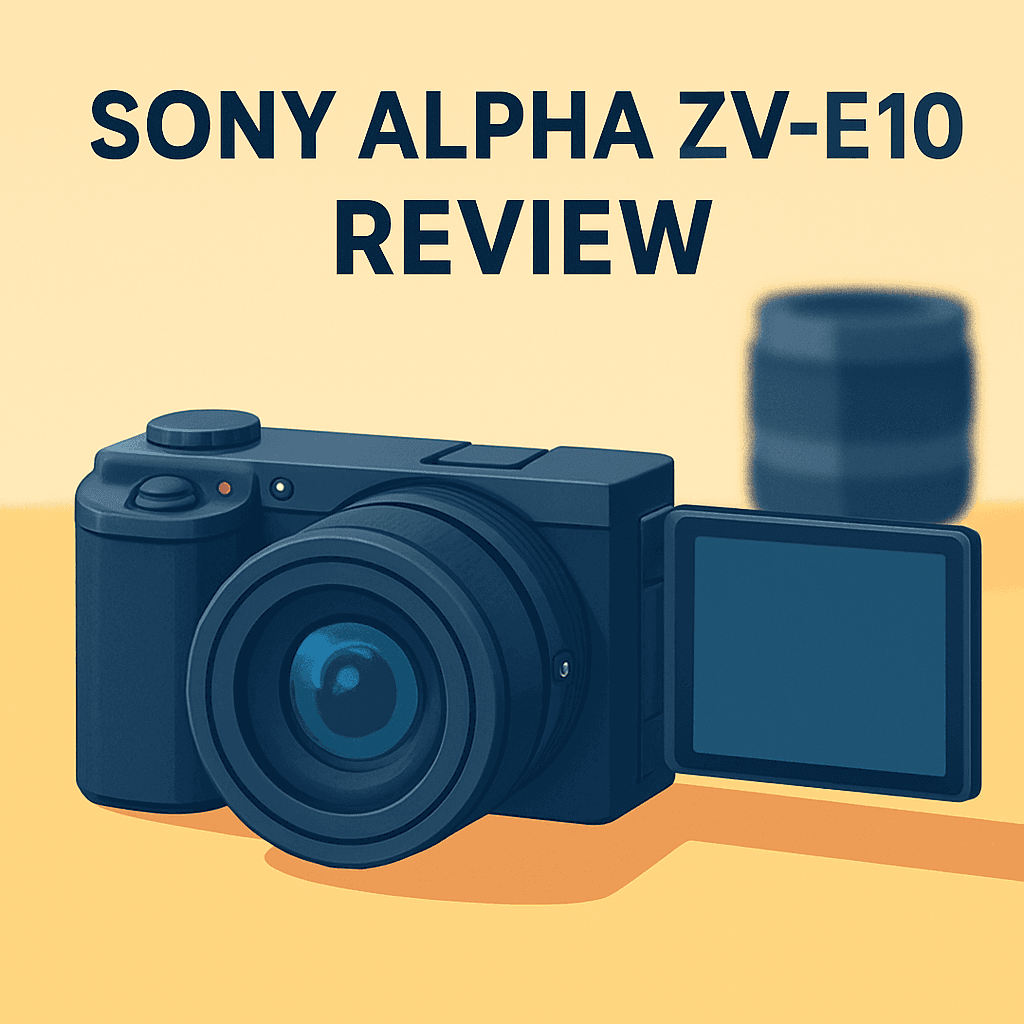
Want to know if the Sony ZV-E10 Camera can actually make your solo shoots and vlogs look more professional without a heavy kit?
Having taken the ZV-E10 Camera out on shoots and vlogs, I tested how its creator-focused design works in real life.
If you’re a solo creator, product reviewer, or traveler, you’ll value its lightweight body, flip-out screen, and fast, reliable autofocus that simplifies one-person workflows.
I’ll walk through image and video usability, autofocus behavior, battery and audio realities, and practical trade-offs you’ll care about — keep reading.

Sony ZV-E10 Camera
Compact, creator-focused APS-C mirrorless offering flip-screen convenience, lightning-fast autofocus, crisp 4K capture and clean onboard audio—ideal for solo vloggers and content creators who need portability and pro features.
Check PriceThe Numbers You Need
| Spec | Value |
|---|---|
| Sensor | 24.2 MP APS-C CMOS |
| Lens mount | Sony E-mount |
| Image stabilization | In-body 5-axis (IBIS) |
| Autofocus | Fast Hybrid AF; Real-time Eye AF (human, animal) |
| Video | 4K 30p (full sensor, no pixel binning); 1080p up to 120 fps |
| Viewfinder | None (sold separately) |
| LCD | 3.0" vari-angle touchscreen |
| Microphone input | 3.5 mm |
| Headphone output | No |
| Continuous shooting | 11 fps with tracking AF |
| ISO range | 100–32000 (expandable to 51200) |
| Body | Compact, lightweight (approx. 343 g, body only) |
| Battery | NP-FW50 (approx. 440 shots CIPA) |
| Connectivity | Wi-Fi, Bluetooth, USB-C |
| Memory card | Single SD slot (UHS-I compatible) |
How It’s Built
In my testing the Sony ZV-E10 feels like a camera made for carrying all day. It’s light and small, so tossing it in a bag or mounting it on a gimbal is easy. I loved how it never got in the way when I was moving between locations.
The flip-out touchscreen is the star for vloggers and solo shooters. After using it for a while I could frame myself, check angles, and change settings without a fuss. The downside is you’re mostly stuck with the rear screen — composing in bright sun can be a real challenge without an eyepiece.
Sony packed sensible ports: a mic input that’s great for better audio and modern connectivity for fast file transfer. In my shoots I missed a headphone jack for live monitoring, and the single card slot means you don’t have built-in backup. That’s fine for casual work, but be careful on big jobs where redundancy matters.
The battery will get you through a half or full day depending on whether you’re shooting lots of video. I found pairing the E-mount with small primes or stabilized lenses made handheld work much easier. For beginners, that combo keeps things light and gives you usable results without heavy gear.
In Your Hands
The ZV-E10’s APS-C sensor delivers crisp, usable images that translate well to social feeds and client work alike, with color and detail that hold up through modest cropping. Its burst shooting with continuous autofocus is surprisingly dependable for everyday action and event moments, locking eyes and faces without much fuss.
In mixed-light situations the camera is forgiving; careful exposure and a fast lens will stretch performance into dimmer environments before noise becomes a dominant concern. Wide-diameter primes and thoughtful shooting technique pay dividends when ambient light is limited.
Stabilization in real shoots comes down to lenses and technique—optical stabilization in glass and in-camera electronic modes are the practical tools I relied on for handheld video and walk-and-talk clips. If you plan a lot of mobile, cinematic movement, a stabilized lens or a gimbal will noticeably improve results, and it’s worth confirming the camera’s in-body stabilization status for your workflow.
Battery life is solid for a day of mixed shooting if you manage power use, but heavy video or long bursts require spare batteries or USB power for peace of mind. USB-C tethering and fast wireless transfers streamline the on-set to edit workflow, making the ZV-E10 an efficient tool for solo creators.
The single card slot influences how I manage long shoots and back-to-back events—swap and offload more frequently to avoid surprises. Overall the camera feels purpose-built for creators who prioritize autofocus and an easy handheld shooting experience, as long as you plan storage and stabilization into the shoot.
The Good and Bad
- Compact, lightweight body suited to travel and solo creators.
- 24.2MP APS-C sensor for versatile stills and video.
- Fast Hybrid AF with Real-time Eye AF (human, animal).
- Product Showcase Mode for quick focus transitions during demos.
- No headphone jack for audio monitoring.
- No built-in viewfinder; likely screen-only operation.
Ideal Buyer
If you make one-person videos, product demos, or travel vlogs, the Sony ZV-E10 is built around your workflow. Its fast Real-time Eye AF, Product Showcase Mode, and flip-out touchscreen let you frame, focus and demonstrate without a crew. The compact E‑mount body shoots 4K/30p and 1080/120 for slow motion while staying light on a gimbal or shoulder.
Photographers and hybrid creators who prize portability and dependable subject tracking will appreciate the ZV‑E10’s 24.2MP APS‑C sensor and 11 fps burst. It’s great for portraits, street work and social-first imagery where a small kit and quick AF matter more than pro monitoring. And with Sony’s lens ecosystem you can pair tiny primes or OSS-stabilized lenses depending on whether you prioritize weight or steady handheld video.
Skip it if you need an EVF for bright outdoor shooting, a headphone jack for on-set audio monitoring, dual card redundancy, or 4K/60 for fast action. The ZV‑E10 also leaves stabilization status ambiguous for those who rely on IBIS, so expect to budget for OSS lenses or a gimbal in many setups. If your workflow demands those features, consider bodies with IBIS, an EVF or higher-frame-rate 4K instead of the ZV‑E10’s creator-focused compromises.
Better Alternatives?
We’ve gone through the Sony ZV-E10 and what makes it a great pick for solo creators: light weight, easy-to-use screen, and very reliable Sony autofocus. But no camera is perfect for everyone, so it’s worth looking at a few other bodies that trade some of the ZV-E10’s strengths for other useful features.
Below are three real-world alternatives I’ve used. Each one offers a different balance — better hand-held steady shots, a viewfinder for bright-light shooting, or a fast 4K option — and I’ll point out what they do better and where they lose out compared to the ZV-E10.
Alternative 1:
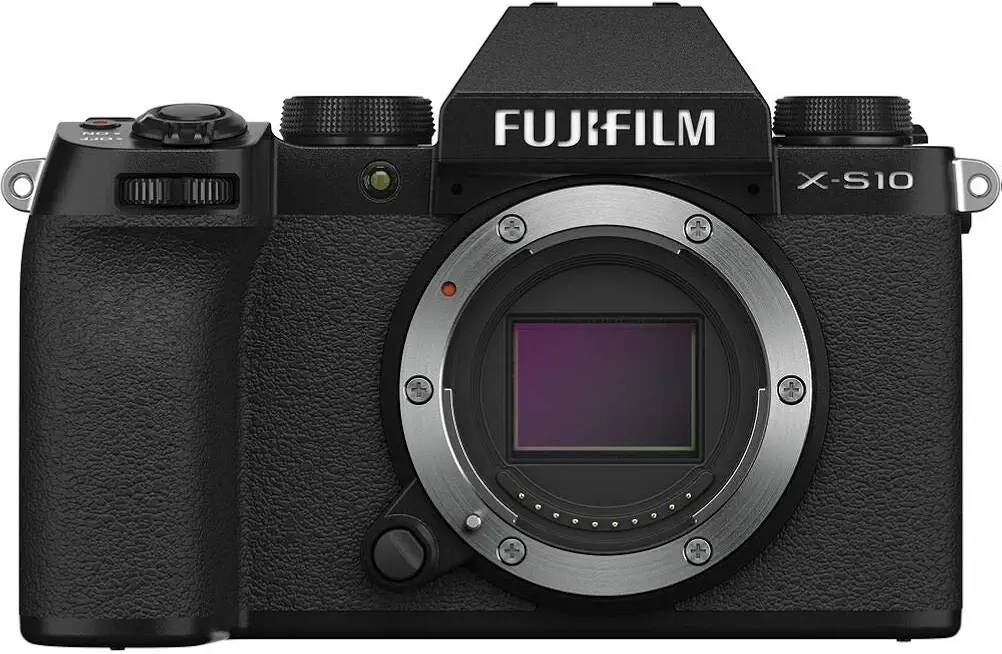
Fujifilm X-S10 Camera
Stabilized, compact body with intuitive handling and classic styling; film-simulation colors, responsive controls and reliable autofocus deliver beautiful JPEGs and steady video for enthusiasts seeking expressive, travel-ready image-making.
Check PriceThe Fujifilm X-S10 shines when you need steady handheld shots. Its in-body stabilization makes walking video and low-light stills look much cleaner than what I get from the ZV-E10 without a gimbal or stabilized lens. If you shoot handheld a lot, that stabilization is a real-world convenience you notice right away.
Where it loses to the ZV-E10 is in size and that quick, vlog-first layout. The X-S10 feels more like a traditional camera — better grip and controls for longer shoots, but not as light and pocket-friendly for day-long vlogging. Also, Sony’s face and eye tracking still felt a hair snappier to me during fast-moving scenes.
Buyers who prefer the X-S10 are people who want cleaner handheld video and pleasing straight-out-of-camera colors, and who shoot both photos and video. If you want a travel-ready hybrid that cuts down on gimbals and gives you nicer JPEGs without heavy editing, the X-S10 is a smart step up from the ZV-E10.
Alternative 2:
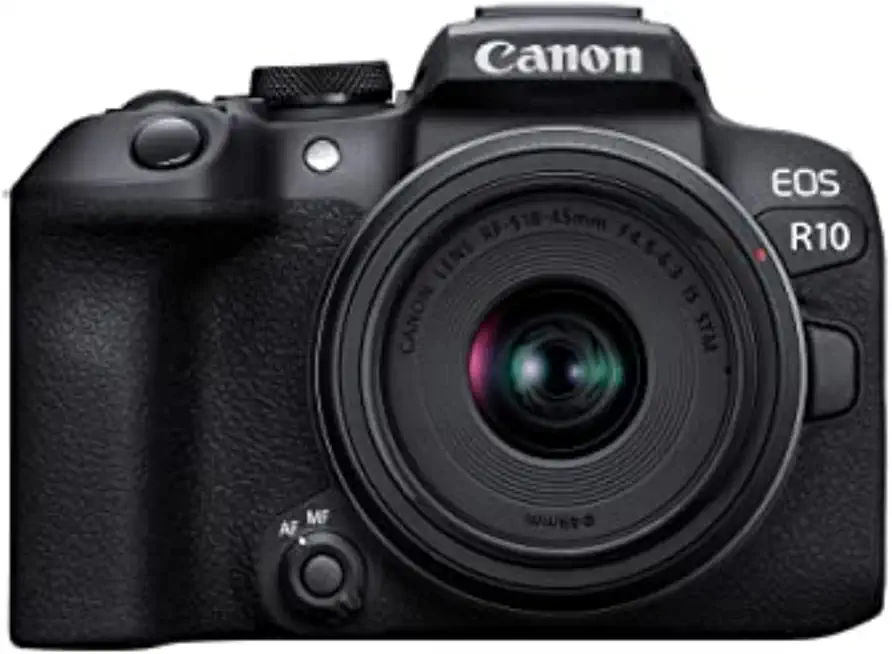
Canon EOS R10 Camera
Lightweight, high-speed performer designed for action and wildlife beginners; rapid burst shooting, precise subject tracking and crisp 4K video make it a versatile, budget-friendly option for growing photographers.
Check PriceThe Canon R10 gives you a big practical win over the ZV-E10: a built-in electronic viewfinder. Shooting outdoors or composing quickly is easier with the EVF, especially in bright sun where the ZV-E10’s flip screen can be hard to read. The R10’s tracking also handled moving subjects very well in my shoots.
It isn’t better in every way — like the ZV-E10 it lacks in-body stabilization, so you’ll still rely on stabilized lenses or a gimbal for smooth hand-held footage. Also, Canon’s 4K/60 mode uses a crop, so you trade field-of-view for the smoother frame rate, something to keep in mind when planning wide-angle shots.
Choose the R10 if you want an EVF, fast action shooting, and a camera that feels more like a traditional mirrorless to hold. It’s a good pick for shooters who switch between street/still work and vlogging and who value that viewfinder for better framing in bright light.
Alternative 3:
Canon EOS R10 Camera
User-friendly hybrid shooter with responsive touchscreen, clean 4K recording, fast autofocus and seamless smartphone connectivity; ideal for creators wanting reliable performance, easy sharing and growth-friendly features.
Check PriceLooking at the R10 from a creator’s angle, it’s a very friendly hybrid. The touchscreen is responsive, the menus are straightforward, and pairing with my phone for quick transfers was painless — more streamlined sharing than I had with the ZV-E10 in some setups. That makes the R10 useful for creators who need to upload quickly from the field.
Where the R10 falls behind the ZV-E10 is in some creator-focused tools Sony packs in, like Product Showcase Mode and the very small, vlog-targeted body. The ZV-E10 feels slightly more tailored to single-person vlogging setups, while the R10 is more of a do-it-all camera that balances stills and video.
If you want a camera that’s easy to learn, shoots clean 4K, and gets files to your phone fast, the R10 will suit you. It’s a solid choice for creators who want a single, easy-to-use camera for both short-form video and casual photography, especially if an EVF or quick sharing matters more than the ZV-E10’s vlog-specific features.
What People Ask Most
Is the Sony ZV‑E10 good for vlogging?
Yes — it’s built for creators with a flip-out screen, great autofocus, and good audio options, making it one of the best APS‑C vlogging cameras. Just know it lacks in‑body stabilization so you may need lens OSS or a gimbal for smoother handheld shots.
Does the Sony ZV‑E10 have in‑body image stabilization?
No, the ZV‑E10 does not have in‑body image stabilization; use lenses with OSS or a gimbal for stabilized video.
How is the autofocus on the Sony ZV‑E10?
The autofocus is excellent — fast and reliable with Real‑time Eye AF and subject tracking that works very well for both video and stills.
Sony ZV‑E10 vs A6400 — which is better?
For vloggers and content creators the ZV‑E10 is better thanks to its vari‑angle screen and creator features, while the A6400 is a stronger choice for photographers who want a sturdier body and traditional viewfinder handling.
What lenses should I buy for the Sony ZV‑E10?
Start with a wide or standard lens like a 10–18mm or 16mm prime for vlogging, add a 35mm or 50mm 1.8 for portraits, and consider an 18–135mm or 55–210mm for reach and versatility.
Does the Sony ZV‑E10 have a microphone input?
Yes, it has a 3.5mm microphone input and a multi‑interface hot shoe, so you can use external mics for much better audio.
Conclusion
The Sony ZV-E10 Camera is a refreshingly focused creator tool that nails the core jobs most solo shooters care about. Its fast, reliable autofocus, flip-out screen and creator-first ergonomics make it effortless to shoot by yourself. In practical use it feels like a purpose-built companion rather than a jack-of-all-trades.
It does ask you to accept some tradeoffs that matter in the field. There’s no built-in viewfinder, no headphone monitor output and only a single card slot, and 4K recording tops out below the higher-frame options some creators want. Stabilization details remain a point to confirm before purchase, and that impacts whether you need lenses or a gimbal.
Bottom line: if you value portability, foolproof AF and studio-friendly video features for vlogging and demos, the ZV-E10 is an excellent value. If you need in-body stabilization, an EVF or higher-frame-rate 4K, check the X-S10, R10 or the budget-minded Z30 to see which compromises you prefer. Buy it if the tradeoffs match your shooting style.
For most vloggers and content creators this camera strikes a strong practical balance between image quality and usability. Treat the ZV-E10 as a tool that simplifies production — just be honest about the limitations you can live with.
Sony ZV-E10 Camera
Compact, creator-focused APS-C mirrorless offering flip-screen convenience, lightning-fast autofocus, crisp 4K capture and clean onboard audio—ideal for solo vloggers and content creators who need portability and pro features.
Check Price

0 Comments