
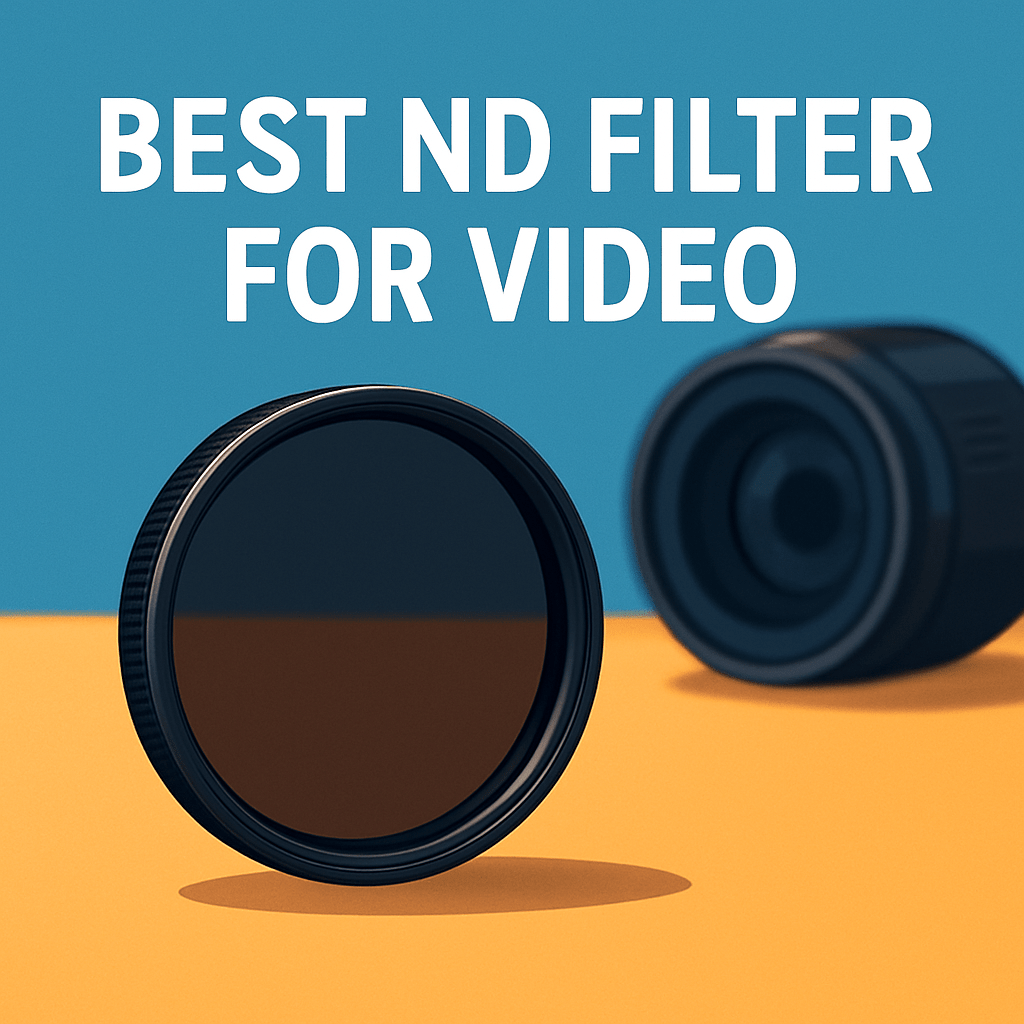
Ever wondered how filmmakers keep silky motion blur on sunlit days without blowing out the highlights? Neutral density filters cut incoming light so you can lock shutter speed and aperture for cinematic results. That control matters in bright conditions when you want natural motion blur and shallow, cinematic depth of field.
Beyond motion, NDs protect highlight detail and preserve color fidelity in high-contrast scenes like beaches or snow. They let you maintain wide apertures for subject separation without overexposing skies, reflections, or faces. High-quality glass and coatings keep sharpness and neutral tones, so you spend less time fixing footage in post.
This guide breaks down five practical approaches to ND use for video, from fast field setups to studio workflows. We’ll look at integrated ND plus polarizer combos that simplify reflection control and modular systems built to replace matte boxes. You’ll also find drone-focused ND/PL kits for aerial clarity, budget-friendly variable ND+CPL options, and wide-range variable NDs for precise exposure control.
Whether you shoot handheld, on gimbals, or from a drone, the right ND widens creative options and speeds your workflow. Read on for straightforward comparisons and real-world considerations so you can choose the best ND filter for your video needs. Short, practical guidance ahead—no technical rabbit holes, just what matters for sharp, cinematic footage in bright light.
1. Freewell V2 Hybrid VND/CPL Filter

Freewell 82mm V2 Magnetic Hybrid VND/CPL 3-7 stops
Precision magnetic hybrid variable ND and polarizer delivering 3 to 7 stops of exposure control for smooth motion and glare-free, vibrant landscapes.
Check PriceThe Freewell V2 Hybrid VND/CPL is a practical 2-in-1 solution that marries a variable ND with a built-in circular polarizer, aimed squarely at cinematic video in high-contrast outdoor scenes like landscapes and water reflections. As a working shooter, I appreciate that it lets you control exposure and tame glare without carrying a separate CPL, which keeps my kit lighter and my workflow faster.
Color rendering is one of its standout traits — users praise its true color rendering and minimal color shift even at stronger ND settings. That makes it a reliable choice when you want natural-looking footage straight out of camera and less time correcting tints in post.
The magnetic mount is a genuine workflow booster for fast attachment and detachment during shoots, so you can react quickly to changing light. Just be mindful: the same convenience demands careful handling, as the magnetic system can loosen if treated roughly.
For landscape and outdoor video work this filter shines because the integrated CPL effectively controls reflections and glare from water, foliage and glass without needing a separate pass. Beginners should know there’s a slight learning curve when balancing ND density and polarization — the combined effects change how highlights and reflections behave.
If you shoot a lot of run-and-gun outdoor scenes and want fewer lens changes, this is mostly a good fit. If you’re rough with gear or prefer separate, independently adjustable CPL and ND controls, you might find some limitations here.
- Excellent natural color accuracy; minimal color shift at high ND
- Integrated CPL reduces glare and reflections
- Fast magnetic mounting for quick filter changes
- Suited to outdoor and landscape videography
- Magnetic system needs careful handling to prevent loosening
- Slight learning curve managing combined ND + polarization effects
2. Freewell K2 Futureproof VND Filter System

Freewell K2 Magnetic Filter System
Modular magnetic filter set enabling quick stacking and effortless swapping for fast-paced shooting with secure alignment and durable construction.
Check PriceThe Freewell K2 Futureproof VND Filter System is a modular, magnetic variable ND system built for professional hybrid shooters. It supports variable and fixed ND, gradient filters, glow/mist effects and a CPL — all on one magnetic mount.
Freewell designed it to replace bulkier matte boxes with a compact, futureproof alternative that still gives you cinema-style control. The magnetic system keeps things tidy and makes the whole rig far more portable than traditional filter stacks.
In the field professionals praise its flexibility and modularity — you can quickly reconfigure for a landscape, an interview, or a creative vignette. Reported magnetic mounts hold firmly during active shooting, so you can swap elements without worrying about them slipping off.
This system really shines when you’re carrying multiple filter types and need fast, reliable swaps between shots. It’s especially useful for serious creators who want a single system that covers ND, polarization, gradients and creative diffusion without a full matte box setup.
Optically the K2 uses high-quality glass and gives smooth exposure control as you vary density, which matters when you need consistent motion blur and color. It’s clearly geared toward professional workflows where modularity and optical performance are priorities.
That said, the complexity and cost mean it’s less ideal for casual or beginner shooters who only need a single ND. And while more compact than a matte box, it can still be bulkier than using a single screw-on filter for simple shoots.
- Modular support for variable, fixed, gradient, CPL and mist
- Secure magnetic swapping — compact mattte box alternative
- High-quality glass with smooth exposure control
- Built for professional workflows and flexibility
- Complex and costly for casual users
- Bulkier than a single screw-on filter
3. PolarPro Vivid ND/PL Filters for Video

PolarPro Vivid Collection 3-Pack ND4/PL, ND8/PL, ND16/PL for DJI Phantom 3
Three graduated ND/polarizer combos for drones, delivering balanced exposure, richer colors, and smoother video across bright conditions.
Check PriceThe PolarPro Vivid ND/PL filters are ND/PL combo filters built around cinema-grade glass and multi-coatings, designed with drones in mind but absolutely relevant to any video work where sharpness and color fidelity matter. As a shooter, I reach for these when I need true-to-life colors and edge-to-edge clarity in bright, reflective environments.
In real-world use the Vivid line delivers outstanding optical clarity with minimal color distortion — you get clean footage without battling odd color casts in post. The polarizer component noticeably improves contrast and saturation over water, snow and glass, so reflections are tamed and textures pop without overdoing saturation.
One practical constraint: the polarizer must be preset before flight or rolling the camera, because you can’t adjust it mid-shoot. That means planning your angle relative to the light, but when you set it right the results are cinematic and repeatable.
Build quality is another plus — PolarPro keeps the filters durable and lightweight, which is a must for aerial work and long handheld days. They feel robust in the field and hold up under professional use, which is why they’re trusted in cinematic drone and video production.
Who should buy them? If you regularly shoot reflective scenes or need the cleanest colors and sharpest results from a compact ND+polarizer solution, these are an excellent choice. If you need on-the-fly polarizer changes or are extremely price-sensitive (or have unusual lens/drone sizes), consider that limitation before committing.
- Cinema-grade optical quality with excellent color accuracy
- Combined ND + polarizer reduces glare and improves image quality
- Robust, lightweight design for field use
- Trusted in cinematic drone and video production
- Polarizer angle must be preset; no in-shoot adjustment
- Premium build at higher price and may not fit all drone/lens sizes
4. K&F Concept Nano-X Variable ND4-64 & CPL

K&F Concept 52mm Variable ND (ND4-64, 2-6 stops) + CPL 2-in-1 Filter
Compact 52mm variable neutral density with integrated polarizer for precise 2 to 6 stop control and minimized reflections.
Check PriceThe K&F Concept Nano-X Variable ND4-64 & CPL is a two‑in‑one filter with independently rotating sections, so you can tune ND strength and polarization separately. It covers roughly 2–6 stops of ND, making it useful for typical daylight video and photo situations where you want to control exposure without changing aperture or shutter. Nano coatings reduce reflections and increase durability, and the unit is positioned as an affordable, multi‑function option.
In the field I appreciate the dual functionality because it saves time and weight compared with carrying separate ND and CPL filters. Large grip rings make adjustments quick and tactile even with gloves on, so you can “ride the ND” as lighting shifts. Be aware those big grips can block lens hoods, so plan your rigging accordingly.
Optically it holds up well for the price: users say it does not noticeably degrade image detail, and the waterproof, scratch‑resistant coating is genuinely appreciated for rough outdoor work. A few shooters note a slight warm color cast in certain lighting, so if you need dead‑neutral color for critical color work, expect to test and perhaps correct in post.
Overall this Nano‑X unit is a solid choice if you want an affordable, compact way to combine variable ND and polarization for run‑and‑gun video or landscape work. It’s great for saving kit space and speeding workflow, but mind the hood fit and the fact that polarization angle can change when you alter ND density, which may require small readjustments during a take.
- Combines variable ND and CPL in one filter
- Tactile large grip rings for easy adjustments
- Nano coatings reduce reflections and add durability
- Does not noticeably degrade image detail
- Large grips prevent use with lens hoods
- Polarization angle can change when adjusting ND
5. Hoya Variable Density II Filter

Hoya 62mm Variable ND II (ND3-400, 1.5-9 stops)
High-quality 62mm variable ND offering smooth 1.5 to 9-stop adjustment for long exposures and cinematic motion blur.
Check PriceHoya’s Variable Density II is a workhorse variable ND that covers ND3 to ND400, which in practice gives you very broad control over exposure without swapping filters. In the field I found it preserves sharpness and color fidelity—Hoya’s claim of minimal impact on image quality holds up in real-world shooting.
The filter has markings on the front and rear frames and a discreet knob for smooth rotation, which makes “riding the ND” far less fiddly than a slippery ring. The knob is comfortable to use and helps avoid fingerprints, so you can make quick adjustments without smudging the glass.
Users report minimal sharpness and contrast loss across the ND range, and I’ve seen consistent results when switching densities mid-shot. There is one caveat: cross-polarization artifacts (X-shaped dark patterns) have been reported at extreme ND settings, but those are typically outside normal video use—so most shooters won’t hit that limit during routine work.
For videographers who want precise exposure control without complex setups, this filter is a smart, reliable choice. It’s suited for both video and stills users who need a wide ND range and stable color rendering, and it’s widely recommended for consistent results.
If you often push to the maximum ND for ultra-bright conditions, be aware of the artifact limitation; and note the knob does add a little bulk to the front of the lens, which can affect hoods or tight mounting situations. Overall, it’s a practical, high-quality variable ND that I’d reach for on most daylight video shoots.
- Excellent optical clarity with minimal sharpness/color loss
- Smooth, easy-to-control rotation via discreet knob
- Durable design that resists fingerprints
- Wide ND range for varied lighting situations
- Cross-polarization artifacts at maximum ND settings
- Knob adds slight bulk to the front of the lens
How to Use ND Filters for Video
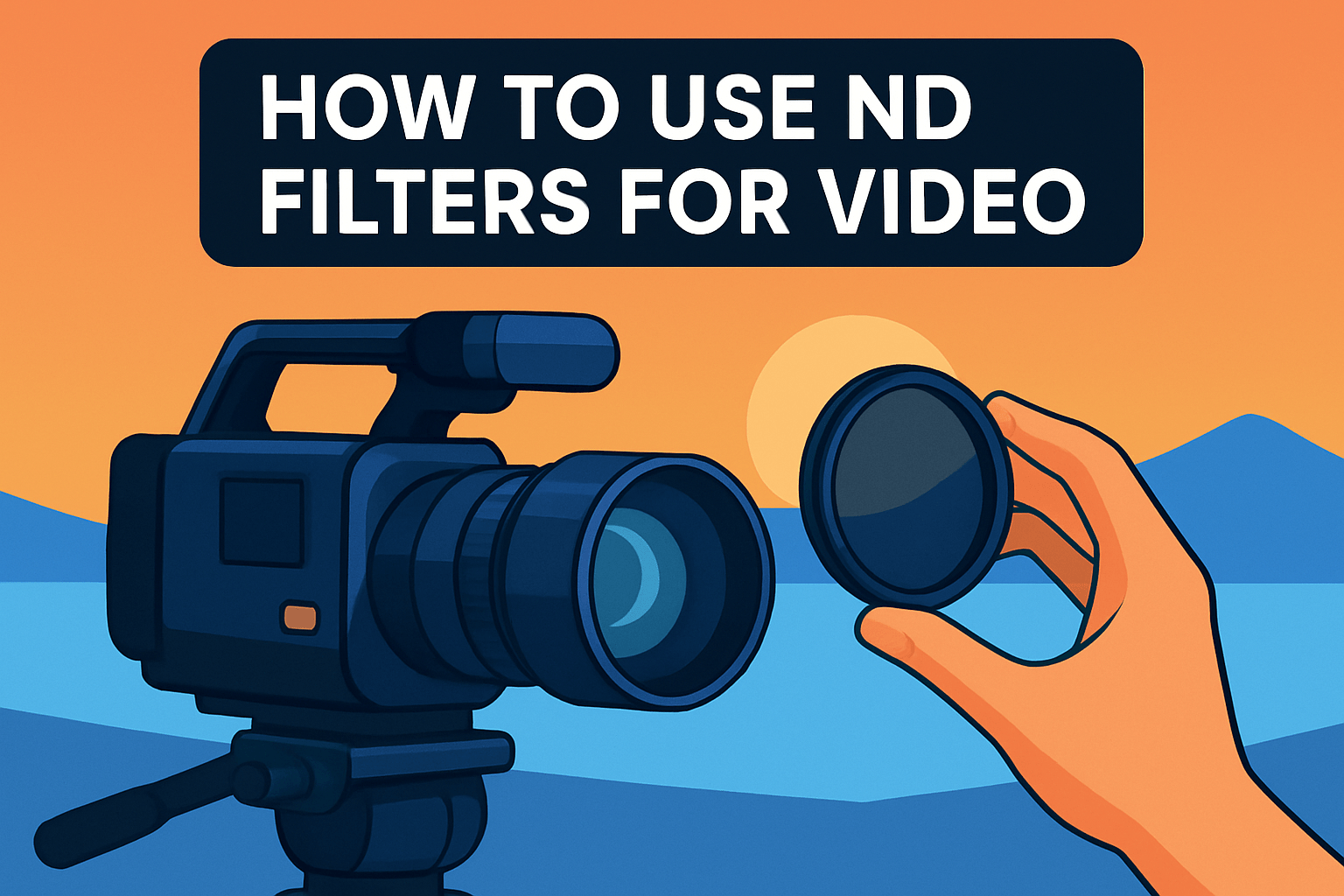
ND filters are the quickest way to keep your exposure choices intact while shooting bright scenes. They cut light so you don’t have to sacrifice aperture or shutter speed—essential for a cinematic look.
A good rule to live by is the 180-degree equivalent: keep shutter speed roughly double your frame rate. For example, 30fps should sit near 1/60s to maintain natural motion blur. It’s a simple anchor for exposure decisions on set.
Attach the ND and dial its strength until the image looks correct without changing aperture or shutter. That preserves depth of field so you can keep wide apertures for creamy background separation.
Variable NDs are handy because you can “ride the ND”—smoothly spin the ring as the light shifts so your exposure stays consistent. This is lifesaving when clouds pass or you move between shade and sun. It keeps your exposure smooth without touching ISO or frame rate.
Use in-camera tools to judge exposure rather than eyeballing it. I rely on zebra stripes: reduce ND until the brightest highlights show minimal zebras, roughly at the 90% mark, and you’ll protect highlight detail. Check zebras while you adjust so skin tones and highlights stay intact.
It’s better to control exposure on-set than try to rescue blown highlights in post. ND filters prevent washed-out footage and keep your colors and contrast where they belong.
On run-and-gun shoots, practice quick, small adjustments so the change is invisible on footage. Smooth, subtle ND moves maintain consistent shutter and aperture, and that’s what sells a cinematic image. Training your hands to make small, predictable rotations pays off.
Spend an afternoon experimenting at different frame rates and apertures to make the adjustment muscle memory. Once you can ride the ND confidently, you’ll find it’s one of the most powerful tools in your kit.
Tips for Choosing the Right ND Filter
Choosing the right ND filter is really about balancing flexibility, optical quality and the way you work. Think of it as choosing a tool that should quietly protect your exposure without forcing you to rethink shots or grade around a tint.
Start with the basics: fixed versus variable. Fixed NDs give predictable, pure densities while variable NDs let you smoothly dial exposure up and down by rotation. For most video work I prefer variable NDs because they let you “ride the exposure” in changing light, and ranges around 2–8 stops cover most day-to-day needs.
Optical quality matters more than the extra stop or two. Cheap glass can soften fine detail, introduce vignetting, or add subtle color casts that eat into skin tones and make grading harder. Aim for true color neutrality; if a filter tints your image, you’ll spend time fixing it in post instead of shooting.
Make life simpler by standardizing filter size. I usually buy a good-quality large diameter and adapt it to smaller lenses with step-up rings and adapters. That single-size strategy keeps weight and cost down and speeds up swaps on set.
Pick the strength to match your aperture and frame-rate goals. If you want wide apertures and natural motion blur at 24–30fps, 4–8 stops is a practical sweet spot for bright conditions. If you mostly shoot in low light, lighter NDs—or a variable with a lower starting point—make more sense.
Avoid stacking NDs unless absolutely necessary. Stacking increases the chance of vignetting and color shifts, and it complicates focus and exposure. If you ever must stack, test the combo beforehand and favor similar-quality elements.
In short: prioritize good glass, standardize your filter diameter, and choose a variable ND with a sensible stop range for your shooting style. You’ll spend less time troubleshooting and more time making images that feel cinematic straight out of camera.
What People Ask Most
What is the best ND filter for shooting video?
There is no single best option; choose a filter that matches your shooting style and priorities such as ease of use, optical quality, and flexibility. Prioritize neutral color reproduction, solid build quality, and a solution that fits your workflow.
How many stops of ND filter do I need for video filming?
The amount of ND required depends on available light and the aperture and shutter speed you want to maintain. Select a strength that lets you keep your desired exposure settings without overexposing highlights.
Should I use a variable ND or fixed ND filter for video?
Variable NDs offer fast, on-the-fly adjustments and are convenient for changing light, while fixed NDs can provide more consistent optical performance and fewer artifacts. Choose based on whether flexibility or absolute consistency is more important for your shoots.
Do ND filters cause image quality loss or vignetting in video?
High-quality ND filters are designed to preserve sharpness and color, but cheaper filters or stacked filters can introduce softness, color cast, or vignetting. Test your combination of lens and filter before important shoots to spot any issues.
How does an ND filter affect shutter speed and motion blur in video?
An ND filter reduces incoming light so you can retain your preferred shutter speed and aperture for natural motion blur without overexposing the image. It enables consistent depth of field and motion characteristics while adapting to bright conditions.
Can I use a polarizer with an ND filter for video?
Yes, combining a polarizer with an ND can reduce reflections and improve contrast, but the polarizer’s effect depends on its angle and may need to be preset. Integrated solutions or independently adjustable elements make managing both effects easier in the field.
Are variable ND filters prone to banding when shooting video?
Some variable NDs can exhibit banding or other artifacts at extreme settings or with certain sensor/lighting combinations, while higher-quality units minimize these issues. Always test filters with your camera and avoid pushing them to their limits for critical work.
Conclusion for Best ND Filters for Video
ND filters are an essential tool for cinematic exposure control, letting you keep preferred shutter speeds and apertures while preserving natural motion blur in bright conditions.
Choose the style that fits your workflow — convenient integrated ND+CPL for quick changes, modular systems for professional flexibility, drone-grade ND/PL for aerial work, affordable combo options for value, or wide-range variables when you need precise control.
Practice with the options that suit your shooting style, and visit our site to read more guides and tips that will help you refine technique and make smarter gear choices.
Have questions or experiences to share? Leave a comment below — we usually reply within a few hours and welcome the discussion.


0 Comments