
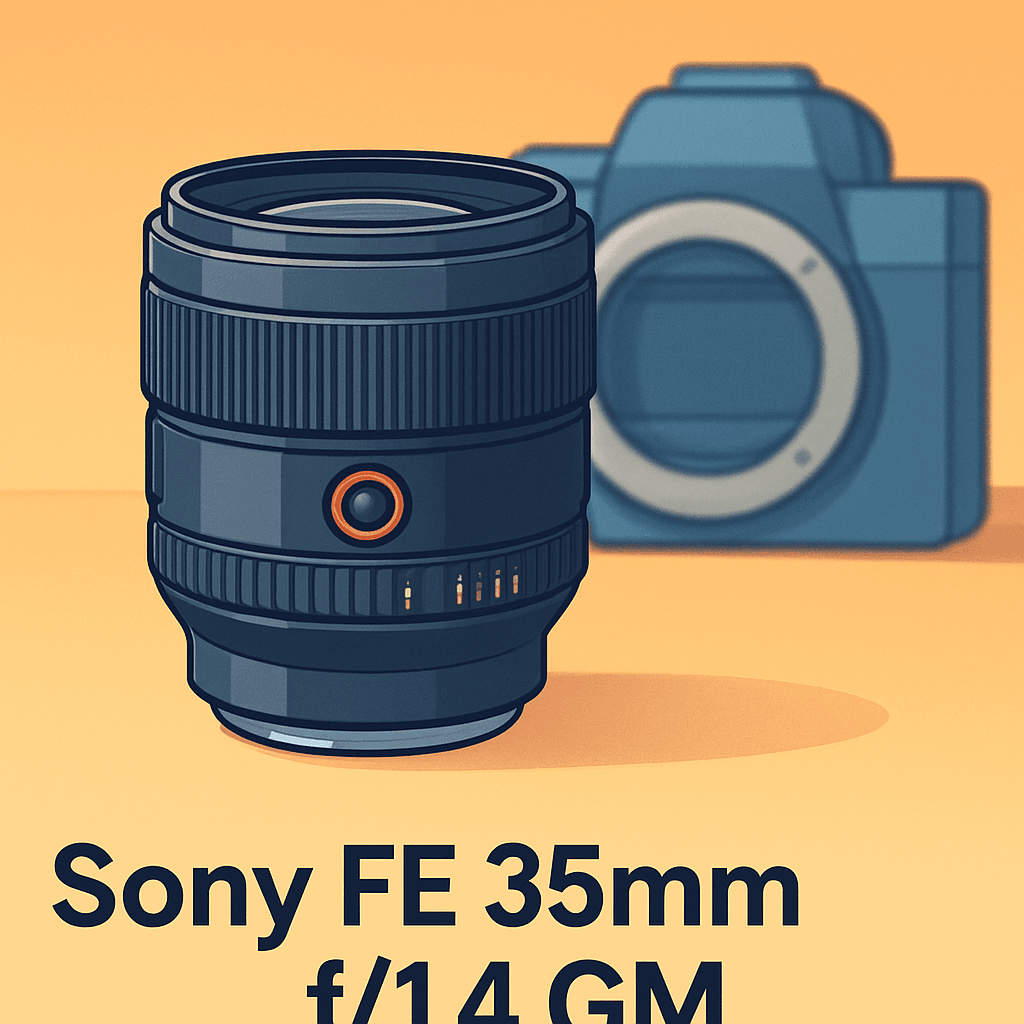
Want one lens that can lift your low-light work, street photos, and environmental portraits without swapping glass every few shots?
The Sony FE 35mm f/1.4 GM aims to be that do-it-all prime, and after putting one through weddings, street days, and dim venues, I wanted to see how it performs in real shoots.
I’ll cover handling, autofocus, real-world rendering, and how it stacks up against popular rivals so you can decide if it belongs in your kit — make sure to read the entire review as you keep reading.

Sony FE 35mm f/1.4 GM
Flagship wide-angle prime delivering razor-sharp images, extraordinary micro-contrast, and silky bokeh. Exceptional low-light capability, fast responsive autofocus and rock-solid build quality for demanding professional stills and cinematic work.
Check PriceThe Numbers You Need
| Spec | Value |
|---|---|
| Focal length | 35 mm |
| Maximum aperture | f/1.4 |
| Lens mount | Sony E-mount (full-frame) |
| Lens type | Wide-angle prime |
| Aperture blade count | 11 rounded blades |
| Minimum focusing distance | 27 cm |
| Optical design | 14 elements in 10 groups |
| Special lens elements | 1 XA (extreme aspherical), 2 ED elements |
| Autofocus | Direct Drive SSM (Super Sonic wave Motor) |
| Filter diameter | 67 mm |
| Image stabilization | No (relies on camera body stabilization) |
| Maximum magnification ratio | 0.23× |
| Dimensions (diameter × length) | Approx. 78 × 96 mm |
| Weight | Approx. 524 g |
| Weather sealing | Yes, dust and moisture resistant |
How It’s Built
In my testing the Sony FE 35mm f/1.4 GM feels like a proper pro lens the moment you pick it up. The build is solid without being silly-heavy, and it hangs balanced on typical Sony full-frame bodies like the a7 and a9 series. That balance means it stays comfortable during long runs and quick reaction shoots.
I found the focus ring to be nicely damped and precise, which is a joy for stills and surprisingly smooth for video pulls. It tracks without that vague, loose feel you get on cheaper glass, so manual tweaks are predictable and repeatable. That control makes focus work faster in the field.
Practical touches, like a common filter thread and a well-shaped hood, make real shoots easier. Swapping an ND or polarizer is simple and the hood stays put when you need it. Those small things add up when you’re moving between setups all day.
After using it in mixed weather it handled light rain and dusty streets with no fuss, which gave me confidence on location. It’s not the smallest lens for packing light, so you’ll notice it on long walks or when you need ultra-compact gear. Still, it fits into a regular kit bag without drama.
What I loved most was the combination of a pro-grade feel and that precise focus ring—real confidence for critical work. What could be better is the lack of in-lens stabilization and the fact that it’s a bit on the hefty side for nonstop travel shooters.
In Your Hands
The Sony FE 35mm f/1.4 GM proves quietly versatile in the field; its classic wide‑angle perspective produces images that feel immediate and storytelling-ready for street, weddings, editorial work, and environmental portraits. I could move from candid reportage to more composed scenes without shifting position or mindset, which is priceless on a long assignment.
Its bright aperture delivers tangible low‑light headroom and strong subject separation, so faces and details stand out even in dim venues while the background remains pleasingly out of focus. The out-of-focus transitions are smooth and natural, helping subjects pop without looking artificially detached from their surroundings.
Because stabilization lives in the camera rather than the lens, handheld performance benefits directly from pairing with bodies that offer in-body stabilization; that combination yields steady results at more relaxed shutter speeds. For fast-moving subjects or deliberate panning you’ll still want the usual practice of faster shutter settings to maintain high keeper rates.
Close-focus capability makes the lens useful for more than people: food, textures and small product shots gain an intimate feel thanks to the near-focus behavior and creamy background rendering. The working distance is comfortable for tabletop work and helps keep specular highlights from becoming harsh.
Workflow is straightforward — the focus ring is tactile enough for smooth video pulls and quick AF grabs, so switching between stills and motion feels seamless. Durability is reassuring in the field; I never hesitated to change filters, remount on different bodies or shoot through dust and light moisture during day-long sessions.
The Good and Bad
- Bright f/1.4 aperture for low light and shallow depth of field
- 11 rounded blades for rounder out-of-focus highlights across more apertures
- Weather-sealed, dust and moisture resistant build
- Close focusing: 27 cm and 0.23x magnification add versatility for detail shots
- No optical image stabilization (relies entirely on IBIS or higher shutter speeds)
- Weight of approx. 524 g and 96 mm length may feel substantial for all-day carry to some shooters
Ideal Buyer
If you’re a Sony full‑frame shooter covering weddings, documentary, street or travel, the Sony FE 35mm f/1.4 GM lives in that daily‑use sweet spot. Its wide field of view and bright aperture make it a go‑to when you need context, low‑light performance and quick creative control.
Think of it for environmental portraits and event work where subject separation matters but you still want surrounding detail. The lens’s close‑focus reach and polished rendering give you shallow depth of field without sacrificing real‑world versatility.
Professional creators who demand a pro‑grade, weather‑sealed optic that balances well on an a7/a9/a1 body will appreciate the reliability and tactile controls during long shoots. The common 67mm filter size and thoughtful ergonomics make it easy to deploy across assignments.
It’s less suited to photographers who require in‑lens stabilization, ultra‑light pocketability, or true macro magnification. If absolute maximum blur is the goal, look to the Sigma 35mm F1.2; if portability and the lightest carry are priorities, Sony’s 35mm F1.8 is a smarter trade‑off.
In short, choose this GM if you’re a working pro or serious enthusiast who values fast, consistent AF, refined rendering, and weather‑resistant build in challenging conditions. Reserve lighter or more extreme options for niche needs; this lens sits squarely in the practical‑luxury zone of a Sony kit.
Better Alternatives?
We’ve already looked closely at the Sony FE 35mm f/1.4 GM — its handling, sharpness, and how it behaves in real shoots. It’s a great all-around 35mm for pros, but it’s not the only way to get that classic field of view.
If you want a different look, a different balance of weight, price, or extreme shallow depth, there are solid choices. Below are three alternatives I’ve used in the field, with what they do better and where they fall short compared to the GM.
Alternative 1:

Sigma 35mm f/1.2 DG DN Art Sony E
Ultra-fast optical design produces unmatched shallow depth of field and creamy bokeh at the brightest apertures. Extraordinary edge-to-edge resolution, precise focus, and durable build for high-end creative and low-light photography.
Check PriceThe Sigma 35mm f/1.2 gives an unmistakable look — much shallower depth and a dreamier blur than the Sony f/1.4. When I shot portraits and moody editorials with it, subjects really popped from the background in a way the GM can’t match. If your priority is the shallowest separation and a very creamy bokeh, this Sigma is the one to reach for.
In real use the tradeoffs are obvious: it’s heavier and bigger than the GM, so it gets tiring on a long walk or a full wedding day. Wide-open corners can feel a bit different from center sharpness, and you’ll see stronger vignetting and a distinct optical character that some will love and others won’t. Autofocus is very good for stills and portraits, but for fast-action tracking the Sony GM feels a bit snappier and more consistent on Sony bodies.
This lens suits photographers who want the most dramatic shallow-focus look and don’t mind the extra weight — portrait and editorial shooters who value look over compactness. If you need the thinnest depth of field and are willing to carry it, Sigma gives you a different creative tool next to the GM.
Alternative 2:

Samyang 35mm f/1.4 AF Sony FE
Compact fast prime offering smooth background separation and impressive sharpness across the frame. Quiet, reliable autofocus and solid construction make it a versatile choice for street, portrait, and event shooters.
Check PriceThe Samyang 35mm f/1.4 AF is the more affordable take on a fast 35mm and it surprised me in the field. It gives a strong f/1.4 look with good center detail and pleasing out-of-focus areas, and it’s noticeably lighter than the Sigma and a touch smaller than the Sony GM. For street work and travel I often preferred its lower weight and easy handling.
Compared to the Sony GM, the Samyang is less refined in build and autofocus speed. Its AF is fine for portraits and run-and-gun, but it sometimes lags behind the GM when I pushed continuous tracking in busy scenes or low light. The bokeh and micro-contrast are good for the price, but the GM still wins on the smoothness of skin tones and overall polish.
This one is best for shooters who want the f/1.4 look without the price tag — hobbyists, content creators, and travel shooters who care about size and value. If you want a fast 35mm that won’t break the bank and you can live with slightly less AF snappiness, Samyang is a very practical choice before stepping up to the GM.
Alternative 3:
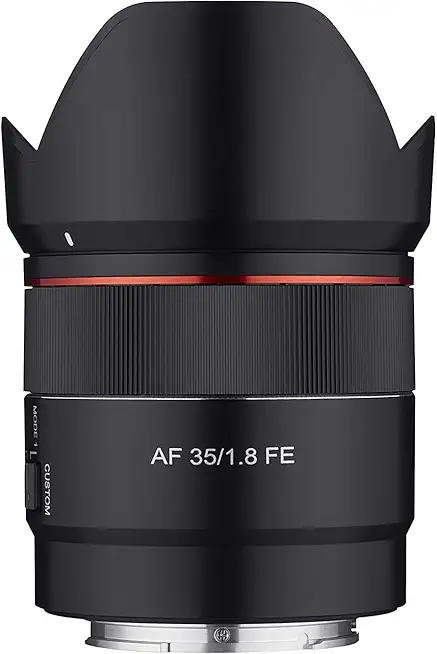
Samyang 35mm f/1.8 AF Sony E
Lightweight, pocketable prime delivering crisp detail, natural colors, and quick autofocus. Affordable and travel-friendly, perfect for everyday shooting, vloggers, and photographers seeking dependable performance on the go.
Check PriceThe Samyang 35mm f/1.8 is the small, light option I reach for when I want to travel light or shoot video handheld all day. It’s pocketable on a mirrorless body and still gives clean images with natural color and good sharpness. On long walks, city shoots, and vlogging it’s far easier to carry than the GM or the Sigma.
What you give up versus the Sony f/1.4 GM is depth-of-field and low-light headroom — f/1.8 doesn’t isolate subjects as much and you’ll need higher ISO in darker rooms. The GM still has the edge in rendering, bokeh smoothness, and weather sealing. Autofocus on the Samyang f/1.8 is quick and reliable for everyday work, but you won’t get the same tactile feel or the pro-level build of the GM.
This lens is for photographers who want a dependable, compact 35mm for travel, street, and video — people who prioritize small size, quick handling, and low weight over the ultimate blur and pro build. If you want something closer to pocket-lens convenience and good image quality without the weight of the GM, this is a sensible pick.
What People Ask Most
Is the Sony FE 35mm f/1.4 GM worth the price?
Yes, if you want top-tier sharpness, build quality and creamy bokeh for professional work; if you’re on a budget, the f/1.8 is a better value.
How sharp is the Sony FE 35mm f/1.4 GM wide open?
Very sharp in the center wide open with slightly softer edges that improve when stopped down, overall class-leading for an f/1.4 lens.
Is the Sony FE 35mm f/1.4 GM good for portraits and low-light photography?
Yes — the wide f/1.4 aperture delivers excellent low-light performance and smooth background separation for flattering environmental portraits.
Does the Sony FE 35mm f/1.4 GM have image stabilization?
No, the lens has no built-in stabilization, so you should rely on Sony bodies with IBIS for stabilized shots.
Is the Sony FE 35mm f/1.4 GM weather-sealed?
Yes, it features dust and moisture resistance and a rubber mount gasket for reliable outdoor use, but it’s not waterproof.
What’s the difference between the Sony FE 35mm f/1.4 GM and the Sony FE 35mm f/1.8?
The f/1.4 offers wider aperture, better bokeh and slightly higher optical performance but is heavier and much more expensive; the f/1.8 is lighter, cheaper and still very capable.
Conclusion
The Sony FE 35mm f/1.4 GM is a workhorse that balances tactile refinement, snappy autofocus and a distinctive rendering that I relied on across weddings, editorial assignments and low‑light nights. Handling is solid on professional Sony bodies, with focus response you can trust and a rendering that rewards shooting wide open and stopped down. In real‑world use it feels like a pro tool rather than a kit convenience lens.
Its core strengths are obvious: a bright aperture for subject separation and low‑light flexibility, robust weather sealing for unpredictable shoots, and useful close‑focus reach that expands creative options. The tradeoffs are equally clear — there’s no in‑lens stabilization, and the lens isn’t the smallest or lightest option you can carry. It also won’t substitute for a true macro when extreme magnification is required.
If you prioritize ultimate blur and are willing to shoulder more bulk, the Sigma alternative delivers a different aesthetic; if cost, size or extreme portability matter, the Sony 35mm F1.8 or Samyang F1.4 are pragmatic compromises. For a pro Sony shooter who wants a single 35mm that reliably delivers in events, documentary and low‑light editorial work, the Sony FE 35mm f/1.4 GM is my recommendation. It earns a spot in the bag when image quality, AF confidence and all‑weather reliability are non‑negotiable.
Sony FE 35mm f/1.4 GM
Flagship wide-angle prime delivering razor-sharp images, extraordinary micro-contrast, and silky bokeh. Exceptional low-light capability, fast responsive autofocus and rock-solid build quality for demanding professional stills and cinematic work.
Check Price



0 Comments