
Want to make your everyday photos better without hauling heavy glass or fussing with complicated gear?
The Sony FE 35mm F1.8 is a compact full-frame prime that’s meant to be unobtrusive for street, travel, and environmental portraits, with a fast aperture and quiet AF that suit real-world shooting. I put the Sony FE 35mm F1.8 through rainy streets, cramped cafés, and twilight walks to see how it behaved in practical use.
It’s designed to balance portability, low-light ability, and close-focus versatility, though it does trade off the absolute reach and isolation of larger f/1.4 lenses. If you want a dependable, go-anywhere 35mm, this review will show whether it earns its place in your kit — Make sure to read the entire review as…

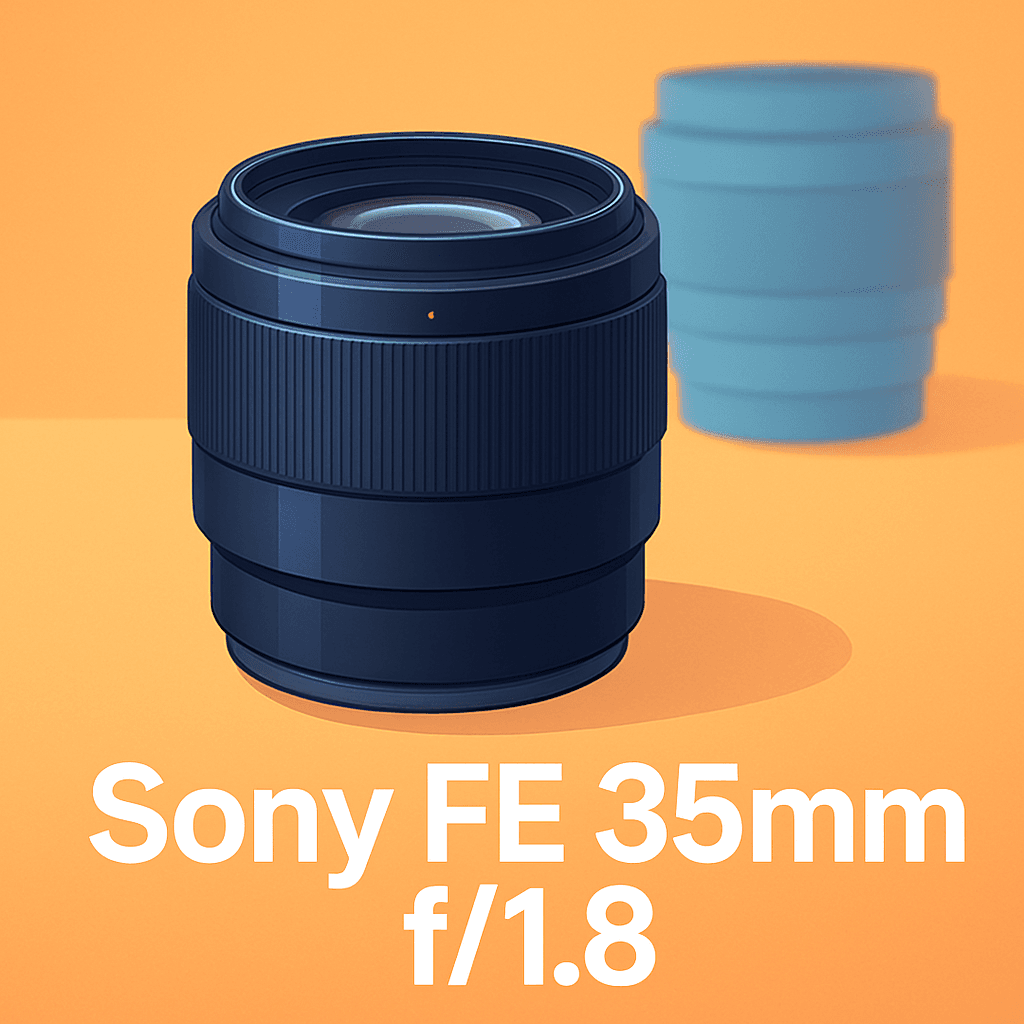
Sony FE 35mm F1.8
Compact full‑frame 35mm prime with a bright f/1.8 aperture delivering crisp edge‑to‑edge sharpness, dependable fast autofocus, and attractive background separation—ideal for travel, street, and low‑light photography.
Check PriceThe Numbers You Need
| Spec | Value |
|---|---|
| Focal Length | 35mm |
| Maximum Aperture | f/1.8 |
| Minimum Aperture | f/22 |
| Mount | Sony E-mount (FE, full-frame) |
| Lens Construction | 11 elements in 9 groups |
| Minimum Focus Distance | 0.22m |
| Maximum Magnification | 0.24x |
| Filter Thread | 55mm |
| Aperture Blades | 9 (circular) |
| Image Stabilization | No |
| Autofocus | Linear motor (fast, quiet) |
| Weight | ~280g |
| Length | ~66mm |
| Weather Sealing | Yes |
| Front Element | Fluorine coating (dust, water repellent) |
How It’s Built
In my testing the Sony FE 35mm F1.8 feels like a full-frame prime that doesn’t weigh you down. It’s compact and light, so it balances nicely on smaller Sony bodies and slips into a daypack or large jacket pocket without fuss. That makes it great for long walks, travel, and shooting raw moments without getting tired.
I found the build to be solid and confidence-inspiring for outdoor use. It’s weather-sealed and has a fluorine-coated front element, so light rain and dusty streets didn’t scare me off and cleaning the front element was noticeably easier. For real-world shoots that means fewer ruined days and less babysitting of your gear.
The handling is straightforward and friendly for beginners. The lens’s quiet, well-damped focus ring and discreet profile make it unobtrusive for street work, and the nine-blade circular aperture helps smooth out background blur. One thing I liked was how comfortable it felt for candid shooting, and one thing that could be better is the lack of optical stabilization — you’ll want a tripod or higher shutter speeds for steady low-light shots and video.
Small touches add up in practice: a compact filter thread makes carrying NDs or polarizers easy, and the single aspheric element helps keep things sharp without adding bulk. After using it for a while I found it a no-nonsense, travel-friendly lens that’s simple to use and forgiving for those still learning the ropes.
In Your Hands
The Sony FE 35mm F1.8 proves its value as an everyday lens by delivering a genuinely versatile field of view that feels right for street, travel, family, and documentary work; its compact, unobtrusive profile encourages candid shooting and long days on the hoof. That brighter maximum aperture lets you work confidently in available light and isolate subjects without fighting for separation, so indoor portraits and dim cafés suddenly become practical. In short, it’s the sort of optic you reach for first when you want to travel light but still cover a lot of ground.
Closer in, the lens’s near‑focus capability opens up a surprising world of detail—food, product shots, textures, and intimate environmental vignettes all benefit from being able to get tight while keeping context. Background separation is smooth enough for natural subject isolation, and the nine‑blade diaphragm helps render highlights pleasantly out of focus. That close‑focus versatility makes it a true one‑lens solution for many on‑location assignments.
For hybrid shooters, the linear motor autofocus is fast and whisper‑quiet, which keeps on‑camera audio clean and focus pulls feeling professional and unobtrusive. The lack of in‑lens stabilization means you’ll want a tripod, gimbal, or steadier technique for slow shutter work or prolonged handheld video, but for run‑and‑gun clips the AF behavior is reassuringly smooth. Focus transitions are repeatable and rarely draw attention away from the scene.
Practical touches—weather‑sealing and a protective front coating that eases cleaning—make this a dependable companion outdoors, while the compact filter diameter keeps ND and polarizer options small and portable. Shoot it wide open in low‑light interiors, backlit scenes for subject separation, fast‑moving subjects to test tracking, close textures for detail, and environmental portraits to show people in context; those scenarios highlight its everyday strengths. The overall experience is of a well‑rounded, reliable lens that simply gets the job done in the field.
The Good and Bad
- Compact and lightweight for full-frame (~66mm length, ~280g)
- Fast f/1.8 maximum aperture
- Fast, quiet linear motor autofocus
- Weather-sealed build with fluorine-coated front element
- No optical image stabilization
- Not as shallow depth-of-field as f/1.4 alternatives
Ideal Buyer
If you favor walking-light full-frame kits, the Sony FE 35mm F1.8 is for you. It pairs a compact, weather-sealed body with a fast, quiet linear AF and an f/1.8 aperture that handles low light and decent subject separation without the bulk of f/1.4 glass. It fits street, travel, documentary, and everyday carry shooting where discretion and agility matter.
Shooters who need close-up versatility will appreciate the 0.22m minimum focus distance and 0.24x magnification for food, product details, and intimate environmental portraits. The small 55mm filter thread keeps ND and polarizers compact for travel kits.
Hybrid photo/video creators benefit from the lens’ quiet autofocus and unobtrusive profile, which helps preserve on-camera audio and natural-looking focus pulls. Weather sealing and a fluorine-coated front element add confidence for outdoor work.
Avoid this lens if you demand the shallowest possible depth of field or ultimate edge-to-edge resolving power — the f/1.4 alternatives are the right trade despite their size and weight. Also skip it if you need in-lens stabilization for slow handheld video. For most shooters, though, the Sony FE 35mm F1.8 is a near-perfect daily driver.
Better Alternatives?
We’ve gone over the Sony FE 35mm f/1.8 and what makes it a great all‑around, lightweight 35mm for travel, street, and everyday shooting. It’s compact, weather‑sealed, fast enough for most low‑light work, and very easy to carry all day.
If you like the 35/1.8’s balance of size and performance but want something different for specific jobs—more extreme background blur, a tighter portrait look, or a wider view for landscapes—here are a few lenses I’ve used that make real differences in the field. Below I’ll say what each one does better and where it gives up compared to the Sony 35/1.8, and which kind of shooter will prefer each option.
Alternative 1:

Sony FE 35mm F1.4 GM
Professional 35mm prime featuring an ultra‑fast f/1.4 aperture that produces stunning bokeh, superb resolution, and advanced optical elements in a weather‑sealed, robust build—designed for demanding portrait, landscape, and low‑light work.
Check PriceI’ve shot weddings and low‑light portraits with the Sony 35/1.4 GM and the main thing it gives you over the 35/1.8 is isolation and image quality. At f/1.4 you get noticeably shallower depth of field and creamier background blur, which helps separate a subject in tight scenes and gives a more “professional” look. The raw detail and microcontrast feel a step up when you pixel‑peep or need the cleanest files for prints.
The trade‑offs are real: the GM is bigger, heavier, and much more expensive, so it’s less pleasant to carry all day. It’s also more obvious on the street if you want to be discreet, and you lose some of the 35/1.8’s pocketable convenience. Autofocus is just as reliable, but the extra bulk changes how the camera handles—more solid, less nimble for quick grabs.
If you’re a pro or enthusiast who prioritizes portraits, weddings, editorial work, or low‑light shooting where the shallowest depth and top IQ matter, the 35/1.4 GM is worth it. If you mainly want a light, unobtrusive walkaround lens, stick with the 35/1.8.
Alternative 2:

Sigma 50mm F1.4 DG DN Sony E
Contemporary 50mm standard lens with an f/1.4 aperture for exceptional subject isolation, razor‑sharp center detail, and creamy bokeh; compact, well‑built, and optimized for high‑resolution mirrorless shooting and portraits.
Check PriceSwitching to a 50mm is a different tool, not just a “better” 35mm. I’ve used the Sigma 50mm f/1.4 when I wanted tighter framing and more subject separation than the 35/1.8 can provide. The wider aperture and longer focal length compress backgrounds and give very pleasing, creamy bokeh—great for headshots, portraits, and editorial work where you want the subject to pop.
What you lose compared to the 35/1.8 is field of view and versatility. The 50mm is less useful for street or travel when you want to include environment or work in tight spaces—you’ll find yourself stepping back more. It’s also a bit heavier, so it’s not as ideal as an all‑day carry lens, but the build and image quality feel very solid for portraits and controlled shooting.
If your work leans toward portraits, studio jobs, or you simply like a tighter, classic “normal” perspective with strong subject isolation, the Sigma 50/1.4 is a great choice. If you need one lens to do everything from streets to interiors, the 35/1.8 is still more flexible.
Alternative 3:

Sigma 24mm F1.4 Art DG DN Sony E
Ultra‑wide 24mm prime offering an f/1.4 aperture for impressive low‑light and night‑sky performance, minimal coma, and excellent corner‑to‑corner clarity; refined coatings and sturdy construction for landscapes, architecture, and astrophotography.
Check PriceThe Sigma 24mm f/1.4 is useful when you need a much wider view than 35mm. I’ve used it for landscapes, interiors, and night sky shots where the wide angle and fast aperture let in more light and capture expansive scenes. It handles stars and point lights very well with low coma, so it’s a real step up for astrophotography and dramatic environmental shots compared to the 35/1.8.
On the downside, 24mm changes how you work with people—close portraits can look distorted and you don’t get the same subject compression or background blur as a 35mm or 50mm. The lens is also larger and heavier than the Sony 35/1.8, so it’s less convenient as a carry‑everywhere option. But for wide scenes, interiors, and low‑light night work it’s hard to beat.
Pick the Sigma 24/1.4 if you shoot landscapes, architecture, astro, or interiors and need a fast wide lens that stays sharp to the edges. If your day‑to‑day work is street, travel, or environmental portraits where discretion and mid‑wide framing matter, the Sony 35/1.8 remains the more balanced choice.
What People Ask Most
How sharp is the Sony FE 35mm f/1.8, especially wide open?
Very sharp in the center at f/1.8 with respectable edge performance that improves noticeably by f/2.8–f/4.
Is the Sony FE 35mm f/1.8 weather-sealed or dust/moisture resistant?
It has a dust- and moisture-resistant design but isn’t fully waterproof, so avoid heavy rain or prolonged exposure to harsh conditions.
Does the Sony FE 35mm f/1.8 have image stabilization (OSS)?
No, it does not have OSS, so rely on in-body stabilization or faster shutter speeds for handheld low-light shots.
How does the Sony FE 35mm f/1.8 compare to the Sony 35mm f/1.4 GM or Sigma 35mm lenses?
The f/1.8 is smaller, lighter, and much cheaper with excellent sharpness; the f/1.4 GM and Sigma give stronger bokeh, low-light headroom, and a more “professional” build at a higher price.
Is the Sony FE 35mm f/1.8 good for portraits and low-light photography?
Yes—its f/1.8 aperture and sharp rendering make it great for environmental portraits and most low-light shooting, though it won’t produce as creamy bokeh as an f/1.4 lens.
Can the Sony FE 35mm f/1.8 be used on APS-C Sony cameras and what focal length does it act like?
Yes, on APS-C bodies it behaves like roughly a 52–53mm full-frame equivalent (35mm × 1.5 crop factor), making it a natural standard/portrait focal length.
Conclusion
The Sony FE 35mm F1.8 is a rare blend of pocketable practicality and dependable performance. It feels at home on a travel day, a crowded street, or an indoor assignment where a quiet, sure autofocus matters. Its compact, weather‑resistant design and versatile rendering make it an easy lens to reach for every time.
It isn’t without compromises, and those are honest ones. If your priority is the absolute shallowest background separation or the ultimate corner‑to‑corner resolving power, heavier f/1.4 alternatives will do more for those specific goals. The lack of in‑lens stabilization is a practical limitation for some video work and hand‑held low‑light shooters.
For most photographers who value mobility, stealth, and solid image quality, the Sony FE 35mm F1.8 represents a smart, balanced choice. Pick a 1.4 GM or Sigma 1.4 if ultimate isolation and peak IQ are non‑negotiable, or the Samyang 1.8 if you need the smallest, most budget‑friendly carry kit. Overall, it’s the everyday 35mm that makes sense to own and actually use.
Sony FE 35mm F1.8
Compact full‑frame 35mm prime with a bright f/1.8 aperture delivering crisp edge‑to‑edge sharpness, dependable fast autofocus, and attractive background separation—ideal for travel, street, and low‑light photography.
Check Price

0 Comments