
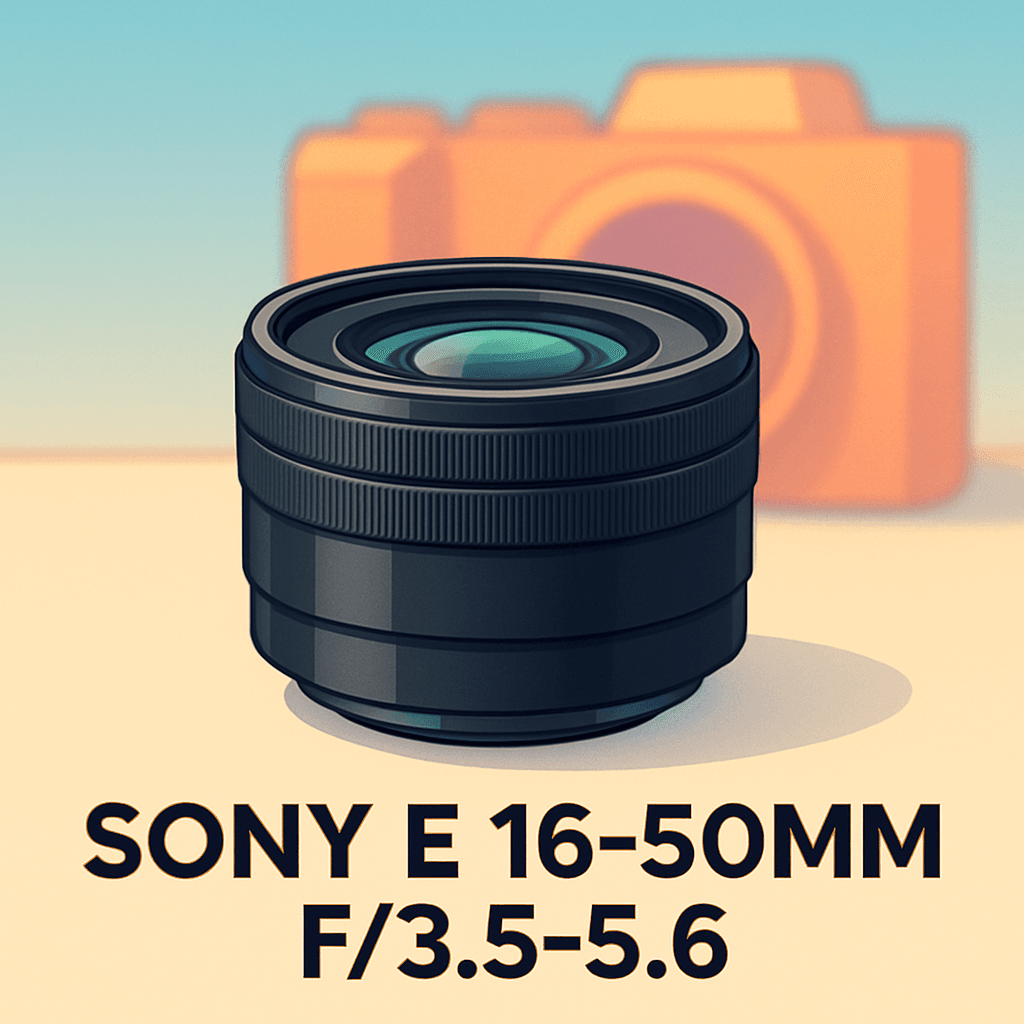
Want a lens that practically disappears in your bag yet still covers your everyday shooting needs? I’ve taken Sony’s tiny retractable zoom on trips and shoots to see if it really earns that promise.
It’s Sony’s ultra-compact, collapsible APS-C kit zoom with power zoom and OSS, built for versatility over speed. The useful 24–75mm equivalent range handles landscapes, street, family moments and casual portraits without fuss.
If you’re a beginner, a lightweight traveler, or a hybrid creator who values smooth zooms and stabilized handheld footage, this lens is aimed at you — sometimes shown as the SELP1650/OSS II in listings. Make sure to read the entire review as I put its real-world strengths and compromises to the test — keep reading.

Sony E PZ 16-50mm f/3.5-5.6 OSS II
Ultra-compact power-zoom delivering versatile wide-to-standard reach with smooth electronic control, effective image stabilization, and whisper-quiet autofocus—perfect for travel, vlogging, and everyday street photography when portability matters.
Check PriceThe Numbers You Need
| Spec | Value |
|---|---|
| Mount | Sony E-mount |
| Focal length | 16-50 mm |
| Equivalent focal length (35mm) | 24-75 mm |
| Maximum aperture | f/3.5-5.6 (variable) |
| Image Stabilization | Optical SteadyShot (OSS) |
| Format compatibility | APS-C sensor |
| Lens type | Zoom, retractable kit lens |
| Minimum focus distance | Approx. 0.25 m (9.84 in) |
| Maximum magnification | Approx. 0.215× |
| Filter diameter | 40.5 mm |
| Lens construction | 9 elements in 8 groups |
| Aperture blades | 7 rounded blades |
| Autofocus | Power zoom with fast, silent AF |
| Weight | About 116 g (4.1 oz) |
| Dimensions (extended) | Approximately 60 x 29 mm (D x L) |
How It’s Built
In my testing the Sony E PZ 16-50mm f/3.5-5.6 OSS II is the kind of lens that disappears into your routine. It collapses down to a pancake you can slip into a jacket pocket or a small bag. That pocketable design makes it perfect for travel days when you don’t want to drag a heavy kit around.
After using it for a while I found it balances really well on Sony’s smaller APS-C bodies. It feels natural to shoot with one hand, and the lightweight nature keeps you shooting longer without fatigue. For beginners that means less fuss and more chance to actually take pictures.
One thing I really liked was the built-in power zoom and how smooth it is for video. Zoom pulls were consistent and useful for gentle reframing while recording. The stabilization also helps keep handheld shots usable, which matters when you’re out and about.
One thing that could be better is the build feel — it comes across as thin and a bit plastic. In the real world that means you should treat it with a little care instead of tossing it around. Overall it’s a great everyday lens if you want convenience over a heavy, premium feel.
In Your Hands
The lens’ compact wide-to-short-tele coverage makes it an easy all-purpose companion for travel, street work, family moments and casual portraits, and it doubles as a useful everyday zoom for light video and vlogging. On mirrorless APS-C bodies it disappears in a bag but still gives you the framing flexibility you need without swapping lenses in most situations.
Sony’s Optical SteadyShot proves its worth when you’re shooting handheld or walking-and-talking video, smoothing modest shake and making ordinary tripod-free shooting more reliable. In practice it turns many hurried hand-held clips into usable footage and gives steadier stills in lower shutter-speed scenarios.
The trade-off is the variable aperture, which curtails low-light performance and limits shallow depth-of-field when you want subject separation; in dim rooms you’ll notice the need for higher ISO or stronger lighting compared with faster glass. For everyday family photos and travel snaps the results are perfectly usable, but it’s not the tool for dramatic background blur or demanding low-light work.
Close-focusing is good enough for casual detail shots, and the power-zoom mechanism makes smooth focal pulls and one-handed framing easy for hybrid shooters. Overall the lens prioritizes portability and convenience over outright speed and edge-to-edge refinement, which is exactly the point for anyone who values a tiny, grab-and-go kit.
The Good and Bad
- Extremely compact, retractable design; pocketable on APS-C bodies
- Useful 24–75mm equivalent range for everyday coverage
- OSS for stabilized handheld shooting
- Power zoom for smooth video zooming and intuitive operation
- Variable f/3.5–5.6 aperture limits low-light and shallow DOF control
- Softer edges and lower contrast/sharpness wide open and toward the long end
Ideal Buyer
The Sony E PZ 16-50mm f/3.5-5.6 OSS II is tailor-made for photographers who prize portability, simplicity, and discreet carry. Its collapsible, pocketable profile makes it ideal for commuters, travelers, or weekend explorers who carry an APS‑C Sony as a daily driver. Beginners will appreciate the all-in-one coverage without the fuss of lens swaps and the forgiving learning curve.
Hybrid creators and casual videographers will like the integrated power zoom and OSS for on-the-fly framing. Smooth, quiet focal changes and stabilization make run-and-gun vlogging and family videos look more polished and need less post stabilization. It’s a practical every‑day tool when convenience trumps extreme optics and when pocketability is king.
Street shooters, vacationers, and parents chasing candid moments get a very usable 24–75mm equivalent range in an ultra-light package that disappears on a strap or in a jacket pocket. The lens covers landscapes, quick portraits, and social-ready images with minimal kit and produces shareable files straight out of camera. You get more shooting and less hauling and fewer excuses to miss the shot.
This lens isn’t for low‑light specialists, bokeh addicts, or pixel‑peepers demanding edge‑to‑edge sharpness. Fast-action shooters should look to faster, tracking‑focused glass. If premium build, constant apertures or maximum image quality are priorities, consider stepping up to the Sigma or Zeiss alternatives.
Better Alternatives?
We’ve gone through the Sony E 16-50mm f/3.5-5.6 and covered what makes it great for travel, casual shooting, and run-and-gun video: tiny size, power zoom, and OSS that let you carry light and still get usable shots. That combo is hard to beat when you want one small lens that covers most everyday needs.
But if you want something different — sharper files, a brighter aperture, or a different balance between size and performance — there are a few lenses worth considering. Below are practical alternatives I’ve used in the field and how they stack up against the 16–50.
Alternative 1:

Sony E PZ 16-50mm f/3.5-5.6 OSS II
Pocketable zoom offering flexible framing from wide to short tele, stabilized handheld performance, responsive AF, and an electronic zoom mechanism that benefits filmmakers and content creators on the go.
Check PriceThis OSS II is basically the same pocketable idea you already know: tiny collapsed size, smooth power zoom and in-lens stabilization. In real use it feels designed around convenience — it tucks into a small bag and lets you move between wide street shots and short portraits quickly without changing lenses.
Compared to the older 16–50, the OSS II feels a touch smoother when zooming for video and the stabilization feels a bit more confident in my handheld clips. Optically, though, the trade-offs remain: it’s not a fast lens, corner sharpness and contrast stay mediocre wide open, and you won’t get much subject separation in low light.
Pick this if you want the exact kit-lens experience: ultimate pocketability, smooth electronic zoom for simple video work, and lightweight travel shooting. If you care more about low-light performance, background blur, or edge-to-edge sharpness, you’ll want one of the other options below.
Alternative 2:

Sigma 18-50mm f/2.8 DC DN Contemporary Sony E
Bright constant f/2.8 aperture throughout the zoom range produces creamy background separation, while compact optics deliver punchy sharpness and fast autofocus—ideal for low-light shooting and expressive portraits on APS-C bodies.
Check PriceThe Sigma 18–50mm f/2.8 is a different animal: it’s noticeably brighter and gives you real low-light headroom and shallower depth of field. I used it for evening street shots and small indoor events and found it much easier to get clean, sharp images at higher shutter speeds than with the Sony kit zoom.
Where it’s better than the Sony: sharper images, nicer subject separation, and more usable shots in dim light. Where it’s worse: it doesn’t collapse flat into a pocket and it starts at 18mm, so you lose a touch of the widest angle the Sony 16mm gives you. It also lacks the Sony’s power zoom and in-lens zoom motor, so it’s less handy for one-handed video zooms.
This is the lens I’d recommend to someone who wants a small but fast walkaround zoom — photographers who shoot portraits, dim interiors, or want a bit of background blur without hauling big glass. It’s a good middle ground for travel where image quality matters more than pocketability.
Alternative 3:
Sigma 18-50mm f/2.8 DC DN Contemporary Sony E
Designed for mirrorless shooters seeking speed and convenience: zippy focusing, minimal size, and consistent brightness make it great for run-and-gun video, travel, and everyday creative work with shallow depth.
Check PriceUsed on both photo and video jobs, the Sigma feels quick and confident. Autofocus is snappy and the constant f/2.8 keeps exposure steady while you zoom, which is handy for run-and-gun videos and when you don’t want to babysit settings. The image look is punchier straight out of camera than the Sony kit lens.
Against the Sony 16–50, the Sigma wins for speed, control over depth of field, and overall image pop. It loses on ultimate compactness and the convenience of the Sony’s power zoom and fully collapsed size. Also, because it’s not stabilized in the lens the same way, you’ll rely more on a camera with IBIS or a stabilizer for smooth handheld video.
Choose this third option if you want a fast, small zoom that’s tuned for creative shooting and video work where a consistent aperture and quick AF matter. It’s great for content creators who need better low-light performance and look than the kit lens, but who still want a reasonably small package.
What People Ask Most
Is the Sony E 16-50mm f/3.5-5.6 a good lens?
Yes for casual shooters—it’s compact, affordable and versatile, but image quality and low-light performance lag behind faster, higher-quality lenses.
Does the Sony E 16-50mm f/3.5-5.6 have OSS (image stabilization)?
Yes, it includes Sony’s Optical SteadyShot (OSS) image stabilization.
What cameras is the Sony E 16-50mm f/3.5-5.6 compatible with?
It’s designed for Sony E-mount APS-C cameras like the A6000/A6300/A6500, and it will mount on full-frame E bodies but typically runs in APS-C crop mode.
How sharp is the Sony E 16-50mm f/3.5-5.6?
Center sharpness is fine for web use and small prints, but edges are soft wide-open and it sharpens up noticeably when stopped down.
Is the Sony E 16-50mm f/3.5-5.6 the kit lens for Sony A6000/A6300/A6500?
Yes—Sony commonly bundled the 16-50mm as the standard kit lens with the A6000 series cameras.
What is the 35mm full-frame equivalent focal length of the Sony E 16-50mm f/3.5-5.6?
On APS-C bodies it gives roughly a 24–75mm equivalent field of view (16–50mm × 1.5x crop factor).
Conclusion
The Sony E PZ 16-50mm f/3.5-5.6 OSS II is a deliberately compact, pocketable power-zoom kit that trades outright speed for everyday convenience. Its smooth electronic zoom and stabilization make run-and-gun shooting and casual video effortless. For its intended role it rarely disappoints.
Where it strains is in low light and when subject separation matters. The variable aperture and kit-grade optics show their limits at wide-open settings and toward the long end, with reduced contrast and softer edges. The build is lightweight and functional rather than luxurious.
In real-world travel, street and family shooting the lens is a consistently useful companion. Autofocus is generally quiet and reliable for stills and hybrid video, and the collapsible design makes it easy to carry all day. Image quality is perfectly serviceable for social sharing and modest prints.
But it’s not a one-lens shop for everyone. If you frequently work in dim environments, need shallow depth of field, or demand edge-to-edge sharpness, you’ll quickly feel the compromises. Action photographers will also want faster, more tracking-focused glass.
My bottom line: buy the Sony E PZ 16-50mm f/3.5-5.6 OSS II if portability, simplicity and smooth video zooming are your top priorities. If you prize optics, low-light performance or a constant aperture, look toward the Sigma or Zeiss options instead. It’s an honest, well-targeted kit lens that earns its keep by being small and easy to use.
Sony E PZ 16-50mm f/3.5-5.6 OSS II
Ultra-compact power-zoom delivering versatile wide-to-standard reach with smooth electronic control, effective image stabilization, and whisper-quiet autofocus—perfect for travel, vlogging, and everyday street photography when portability matters.
Check Price


0 Comments