
Think you can get DSLR-like control from a pocket camera without losing low-light performance?
The Canon PowerShot G16 Camera aims to give pro control in a truly pocketable, small body.
I’ve personally field-tested the Canon PowerShot G16 Camera and compared it with a couple of close rivals.
I shot in cities, on trips, and in low light to stress it.
If you travel, shoot street, or like manual controls, this camera was made for you.
It gives bright lenses, RAW files, and stabilization that pay off when light gets tight.
You’ll get a fast, very bright lens and usable stabilization for handheld work.
That means cleaner night shots, shallower backgrounds, and quicker action frames than most compacts in real life.
It simply lacks long reach for distant subjects.
So keep reading as I will reveal something shocking about the Canon PowerShot G16 Camera that might change your photo quality drastically.
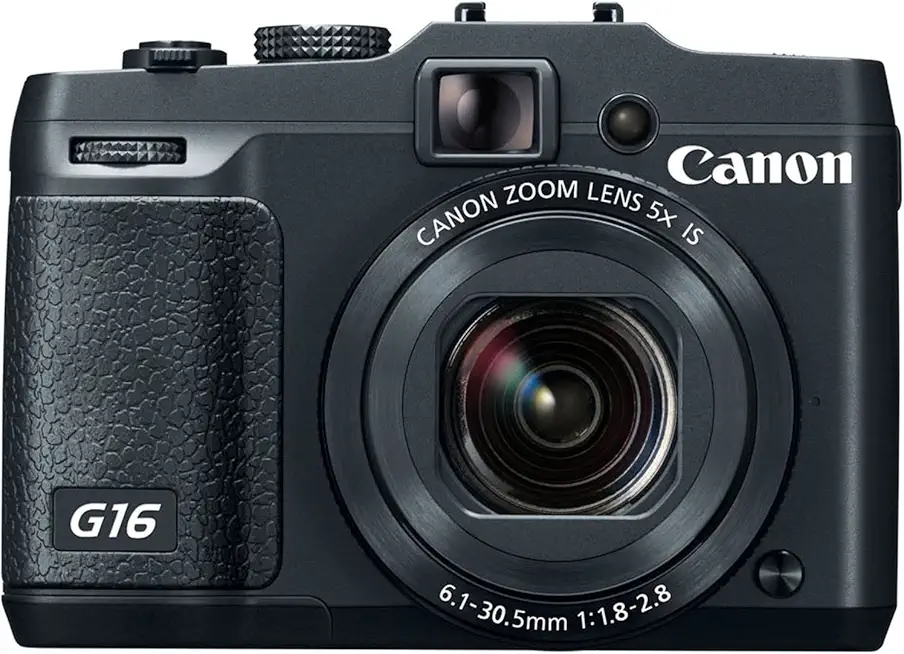
Canon PowerShot G16 Camera
Compact enthusiast tool delivering versatile 5x optical zoom and bright f/1.8–2.8 lens, RAW capture, manual controls and image stabilization—ideal for travel photographers wanting DSLR-style control in a pocketable body.
Check PriceThe Numbers You Need
| Spec | Value |
|---|---|
| Sensor | 1/1.7″ back-illuminated CMOS, 12.1 megapixels |
| Image processor | DIGIC 6 with iSAPS technology |
| Lens | 6.1–30.5 mm (28–140 mm equiv.), 5× optical zoom, f/1.8–f/2.8 |
| ISO range | 80–12,800 (expandable) |
| Shutter speed | 1 s to 1/4,000 s (extended to 250 s in Star mode) |
| Autofocus | AiAF 9-point, Face Detection, Manual Focus w/ MF Peaking, Focus Bracketing |
| Image stabilization | Lens-shift approx. 3 stops; Intelligent IS with 5-axis Enhanced Dynamic IS (video) |
| Continuous shooting | Up to 9.3 fps (High Speed AF mode) |
| Video | Full HD 1080p at 60 fps, MPEG-4 H.264 |
| Display | 3.0″ fixed LCD, ~922k dots (non-articulated) |
| RAW capture | Supported (multiple aspect ratios) |
| Connectivity | Wi‑Fi for wireless sharing/backup; GPS via mobile phone link |
| Storage | SD / SDHC / SDXC memory cards |
| Weight | Approximately 356 g (including battery) |
| Dimensions | 109 × 76 × 40 mm |
How It’s Built
In my testing the Canon PowerShot G16 feels like a camera built to last. The body is solid and reassuring in the hand, so you don’t worry about everyday knocks when out shooting. That gives you real confidence on trips and busy streets.
I found the controls to be a highlight — the manual dials are tactile and easy to reach. For beginners that means you can learn exposure and focus by touch without digging through menus. I really liked how natural it felt to make quick adjustments mid-shoot.
The fixed LCD is bright and clear, and there’s a small optical viewfinder for sunny days. In practice the non-articulated screen is the one thing that could be better, since low or high angle shooting becomes awkward. The viewfinder helps, but it’s not a full substitute for a tilting screen.
The camera is compact but a bit chunky, which actually makes it feel more stable in your grip. Weather protection isn’t claimed, so I was careful around rain and dusty shoots. If you plan outdoor use, bring a simple cover or bag to keep it safe.
In Your Hands
The Canon PowerShot G16 delivers image quality that punches well above its compact size; photos are sharp and clean through the mid sensitivity range with pleasant, natural color rendition. Shooting RAW unlocks real flexibility in post, letting you pull detail and adjust tones without obvious artifacts.
The lens is the star in everyday shooting, remaining bright across the zoom range so you can work in low light and get pleasing background separation when you want it. Built‑in neutral density control also makes it easy to tame highlights for wide‑open looks in bright conditions.
Stabilization is genuinely useful in handheld situations, so slower shutter speeds feel practical rather than risky, and the continuous shooting rate keeps up with street moments and fleeting action. Autofocus is responsive and reliable, with face detection and tracking that make run‑and‑gun shooting feel less fussy than you might expect from a compact.
Macro work is surprisingly capable, letting you get in close for detail shots, while video benefits from the same fast lens—clips look smooth and usable in everyday low light. That said, the lack of a touchscreen and an articulated LCD does limit creative framing and some run‑and‑gun video workflows.
There are minor trade‑offs: images can appear a touch soft straight from the camera at default sharpening, the modest zoom restricts reach, and noise becomes more noticeable in very dark scenes. For travelers and street shooters prioritizing a bright, pocketable tool with manual control, the G16 is a very compelling companion.
The Good and Bad
- Bright f/1.8–2.8 lens
- Effective image stabilization
- Fast continuous shooting up to 9.3 FPS
- RAW capture and advanced manual controls
- Limited 5x zoom range (28–140mm equivalent)
- No articulated LCD screen
- Noise becomes apparent beyond ISO 1600
- Slight in-camera softness at default sharpening settings
Ideal Buyer
The Canon PowerShot G16 is for enthusiast photographers who demand manual controls and RAW flexibility in a compact package. Its tactile dials and customizable settings make it a real alternative to a bulky DSLR for learning exposure and refinement. The image quality rewards those who want to edit files later.
Travelers and street shooters will appreciate the bright f/1.8–2.8 lens and pocketable footprint. Low-light performance and fast burst rates let you capture decisive moments without a tripod. The fixed 28–140mm range covers most everyday scenarios while staying small.
If you crave DSLR-like background blur and shallow depth of field but don’t want interchangeable lenses, the G16 delivers that look in-camera. Its stabilization and macro capability broaden creative options for portraits and close-ups. Photographers who prioritize feel and control over ultimate reach will love it.
Skip this camera if you need long reach, a tilting touchscreen, or spotless high-ISO performance past ISO 1600. Ideal buyers are those who value wireless sharing, quick handling, and optical quality over modern gimmicks. In short, choose the G16 if portability and real manual control beat the latest bells and whistles.
Better Alternatives?
We’ve gone through what makes the Canon PowerShot G16 such a handy little camera — the bright zoom, good low‑light shots for a pocket camera, and real manual controls in a small body. But no single compact fits every photographer, and if you want different strengths there are a few cameras I’d reach for instead of the G16.
Below are three real-world alternatives I’ve used. I’ll tell you where each one beats the G16, where it falls short, and the kind of shooter who’ll get the most from it.
Alternative 1:
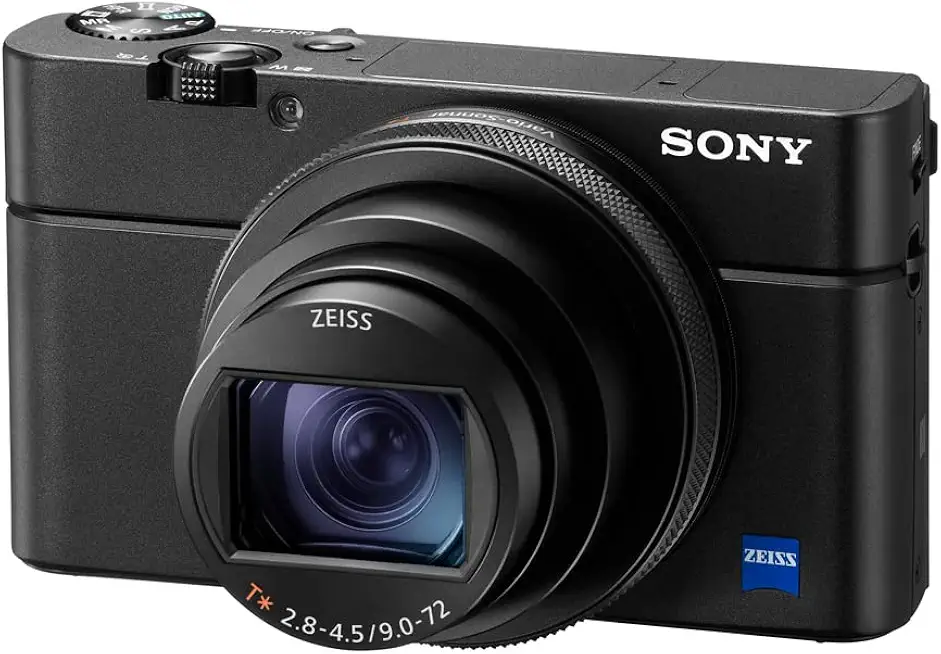
Sony RX100 VII Camera
Pocket powerhouse with a 1-inch sensor, long 24–200mm equivalent zoom, lightning-fast autofocus and high-speed continuous shooting—perfect for creators who need pro-level performance in a truly compact form.
Check PriceI’ve used the RX100 VII on travel days when I wanted as much reach and speed as possible from a true pocket camera. Compared to the G16 it gives you longer zoom reach and much faster, more reliable autofocus—so it nails moving subjects and quick street moments more often. It’s also better if you shoot a lot of video or need fast bursts for action.
Where it loses to the G16 is in lens speed and that “subject‑isolation” look. The RX100 VII’s zoom isn’t as bright at the long end, so in low light you’ll see more noise or need to push ISO/slow shutter. The handling is also a bit more compact and fiddly if you like big dials; the G16 feels more like a little DSLR in hand.
Pick the RX100 VII if you want one tiny camera that hides in a pocket but can chase kids, sports, or street scenes with fast AF and long reach. Skip it if you value the G16’s brighter zoom and the tactile control feel for low‑light, shallow‑depth work.
Alternative 2:

Panasonic Lumix LX100 II Camera
Large-sensor compact featuring a Micro Four Thirds chip and fast multi-aspect lens for rich detail, beautiful bokeh and flexible manual controls—great for low-light shooting and refined travel photography.
Check PriceThe LX100 II is the one I grab when image quality and low‑light performance matter most. In real shoots it gives cleaner files and creamier background blur than the G16, and the controls encourage shooting manually — I found colors and skin tones a touch more natural straight out of camera on many days.
But the LX100 II doesn’t match the G16’s zoom flexibility. It’s less about reach and more about picture quality and control — you give up the G16’s wider 28–140mm style zoom for a shorter range and a different shooting rhythm. Also, it’s a little bigger and doesn’t tuck into the smallest pockets as easily.
Choose the LX100 II if you’re an enthusiast who cares about low‑light shots, shallow depth of field, and hands‑on controls for travel or portraits. If you need zoom reach or the G16’s slightly simpler, DSLR‑like handling for fast snaps, the G16 might still be the better travel buddy.
Alternative 3:

Fujifilm X100V Camera
Stylish fixed-lens rangefinder with an APS-C sensor, sharp 23mm equivalent f/2 optic, hybrid viewfinder and classic film simulations—delivering gorgeous color, tactile controls and outstanding street performance.
Check PriceThe X100V is a very different tool I’ve used for street and portrait work. It beats the G16 on image quality, color rendering, and that rich creamy background when you want it — shots straight from the camera look gorgeous. The viewfinder and tactile controls make shooting feel intentional and fast for street work.
What you give up versus the G16 is zoom and convenience. The X100V has a fixed focal length, so you must move to compose or rely on digital crops. That makes it less flexible for travel where you want one‑camera‑does‑all. It’s also a little larger and calls for a different shooting style.
If you love shooting street, portraits, or editorial work and want the best image quality and film‑like colors from a carry‑around camera, the X100V is hard to beat. If you need a single compact with a useful zoom and easier framing for varied scenes, the G16 remains a very sensible choice.
What People Ask Most
Does the G16 shoot RAW?
Yes — it supports RAW capture in various aspect ratios.
What video formats and frame rates are available?
It records Full HD 1080p video up to 60 fps in MPEG‑4 H.264 format.
How effective is stabilization?
Lens‑shift stabilization gives roughly three stops of shake reduction, and Intelligent IS adds a 5‑axis enhancement for video.
Can the G16 focus close for macro?
Yes — it can focus down to about 1 cm at the wide‑angle setting.
Is there built-in wireless connectivity?
Yes — the G16 has Wi‑Fi for wireless sharing and backup, and supports GPS via a linked smartphone.
Conclusion
The Canon PowerShot G16 is a compact enthusiast camera that truly shines when portability, manual controls, and usable low-light performance are your priorities. Its very bright lens, RAW capability, and steady image stabilization combine to yield images with pleasing subject separation and reliable handheld results in everyday shooting. Ergonomic controls and decisive handling make it a camera you reach for instinctively when you want creative results without lugging a larger system.
That capability comes with clear trade-offs that will matter to many shooters. Zoom reach is modest, the screen lacks articulation and modern touch convenience, and image noise and gentle default sharpening temper results at higher sensitivities. There’s also no extensive weather protection, so it’s less suited to harsh-field conditions or mission-critical assignments where ruggedness is non-negotiable.
Bottom line: for travelers, street photographers, and enthusiasts who favor image quality, manual control and pocketable confidence, the G16 remains a compelling, well-rounded tool. If your priorities are longer reach, the latest video codecs, or a flexible touchscreen workflow, you should look elsewhere. Otherwise the G16 delivers characterful images, fast handling, and real-world versatility that justify its place in a serious photographer’s compact camera rotation.
Canon PowerShot G16 Camera
Compact enthusiast tool delivering versatile 5x optical zoom and bright f/1.8–2.8 lens, RAW capture, manual controls and image stabilization—ideal for travel photographers wanting DSLR-style control in a pocketable body.
Check Price


0 Comments