
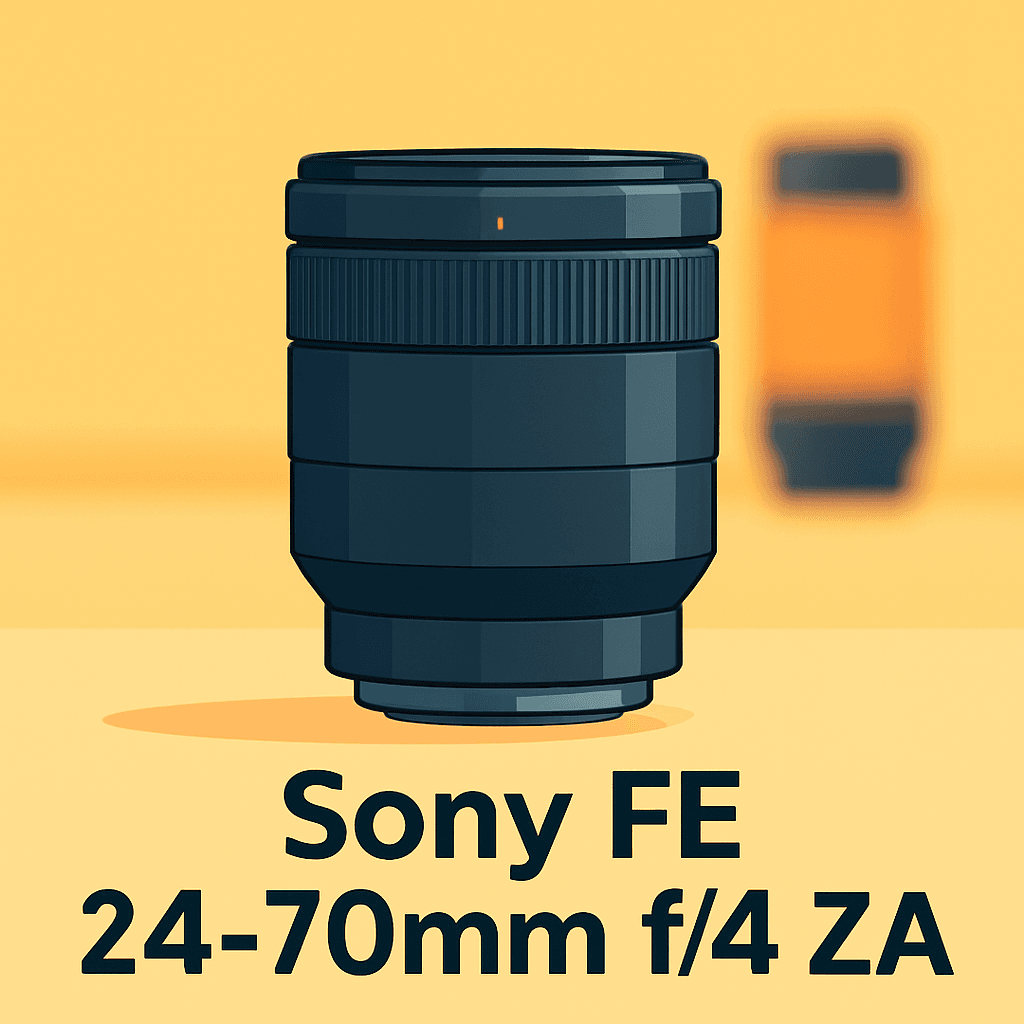
Want a single walk‑around lens that keeps your kit light and delivers steady handheld shots? That’s the promise many photographers chase.
The Sony FE 24-70mm f/4 Vario-Tessar T — it’s a compact full‑frame zoom with Zeiss coatings, in‑lens stabilization and quiet AF.
After shooting with it across streets and trips, I found its balance and stabilization genuinely useful. Keep reading to see real-world comparisons, where it shines and who should pack it.

Sony FE 24-70mm f/4 Vario-Tessar T
Compact, lightweight constant-aperture standard zoom delivering sharp, consistent images, smooth zoom action, and reliable autofocus—ideal for travel, street, and landscape photographers seeking steady performance in varied lighting conditions.
Check PriceThe Numbers You Need
| Spec | Value |
|---|---|
| Lens type | Standard zoom |
| Mount type | Sony E-mount (FE) |
| Focal length | 24–70mm |
| Maximum aperture | f/4 constant |
| Optical image stabilization | Yes (OSS) |
| Optical design | Zeiss Vario-Tessar T* elements & coatings |
| Sensor format compatibility | Full-frame (35mm) |
| Minimum focus distance | Approximately 0.4 m (1.31 ft) |
| Maximum magnification ratio | About 0.20× |
| Filter thread size | 67 mm |
| Diaphragm blades | 7, rounded aperture |
| Weight | Around 426 g (15 oz) |
| Dimensions | About 73 mm diameter × 94 mm length |
| Weather sealing | No (not fully weather sealed) |
| Autofocus | Fast, silent linear motor autofocus |
How It’s Built
In my testing the Sony FE 24-70mm f/4 Vario-Tessar T feels compact and solid in the hand. The metal mount and smooth finish make it comfortable for all-day carry on an a7-series. That balance means you won’t tire quickly when you’re out shooting all day.
The zoom and focus rings are nicely damped — smooth with a touch of resistance so adjustments feel deliberate. For video the rings stay quiet and predictable, and for stills I found them precise enough to fine-tune framing. The hood clicks on securely and tucks away without fuss.
I liked the practical filter thread size; I could swap my polarizer and ND between lenses without juggling adapters. The built-in Optical SteadyShot sits quietly in the lens, so handheld shooting feels steadier right out of the bag. Those simple conveniences make it friendly for beginners who want less gear hassle.
One thing that could be better is the lack of full weather sealing — I wouldn’t leave it exposed in heavy rain without extra protection. Long-term it feels well made, but be cautious around dust and moisture. Overall the build inspires confidence for travel and street work while reminding you to respect rough conditions.
In Your Hands
The Sony FE 24-70mm f/4 Vario-Tessar T is one of those do-it-all lenses that shines when you switch between landscapes, street scenes and environmental portraits during a single outing. Its constant aperture keeps exposure steady as you zoom, which makes it easy to work quickly without hunting for settings between frames.
In practice the in-lens stabilization is a real travel-day asset—handheld stills come out sharper at slower shutter speeds and handheld video benefits from noticeably smoother pans and reduced micro‑shake. That said, stabilization is no substitute for a faster aperture in very dim conditions; you’ll often rely on higher ISO or steadier technique once light levels fall.
Autofocus feels tuned for hybrid use: quiet and unobtrusive for recording, yet responsive enough for events and moving subjects when you need it. Close-focusing capability is handy for food and small-product work, though it behaves like a general-purpose zoom rather than a dedicated macro.
Color and contrast carry that Zeiss character—good flare control, pleasant saturation and a fine micro‑contrast that adds perceived sharpness. The compact, well-balanced handling makes it comfortable on longer walks and gimbal setups, but remember it isn’t fully weather-sealed, so a little caution in rain or dusty environments goes a long way.
The Good and Bad
- Compact and light for a full-frame standard zoom (~426 g; ~73 × 94 mm)
- Constant f/4 aperture for consistent exposure across the zoom range
- Optical SteadyShot (OSS) for handheld stills and video
- Zeiss Vario-Tessar T* coatings; pleasing color, contrast and micro-contrast rendering
- Not fully weather sealed
- f/4 speed limits low-light performance and subject isolation versus f/2.8 alternatives
Ideal Buyer
If you travel light but shoot seriously, the Sony FE 24-70mm f/4 Vario-Tessar T is aimed squarely at you. Its compact footprint and built‑in OSS make it ideal for days when every ounce matters. The 24–70 range covers landscapes, street and environmental portraiture without demanding a big lens bag.
Hybrid shooters who switch between stills and handheld video will appreciate the quiet linear AF and steadying OSS. Photographers using older or non‑IBIS Sony bodies get an immediate stabilization advantage. Wedding second‑shooters, documentarians and run‑and‑gun journalists will love the balance of performance and portability.
If you prize Zeiss color, micro‑contrast and a consistent f/4 workflow over extreme low‑light speed, this lens is a great match. For photographers who depend on quick, predictable results in mixed lighting, that tradeoff often makes sense. Just be mindful that those needing f/2.8 shallow depth or robust weather sealing will want something different.
In short, pick this 24‑70 when you want a true everyday lens that tucks into a travel kit and produces reliable, pleasing images. It’s a pragmatic choice for photographers who favor lightweight versatility over headline specs. It’s particularly smart for travelers, street shooters and anyone who values a single, dependable walk‑around optic.
Better Alternatives?
We’ve already gone through what the Sony FE 24-70mm f/4 Vario-Tessar T brings to the table: compact size, in-lens OSS, that Zeiss color and contrast, and a very usable 24–70 range for travel and day-to-day work. It’s a great walk-around lens, but depending on your shooting style you might want more reach, more speed, or a different balance of weight and price.
Below are three real-world alternatives I’ve used, each with clear strengths and tradeoffs compared directly to the Sony FE 24-70mm f/4 Vario-Tessar T. I’ll point out what each one does better and where it gives ground, and who I’d recommend it to based on how I actually shot with them.
Alternative 1:
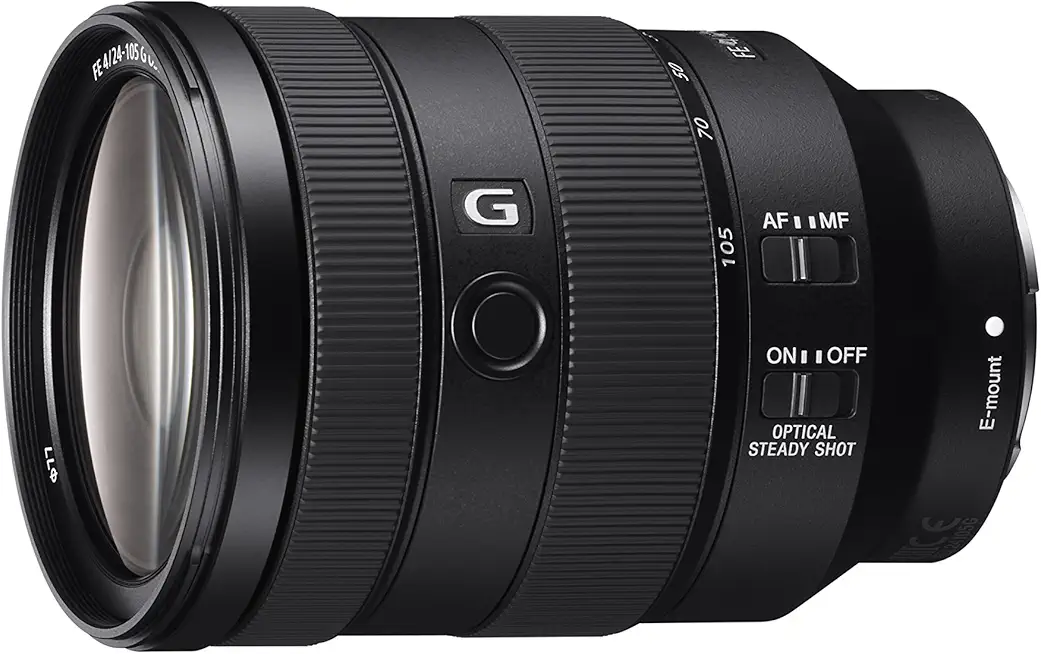
Sony FE 24-105mm f/4 G
Versatile constant-aperture travel zoom with extended reach and crisp optics, offering reliable autofocus and pleasing background separation—perfect for events, portraits, everyday shooting, and run-and-gun video capture.
Check PriceThe Sony FE 24-105mm f/4 G is the go-to if you want more reach without changing aperture. In the field I found the extra 35mm at the long end makes a big difference for portraits, tight event shots, and when you can’t move closer. Compared to the Sony FE 24-70mm f/4 Vario-Tessar T, it trades a bit of compactness for that useful reach—so you carry more weight but make fewer lens swaps.
Optically the 24-105 is very capable and gives consistently usable images across its range, but I still noticed the Zeiss 24-70/4 has a slightly different “pop” in color and micro-contrast at the wide end. The 24-105 can be a touch softer in the corners at certain focal lengths, but in real shooting most people will prefer the convenience and flexibility of the extra reach.
Pick the 24-105mm if you’re a travel shooter, event photographer, or hybrid shooter who values one-lens convenience and reach over the absolute smallest size. If you loved the Sony FE 24-70mm f/4 Vario-Tessar T for portability and Zeiss rendering but wish it went farther, the 24-105 is the practical next step.
Alternative 2:

Sigma 24-70mm f/2.8 DG DN Art Sony E
Professional fast standard zoom with bright aperture that produces outstanding sharpness, creamy bokeh, and confident low-light performance; ruggedly built for weddings, portraits, editorial work, and demanding commercial shoots.
Check PriceThe Sigma 24-70mm f/2.8 DG DN Art’s biggest real-world advantage over the Sony FE 24-70mm f/4 Vario-Tessar T is speed. Shooting at f/2.8 gives you noticeably better low-light performance and shallower depth of field for subject separation. I used it for weddings and low-light events where that extra stop made a real difference in usable frames.
That speed comes with extra size and weight, and the Sigma lacks in-lens stabilization, so you’re relying on the camera’s body stabilization. On modern Sony bodies that’s usually fine, but if you were using the Sony FE 24-70mm f/4 Vario-Tessar T for its OSS on older or non-IBIS bodies, the Sigma changes that workflow. Optically the Sigma is very sharp, often sharper in the center than the Zeiss at equivalent apertures, and it renders a smoother, creamier background when shooting wide open.
Choose the Sigma if you’re a pro or enthusiast who needs low-light performance and more control over depth of field — wedding photographers, portrait shooters, and commercial shooters who don’t mind extra weight. If you prioritize the small size and OSS of the Sony FE 24-70mm f/4 Vario-Tessar T, the Sigma will feel heavier but deliver more image-making power in tough light.
Alternative 3:
Sigma 24-70mm f/2.8 DG DN Art Sony E
High-performance pro zoom engineered for edge-to-edge resolution and smooth rendering, featuring responsive autofocus and durable construction—made to handle intensive studio, on-location, and reportage assignments with consistent image quality.
Check PriceThis second Sigma entry highlights the same lens as a slightly different angle: when I used it for studio and editorial work it proved to be very consistent frame to frame. Versus the Sony FE 24-70mm f/4 Vario-Tessar T, the Sigma’s wider aperture makes it easier to freeze moments with lower ISO and gives more control over background blur, which matters in portraits and product shots.
On the downside for run-and-gun shooters, the Sigma’s bulk is real and you’ll feel it after a long day on your neck or on a gimbal. Also, without OSS you’ll want a body with good IBIS or plan for faster shutter speeds. Compared to the Sony FE 24-70mm f/4 Vario-Tessar T, you get top-end optics and low-light power, but you lose a bit of the Zeiss character and the ultra-light travel friendliness.
Think of this Sigma as the choice for image-first shooters who don’t mind size: studio, editorial, and event pros who want the edge in sharpness and shallow depth of field. If you loved the look and handling of the Sony FE 24-70mm f/4 Vario-Tessar T but need faster glass for tougher light or more control, the Sigma is a strong step up in image capability at the cost of portability.
What People Ask Most
Is the Sony FE 24-70mm f/4 ZA a good lens for Sony full-frame cameras?
Yes — it’s a sharp, compact all‑around zoom that performs well for travel, events and everyday work while being lighter and less expensive than pro zooms.
How does the Sony FE 24-70mm f/4 ZA compare to the Sony FE 24-70mm f/2.8 GM?
The f/2.8 GM gives better low‑light performance, shallower depth of field and slightly higher resolving power, while the f/4 ZA is smaller, lighter and more affordable with very good image quality for most uses.
Does the Sony FE 24-70mm f/4 ZA have optical image stabilization (OSS)?
Yes — it includes built‑in OSS to help steady handheld shots, especially at slower shutter speeds.
Is the Sony FE 24-70mm f/4 ZA weather-sealed?
It has dust and moisture resistance with a gasketed mount for better protection, but it’s not fully weatherproof so use caution in heavy rain.
What is the image quality (sharpness and bokeh) of the Sony FE 24-70mm f/4 ZA?
Sharpness is excellent in the center and good to very good across the frame when stopped down, while bokeh is smooth for an f/4 lens but less creamy than faster f/2.8 alternatives.
What filter size does the Sony FE 24-70mm f/4 ZA use?
It uses 67mm screw‑on filters, which are easy to find and swap for filters or a UV protector.
Conclusion
The Sony FE 24-70mm f/4 Vario-Tessar T is a compact, travel-minded standard zoom that delivers the combination most photographers actually use: consistent exposure across the range, in-lens stabilization, quiet responsive AF, and that Zeiss T* color and micro-contrast signature. It feels at home on a light mirrorless kit and rewards run-and-gun shooting with confidence and consistent rendering. The overall balance of size, handling and image character is persuasive.
That said, it is not a one-size-fits-all lens. The f/4 aperture and limited close-focus ability put practical limits on low-light shooting and background separation compared with f/2.8 alternatives. It also lacks full weather sealing, so cautious handling in harsh conditions is wise.
If you prize portability, stabilized handheld video and the classic Zeiss look, this lens is an excellent everyday and travel choice. If you need extra reach or shallower depth of field, the longer 24–105 options or faster 24–70 f/2.8 zooms are the smarter tradeoff.
My recommendation is simple and blunt: buy the 24–70 f/4 Vario‑Tessar if your priority is a lightweight, stabilized, all-purpose walkaround with pleasing color and contrast. If low-light speed, reach, or maximum subject isolation matter more, look to the 24–105 or the f/2.8 contenders instead.
Sony FE 24-70mm f/4 Vario-Tessar T
Compact, lightweight constant-aperture standard zoom delivering sharp, consistent images, smooth zoom action, and reliable autofocus—ideal for travel, street, and landscape photographers seeking steady performance in varied lighting conditions.
Check Price


0 Comments