
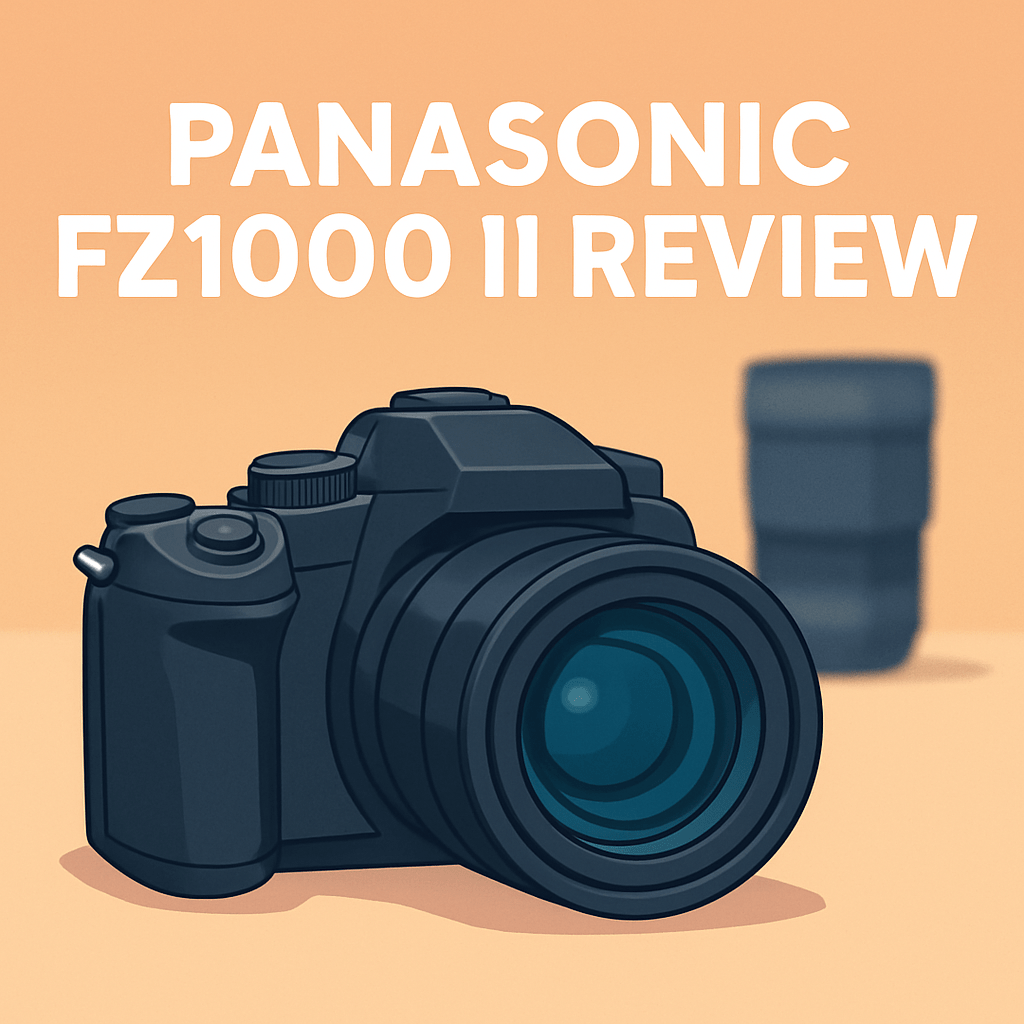
Want to get noticeably better photos and video without carrying a bag full of lenses?
The Panasonic Lumix FZ1000 II is a one-body, long-zoom bridge camera that promises 4K capture, a bright zoom, and solid stabilization for everyday shooting. I’ve field-tested it on travel and street shoots to see how that promise plays out in real life.
This review’s for generalists who want one versatile tool—travelers, family shooters, and content creators who value reach, flexibility, and easy handheld video. I’ll focus on stills, video, autofocus, and handling so you’ll know what matters in the field.
Curious if it’s the do-it-all camera you need or if an alternative fits you better? Make sure to read the entire review as I break down real-world strengths, limits, and who should buy it—keep reading.

Panasonic Lumix FZ1000 II Camera
High-performance bridge camera offering a large 1-inch sensor, fast lens, and 4K video capture; ideal for enthusiasts seeking superb detail, quick autofocus, and versatile telephoto reach in a single ergonomic body.
Check PriceThe Numbers You Need
| Spec | Value |
|---|---|
| Sensor | 20.1 MP 1-inch CMOS |
| Lens | 25-400mm equivalent, f/2.8-4.0 Leica DC Vario-Elmarit |
| Zoom | 16x optical zoom |
| Video | 4K UHD at 30p |
| ISO range | 125–12,800 (expandable to 80) |
| Autofocus | Rapid DFD contrast-detection AF system |
| Continuous shooting | Up to 12 fps |
| Viewfinder | 2.36M-dot OLED electronic viewfinder |
| LCD | 3.0-inch 1.24M-dot articulating touchscreen |
| Image stabilization | 5-axis hybrid optical image stabilization |
| Shutter speed | 1/16,000 to 60 seconds |
| RAW format support | Yes (14-bit RAW) |
| Connectivity | Wi-Fi and Bluetooth 4.2 |
| Storage media | SD/SDHC/SDXC cards (UHS-I compatible) |
| Body weight | Approximately 600 grams |
How It’s Built
In my testing with the Panasonic Lumix FZ1000 II Camera I noticed it feels substantial but not bulky. At roughly the size of a serious compact it sits comfortably on a shoulder for a day of shooting, and that weight actually helps steady the camera when rocking out long zooms.
The electronic viewfinder is clear and easy to use in bright sun, and the tilting touchscreen makes low and high angles simple to frame. I found the touchscreen responsive enough for quick menu changes and touch AF, which is great if you’re just starting out and don’t want to dive deep into buttons.
The built-in Leica zoom behaves like a real all-in-one lens when I moved from wide scenes to tighter shots. Zoom action is smooth and predictable, so you won’t be fighting the lens while tracking a subject or composing on the fly.
Ergonomics are friendly for beginners with a decent grip, well-placed dials, and logical buttons. After using it for a while I appreciated the customizable controls, but I wished for a slightly bigger thumb rest for long handheld sessions.
Pairing over Wi‑Fi and Bluetooth worked for quick transfers and remote shots in my experience, though connection can be finicky now and then. One thing I really liked was the blend of a solid EVF plus an articulating touchscreen, and one thing that could be better is a more reliable app pairing for faster workflow.
In Your Hands
The one-inch-sensor package delivers images with pleasing detail and natural color rendering that hold up well across everyday shooting scenarios. Highlights are handled with a conservative touch and shadow recovery is forgiving in raw files, so you can push edits without the image falling apart; noise becomes noticeable only as light dwindles.
The integrated long‑range zoom is surprisingly capable, offering crisp central sharpness through much of the range while the edges soften a touch at the extremes. Background separation is better than you might expect from a smaller sensor, producing smooth, attractive bokeh for portraits and subject isolation at the tele end.
The hybrid multi‑axis stabilization inspires confidence for handheld work, keeping stills usable at slower exposures and smoothing out casual walk‑and‑shoot video without gimbal gymnastics. Pans are steady and handheld telephoto shots are practical in situations where you’d normally reach for a tripod.
Autofocus and burst shooting are geared toward generalist use: acquisitions are quick in good light and the camera keeps up with everyday action, though very fast subjects or low‑contrast scenes can trip up the contrast‑based system. Raw files behave well in post and the camera recovers reasonably quickly after sustained bursts, with buffer clear times dependent on card performance.
Finally, the flexible shutter range and responsive handling make it a versatile field camera for travelers and event shooters alike, delivering predictable results whether you’re freezing motion or working creatively with long exposures. Overall, it’s a practical, shootable tool that rewards thoughtful use more than brute force.
The Good and Bad
- 20.1 MP 1-inch CMOS sensor
- 25–400mm equivalent f/2.8–4 Leica DC Vario‑Elmarit lens (16x optical zoom)
- 4K UHD recording at 30p
- 5-axis hybrid optical image stabilization
- AF is contrast-detection (DFD), not phase-detect
- 4K limited to 30p
Ideal Buyer
The Panasonic Lumix FZ1000 II Camera is the kind of single‑body solution that frees you from gear indecision and keeps your bag light. It’s ideal for shooters who want one camera to handle landscapes, portraits, travel snaps, and the occasional long‑reach grab shot with minimal fuss.
If you crave a wide 25–400mm range on a 1‑inch sensor, plus 4K 30p recording and 14‑bit RAW latitude, this camera delivers steady value for stills and video. The Leica‑tuned zoom, 5‑axis stabilization, and up to 12 fps burst make handheld shooting and quick action frames more usable. You’ll also appreciate the OLED viewfinder and articulating touchscreen for real‑world framing and fast work.
This isn’t the first pick for pro sports or bird photographers who demand phase‑detect AF and relentless tracking. Nor is it aimed at filmmakers who need dedicated cinema controls, higher frame‑rate 4K, or studio‑grade ergonomics. Instead, the FZ1000 II rewards versatile generalists who trade a little specialization for a lot of practical capability.
Weighing roughly 600 grams, the FZ1000 II is a comfortable compromise between portability and optical reach that suits day trips and carry‑on travel. Add stable wireless sharing and remote control via Wi‑Fi and Bluetooth, and it becomes a handy solo‑shooting tool for bloggers and small‑team creators. If you value convenience, image flexibility, and an all‑in‑one kit, this is the camera to seriously consider.
Better Alternatives?
We’ve gone through the FZ1000 II’s core kit lens, how it handles, and what it brings to stills and video. That camera is a very useful all-in-one for a lot of shooters, but there are other bridge-style options that push different strengths—faster AF, more video tools, or a longer reach.
Below are three alternatives I’ve used in the field. For each I’ll say where it beats the FZ1000 II, where it falls short, and what kind of buyer will find it a better fit.
Alternative 1:

Sony CyberShot RX10 IV Camera
Premium all-in-one shooter with a 1-inch sensor and super-telephoto zoom, delivering lightning-fast autofocus, high-speed continuous shooting, and stunning 4K video—perfect for wildlife, sports, and travel photographers.
Check PriceHaving shot the RX10 IV next to the FZ1000 II, the RX10 IV wins when you need speed and reach. Its autofocus feels much sharper on moving subjects and it locks and tracks birds or fast athletes more reliably. The longer zoom and very fast burst shooting mean you capture action that would give the FZ1000 II more trouble.
What it doesn’t do as well is carry and cost. The Sony is heavier and pricier in real life, and that matters on long walks or when you want a lighter travel camera. For everyday shooting where size and value matter, the FZ1000 II is easier to carry and still gives great images.
Choose the RX10 IV if you shoot lots of wildlife, sports, or fast street action and you need better AF and reach. If you want a lighter, more affordable all-rounder for travel and family work, stick with the FZ1000 II instead.
Alternative 2:

Panasonic Lumix FZ2500 Camera
Video-focused travel companion combining a large sensor, powerful zoom, built-in ND filter, and intuitive manual controls for cinematic 4K recording and smooth handheld shooting in varied lighting conditions.
Check PriceThe FZ2500 I used feels built for video. It has better, more deliberate hands-on controls for exposure and a built-in ND filter that makes hand-held, cinematic clips much easier. For run-and-gun video or interviews without lots of extra gear, it gives you a smoother, more controlled shooting experience than the FZ1000 II.
On the flip side, its autofocus and subject tracking aren’t as modern-feeling as the FZ1000 II’s updated system. For fast-moving subjects or quick-focus stalking, you’ll notice the FZ1000 II reacquires and responds a little faster. The FZ2500 also leans heavier and a touch older in handling compared with the newer ergonomics of the FZ1000 II.
If your work is video-first—short films, travel videos, or you want better manual control and an ND for sunny days—the FZ2500 will suit you. If you need a faster AF camera for mixed photo-and-video action shooting, the FZ1000 II is the more versatile pick.
Alternative 3:
Panasonic Lumix FZ2500 Camera
Designed for storytellers, this advanced compact blends pro-grade video tools—log profiles, headphone/mic support, and responsive manual dials—with robust zoom optics for polished footage without a rig.
Check PriceUsed as a storyteller’s tool, the FZ2500 stands out for giving you pro-style video tools inside a single body. The presence of log-like profiles, good audio I/O, and tactile dials make it easier to shape footage in camera and monitor sound while shooting. For solo shooters who want polished clips without a big rig, that workflow beats the FZ1000 II.
Where it lags is in raw responsiveness and some photo-centric conveniences. The FZ1000 II tends to feel snappier for quick stills work and subject hunting, and it’s a bit more modern in focus behavior for mixed photo/video days. If you need the best of both stills action and video, the FZ1000 II is often the better compromise.
Pick this FZ2500 setup if you’re a one-person video storyteller who cares about in-camera video tools and audio control. If your shooting is balanced toward fast-paced photography and travel weight, the FZ1000 II will likely fit your needs better.
What People Ask Most
Is the Panasonic FZ1000 II worth buying?
Yes — it’s an excellent all‑in‑one camera if you want strong stills and 4K video from a single body with a long zoom, but consider larger‑sensor mirrorless if you need top low‑light or AF performance.
What is the difference between the Panasonic FZ1000 and the FZ1000 II?
The FZ1000 II brings mainly refinements like an improved EVF, updated rear screen and small AF/firmware tweaks while keeping the same sensor and lens design.
Does the Panasonic FZ1000 II shoot 4K video?
Yes — it records 4K UHD video (up to 30p) and includes Panasonic’s 4K Photo modes for pulling high‑resolution stills from video.
How good is the image quality of the Panasonic FZ1000 II?
Image quality is very good for a 1‑inch sensor: sharp and detailed at low ISOs with pleasing color, though noise increases sooner than on larger‑sensor cameras.
Is the Panasonic FZ1000 II good for wildlife and bird photography?
It’s useful for wildlife and casual birding thanks to the 25–400mm equivalent zoom and decent burst speed, but reach and AF tracking can limit results on small, distant, fast birds.
How does the autofocus on the Panasonic FZ1000 II perform?
Autofocus is quick and reliable in good light for stills, but it can struggle with fast action and low‑light situations compared with modern phase‑detect mirrorless systems.
Conclusion
The Panasonic Lumix FZ1000 II Camera is the kind of all‑in‑one tool that makes you rethink packing multiple bodies and lenses. Its 1‑inch sensor matched to a long Leica‑tuned zoom and capable 4K capture deliver punchy stills and usable video in a wide range of everyday situations. Add reliable stabilization, a responsive OLED viewfinder, and an articulating touchscreen and you get a camera that handles like a true travel workhorse.
It’s not perfect — the DFD contrast‑detect AF can lag behind phase‑detect systems when chasing erratic subjects, and video options stop at 30p for 4K. The camera’s file‑handling and card interface also ask you to accept modest burst recovery compared with more specialized pro tools. And at roughly the same heft you’d expect from a substantial bridge body, it’s a tradeoff between capability and carry comfort.
Bottom line: for versatile generalists, travelers, and content creators who want one camera that punches well above its class, the FZ1000 II is a clear, confident recommendation. If your priorities are blistering AF for sports or pro video ergonomics, look to more specialized alternatives; otherwise this is a high‑value, thoroughly practical pick. I’d buy it as a single‑camera solution that gives you exceptional reach and real‑world performance without forcing a bag full of glass.
Panasonic Lumix FZ1000 II Camera
High-performance bridge camera offering a large 1-inch sensor, fast lens, and 4K video capture; ideal for enthusiasts seeking superb detail, quick autofocus, and versatile telephoto reach in a single ergonomic body.
Check Price

0 Comments