
Want sharper images and cleaner files for big prints or tight crops?
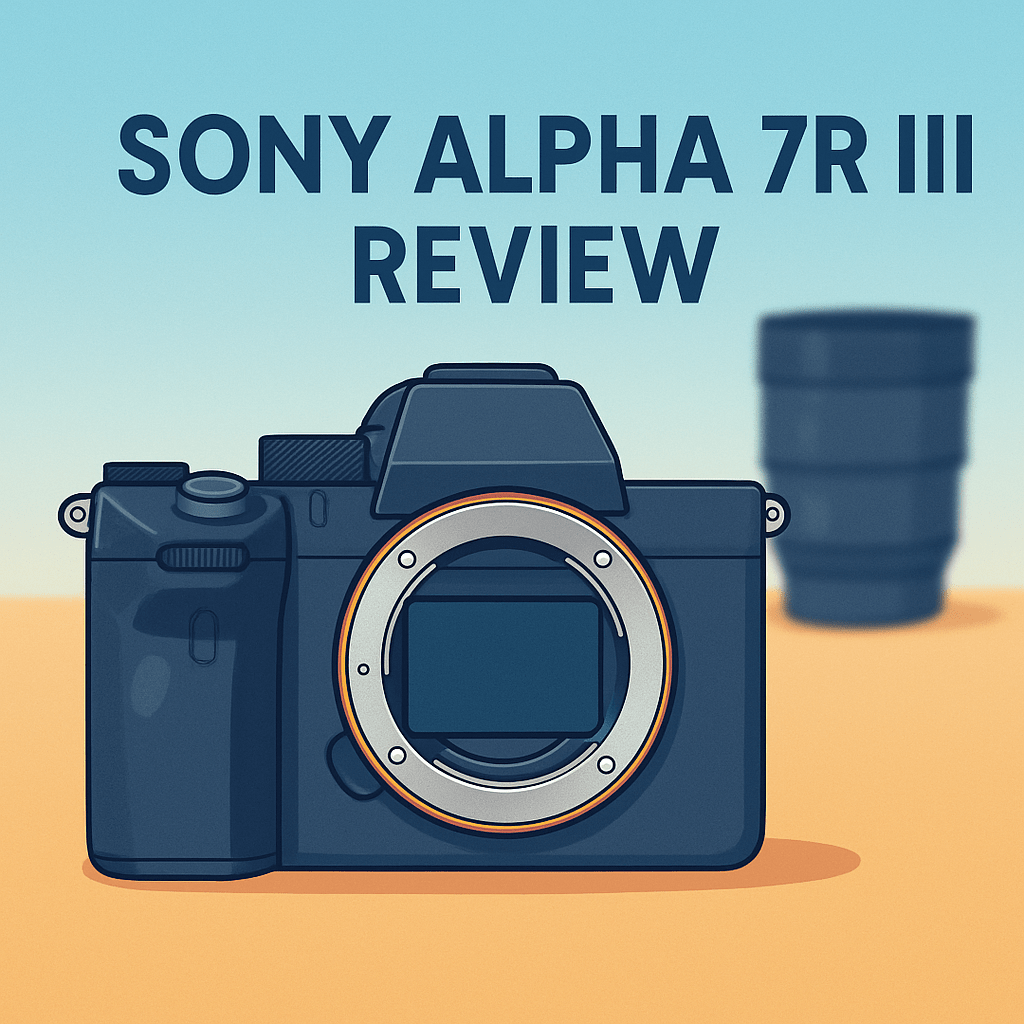
This sony alpha 7r iii review looks at whether the Sony Alpha 7R III Camera delivers where it matters most.
I’ll focus on who benefits — landscape, portrait, studio and product shooters, plus hybrid photographers who put stills first.
Its appeal — huge resolution, 5-axis stabilization, silent 10 fps bursts, 4K30 video, dual card slots, strong EVF and usable battery life — translates directly to real-world reliability.
After field-testing it across shoots, I paid special attention to file handling and workflow impact.
I’ll take a hands-on look at reliability, speed, and how this body affects your workflow, not just lab numbers; make sure to read the entire review as I unpack what matters in the real world — keep reading.

Sony Alpha 7R III Camera
High-resolution full-frame mirrorless body delivering exceptional detail, wide dynamic range, and reliable 5-axis stabilization. Fast autofocus and long battery life make it perfect for landscapes, studio, and wedding professionals.
Check PriceThe Numbers You Need
| Spec | Value |
|---|---|
| Sensor | 42.4 MP |
| Format | Full-frame CMOS |
| Lens Mount | Sony E-mount |
| Autofocus | Fast Hybrid AF |
| Image Stabilization | 5-axis in-body |
| Video | 4K at 30 fps |
| ISO Range | 100-32000 (expandable to 50-102400) |
| Shutter Speed | 1/8000s to 30s |
| Continuous Shooting | 10 fps (mechanical shutter), 10 fps (silent) |
| Memory Slots | Dual SD(UHS-II) + 1 Slot for SD(UHS-I) |
| Viewfinder | 3.69 million-dot OLED |
| LCD | 3-inch tilting touchscreen |
| Weight | Approximately 657 grams |
| Dimensions | 129 x 97 x 76 mm |
| Battery Life | Approximately 530 shots (LCD) or 440 shots (viewfinder) |
How It’s Built
The Sony Alpha 7R III Camera feels like a serious tool in the hand. In my testing the deep grip and balanced weight kept the camera steady for long walks and long shoots. That comfort matters when you’re carrying a camera all day.
I found the buttons and dials fall to hand naturally. Custom buttons and easy dial reach meant I changed settings quickly without digging through menus. For a beginner that saves time and keeps you in the moment.
The electronic viewfinder is sharp and gives real confidence when you’re focusing by eye, even in bright sun. The tilting touchscreen responds well and makes low or high angle shots painless. I really liked the finder clarity — it made manual focus work far easier.
Dual card slots give you options for backup or overflow, but the mixed-speed setup can slow down long bursts and clear times. The E-mount lens choice is huge and lets you shape the camera for any style. The body felt tough in real shoots, but I still kept a rain cover and careful lens swaps to avoid trouble.
In Your Hands
The Sony Alpha 7R III’s autofocus is where the camera earns its keep for most professionals: the hybrid system locks onto eyes and faces with calm confidence, making portraits, weddings, and editorial work feel straightforward rather than stressful. Subject tracking is solid for people and moderate action, though extremely fast or erratic movement can still give it pause.
Physically the shutter and drive feel refined—mechanical actuation is satisfyingly tactile and the silent option is genuinely useful in quiet ceremonies or studio stills. Blackout is minimal and the continuous mode catches fleeting expressions and short bursts of action without feeling like a compromise.
The mixed-speed dual card slots matter in practice; using the faster slot for primary captures and the other for overflow or backup improves clearing times and keeps a shoot moving. Real-world workflow benefits from a habit of offloading cards frequently and assigning slot roles before a job starts.
Battery life is reassuring for a full shooting day when managed carefully, but heavy live view or video work shortens that window; I always carry at least one spare and use power-saving routines for long assignments. Simple habits—spare batteries, airplane mode, and conservative screen use—stretch a day of shooting into a reliable workflow.
Menus, custom buttons, and the function setup reward time invested: a few well-placed customizations make AF mode swaps, drive selections, and exposure adjustments nearly instantaneous. The tilting touchscreen speeds framing in awkward positions and the dials offer tactile feedback you trust under pressure.
Over long sessions the body simply behaves—files are consistent, IBIS reduces wasted frames, and the camera’s practical sealing and build hold up to varied weather and long days. For commercial and client work it inspires quiet confidence that the job will come back with keepers.
The Good and Bad
- 42.4MP full-frame detail with strong cropping latitude.
- 5-axis in-body image stabilization.
- 10 fps continuous shooting with silent option.
- Dual card slots for redundancy.
- Mixed-speed card slots can bottleneck bursts and workflow.
- AF tracking for fast action not class-leading compared to current-generation systems.
Ideal Buyer
If you care about resolution and real-world workflow, this camera is aimed at shooters who want lots of pixels without the storage and processing hit of 60+MP bodies. The 42.4MP balance gives large-print and crop latitude without drowning your edit suite. It’s a choice for photographers who value detail and deliverables over headline specs.
Portrait, landscape, product and studio photographers will find the camera’s mix of high-resolution sensor, reliable AF and 5-axis IBIS compelling. Skin tones, texture and fine detail hold up in large prints and commercial work. Fastidious retouchers appreciate files that are rich but not unwieldy.
Event and wedding pros who need a quiet camera, steady handheld shots and fail-safe redundancy will like the silent 10 fps option and dual card slots. It handles long days and changing light with predictable results. If you require the absolute best subject-tracking or 4K60 video, this isn’t the flagship for that niche.
Hybrid creators who shoot mostly stills and only occasional video will benefit from solid 4K30 capability and dependable ergonomics. It’s a pragmatic pick when you want pro-level stills and competent video without chasing the latest video bells and whistles. The Sony Alpha 7R III Camera sits squarely in that sweet spot.
Better Alternatives?
We’ve already gone deep on the sony alpha 7r iii review — what it does well and where it fits into a working photographer’s kit. If you like the 42MP detail, 5-axis IBIS, and the quiet 10 fps shooting, you know why it’s a solid choice for landscape, portrait, and studio work.
Still, there are times you might want more resolution, faster subject tracking, or stronger video tools. Below are three real-world alternatives I’ve used in the field, with clear notes on what each one gives you that the A7R III doesn’t, and who should consider them.
Alternative 1:

Sony Alpha 7R IV Camera
Ultra high-megapixel full-frame system offering incredible resolution, refined autofocus, and robust in-body stabilization. Designed for commercial, landscape, and portrait shooters craving detail-rich large-format imagery and flexible cropping.
Check PriceI’ve used the Sony Alpha 7R IV on landscape and studio shoots and the big thing is the jump to 61MP. That extra resolution is obvious when you crop or print huge canvases — textures and fine detail really pop more than on the A7R III. The EVF also feels sharper and autofocus is a bit more refined, so manual-focus work and critical framing are easier in real shoots.
What it loses compared to the A7R III is simple workflow speed: files are much larger, so you’ll need more storage and a faster computer. The camera also feels a touch heavier in a long day of handheld shooting, and you’ll notice longer import and export times. IBIS and general handling are close to the A7R III, so you keep most of the practical shooting benefits but pay the price in file and workflow weight.
If you’re a studio, commercial, or landscape shooter who lives for every extra bit of detail and plans to print big or heavily crop, the A7R IV is worth the trade. If you value smaller files, faster transfers, or shoot long continuous action where buffer and speed matter more than ultimate pixels, you might stick with the A7R III instead.
Alternative 2:

Canon EOS R5 Camera
Pro-level hybrid shooter offering high-resolution stills and cinema-grade video capture. Lightning-fast autofocus, generous in-body stabilization, and advanced connectivity streamline studio workflows and run-and-gun production alike.
Check PriceI’ve shot weddings and short films with the Canon EOS R5 and its autofocus and video chops stand out next to the A7R III. The R5 locks onto faces and animals in ways that felt more reliable in tricky light, and the 8K/4K60 video options give you more creative freedom for slow motion and cropping in post. In run-and-gun situations the AF tracking simply inspires more confidence than the A7R III.
The trade-offs I saw were heat and battery life during long video sessions — the R5 can force you to plan shorter takes or manage cooling breaks. Also, high-resolution stills and 8K files demand big, fast cards and a heavy editing setup. Lenses for the RF mount are beautiful, but the cost adds up if you switch systems.
Choose the R5 if you need a true hybrid body that nails people and animal tracking and gives modern video features alongside excellent stills. If you mainly want the A7R III’s balance of resolution and long shooting days without the extra video complexity, the Sony remains a simpler, more forgiving choice.
Alternative 3:
Canon EOS R5 Camera
Flagship mirrorless powerhouse built for demanding professionals: blistering continuous shooting, superior autofocus tracking, dual-slot reliability, and rich video capabilities—perfect for sports, wildlife, and high-end commercial work.
Check PriceSeen as a flagship, the R5 is a different animal when you need speed and tracking. On sports and wildlife jobs I used its fast bursts and sticky AF to get keeper after keeper — the A7R III can capture decisive moments, but the R5 feels more confident on fast, erratic subjects. Dual high-speed slots and bigger buffers mean you can keep shooting long bursts without worrying as much about filling a slow card.
The downside versus the A7R III is that the R5’s files and video workflows are heavier, and in long handheld sessions I noticed more battery drain. For long landscape days or studio shoots where you want many megapixels but predictable battery life and file sizes, the A7R III can be less finicky and easier to manage.
If your work is sports, wildlife, or fast-paced events where autofocus tracking and burst performance win the day, the R5 will likely make you more productive. If you prioritize high-res stills with longer shoot times, quieter operation, and lighter file management, the A7R III still makes a lot of sense.
What People Ask Most
Is the Sony A7R III worth buying?
Yes — it still offers excellent 42MP image quality, fast performance and great value, especially used or on sale. It’s a strong choice if you want high resolution without paying for the newest model.
How does the Sony A7R III compare to the Sony A7R IV?
The A7R IV has higher resolution (61MP), denser AF coverage and a better EVF, while the A7R III is cheaper, faster in some workflows and still delivers excellent image quality. For many shooters the III is the better value; for pixel-hungry pros the IV is worth the upgrade.
Is the Sony A7R III good for low light photography?
Yes — it has strong high-ISO performance and wide dynamic range, giving usable results into the mid-to-high ISO range depending on your noise tolerance. Good glass and stabilization help further in low light.
How good is the autofocus on the Sony A7R III?
Very good — its hybrid AF system and reliable Eye AF handle stills and subjects well, though newer bodies improve tracking and coverage. For most photography tasks it’s fast and dependable.
Is the Sony A7R III good for video?
Capable — it shoots clean 4K (full-pixel readout) and is fine for run-and-gun or client work, but it lacks some modern video features and the thermal/video ergonomics of Sony’s dedicated video models. For heavy video users, newer Sony bodies are better choices.
What is the battery life of the Sony A7R III?
Very good for a mirrorless camera — it uses the NP-FZ100 and rates around 600–650 shots per charge in real-world use. Still, bring a spare battery for long shoots or extensive video recording.
Conclusion
The Sony Alpha 7R III Camera remains a photographer’s workhorse thanks to a high-resolution full-frame sensor, five-axis IBIS, and a responsive continuous-shooting mode with a silent option. Dual card slots and practical battery life keep it reliable across long assignments. Its video chops are solid for run-and-gun and short-form work, even if not flagship-level.
If you care most about pixel-level detail, consistent autofocus for portraits and events, and file sizes that stay manageable, this is the camera you reach for. Studio, landscape, portrait and event shooters will find it a pragmatic balance of image quality and day-to-day reliability.
The compromises are clear and real: card-slot speed choices can complicate heavy burst workflows, video frame-rate ceilings limit slow-motion options, and AF tracking has been eclipsed by newer systems. That doesn’t make it a bad camera; it makes it a focused one with known boundaries.
Against newer rivals it trades peak novelty for a mature, dependable platform that still serves pros. In short, this sony alpha 7r iii review finds the Sony Alpha 7R III Camera to be a highly capable, balanced tool for working photographers who prioritize stills detail and workflow sanity. Choose it when those priorities match your subjects and editing pipeline.
Sony Alpha 7R III Camera
High-resolution full-frame mirrorless body delivering exceptional detail, wide dynamic range, and reliable 5-axis stabilization. Fast autofocus and long battery life make it perfect for landscapes, studio, and wedding professionals.
Check Price

0 Comments