
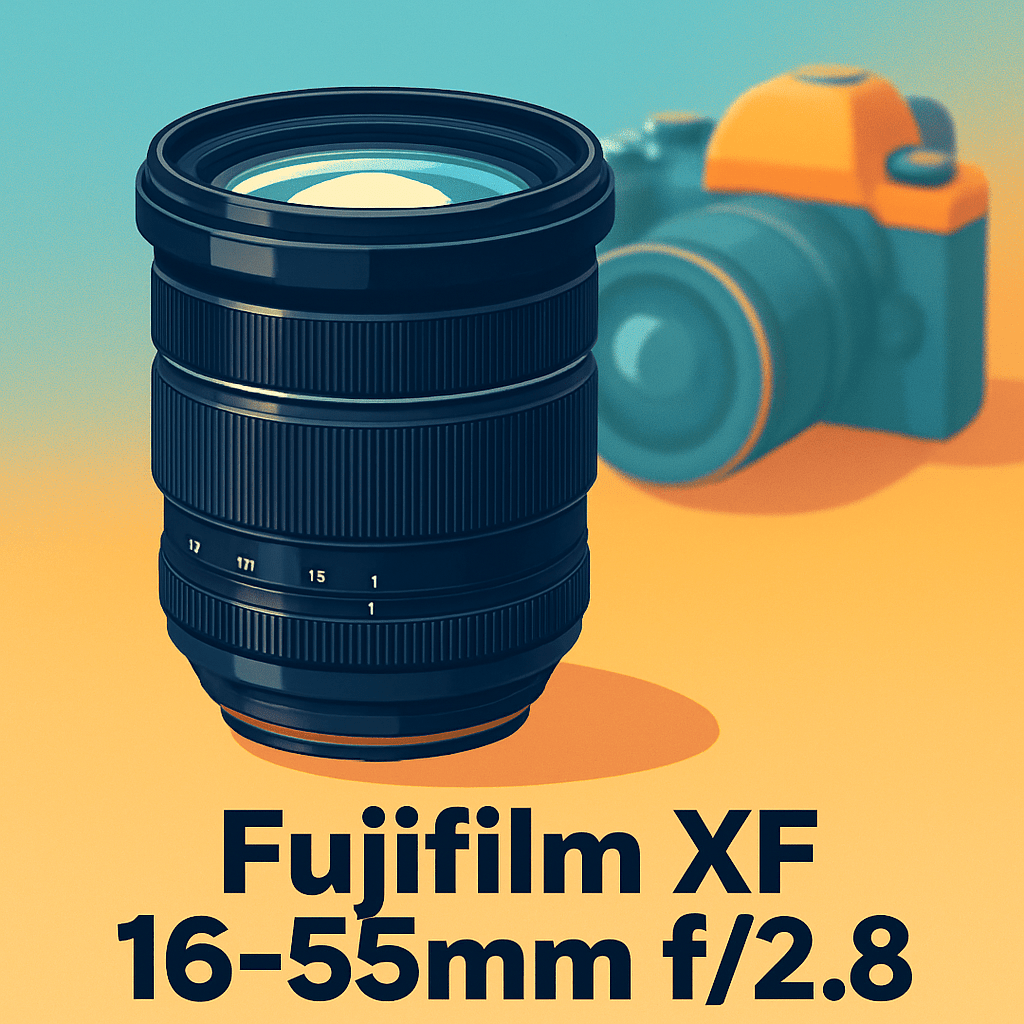
Wondering if the Fujifilm XF 16-55mm f/2.8 R LM WR can really be your one go-to zoom for events, portraits, and travel photography?
It’s aimed at shooters who want a fast, tough lens with quick autofocus and reliable image quality in the real world. I’ve taken it into low‑light weddings and rainy street shoots to see how it holds up.
This review will walk through handling, everyday performance without stabilization, image quality, AF behavior, and sensible alternatives so you can decide if it fits your kit. Make sure to read the entire review as I break down when it’s worth the weight and tradeoffs—keep reading.

Fujifilm XF 16-55mm f/2.8 R LM WR
Robust, pro-grade standard zoom with constant wide aperture, delivering razor-sharp images, fast linear-motor autofocus and weather-sealed construction—ideal for low-light shooting, events, landscapes and reliable all-day performance.
Check PriceThe Numbers You Need
| Spec | Value |
|---|---|
| Lens type | Standard zoom |
| Focal length | 16-55mm |
| Equivalent focal length (35mm) | 24-82.5mm |
| Aperture | Constant f/2.8 |
| Mount type | Fujifilm X-mount |
| Format compatibility | APS-C |
| Optical design | 17 elements in 12 groups |
| Minimum focusing distance | 0.3 m |
| Maximum magnification | 0.17 × |
| Image stabilization | None (no optical stabilization) |
| Autofocus | Linear motor, fast and quiet |
| Weather resistance | Yes — dust & moisture resistant (WR) |
| Filter size | 77mm |
| Dimensions (diameter × length) | Approximately 83 × 118 mm |
| Weight | Approximately 655 g |
How It’s Built
In my testing the Fujifilm XF 16-55mm f/2.8 R LM WR feels like a proper pro lens. It’s built for the Fujifilm X mount and made with solid materials and weather seals, so it doesn’t shy away from rain or dust. That gives you confidence shooting outdoors.
I found the size and weight sit nicely on mid-sized Fuji bodies. The heft feels reassuring when framing, but it can tire you on long walks. For beginners that means very steady handling and pro feel, just plan for a slightly heavier bag.
The front accepts 77mm filters which makes adding polarizers or NDs simple, and the included flower-shaped hood does a good job of cutting flare and protecting the glass. The aperture ring is nicely stepped and clicks into place so adjustments are obvious by touch. One thing that could be better is the overall weight for walkaround use.
After using it for a while I can say it’s built to last and forgiving in rough conditions. For beginners it’s easy to hold and simple to attach filters or the hood, which keeps your shots clean. If you travel a lot, just budget for the extra weight in your kit.
In Your Hands
The Fujifilm XF 16-55mm f/2.8 R LM WR earns its keep in the moment with that constant f/2.8 aperture—zooming doesn’t force you to chase exposure or change shutter speeds, so you stay focused on the scene. That wide-aperture behavior translates to reliable subject separation and low‑light confidence, whether you’re working an evening event or squeezing in environmental portraits under available light.
There’s no in‑lens stabilization, so handheld work asks for disciplined technique: brace, prioritize faster shutter speeds, and be ready to nudge ISO when the light falls away. If you habitually use a monopod or a camera body with stabilization, the lens feels comfortably less limiting; otherwise it rewards a steadier approach or a tripod for critical low‑light frames.
Close‑up capability is surprisingly useful for details and near‑subject storytelling, but this isn’t a macro tool—expect nice, sharp close shots rather than extreme magnification. The zoom’s coverage is genuinely versatile in the field: the wide end opens up landscapes and architecture, the middle focal lengths shine for street and documentary work, and the longer reach is flattering for portraits and tight detail shots.
Outdoors the weather‑resistant build lets you shoot through dust and drizzle without second‑guessing, and the lensmates well with polarizers and NDs for creative control. It’s a pro‑grade, workhorse zoom—a bit heavier to carry all day, but the handling, hooded flare protection, and overall reliability make it a dependable tool on shoots that matter.
The Good and Bad
- Constant f/2.8 aperture throughout the zoom range
- Weather-resistant construction (WR)
- Linear motor autofocus: fast and quiet
- Useful 24–82.5mm equivalent coverage for generalist work
- No optical image stabilization
- Relatively large and heavy (~655 g; 83 x 118 mm)
Ideal Buyer
If you prize speed, consistency and pro-grade handling, the Fujifilm XF 16-55mm f/2.8 R LM WR is built for you. Its constant f/2.8 gives reliable low‑light performance and shallow depth of field across the zoom range, so you can freeze moments or isolate subjects without swapping lenses. Photographers who shoot events, editorial assignments, environmental portraits and documentary work will appreciate that steady aperture and predictable exposure as they zoom.
Bring this lens when weather and durability matter. The WR sealing and solid construction stand up to rain, dust and gritty locations, while the linear motor AF is fast and quiet for stills and video capture. If you value ruggedness and dependable focus performance over featherweight convenience, this lens earns its place on your kit list.
That said, the XF 16-55mm is a deliberate trade: it’s heavier and lacks optical stabilization. Shooters who rely on ultra‑slow shutter speeds handheld, or who prefer the lightest possible travel kit, may find it less ideal. Consider it when image speed and build quality outweigh portability and in‑body or lens stabilization.
Look elsewhere if you need extended reach, stronger close‑up magnification, or built‑in OIS for run‑and‑gun video and low‑light tripod‑free shooting. For one‑lens travel, stabilized zooms or lighter standard zooms will serve better, but for photographers prioritizing speed, robustness and class‑leading sharpness, this is a go‑to workhorse.
Better Alternatives?
We’ve gone through the Fujifilm XF 16-55mm f/2.8 R LM WR and seen why many pros pick it: constant f/2.8, solid build, fast AF and reliable results in low light. At the same time it’s heavy for long walks and it lacks optical stabilization, so some shooters will want other options depending on their needs.
Below are a few real-world alternatives I’ve used that trade some of the 16-55’s strengths for other useful gains — lighter weight, image stabilization, extra reach, or a lower price. I’ll point out what each one does better and worse than the 16-55 and who I’d recommend it to.
Alternative 1:

Fujifilm XF 16-80mm f/4 R OIS WR
All-in-one travel zoom offering expansive focal range, built-in stabilization and weather sealing for confident shooting. Compact and lightweight, it balances sharp optics with convenient handling for on-the-go photographers.
Check PriceHaving shot with both, the 16-80mm f/4 wins on everyday comfort and versatility. Its built-in OIS makes handheld shooting at slower shutter speeds far easier than the 16-55 f/2.8 R LM WR, so for travel or run-and-gun work you’ll get more keepers without pushing ISO or using a tripod. The longer reach to 80mm is handy for portraits and details when you don’t want to swap lenses.
Where it loses to the 16-55 is in low light and subject separation. The constant f/4 is useful, but it doesn’t give the same background blur or speed in dim venues as the f/2.8 of the 16-55. I also noticed the 16-55 edges out the 16-80 for razor-sharp corners and micro-contrast at wide-open apertures, so if ultimate image quality at f/2.8 matters, the 16-55 still wins.
If you travel a lot, shoot handheld without IBIS, or want one lens for most days, the 16-80 is a great pick. I’d recommend it to photographers who value lighter gear, stabilization for video or evening shots, and reach — but who can live without the extra speed and the absolute best edge sharpness of the 16-55.
Alternative 2:

Fujifilm XF 18-55mm f/2.8-4 R LM OIS
Compact standard zoom with bright variable aperture and optical stabilization, producing crisp images and smooth handheld video. Fast linear-motor autofocus and lightweight design make it an excellent everyday lens.
Check PriceThe 18-55mm f/2.8-4 is one I’ve taken on short assignments and street days when I wanted a small, unobtrusive setup. Compared to the 16-55 f/2.8 R LM WR it’s much easier to carry and still gives very usable sharpness in the center. The OIS and quiet linear AF make it a strong choice for handheld video and fast-moving street scenes.
What you give up versus the 16-55 is clear: the 18-55 starts at 18mm instead of 16mm, so you lose a bit of wide-angle framing, and the variable aperture means you don’t get a consistent f/2.8 across the range. The build is lighter and less weather-sealed, so I’d be cautious in rough conditions where the 16-55’s WR build would be more reassuring.
Pick the 18-55 if you want a light, affordable lens that still performs very well for everyday shooting and video. It’s ideal for street photographers, hobbyists, and anyone who wants a compact setup without sacrificing too much image quality — especially if you don’t need the absolute wide-angle reach or full weather sealing of the 16-55.
Alternative 3:
Fujifilm XF 18-55mm f/2.8-4 R LM OIS
Versatile kit lens combining impressive sharpness, effective image stabilization and responsive autofocus in a compact package. Great for beginners and enthusiasts seeking reliable performance across photo and video needs.
Check PriceTo add another perspective on the 18-55, when I used it as a go-to single lens it felt like a great compromise: small, quick to focus, and steady handheld. Against the 16-55 f/2.8 R LM WR it’s less of a “pro” tool and more of a flexible everyday companion. For indoor family shots or casual events, the OIS helped me avoid blurry frames where the 16-55 would require higher ISO or a faster shutter.
On tough assignments the differences show: the 16-55’s constant f/2.8 gives a more consistent look and better subject isolation, especially in dim light or when I needed to push background blur. The 18-55’s weaker weather sealing and tougher corners at longer focal lengths mean it’s not my first pick for harsh outdoor pro work or when absolute edge-to-edge image quality matters.
I’d recommend this lens to beginners, vloggers, and photographers on a budget who want one reliable zoom that covers most daily needs. It’s also a smart second lens for someone who owns the 16-55 and wants a lighter option for travel or casual shoots where stabilization and compact size matter more than the last stop of image quality.
What People Ask Most
Is the Fujifilm XF 16-55mm f/2.8 weather-sealed?
Yes — the XF 16-55mm f/2.8 R LM WR has weather-resistant construction for dust and moisture, but it’s not designed for full underwater use.
Is the Fujifilm XF 16-55mm f/2.8 worth the price?
If you need a pro-grade, constant f/2.8 zoom with top-notch sharpness for events or pro work, it’s worth it; if you prioritize light weight or built-in stabilization, there are cheaper alternatives.
Does the Fujifilm XF 16-55mm f/2.8 have image stabilization?
No — this lens has no optical image stabilization, so you’ll rely on in-body stabilization in compatible Fujifilm camera bodies.
How sharp is the Fujifilm XF 16-55mm f/2.8?
Very sharp, especially in the center across the zoom range; edges and corners improve noticeably when stopped down.
What is the 35mm equivalent focal length of the Fujifilm XF 16-55mm f/2.8?
On Fujifilm’s APS-C bodies it’s about 24–82.5mm (commonly rounded to 24–84mm) full-frame equivalent.
Is the Fujifilm XF 16-55mm f/2.8 good for portraits and weddings?
Yes — the focal range and constant f/2.8 make it excellent for portraits and low-light wedding work, though it’s fairly heavy and lacks stabilization for long handheld shoots.
Conclusion
The Fujifilm XF 16-55mm f/2.8 R LM WR is the lens I reach for when I need pro-level speed, weather resistance and optics that deliver authority across a day’s work. Its constant aperture and linear-motor autofocus make exposure and focus predictable under pressure, and the build communicates that this is a tool meant to be used hard. In practice it rewards shooters who demand consistency and image quality first.
That clarity comes with trade-offs: it’s a chunkier, commitment-style standard zoom and it does not include optical stabilization, so handheld slow-shutter or ultra-light travel scenarios require compromises. If stabilization, lower weight or extended reach are your top priorities, lenses like the 16-80, the compact 18-55, or the long-reach 18-135 offer sensible alternatives. Those options are practical and capable, but none quite match the 16-55mm’s outright speed and rendering.
Bottom line: choose the Fujifilm XF 16-55mm f/2.8 R LM WR if your work values fast f/2.8 performance, rugged reliability and quiet, repeatable AF. If you need OIS, a lighter one-lens travel kit or longer reach, pick an alternative that better fits those needs. Match the lens to your shooting priorities and it will either become your daily workhorse or a deliberate, excellent choice for demanding assignments.
Fujifilm XF 16-55mm f/2.8 R LM WR
Robust, pro-grade standard zoom with constant wide aperture, delivering razor-sharp images, fast linear-motor autofocus and weather-sealed construction—ideal for low-light shooting, events, landscapes and reliable all-day performance.
Check Price




0 Comments