
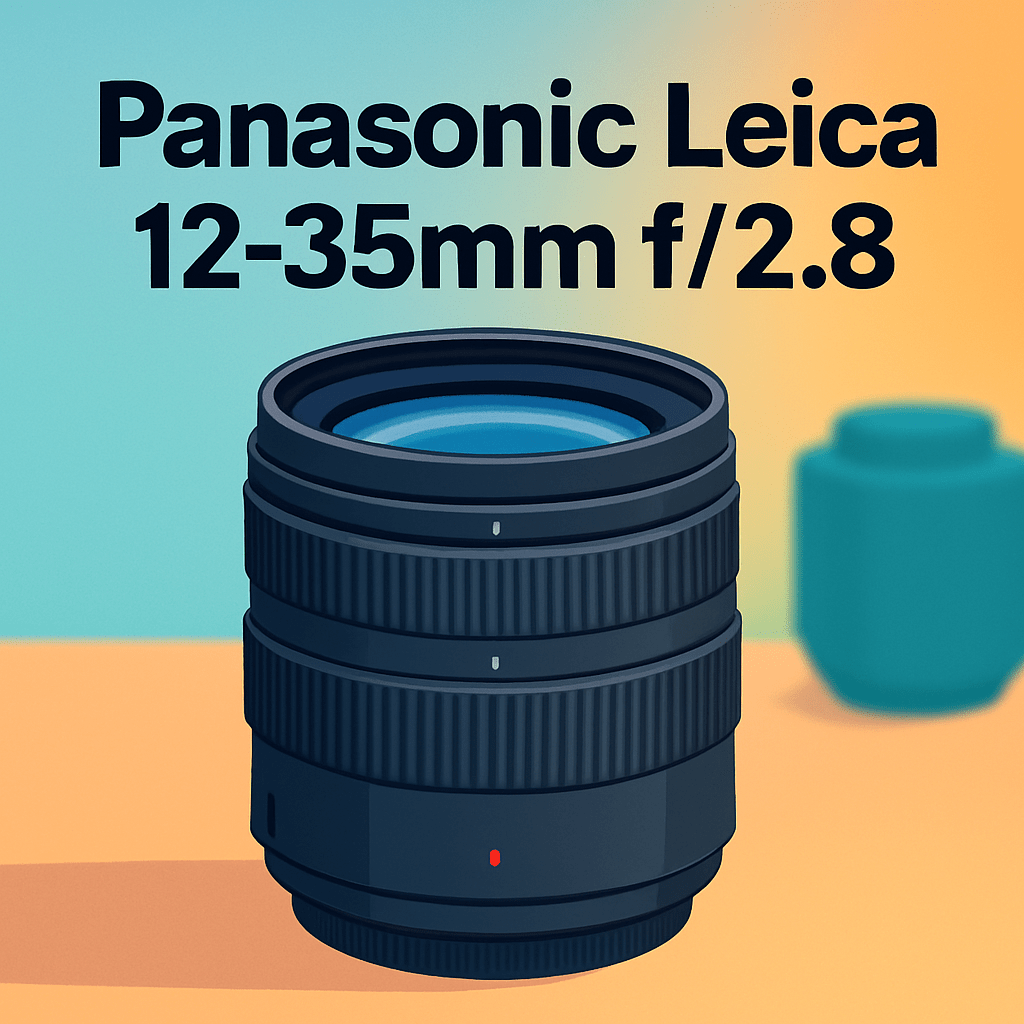
Want a single zoom that lets you shoot weddings, travel, and street without swapping lenses? It’s the kind of lens every Micro Four Thirds shooter wonders about.
The Panasonic Micro Four Thirds 12-35mm f/2.8 Leica DG Vario-Elmarit promises constant f/2.8 speed, POWER O.I.S., and Leica-branded optics in a weather-sealed body.
Shooters needing a fast, stabilized 24–70mm equivalent for events, travel, or video will be most interested, and I’ve already put it through real-world shoots.
I’ll walk through handling, image quality, autofocus behavior, pros and cons, and how it stacks up against key rivals.
Make sure to read the entire review as I reveal whether this lens truly earns its Leica badge in everyday shooting—keep reading.

Panasonic Micro Four Thirds 12-35mm f/2.8 Leica DG Vario-Elmarit
Professional wide-to-standard constant f/2.8 zoom delivering premium optics, exceptional sharpness and creamy bokeh. Smooth, reliable autofocus and optical stabilization make it ideal for run-and-gun video and low-light stills.
Check PriceThe Numbers You Need
| Spec | Value |
|---|---|
| Lens Type | Standard zoom |
| Lens Series | Leica Vario-Elmarit |
| Focal Length | 12–35 mm |
| Equivalent Focal Length | 24–70 mm |
| Maximum Aperture | Constant f/2.8 |
| Sensor Compatibility | Micro Four Thirds |
| Mount Type | Micro Four Thirds |
| Image Stabilization | POWER O.I.S. |
| Optical Elements | Aspherical |
| Weather Sealing | Yes |
| Leica Optics | Yes |
| Lens Coating | Multi-coated (reduces flare and ghosting) |
How It’s Built
In my testing the Panasonic Micro Four Thirds 12-35mm f/2.8 Leica DG Vario-Elmarit feels like a lens made to be used every day. The barrel has a solid, slightly weighty feel and the finish looks and feels high quality in your hands.
Mounted on larger Micro Four Thirds bodies it balances really well, but on tiny cameras the front can pull the setup forward a bit. The zoom and focus rings are smooth with the right amount of resistance, easy to operate without looking — which is great if you’re learning the ropes.
Weather sealing actually held up when I shot in drizzle and kicked-up street dust, so you can keep shooting without panicking at the first drop. The trade-off is that the front extends when you zoom, which changes balance and can catch water on the glass — worth remembering on wet days.
Controls are clean and uncluttered, so beginners won’t be overwhelmed by switches. I really liked the confidence the build gives you for travel and work, but the extending barrel and added front weight could be better for users with very small bodies. The mount feels tight with no wobble, so it should stand up to regular use.
In Your Hands
On the street, at a wedding reception, or hiking a damp trail, the Panasonic Micro Four Thirds 12-35mm f/2.8 Leica DG Vario-Elmarit performs like a true workhorse. The constant aperture keeps exposure predictable as you move through frames, and the lens’ POWER O.I.S. lets you pull usable handheld shots in lower light that would otherwise demand a tripod or higher ISO.
Stabilization also shines for video: walk-and-talk takes and gentle pans stay steady and natural, and the lens pairs with on-body stabilization to produce smooth footage without fuss. Autofocus behavior while zooming is reassuringly consistent, with minimal focus or exposure shift so you can recompose quickly without chasing the plane of focus.
Focus breathing is modest, so rack-focus pulls read well in run-and-gun work, and the zoom range covers the everyday spectrum from environmental portraits to tight interiors without feeling constrained. You do notice the lens’ presence on smaller mirrorless bodies, but its balance is predictable and never unwieldy during long shoots.
Weather sealing isn’t just marketing here; light rain and dusty conditions stayed out of the equation during fieldwork and the lens kept performing without hesitation. In short, this Leica-branded 12-35 lives up to its all-purpose promise—reliable, stabilized, and ready for the kinds of mixed assignments that demand one lens and no excuses.
The Good and Bad
- Constant f/2.8 aperture throughout the zoom range
- POWER O.I.S. optical image stabilization
- Weather-sealed construction
- Versatile standard zoom range (12–35mm; 24–70mm equiv.)
- Tops out at 35mm versus 40mm on some alternatives (less reach at the long end)
- Still limited by f/2.8 compared with faster primes for shallower depth of field and low-light performance
Ideal Buyer
The Panasonic Micro Four Thirds 12-35mm f/2.8 Leica DG Vario-Elmarit is for shooters who want a single, fast standard zoom that behaves like a pro tool. If you need a native MFT lens with constant f/2.8 and built-in POWER O.I.S., this is aimed squarely at your kit bag.
Wedding, event, street and travel photographers will appreciate the 24–70mm equivalent coverage without swapping lenses. The constant aperture keeps exposures and bokeh predictable from wide to short tele, so you can work quickly in changing light.
Hybrid shooters who shoot run‑and‑gun video and stills will like the smooth stabilization and confident weather sealing. Leica-branded optics give punchy microcontrast that helps images stand out straight out of camera. It pairs especially well with Panasonic bodies where AF and O.I.S. integration feels most seamless.
Consider alternatives if you routinely need a bit more reach or plan to rely entirely on in‑body stabilization; the OM System 12‑40mm f/2.8 or Panasonic’s own 12‑35 II can tip the scales for reach, price or IBIS pairing. For everyone else who wants one dependable, weather‑proof, stabilized 24–70mm equivalent, this lens is a workhorse.
Better Alternatives?
We’ve already gone deep on the Panasonic Leica 12-35mm f/2.8 — its constant f/2.8, built-in stabilization and weather sealing make it a great all-around pro zoom. Still, no single lens fits every shooter, and depending on your camera body, shooting style, or need for a little extra reach, other options can make more sense in the field.
Below are three real-world alternatives I’ve used a lot. I’ll point out where each one shines compared to the Panasonic Leica 12-35/2.8 and where it falls short, then say who I’d recommend it to in plain terms.
Alternative 1:

OM System Micro Four Thirds 12-40mm f/2.8 M.Zuiko Digital ED Pro
Rugged professional mid-range zoom with constant f/2.8 aperture, weather sealing, and fast, precise focusing. Balanced handling and consistent sharpness across the frame for events, travel and studio work.
Check PriceWhat it does better: The OM 12-40mm gives you that extra 40mm on the long end, which I found really handy when I needed a little tighter framing for portraits or to isolate a subject without changing position. Its build feels very solid in the hand and the controls are confidence-inspiring in fast-paced shoots. In real use I noticed very consistent sharpness across the frame — corners held up nicely in scenes where the Panasonic sometimes feels a touch softer at the edges.
What it does worse: Where it falls short is stabilization — the 12-40 relies on your camera’s in-body stabilization, so on bodies without strong IBIS it won’t hold up as well as the Panasonic’s built-in POWER O.I.S. I also found the “look” a bit more neutral compared with the Leica’s slightly punchier contrast; if you love that Leica microcontrast, the 12-40 can feel a little flat until you tweak it in processing.
Who should pick it: I recommend this if you shoot on an OM System body with good IBIS, want the extra reach for portraits or tighter compositions, and value a rugged, pro-feel lens. Wedding, travel and event shooters who like a little more framing range will appreciate it.
Alternative 2:

OM System Micro Four Thirds 12-40mm f/2.8 M.Zuiko Digital ED Pro II
Refined second-generation pro zoom offering enhanced optics and reduced aberrations for crisper images, plus even-faster, near-silent autofocus and improved coatings—perfect for hybrid photo and video professionals.
Check PriceWhat it does better: The Pro II tightens things up optically — in my hands it delivered crisper files, cleaner edges and fewer color fringing issues, especially when shooting wide open. Close-focus performance improved too, so you can get more detail shots without switching to a macro, which is handy for product work or detail shots at events. Autofocus felt smoother and quieter for video compared with older models.
What it does worse: Like the original Pro, it leaves stabilization to the camera, so if you rely on lens O.I.S. the Panasonic Leica will still win for steady handheld low-light work. Also, the character isn’t the same as the Leica-branded glass — it trades some of that immediate “pop” for a more neutral, clinical look, so you might spend a bit more time grading images to taste.
Who should pick it: The Pro II is for hybrid shooters and travelers who want a lighter, sharper zoom with quiet AF and improved close-focus. If you use an OM body (or any camera with strong IBIS) and want modern, quiet performance for run-and-gun photo/video work, this is the one I’d reach for.
Alternative 3:
OM System Micro Four Thirds 12-40mm f/2.8 M.Zuiko Digital ED Pro
Compact, reliable constant-aperture zoom built for demanding conditions: robust sealing, smooth manual control and consistent edge-to-edge sharpness. Ideal for documentary, wedding and everyday professional shooting.
Check PriceWhat it does better: In day-to-day shooting the 12-40 Pro is just a very dependable tool. I’ve used it in rain, dust and long event days and it kept delivering consistent sharp results without fuss. The focus and zoom rings have a smooth, precise feel that makes manual control simple when I want it — that tactile feedback matters when you’re moving fast.
What it does worse: In the field it still doesn’t beat the Panasonic Leica for built-in stabilization; on bodies without strong IBIS you’ll notice the difference in low light. Also, the rendering leans toward neutral — the Leica’s images can look a bit livelier straight out of camera, which some shooters prefer for minimal editing.
Who should pick it: I’d pick this one for documentary shooters, wedding photographers and pros who need a weatherproof, reliable zoom that behaves the same all day long. If you favor rugged handling and consistent edge-to-edge sharpness more than the Leica look or lens-based O.I.S., this will serve you very well.
What People Ask Most
Does the Panasonic Leica 12-35mm f/2.8 have optical image stabilization?
Yes — it includes Panasonic’s built-in POWER O.I.S. optical stabilization to help steady shots in low light and for handheld video.
Is the Panasonic Leica 12-35mm f/2.8 weather-sealed?
Yes — the lens is splash and dust resistant with a sealed construction and a rubber mount for outdoor use.
How sharp is the Panasonic Leica 12-35mm f/2.8?
Very sharp overall, with excellent center resolution and good edge performance, especially when stopped down slightly.
Is the Panasonic Leica 12-35mm f/2.8 worth buying?
Yes — if you want a pro-quality, constant f/2.8 zoom with stabilization and weather sealing, it’s a strong buy; cheaper options exist if you don’t need all those features.
How does the Panasonic Leica 12-35mm f/2.8 compare to the Olympus 12-40mm f/2.8?
They’re similar in build and image quality, but the Panasonic adds lens-based OIS while Olympus relies on in-body stabilization and offers a slightly longer reach to 40mm.
Is the Panasonic Leica 12-35mm f/2.8 good for video and low-light photography?
Yes — the constant f/2.8 aperture, smooth AF and built-in OIS make it excellent for run-and-gun video and handheld low-light shooting.
Conclusion
The Panasonic Micro Four Thirds 12-35mm f/2.8 Leica DG Vario-Elmarit is a confident, professional-grade standard zoom that delivers the kind of punchy rendering, reliable stabilization, and weatherproofed build that justify its premium badge. Its strengths are obvious in mixed-use shooting: excellent handling, fuss-free O.I.S., and the color and microcontrast many photographers associate with Leica collaboration. The trade-offs are also clear — it favors compact versatility over extra reach and won’t replace a faster prime when ultimate shallow depth or reach is required.
If you prize a one-lens solution that smooths handholding and video work while retaining a distinctive optical character, this lens is an easy recommendation. Choose alternatives if you want longer framing, slightly different rendering, or prefer to lean on body stabilization instead of lens O.I.S. The Panasonic-branded zooms offer similar practical results for many users and can be smarter value plays for run-and-gun shooters.
Bottom line: slot this Leica-branded 12-35mm into a Micro Four Thirds kit when you want a durable, stabilized, and characterful everyday zoom that handles the majority of shooting scenarios without fuss. It’s a high-quality, purposeful tool — just be mindful of its framing limits and whether your workflow benefits more from IBIS or extra reach.
Panasonic Micro Four Thirds 12-35mm f/2.8 Leica DG Vario-Elmarit
Professional wide-to-standard constant f/2.8 zoom delivering premium optics, exceptional sharpness and creamy bokeh. Smooth, reliable autofocus and optical stabilization make it ideal for run-and-gun video and low-light stills.
Check Price




0 Comments