
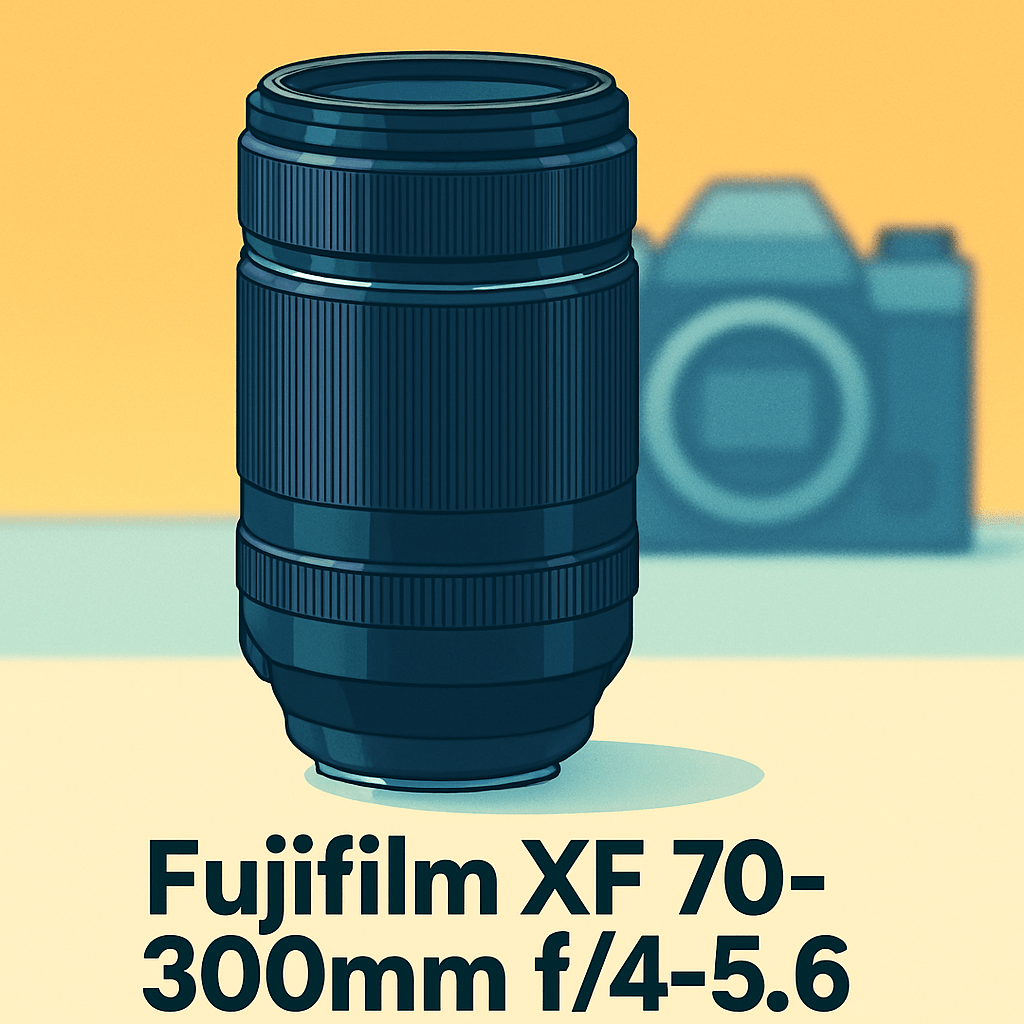
Want more tele reach without hauling a giant lens everywhere you go? If you shoot wildlife, travel, or daylight action on an X-mount body, that question probably keeps you up as much as the images do.
The Fujifilm XF 70-300mm f/4-5.6 R LM OIS WR promises long reach, stabilization, and weather resistance in a travel-friendly package, and I took it into rain and long hikes to see how it behaves in real shoots. It’s aimed at photographers who value reach and portability over super-fast glass.
This review will walk through handling, autofocus, stabilization, and image character so you can decide if it’s the right tele zoom for your kit. Make sure to read the entire review as I’ll show where it shines—and where compromises matter—so you’ll know what to expect in the field.

Fujifilm XF 70-300mm f/4-5.6 R LM OIS WR
Versatile telephoto zoom delivering extended reach, fast linear-motor autofocus and effective optical stabilization. Lightweight, weather-sealed construction ensures reliable outdoor performance for wildlife, sports, and travel photography with crisp, high-contrast images.
Check PriceThe Numbers You Need
| Spec | Value |
|---|---|
| Focal length | 70–300mm |
| Aperture | f/4–5.6 |
| Lens mount | Fujifilm X-mount |
| Format | APS-C (approx. 105–450mm full-frame equivalent) |
| Image stabilization | Yes (OIS) |
| Autofocus drive | Linear motor |
| Weather resistance | Yes (WR) |
| Minimum focus distance | 0.83–1.5m |
| Filter size | 67mm |
| Optical design | 17 elements in 12 groups |
| Weight | 580g |
| Length | 132.5mm |
| Maximum magnification | 0.33x |
| Aperture blades | 9 (rounded diaphragm) |
| Internal focusing | Yes |
How It’s Built
In my testing the Fujifilm XF 70-300mm f/4-5.6 R LM OIS WR feels like a lens built to go outside and stay there. The weather-sealed construction gave me confidence on rainy hikes and dusty trails, so I kept shooting while others packed up. For real-world use that means fewer second guesses and more frames in the bag.
I found the balance on typical X-series bodies pleasantly steady, not front-heavy like bigger telezooms. Internal focusing and the linear motor AF are a joy — focus is quick and the front element doesn’t rotate, which makes using filters far less fussy. That internal design also helps keep the handling predictable as you zoom and shoot handheld.
After using it for a while I really liked the aperture ring — it’s clicky, easy to reach, and great for switching exposure modes fast. One thing that could be better is the zoom action; it’s generally smooth but shows a bit of play at the long end, so you’ll want to watch for slight creep when pointing downward.
Fit and finish feel solid, with a snug mount and clean tolerances that inspire confidence on longer trips. The hood stows neatly and works well against flare, and the common filter size makes packing filters painless. For beginners this means a travel-friendly tele that’s forgiving, stable, and built to handle messy outdoor shoots.
In Your Hands
On X-series bodies the Fujifilm XF 70-300’s linear motor-driven autofocus is quick and quiet, locking reliably in single-shot and tracking well when subjects move predictably. In very erratic action it can hesitate briefly, but it usually recovers fast and keeps frames usable.
The lens’ relatively slow, variable aperture means you trade shutter speed and ISO more aggressively in lower light than with faster glass, but in daylight it behaves without drama. The rounded diaphragm yields smooth, pleasing out-of-focus areas and natural highlight roll-off, even if it won’t deliver the razor-thin subject isolation of a faster teleprime.
That long reach translates into tangible framing advantages for wildlife and field sports—distant subjects fill the frame and mid-to-long compression helps separate them from busy backgrounds. The combination of compression and bokeh gives subjects a three-dimensional feel that’s especially flattering on animals and candid portraits from a distance.
Close-focus capability turns the lens into a handy near‑macro option for flowers, details and small subjects, letting you capture tight crops while keeping a comfortable working distance. It won’t replace a dedicated macro lens for extreme reproduction, but it’s unexpectedly useful for travel and editorial assignments.
Internal focusing keeps the front element steady, so circular polarizers and other filters remain effective and handling stays predictable during focus pulls. The optical stabilizer is a real enabler for handheld tele work, and the weather-sealed construction held up well in rain, dust and chilly conditions without noticeable thermal quirks.
The Good and Bad
- Useful tele range on APS-C (approx. 105–450mm equivalent)
- Effective OIS for handheld telephoto work
- Weather resistance for outdoor reliability
- Manageable size/weight (580g; 132.5mm; 67mm filters)
- Variable f/4–5.6 aperture limits low-light and subject isolation vs. faster tele options
- Tele-end sharpness demands careful technique and stabilization
Ideal Buyer
The Fujifilm XF 70-300mm f/4-5.6 R LM OIS WR is for shooters who want substantial tele reach without hauling a tripod or a giant lens bag, offering roughly 105–450mm equivalent framing on X‑mount bodies in a travel‑friendly 580g package. Its effective OIS, weather resistance and snappy linear‑motor AF make handheld wildlife, airshow, and daylight sports shooting far more practical, while internal focusing plus a common 67mm filter thread and 0.33x close‑focus option add real field versatility. If you value stabilized reach, manageable size and the ability to grab distant detail on the run, this lens was designed with you in mind.
It’s less appealing for low‑light indoor sports, event photographers or portraitists who need the constant f/2.8 speed and subject separation that the XF 50‑140mm f/2.8 provides, and dedicated birders seeking maximum reach and tele‑end acuity will likely prefer the XF 100‑400mm despite its extra bulk. The core trade‑off is clear: reach and portability versus a slower variable aperture that forces higher ISOs or slower shutter speeds in dim conditions. For most travel, landscape and outdoor action shooters who prioritize stabilized reach and weather‑proof reliability over outright low‑light performance, the 70‑300mm strikes a smart, practical balance.
Better Alternatives?
We’ve already gone through what the XF 70-300mm does well: long reach in a fairly light, weather-sealed package with good stabilization for handheld work. It’s a great all-round telephoto for travel, daytime wildlife, and outdoor sports when you want reach without a heavy rig.
If you need different tradeoffs — more reach, more speed, or better low-light performance — there are a few clear alternatives worth considering. Below I’ll point out how each one shoots differently in real life, what it gives up compared to the 70-300, and who I’d recommend it to.
Alternative 1:

Fujifilm XF 100-400mm f/4.5-5.6 R LM OIS WR
Super-telephoto zoom offers extraordinary reach with powerful optical stabilization and rapid linear-motor focusing. Robust, weather-sealed build supports handheld shooting of distant subjects—ideal for wildlife, aviation and action photography.
Check PriceHaving used the 100-400, the biggest real-world win over the 70-300 is pure reach. When birds or planes are small and far away, that extra 100mm on the long end means you get cleaner frames without heavy cropping. The image quality at the extreme tele end also looks a touch stronger in real shooting — better subject separation and more usable detail at long distances.
What you give up is size and comfort. The 100-400 is noticeably bigger and heavier in the hand, so long handheld sessions get tiring. I often end up using a monopod or resting the lens when I’m on long birding trips. It’s also pricier, so you’re paying for reach and a bit more optical polish.
This is the lens I’d pick if I’m shooting birds, distant wildlife, or airshows and I can tolerate the extra weight or bring a monopod. If you value maximum reach and tele-end IQ more than pocketability, the 100-400 is a clear step up from the 70-300.
Alternative 2:

Fujinon XF 50-140mm f/2.8 R LM OIS WR
Fast constant-aperture telezoom delivers consistent f/2.8 performance, smooth linear-motor autofocus and stabilization for low-light shooting. Durable, weather-resistant construction ensures professional-grade results for portraits, events, and sports.
Check PriceThe 50-140mm f/2.8 is the opposite trade to the 100-400: it’s about speed, not reach. In real shoots it lets me freeze action in lower light, shoot indoor sports, and get much creamier background blur for portraits. That constant f/2.8 makes a big difference when you’re inside or when you want subject separation on a cloudy day.
Compared with the 70-300, it can’t reach as far — you’ll miss distant birds and far-off subjects without stepping closer or cropping. It’s also a heavier, more solid-feeling lens, so it’s bulkier in the bag and less travel-friendly than the lightweight 70-300.
If you photograph weddings, indoor sports, events, or portraits where low-light performance and shallow depth of field matter most, the 50-140 f/2.8 will feel like a professional tool. Choose it when speed and image separation beat having the extra tele range.
Alternative 3:
Fujinon XF 50-140mm f/2.8 R LM OIS WR
Precision-engineered optic combines sharp edge-to-edge image quality with creamy bokeh and reliable optical stabilization. Ergonomic controls and rugged sealing make this a go-to lens for weddings, studio work, and fast-paced action.
Check PriceComing back to the 50-140mm again, another useful point from hands-on use is control and feel. The focus and zoom rings are smooth, the stabilization is reliable, and the lens balances well on heavier X-series bodies. For long shoots like a full wedding day, it wears better on a pro body than many long, zoomed-out tele lenses.
Where it’s worse than the 70-300 is obvious: you lose far-end reach. I’ve missed shots of distant wildlife that the 70-300 would have captured, so you have to choose based on what you shoot most. Also, it’s a more expensive choice up front, but you get class-leading sharpness and consistent results wide open.
Buy the 50-140mm f/2.8 if you need a go-to, fast telezoom for events, portraits, and action where low light and shallow depth of field are priorities. If your work skews toward distant subjects or travel where weight matters, stick with the 70-300 or consider the 100-400 instead.
What People Ask Most
Is the Fujifilm XF 70-300mm f/4-5.6 weather-sealed?
Yes — it’s a WR (weather-resistant) lens with seals for dust and moisture, so it’s fine for shooting in light rain and dusty conditions.
Does the Fujifilm XF 70-300mm f/4-5.6 have image stabilization (OIS)?
Yes — it has built-in OIS that provides several stops of stabilization and helps a lot for handheld shooting at long focal lengths.
Is the Fujifilm XF 70-300mm f/4-5.6 good for wildlife and bird photography?
Yes for most daylight wildlife and bird work thanks to its reach and OIS, but the relatively slow aperture limits low-light performance and very distant, small birds compared with faster or longer lenses.
How sharp is the Fujifilm XF 70-300mm f/4-5.6 across the zoom range?
Very sharp in the center across most of the range and best stopped down a bit, with slight softness toward the edges and a bit more falloff at the longest focal lengths.
Is the Fujifilm XF 70-300mm f/4-5.6 compatible with Fujifilm teleconverters?
Fujifilm’s X-mount teleconverters are not broadly guaranteed to work with every XF lens, and the 70-300 is not officially listed as fully compatible, so expect reduced AF performance and image quality if you try a TC.
How fast and reliable is the autofocus on the Fujifilm XF 70-300mm f/4-5.6?
The linear motor AF is fast and generally reliable for stills and tracking on modern X-series bodies, though it can struggle a bit in low light or with very fast erratic subjects.
Conclusion
The Fujifilm XF 70-300mm f/4-5.6 R LM OIS WR is a compelling telephoto zoom that balances reach, stabilization and weather-sealed reliability in a travel-friendly package. Its stabilized optics, fast linear AF and internal focusing make it an easy choice for handheld outdoor work and distant subjects. The rounded diaphragm and close-focus capability add pleasing rendering and real-world versatility beyond pure long-lens use.
The tradeoffs are clear: the variable, relatively slow aperture and the long-end demands mean you’ll rely on good light or stabilization to get the best results. If you need extreme reach, the larger super-tele still delivers tighter frames and marginally higher tele-end performance. Likewise, shooters who prioritize low-light speed and creamy subject separation will prefer a constant-aperture pro zoom.
For most wildlife, travel and outdoor-action shooters looking for a lightweight, weather-resistant telephoto, this lens is a high-value, pragmatic pick for field photographers. Buy it now if you value portability, OIS and dependable AF over maximal aperture or ultimate reach. If your work is niche—dedicated birding or dim indoor sports—consider stepping up or sideways to lenses built specifically for those demands.
Fujifilm XF 70-300mm f/4-5.6 R LM OIS WR
Versatile telephoto zoom delivering extended reach, fast linear-motor autofocus and effective optical stabilization. Lightweight, weather-sealed construction ensures reliable outdoor performance for wildlife, sports, and travel photography with crisp, high-contrast images.
Check Price



0 Comments