
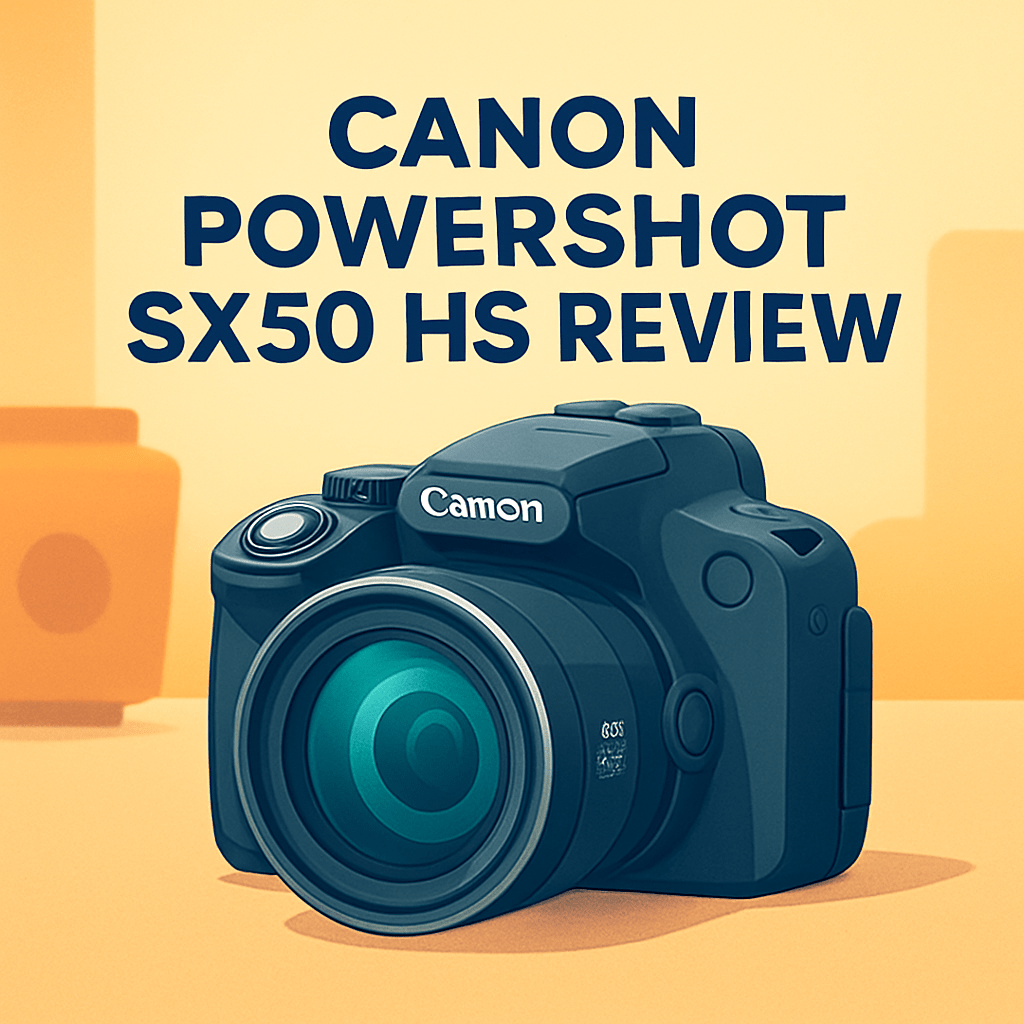
Want to know if a single camera can get you close to the action without changing lenses? Here’s a practical, hands-on look.
I’ve tested the Canon PowerShot SX50 HS Camera in the field to see how it performs in practical use. This isn’t a lab report — it’s about shoots where your images really matter.
If you chase birds, travel light, or love lunar close-ups, its long reach and manual controls’ll appeal. Stabilization and a vari-angle screen also pay dividends in real shooting.
I worked handheld and supported at long telephoto, tested low-light compromises, and judged video stabilization and focus reliability. Make sure to read the entire review — I’ll show who it suits, its limits, and how to get the best shots; keep reading.

Canon PowerShot SX50 HS Camera
Compact bridge camera delivering 50x optical reach, flexible manual controls, and image stabilization. Ideal for travel and wildlife, it balances long-range performance with portable handling and reliable low-light shooting.
Check PriceThe Numbers You Need
| Spec | Value |
|---|---|
| Sensor | 12.1 MP CMOS |
| Optical Zoom | 50x (24–1200mm f/3.4–6.5) |
| Image Stabilization | Optical (lens-based, Intelligent IS) |
| LCD Screen | 2.8″ vari-angle, 461k dots |
| Viewfinder | Electronic (EVF), 202k dots |
| Maximum ISO | 12800 |
| Continuous Shooting | 2.2 fps |
| Shutter Speed | 15–1/2000 sec |
| HD Video | 1080p (24fps) |
| Manual Controls | Full manual, PASM modes |
| Built-in Flash | Yes |
| Hot Shoe | Yes |
| Weight | Approx. 551g (with battery/card) |
| Dimensions | 123 x 87 x 106 mm |
| Focus Points | 9-point AiAF |
How It’s Built
In my testing the Canon PowerShot SX50 HS feels like a proper camera rather than a toy compact. That extra heft makes it a more stable platform for the long zoom and helps cut down shake.
The grip is surprisingly comfortable and gives you confidence when the lens is extended. Balance does shift forward at long focal lengths, so I often brace against my body or rest an elbow to steady shots.
Controls are laid out for photographers who want to learn manual exposure. In my hands the PASM dial and buttons have decent tactile feedback and are easy to reach. What I really liked was how quickly I could change settings without fumbling.
The flip-out LCD is a real plus for awkward angles and video work, but the screen and viewfinder are a bit soft in resolution. I found myself using the viewfinder for distant shots even though the image looks coarse; beginners will still appreciate the option when framing long telephoto shots.
There’s a built-in flash and a hot shoe for a real flash or accessory. The body feels solid, but long sessions make the weight obvious and the strap can dig in. If weight bothers you, use a comfortable strap or a monopod.
In Your Hands
In practice the SX50 HS’s autofocus is reliable for still subjects in good light, locking quickly for landscapes and posed wildlife. It struggles more with moving targets, slowing and hunting when you’re zoomed far or contrast is low. Using a quick half‑press and anticipation improves hit rates.
Continuous shooting is slow by modern standards, so fleeting action often requires timing rather than brute force of frames. Shutter response is fine for everyday shooting but can feel sluggish for split‑second moments. In low light the camera leans on higher sensitivity and images start showing noise before high‑ISO settings are fully usable.
Optical stabilization is a standout, letting you capture surprisingly steady handheld telephoto stills and usable walk‑and‑shoot footage. Video has a filmlike cadence but autofocus can be slow and rolling‑shutter shows on quick pans. For important clips I often switch to manual focus or keep pans deliberate and measured.
This camera excels for travel details, moon shots and distant subjects where reach matters more than high burst rates. Bracing against structures, using a monopod, pre‑focusing and careful panning markedly increase keeper rates at long focal lengths. In bright light you can handhold with confidence; in low light support is often essential.
The Good and Bad
- Massive 50x optical zoom (24–1200mm) in a single package
- Optical Intelligent IS helps stabilize long‑reach stills and video
- Full manual controls (PASM) for creative flexibility
- Vari‑angle LCD aids high/low angles and video
- Slow continuous shooting (2.2 fps) limits action capture
- Narrow max aperture at tele (f/6.5) increases ISO and shutter compromises
Ideal Buyer
The Canon PowerShot SX50 HS Camera is for photographers who want enormous reach in a single, pocketable package. If your subjects are distant — birds, the moon, airshow passes or tiny travel details — this camera lets you frame them without swapping glass.
It’s also aimed at shooters who insist on real manual control and a hot shoe in a superzoom body. You get PASM modes and DSLR-like handling that make creative exposure and flash work straightforward. And the hot shoe is a real advantage for bounce flash indoors.
Best results come from users who primarily shoot in good light and value stabilization and framing flexibility more than blistering burst rates or modern 4K video. Intelligent IS and the big telephoto let you grab keepers handheld, but the 2.2 fps burst, modest AF tracking and 1080p/24fps video will frustrate action-first shooters. With a little telephoto technique — bracing, half-press focus and support — keeper rates improve dramatically.
Think of it as an all‑in‑one travel camera for enthusiasts who want reach and reliability without carrying multiple lenses. Use a monopod or firm support in lower light and this camera rewards with images you couldn’t get with a standard compact.
Better Alternatives?
We’ve already looked at what the Canon PowerShot SX50 HS does well: a huge 50x reach in a single body, useful manual controls, and decent stabilization for handheld long‑reach shots. That camera is a great all‑rounder for travel and wildlife when you want one camera that goes from wide to very tight without changing lenses.
If the SX50 meets most of your needs but you want something newer, or with even more reach or modern video features, here are a few real alternatives I’ve used in the field and how they compare in everyday shooting.
Alternative 1:

Canon PowerShot SX70 HS Camera
Advanced superzoom with 65x optical magnification and 4K video capture. Features a high-resolution electronic viewfinder, tilting LCD, and fast autofocus for versatile shooting from landscapes to distant subjects.
Check PriceThe SX70 HS is the natural step up from the SX50 in real use. I found its longer reach and newer processor make framing distant subjects faster, and the 4K video is a big jump if you record moving subjects or want to crop video later. Autofocus is quicker and more confident than on the SX50, so I got more keepers when shooting moving birds or kids running.
Where it’s worse than the SX50 is not in image feel but in the same small‑sensor limits: low‑light shots still get noisy and background blur is limited. The SX70 is also a bit larger and can feel front‑heavy at long focal lengths, so it benefits from a monopod or careful handholding techniques just like the SX50.
If you want a modern, better‑autofocus, and 4K‑capable Canon that keeps the superzoom spirit, the SX70 is for you. Pick it if you want newer features and more reach without leaving the Canon family or dealing with huge weight.
Alternative 2:

Nikon COOLPIX P1000 Camera
Extraordinary ultra-telephoto bridge camera offering 125x optical zoom to reach subjects hundreds of meters away. Delivers RAW support, 4K video, and steady stabilization for nature, astronomy, and sports imaging.
Check PriceThe P1000 brings astonishing reach — far beyond the SX50 — and that changes what you can shoot. I’ve framed lunar details and distant wildlife that would be out of reach on the SX50, and the RAW support plus 4K video give more flexibility in post. Stabilization helps, but the camera’s size means you often need a tripod for the best results.
Compared with the SX50 the P1000 is worse in everyday handling: it’s heavy and bulky, and handheld shooting at extreme zoom is tiring and gives lower keeper rates. Autofocus can also struggle at the longest distances, so you may spend more time setting up and waiting for focus than with the quicker, nimbler SX50.
Choose the P1000 if absolute reach is what you need and you’re OK carrying a big camera and a tripod. It’s ideal for moon shots, plane spotting, and very distant wildlife where the SX50 simply can’t get close enough.
Alternative 3:
Nikon COOLPIX P1000 Camera
Built for extreme long-range photography, this powerhouse captures distant detail with a 3000mm-equivalent lens, precise manual controls, tripod-ready ergonomics, and high-resolution stills plus smooth 4K movie recording.
Check PriceUsed on a tripod, the P1000 feels like a different tool from the SX50: its ergonomics and manual controls are set up for careful long‑range work. When I stopped down, took time to focus, and used a solid support, the P1000 resolved tiny details at distance that the SX50 couldn’t. The 4K video was smooth and useful for crops or stabilizing later.
It does worse than the SX50 for casual shooting and travel. You can’t walk around all day with the P1000 the way you can with the lighter SX50. Also, in low light the tiny sensor still limits image quality, so you trade weight and reach for better framing, not cleaner high‑ISO files.
If you’re a photographer who plans shoots with a tripod and wants to tease out details at extreme range, the P1000 is your pick. If you need a hand‑carry, all‑day camera for fast action, you’ll probably prefer the SX50’s easier handling.
What People Ask Most
Is the Canon PowerShot SX50 HS worth buying?
Yes — it’s a good buy if you want an affordable superzoom with great reach and simple handling, but skip it if you need top-notch low-light performance or interchangeable lenses.
How is the image quality of the Canon PowerShot SX50 HS?
Image quality is solid in good light with decent detail, but high ISO noise and limited dynamic range hurt low-light shots and large prints.
How good is the 50x optical zoom on the Canon PowerShot SX50 HS?
The 50x zoom gives exceptional reach for distant subjects, though sharpness and autofocus performance drop off at full telephoto and you’ll often need a tripod.
Does the Canon PowerShot SX50 HS support RAW shooting?
Yes — it records RAW (CR2) files so you can recover detail and color in post, although noise remains a limitation at high ISOs.
Is the Canon PowerShot SX50 HS good for wildlife and bird photography?
Yes for casual wildlife and birding thanks to its long zoom, but for fast action or small birds you may find the autofocus speed and buffer limiting compared with faster bodies.
How does the Canon PowerShot SX50 HS compare to the Canon PowerShot SX60 HS or a DSLR?
Compared to the SX60 HS, the SX50 is older with slower AF and fewer modern features but similar superzoom utility; compared to a DSLR it’s more compact and offers huge zoom in one body, but it can’t match a DSLR’s sensor size, speed, or image quality.
Conclusion
The Canon PowerShot SX50 HS Camera is a practical all‑in‑one for photographers who want genuine long reach without swapping lenses. It pairs extensive telephoto flexibility with full manual controls, optical stabilization, a vari‑angle LCD, an electronic viewfinder and a hot shoe for flash. In the field it’s a confident tool for travel, wildlife and distant detail when light is cooperative.
That versatility comes with clear tradeoffs: shooting speed and autofocus sophistication lag modern rivals, and video and display capabilities feel dated next to newer models. The telephoto end demands careful technique because the lens and shutter ceiling force compromises between shutter speed and sensitivity in challenging light. If your work depends on fast action, higher‑resolution video or top‑end low‑light performance, this camera will frustrate you.
I recommend the SX50 HS to enthusiasts who value extreme reach, manual control and stabilized handheld framing in good light. Seek newer superzooms if you need higher‑resolution video, quicker AF and faster burst rates or absolute max reach with updated electronics. Match your subjects and shooting conditions to the camera’s strengths, use solid bracing or a monopod, and you’ll get excellent keepers from this capable, purposeful package.
Canon PowerShot SX50 HS Camera
Compact bridge camera delivering 50x optical reach, flexible manual controls, and image stabilization. Ideal for travel and wildlife, it balances long-range performance with portable handling and reliable low-light shooting.
Check Price

0 Comments