
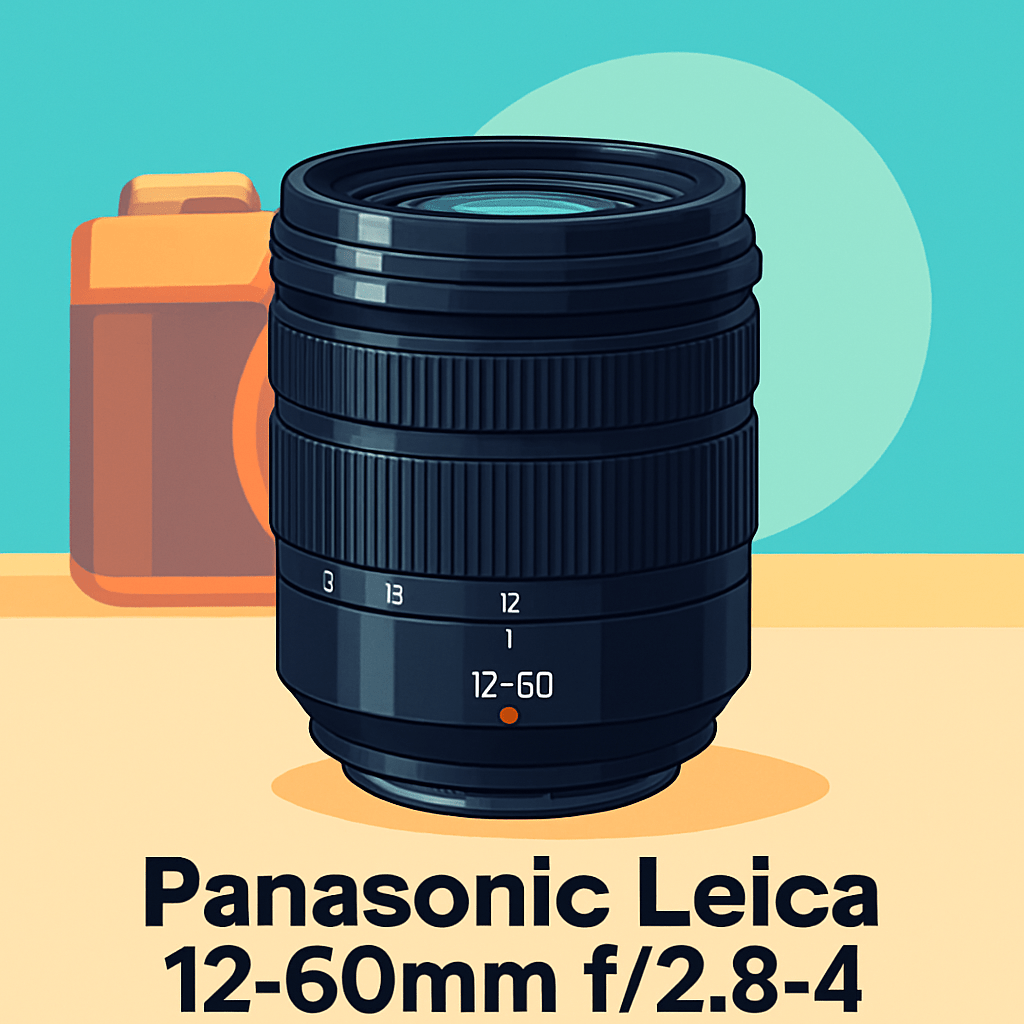
Want one lens that covers everything from wide environmental shots to short-tele portraits without swapping lenses?
The Panasonic Leica DG Vario Elmarit 12-60mm f/2.8-4 Micro Four Thirds aims to do exactly that, giving you roughly 24–120mm equivalent reach in a compact, travel-friendly package.
It’s geared at hybrid shooters, travelers, documentary makers and families who want Leica-certified optics, in-lens stabilization and weather sealing in a lightweight zoom, though it trades a variable aperture for pro constant-f/2.8 options.
After taking it on several trips and shoots, I focused on handling, stabilization, sharpness across the range and close-focus usability to judge real-world payoffs. I’ll also compare it to the 12–40mm f/2.8, 12–35mm f/2.8 and 12–100mm f/4, so make sure to read the entire review as I break down handling, rendering and whether this is the one-lens solution you’ve been waiting for — keep reading.

Panasonic Leica DG Vario Elmarit 12-60mm f/2.8-4 Micro Four Thirds
Versatile wide-to-portrait zoom with bright f/2.8–4 aperture, exceptional sharpness and robust construction. Ideal for travel and video, featuring smooth focusing, low distortion, and weather-sealed reliability.
Check PriceThe Numbers You Need
| Spec | Value |
|---|---|
| Aperture | f/2.8–4 |
| Focal range | 12–60mm (24–120mm equivalent) |
| Optical stabilization | POWER O.I.S. |
| Weather sealing | Yes |
| Lens mount | Micro Four Thirds |
| Filter size | 62mm |
| Minimum focus distance | 0.2m |
| Maximum magnification | 0.3x |
| Lens construction | 14 elements in 9 groups |
| Aspherical elements | 3 |
| Leica-certified optics | Yes |
| Dimensions (approx.) | 77.4mm diameter, 93mm length |
| Weight | 320g |
| Aperture type | Circular, 7-blade |
| Autofocus | Yes |
How It’s Built
In my testing the Panasonic Leica DG Vario Elmarit 12-60mm f/2.8-4 Micro Four Thirds felt like a real travel companion — solid, nicely finished, and noticeably lighter than many pro zooms. The Leica name is more than a sticker here; the lens has a reassuring build that makes you reach for it when going out the door. For everyday shooting that translates to less fatigue and a lens you actually want to carry all day.
The zoom and focus rings are damped just right in my hands, smooth without being loose, so making quick framing or fine focus tweaks is easy. Markings are clear and spaced so you can change focal lengths without fumbling, which is great for street or event work. The focus ring is precise enough for careful work but friendly for beginners who like to push the lens manually now and then.
I really liked the weather sealing — I tested it in light rain and came away confident to shoot outdoors more aggressively. The mount gasket and sealed points give real peace of mind when you’re on the road or in messy conditions. The overall feel sits a step above average Micro Four Thirds zooms, which matters when you want reliability over long trips.
One thing that could be better is the way the barrel extends as you zoom; on very small bodies it shifts balance and can make one‑handed work a bit trickier. The handy POWER O.I.S. switch sits where you can toggle it quickly, and the close‑focus ability means you can grab decent detail shots without swapping lenses. For a beginner that means less gear to learn and more shots in the bag, though if you favor rock‑steady handling on tiny cameras you’ll want to brace for a little forward pull as you zoom out.
In Your Hands
Autofocus on the Panasonic Leica DG Vario Elmarit 12-60mm f/2.8-4 is brisk and quietly confident for both stills and video; single-shot locks feel immediate and continuous tracking holds subjects with minimal hunting. Face and eye detection stayed reliable across the focal range, which makes keeping people sharp during events straightforward.
The in-lens POWER O.I.S. is the workhorse for handheld shooting, taming camera shake so slower shutter captures are usable across the zoom. For video it yields smooth pans and walking shots with only minor micro‑jitters, and when paired with bodies that have IBIS the two systems feel synergistic rather than redundant.
The variable aperture is a practical compromise: you get a brighter wide end for low‑light starts but must accept reduced light as you zoom, so exposure nudges are routine. At portrait distances the lens produces pleasing subject separation on Micro Four Thirds, enough isolation for natural-looking portraits without overly creamy bokeh.
Rendering leans toward refined contrast and natural color, consistent throughout the range and flattering for skin tones and landscapes alike. Backlit work is handled confidently with restrained flare and few ghosting artifacts, so using the sun as rim light is often usable straight away.
Optical geometry shows the expected wide‑end bulge and gentle tele compression, and in-camera corrections remove most obvious distortion in everyday shooting. High‑contrast edges can reveal occasional purple fringing in extreme backlight, but that is easily managed in RAW processing.
Close‑focus capability is surprisingly useful: getting tight on food, product, or detail shots yields strong micro‑contrast and readable detail. The working distance asks for careful lighting and steadiness, but the quasi‑macro results are practical and satisfying for editorial and social work.
As a travel and street companion the extended 24–120mm equivalent reach really minimizes lens changes, and the light, weather‑sealed build makes it comfortable to carry all day. For events and landscapes it delivers reliable handling and stopped‑down edge integrity that keeps you shooting confidently in mixed conditions.
The Good and Bad
- Versatile 12-60mm (24-120mm equivalent) range in a compact 320g package
- Bright wide end for class (f/2.8) with variable f/2.8-4 aperture
- POWER O.I.S. for handheld stills and video stabilization
- Weather-sealed design for outdoor reliability
- Variable aperture limits low-light performance and background separation at the tele end
- Shorter reach than superzoom alternatives (stops at 60mm)
Ideal Buyer
The Panasonic Leica DG Vario Elmarit 12-60mm f/2.8-4 Micro Four Thirds is for photographers who want one‑lens freedom on the road. It gives a true 24–120mm equivalent range in a compact, weather‑sealed package with in‑lens O.I.S. and Leica‑branded optics. At about 320g it balances well on compact Micro Four Thirds bodies and slips into travel bags easily.
Travel shooters, street photographers, and parents who hate swapping glass will appreciate its reach, 0.2m close‑focus and modest weight. Hybrid creators who shoot run‑and‑gun video as well as stills will value the stabilization and smooth handling over the bulk of pro f/2.8 zooms. Its weather sealing and 62mm filter thread make it practical for outdoor and mixed‑light shoots.
That comfort comes with a conscious tradeoff: the variable f/2.8–4 aperture means less background separation and lower light speed at 60mm than a constant f/2.8 lens. If you demand the absolute low‑light performance or the longer tele reach of a 12–100mm, you might prefer a different zoom. Pick the 12–40 or 12–35 if consistent f/2.8 shallow DoF is your priority, or the 12–100 if you want longer reach with fewer lens swaps.
In short, this lens suits photographers prioritizing versatility and low weight over absolute low‑light speed. It’s the kind of optic you buy to travel light and still cover nearly every everyday shooting scenario.
Better Alternatives?
We’ve gone through what the Panasonic Leica 12-60mm f/2.8-4 does best: a light, weather‑sealed travel zoom with useful 24–120mm equivalent reach, in‑lens O.I.S., and a bright wide end. It’s a great one‑lens choice for travel, events and hybrid video work when you need reach without carrying much gear.
If you want different trade‑offs — more constant speed, stronger pro feel, or better stabilization on bodies without IBIS — there are a few lenses I regularly reach for instead. Below are three lenses I’ve shot with a lot, how they compare to the Leica 12‑60, and who I think should pick each one.
Alternative 1:

OM System M.Zuiko Digital ED 12-40mm f/2.8 Pro Micro Four Thirds
Professional-grade standard zoom offering constant f/2.8 brightness, razor-sharp optics and fast, precise autofocus. Compact, durable design for demanding photo and video work with excellent edge-to-edge clarity.
Check PriceThe OM 12‑40mm f/2.8 Pro is the classic counter‑offer to the Leica 12‑60. In real shooting I found it gives a more consistent image look across the frame and the constant f/2.8 matters: exposure doesn’t change when you zoom, and you get shallower background blur at the longer end compared with the Leica’s f/4 at 60mm. It feels very solid in the hand and the images look punchy straight out of camera.
What it loses to the Leica is reach and in‑lens stabilization. The 12‑40 ends at 40mm, so you miss that extra 20mm of telephoto for tight portraits or distant subjects. Also, unlike the Leica’s POWER O.I.S., the OM lens expects your camera to provide stabilization — on bodies without strong IBIS that can make a practical difference for slow‑shutter handholding.
Pick the OM 12‑40 if you’re a shooter who values constant aperture, top‑tier optics and a pro build — wedding shooters, studio/hybrid photographers, and anyone who needs reliable low‑light performance and consistent depth of field more than extra tele reach.
Alternative 2:

Panasonic Lumix G X Vario II 12-35mm f/2.8 Micro Four Thirds
High-performance standard zoom with constant f/2.8 for stunning low-light results, impressively smooth image stabilization, and tactile control. Lightweight pro-level handling tailored for hybrid shooters and creatives.
Check PriceThe Panasonic 12‑35mm II is closer to the Leica in handling because it also feels compact, but it gives you a constant f/2.8 plus Panasonic’s Power O.I.S. That combo means steady handheld shots and very smooth video on bodies that don’t have the strongest IBIS — in day‑to‑day shooting I found it easier to get usable frames at slower speeds than with the Leica once you’re inside buildings or under dim light.
Compared to the Leica 12‑60, the obvious trade is range. The 12‑35 stops at 35mm, so you lose the long end and some of the Leica’s travel flexibility. The Panasonic also sits in a different space for people who want consistent exposure and stabilization together — it won’t replace the Leica if your priority is a single lens that covers 24–120mm.
Choose the 12‑35 II if you are a hybrid shooter or videographer who wants steady, consistent results and the look of f/2.8 across the frame. It’s great for run‑and‑gun video, low‑light street work, and anyone who prefers in‑lens stabilization paired with a constant aperture.
Alternative 3:

Panasonic Lumix G X Vario 12-35mm f/2.8 Micro Four Thirds
Classic constant-aperture 12-35 zoom delivers reliable f/2.8 performance, balanced sharpness, quiet autofocus and compact build. Great everyday walkaround lens for photos and run-and-gun video.
Check PriceThe original Panasonic 12‑35mm f/2.8 is a very usable lens for less money, and I’ve depended on it for event days and quick trips. It gives the same constant f/2.8 advantage as the II and delivers pleasing sharpness and quiet autofocus for video. In practice it’s a reliable, sensible tool when you want a professional look without paying top dollar.
Versus the Leica 12‑60, the 12‑35 trades reach for that constant aperture and a smaller price — you’ll miss the tele end and the Leica’s slightly longer close‑focus reach, but you gain predictable exposure and easy background separation at similar focal lengths. The older Panasonic version can feel a touch less refined than the II in stabilization and AF speed, but it still gets the job done in most real‑world shoots.
Go for the original 12‑35 if you want a pro‑grade constant‑aperture zoom on a budget or you buy used gear. It’s ideal for photographers who shoot indoors, cover events, or do a lot of run‑and‑gun video and don’t need the extra reach of the Leica 12‑60.
What People Ask Most
Is the Panasonic Leica 12-60mm f/2.8-4 weather-sealed?
Yes — it’s dust- and splash-resistant with seals for outdoor use, but it’s not rated for underwater use or heavy immersion.
Does the Panasonic Leica 12-60mm f/2.8-4 have optical image stabilization (OIS)?
Yes — it features Panasonic’s POWER O.I.S., which helps steady handheld shots and smooths video.
How sharp is the Panasonic Leica 12-60mm f/2.8-4 across the frame?
The center is very sharp even wide open, while edges and corners are softer at f/2.8 and improve noticeably when stopped down to around f/5.6–f/8.
How does the Panasonic Leica 12-60mm f/2.8-4 compare to the Olympus 12-40mm f/2.8?
The Olympus 12-40mm gives a constant f/2.8 and slightly better edge performance, while the Panasonic 12-60mm offers a longer reach and built-in OIS for more versatility but with a slower max aperture.
Is the Panasonic Leica 12-60mm f/2.8-4 good for video and autofocus performance?
Yes — it delivers smooth, quiet AF and effective stabilization for video, especially on Panasonic bodies, though actual AF speed can vary by camera model.
Is the Panasonic Leica 12-60mm f/2.8-4 good for low-light and portrait photography?
It’s decent in low light at the wide end but not as strong as a constant f/2.8 or a fast prime, and it makes solid environmental and telephoto portraits though bokeh is moderate compared with faster lenses.
Conclusion
The Panasonic Leica DG Vario Elmarit 12-60mm f/2.8-4 Micro Four Thirds is a purposeful, travel‑ready tool for hybrid shooters who want one reliable lens to cover most days. It’s aimed squarely at photographers and videographers who prize portability, built‑in stabilization and weather resistance over headline‑grabbing speed.
Its real strengths are practical: Leica‑certified optics that deliver pleasing rendering, dependable in‑lens stabilization that steadies handheld work, and a compact, confidence‑inspiring build that invites all‑day carry. Close‑focus flexibility and overall balance make it unusually versatile for run‑and‑gun shooting without feeling like a compromise tool.
The tradeoffs are clear and unavoidable. The variable aperture means you surrender some low‑light and background‑separation performance compared with pro constant‑aperture zooms, and it can’t out‑stretch purpose‑built superzooms for long‑reach travel needs. If maximum shallow‑depth control or ultimate tele reach are priorities, this won’t be your final word.
Choose this lens when you want one compact, stabilized, weather‑resistant zoom that covers the broadest range of everyday shooting with minimal fuss. Opt for a constant f/2.8 or a long‑reach superzoom if low‑light speed or ultimate coverage matter more. Review the hands‑on samples, handheld O.I.S. trials, and close‑focus images to confirm it fits your shooting style.
Panasonic Leica DG Vario Elmarit 12-60mm f/2.8-4 Micro Four Thirds
Versatile wide-to-portrait zoom with bright f/2.8–4 aperture, exceptional sharpness and robust construction. Ideal for travel and video, featuring smooth focusing, low distortion, and weather-sealed reliability.
Check Price


0 Comments