
Want a small, fast lens that’ll actually improve your low‑light and street photos?
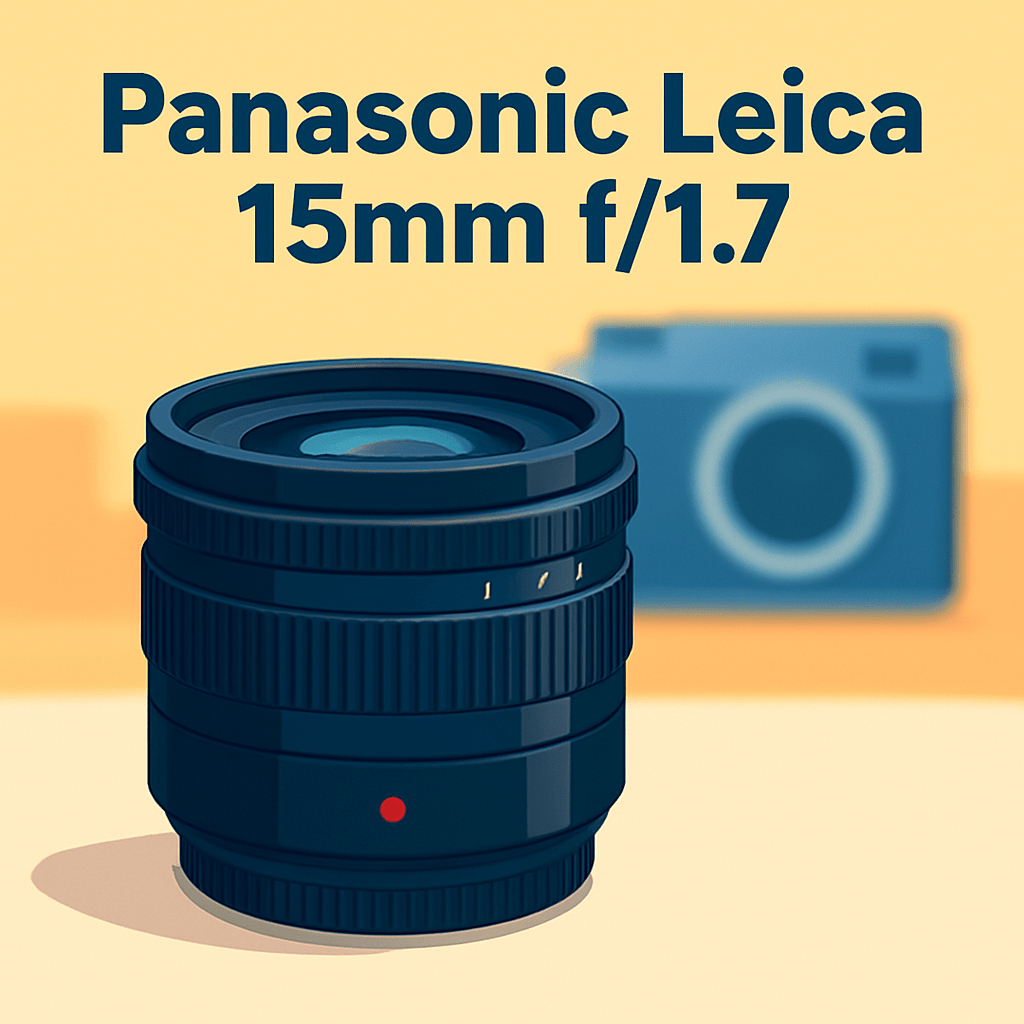
The Micro Four Thirds 15mm F1.7 Leica DG Summilux is a compact, wide‑angle prime for MFT bodies, delivering about a 30mm‑equivalent field of view that suits street, travel, and environmental work.
It’s built around an f/1.7 aperture for better low‑light performance and subject separation, with Leica‑designed coatings and a quiet AF that make discreet shooting easier.
After shooting it in the field, I’ve found it offers the kind of micro‑contrast and edge performance you’d expect from a Leica‑branded optic, though it isn’t weather sealed so plan accordingly.
I’ll walk through handling, sharpness, autofocus, real‑world use cases, pros and cons, and key alternatives so you’ll know who benefits most—make sure to read the entire review as I compare images and handling, keep reading.

Micro Four Thirds 15mm F1.7 Leica DG Summilux
Legendary optical design delivers creamy bokeh and edge-to-edge sharpness in a compact package. Fast aperture captures low-light scenes with beautiful subject separation—ideal for street, landscape, and environmental portraits.
Check PriceThe Numbers You Need
| Spec | Value |
|---|---|
| Focal length | 15mm |
| Equivalent focal length (35mm) | ~30mm |
| Maximum aperture | f/1.7 |
| Lens type | Wide-angle prime |
| Lens mount | Micro Four Thirds |
| Aperture blades | 7 rounded blades |
| Lens construction | 9 elements in 7 groups |
| Filter thread size | 46mm |
| Minimum focusing distance | Approximately 0.25 meters |
| Maximum magnification ratio | Around 0.11x |
| Autofocus | Yes, with fast and quiet focusing motor |
| Lens coating | Leica-designed multi-coating for flare and ghosting reduction |
| Dimensions | Approx. 57mm diameter × 55mm length |
| Weight | Around 115 grams |
| Weather sealing | No (not fully weather sealed) |
How It’s Built
In my testing the Micro Four Thirds 15mm F1.7 Leica DG Summilux feels surprisingly refined for such a small lens. The mount and focus ring had firm, predictable tolerances with no gritty play. That translates to confidence when changing lenses quickly in the field.
It sits beautifully on smaller MFT bodies—light enough that you forget it’s there and balanced enough for steady handheld work. On larger bodies it still works fine but looks and feels tiny, especially with big grips or battery packs. For travel and gimbal setups that small footprint is a real win.
I really liked how the Leica-designed coatings kept flare and ghosting under control when I shot into the sun. I found the aperture closes smoothly and produces pleasing out-of-focus highlights without odd edges in everyday shooting. One thing that could be better is the lack of weather sealing, so I watched the lens carefully in drizzle and dusty situations.
Filters are easy to source thanks to the small filter thread, which is handy for ND or polarizers when shooting landscapes or cityscapes. After using it for a while the overall build inspires confidence for beginners—robust feel, simple operation, and predictable handling. Just pack a rain cover if you plan to shoot in rough weather.
In Your Hands
On camera the Micro Four Thirds 15mm F1.7 Leica DG Summilux settles into the sweet spot between wide and normal, making it an instinctive choice for street, travel, interiors and environmental portraits. The field of view nudges you toward tighter compositions than the wider 17/20mm options, which encourages stepping closer and using perspective to tell the story rather than relying on exaggerated foregrounds. Its compact footprint keeps it from getting in the way during long days of shooting.
That bright aperture really shows up in dim, handheld scenarios — dusk streets, low-lit cafés and museum interiors — where usable shutter speeds and subject separation matter. Autofocus is quick and unobtrusive for stills and discrete street work, and it tracks smoothly for run-and-gun video, though the focusing motor can be audible to an on-camera mic in very quiet scenes. For most everyday uses the combo of speed and silence feels modern and reliable.
Rendering leans toward contrasty, detailed images with a pleasing sense of depth; subjects tend to pop against backgrounds more than they do with comparable small MFT primes. Close-focusing is practical for texture and detail shots but stops short of true macro, so think of it as a detail-friendly walkaround lens. In backlit cityscapes Leica’s multi-coating keeps flare and ghosting in check more often than not, retaining color and punch.
The small filter thread makes ND and polarizer use simple and keeps the whole setup balanced on gimbals and travel rigs, so it’s easy to carry as a primary lens. The lack of weather sealing is the main practical caveat — you’ll want to be careful in sleet or heavy spray — but for travel, street and everyday reportage this lens is a confident, user-friendly performer.
The Good and Bad
- Fast f/1.7 in a compact, lightweight form factor (~115g; 57x55mm)
- Strong micro-contrast and edge sharpness wide open vs common alternatives
- Fast, quiet autofocus with favored AF tuning for continuous/video
- Leica-designed coatings to reduce flare and ghosting
- Not weather sealed
- Limited close-up capability (0.25m MFD; ~0.11x magnification)
Ideal Buyer
The Micro Four Thirds 15mm F1.7 Leica DG Summilux is for photographers who want a fast, compact 30mm‑equivalent prime for street, travel and environmental portraits. It’s built to slide into a small kit without sacrificing optical character. It frames like a classic 30mm on full frame, translating to versatile compositions without distortion headaches.
If you prize micro‑contrast and edge-to-edge punch wide open, this lens punches above its size compared with common MFT primes. That extra “3D pop” and usable f/1.7 speed make dusk streets and dim interiors easier to shoot. That makes it ideal for photographers who want subject separation without lugging larger glass.
Its quiet, reliable autofocus suits stills and continuous tracking for run-and-gun shooting or video. Light weight and a 46mm filter thread make it practical on gimbals and minimalist travel setups. AF is discreet for street work and less intrusive for on-camera sound when shooting run-and-gun video.
Avoid this lens if you need weather sealing, macro capability, or the absolute tiniest pancake footprint. Likewise, shooters chasing extreme shallow‑DOF or manual‑only character will prefer specialist alternatives. Budget-minded buyers who prioritize the tiniest, cheapest option might look to the Panasonic 20mm or Olympus 17mm instead.
Better Alternatives?
We’ve gone through what the Panasonic Leica 15mm f/1.7 offers: a compact, fast 30mm-equivalent prime with strong micro-contrast, quiet AF, and a look that gives a nice “3D” pop wide open. It’s a great all-around walkaround lens for street, travel, and environmental portraits, but it isn’t the only way to get those shots on Micro Four Thirds.
If you want something different — smaller, cheaper, or with a different field of view — there are a few easy choices that change the way you shoot. Below are lenses I’ve used alongside the Leica 15/1.7, with clear notes on what each one does better and where it gives ground.
Alternative 1:

Micro Four Thirds 17mm F1.8 M.Zuiko
Ultra-compact prime tuned for quick, discreet shooting. Bright aperture enables hand-held low-light performance while delivering punchy contrast and fast autofocus for travel, street, and everyday creative work.
Check PriceI use the Olympus 17mm f/1.8 when I want something even more pocketable and dead easy to carry. Compared to the Leica 15/1.7 it feels smaller in the bag and on the camera, so it’s the one I reach for when I’m walking all day and want to stay light. In real shooting, the 17/1.8 frames a bit tighter than the Leica’s 15mm—so you get a slightly more “standard” street perspective that some people prefer for portraits and single-subject street work.
Where it loses to the Leica is in sheer micro-contrast and edge performance wide open. The Olympus is sharp and clean in the center, but I noticed the Leica gives images more pop and holds detail toward the corners without having to stop down. The Olympus is still excellent for quick snaps and low-light candids, but it doesn’t create the same separation or dimensional look at f/1.7–f/1.8 that the Leica does.
Buy the 17mm if you want a tiny, practical lens for travel and street shooting — someone who cares more about carry comfort and stealth than squeezing the last bit of wide‑open edge detail. It’s a solid, cheaper option for everyday work and discreet shooting.
Alternative 2:

Micro Four Thirds 20mm F1.7 Lumix G II
Svelte pancake lens offering a natural wide perspective and creamy background separation. Super-fast aperture and responsive focus make it perfect for vlogging, travel snapshots, and low-light storytelling.
Check PriceThe Panasonic 20mm f/1.7 II is the “everyday carry” lens I’ve used when I want something almost invisible on the camera. It’s smaller than the Leica and gives a tighter, more intimate field of view (about a 40mm equivalent), which changes how you approach scenes—closer, cropped compositions feel natural. In use it’s fast to focus and very handy for casual portraits, vlogging, and low-light snapshots where you want to move fast.
Compared to the Leica 15/1.7, the 20mm can’t match the Leica’s edge-to-edge clarity or the same level of micro-contrast wide open. The Leica’s images look a bit more dimensional and punchy, especially when shooting wider scenes. The 20mm’s strength is its size and simplicity: it’s lighter on gimbals, easier to tuck away, and tends to feel less like a camera is on you when you’re shooting street or travel.
This is the lens for someone who values tiny size and a natural, walk-around framing more than the last stops of optical refinement. If you want ultra-portability, a friendly price, and a lens that disappears in your hands, the 20mm is a practical pick.
Alternative 3:
Micro Four Thirds 20mm F1.7 Lumix G II
Featherlight optical design fits easily in any kit while producing punchy, sharp images from center to edge. Fast aperture and quiet AF are excellent for candid, indoor, and night photography.
Check PriceRevisiting the 20mm here because it really covers a lot of ground in practice. When I hand‑held this lens in dim cafés or on a night walk, its f/1.7 speed let me keep shutters fast and ISO reasonable while staying small and nimble. Where the Leica 15/1.7 shines with a slightly wider view and more sculpted midtones, the 20mm gives a friendlier working distance for single subjects and a more classic “everyday” look.
One real advantage I found for the 20mm on video is balance—on small bodies it helps keep the setup light and steady without a big front-heavy lens. The Leica is better if you want that extra pop and cleaner corners straight out of camera, but the 20mm gives comfortable handling and consistent results for run-and-gun work.
Choose the 20mm again if your priority is low-profile shooting, short lens-to-subject distance, or a lighter rig for video. It’s ideal for vloggers, daily street shooters, and anyone who wants a friendly, do-it-all prime without the Leica’s price and emphasis on wide-open corner performance.
What People Ask Most
Is the Panasonic Leica 15mm f/1.7 worth buying?
Yes — if you shoot Micro Four Thirds and want a compact, high-quality prime with a fast aperture, it offers excellent image quality and handling for the price.
How sharp is the Panasonic Leica 15mm f/1.7?
Very sharp in the center straight from f/1.7 and improves across the frame when stopped down to f/2.8–f/5.6.
Is the Panasonic Leica 15mm f/1.7 good in low light?
Yes — the f/1.7 aperture lets in plenty of light and gives usable low-light performance combined with modern high-ISO bodies.
Does the Panasonic Leica 15mm f/1.7 have fast and accurate autofocus?
Generally yes — autofocus is quick and reliable for stills and casual video on Panasonic/OM bodies, though it’s not the absolute fastest for aggressive subject tracking.
Is the Panasonic Leica 15mm f/1.7 weather-sealed?
No — the lens is not weather-sealed, so avoid heavy rain and dusty conditions or use additional protection.
Is the Panasonic Leica 15mm f/1.7 good for street and portrait photography?
Great for street shooting thanks to its compact size and field of view (about 30mm equivalent); it also works well for environmental portraits but isn’t ideal for tight headshots.
Conclusion
The Micro Four Thirds 15mm F1.7 Leica DG Summilux is a compact, 30mm‑equivalent fast prime that delivers strong micro‑contrast, clean edge performance, Leica‑grade coatings and quiet autofocus. Tested images show crisp, punchy files wide open with pleasing subject separation for street, travel and environmental work. Handling across common MFT bodies felt balanced and natural in real use.
Its strengths are obvious: the speed and rendering translate to usable low‑light performance, convincing 3D pop and reliable AF for both stills and video. Weaknesses are equally straightforward — no weather sealing, modest close‑focus capability and a bokeh character that tightens when stopped down. Those trade‑offs matter if you regularly shoot in adverse conditions or need macro reach.
Overall value lands squarely on the positive side. This is a balanced, high‑quality walkaround lens that punches above its size and consistently rewards shooting wide open. For photographers who want a dependable, versatile 30mm‑equivalent for street, travel and environmental portraits, it’s an easy recommendation.
If ultimate pocketability, slightly tighter framing or extreme shallow‑DOF character are your priorities, consider the smaller 20mm, the 17mm alternative, or a specialist fast manual lens. But for reliable rendering, quiet AF and everyday usability across MFT bodies, the Micro Four Thirds 15mm F1.7 Leica DG Summilux is a smart, versatile choice.
Micro Four Thirds 15mm F1.7 Leica DG Summilux
Legendary optical design delivers creamy bokeh and edge-to-edge sharpness in a compact package. Fast aperture captures low-light scenes with beautiful subject separation—ideal for street, landscape, and environmental portraits.
Check Price

0 Comments