
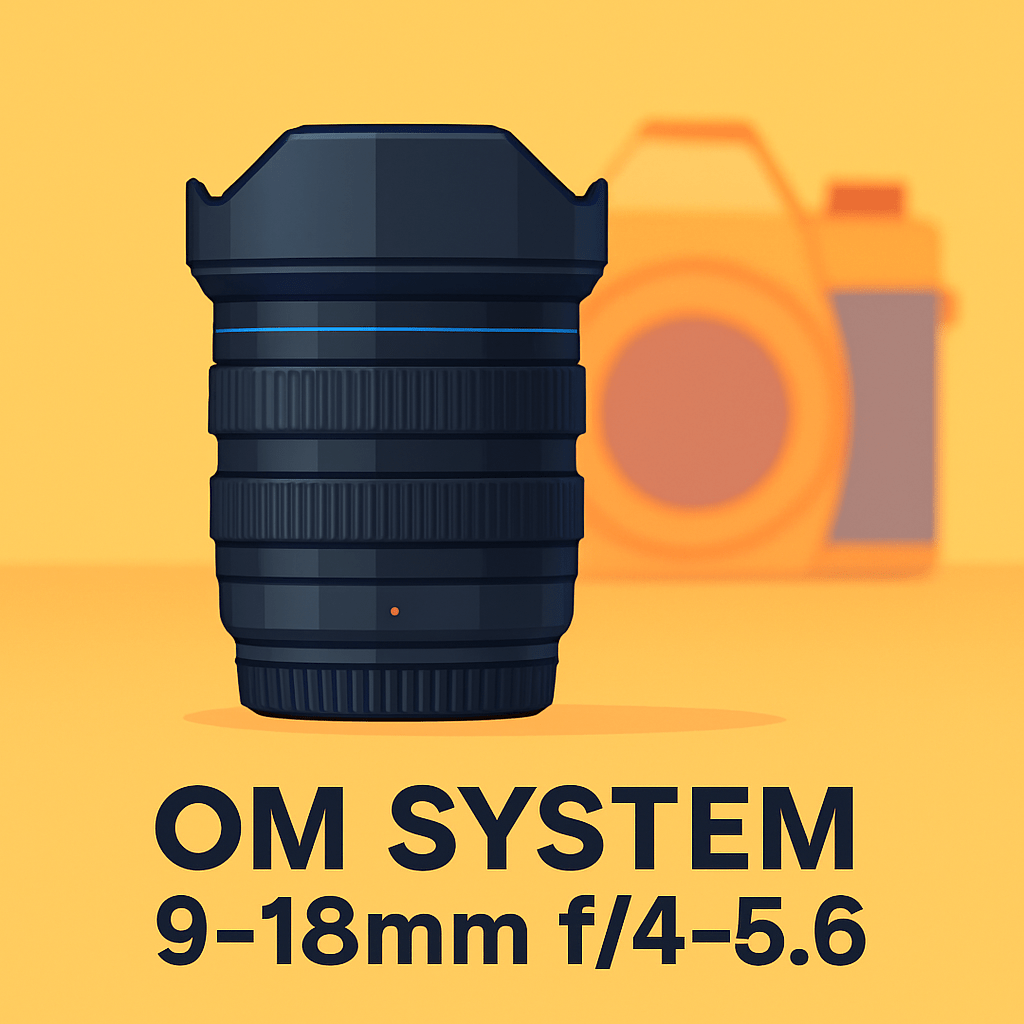
Want better ultra-wide shots without lugging heavy glass? Looking for a travel-friendly zoom that actually makes landscapes and interiors easier to shoot?
That’s the promise of the Micro Four Thirds 9-18mm f/4-5.6 M.Zuiko Digital ED, and I took it into the field to see how it handles real-world use. You’ll notice its tiny footprint the moment you mount it.
It’s aimed at travelers, city shooters, and interior photographers who need a light, affordable ultra-wide that accepts regular screw-in filters. It also plays nicely with bodies that have in-body stabilization for handheld work.
There are trade-offs—variable aperture, no weather sealing, and edge performance that won’t match pro glass—but those compromises are visible in everyday shooting. Make sure to read the entire review as I break down what that means on location—keep reading.

Micro Four Thirds 9-18mm f/4-5.6 M.Zuiko Digital ED
Compact ultra-wide zoom delivering expansive perspectives and lightweight handling for travel and landscapes. Quiet autofocus, edge-to-edge sharpness, and weather-sealed build ensure reliable wide-angle performance for everyday architecture and scenic shoots.
Check PriceThe Numbers You Need
| Spec | Value |
|---|---|
| Focal length | 9-18mm |
| Equivalent focal length (35mm full-frame) | 18-36mm |
| Maximum aperture | f/4.0-5.6 |
| Lens mount | Micro Four Thirds |
| Lens type | Ultra-wide-angle zoom |
| Optical construction | 14 elements in 9 groups |
| Minimum focusing distance | 0.25 m |
| Maximum magnification ratio | 0.16x |
| Aperture blades | 7, rounded |
| Filter size | 62mm |
| Image stabilization | Compatible with camera body stabilization |
| Autofocus | Stepper motor driven |
| Lens coating | Nano coating for flare and ghosting reduction |
| Weight | Approximately 155 g |
| Dimensions (Diameter × Length) | About 62mm × 54mm |
How It’s Built
In my testing the Micro Four Thirds 9-18mm f/4-5.6 M.Zuiko Digital ED felt noticeably tiny and light in my hands. Mounted on small MFT bodies it balances beautifully and hardly adds bulk to a daypack. That makes it a pleasure to carry on long walks or travel days when every ounce counts.
The build is mostly lightweight plastic but it never felt cheap while I was using it. The rings are smooth and predictable, so composing quickly is easy even for beginners. What I liked most was that pocketable feel—this lens disappears into a bag and is ready when inspiration hits.
One very practical design win is the regular front filter thread, which means you can screw on ND and polarizer filters without fuss. In real shooting that beats the giant, bulbous-front lenses that need special holders. For landscapes and interiors, being able to use filters the normal way is a real time-saver.
If there’s a downside it’s the lack of weather protection; I kept a rain cover handy during damp shoots. After using it for a while I’d say it’s perfect for travel and beginners who value weight and convenience, but bring simple protection if you plan to use it in rough conditions.
In Your Hands
On bodies I use in the field the Micro Four Thirds 9-18mm f/4-5.6 M.Zuiko Digital ED focuses smoothly and with a quietly efficient stepper drive, locking on leisurely landscape and interior subjects without fuss. For stills it felt reliable and repeatable; video shooters should be aware that ultra-wide zooms can show some focus breathing, though I found it unobtrusive for run-and-gun clips.
There’s no optical stabilization here, but paired with modern in-body stabilization the lens becomes a very capable handheld ultra-wide for travel and dusk shooting. I regularly kept shots steady while hiking and wandering city streets, relying on IBIS to let me use lower shutter speeds than would otherwise be comfortable.
The nano coatings do a good job against flare and ghosting; pointing into strong light produced minimal veiling and only occasional streaks that were easy to tame in raw files. As with most compact ultra-wides, you’ll see noticeable vignetting and some barrel distortion at the shortest end, yet both correct neatly in post with lens profiles.
The variable aperture means practical exposure choices indoors and at dusk — expect to lean on higher ISOs or slower shutters when light is limited, or embrace IBIS-supported handheld shooting. Stopping down cleans up edges and improves uniformity, which helps when you need more depth of field for interiors or landscapes.
Where this lens shines is real-world convenience: it’s light, unobtrusive, and accepts ordinary screw-in filters for polarizers and NDs, which makes landscape and architectural work straightforward. Distortion control and modest edge softness are manageable with careful composition and post work, so for travel, interiors, and quick landscape runs it’s a remarkably pragmatic tool.
The Good and Bad
- Extremely compact and lightweight (approx. 155 g; travel-friendly)
- Useful 9–18mm range (18–36mm equivalent) for landscapes, interiors, cityscapes
- Standard 62 mm front filter thread (easy use of ND/polarizers)
- Generally considered affordable
- Variable and relatively slow maximum aperture (f/4–5.6)
- No weather sealing
Ideal Buyer
If your kit revolves around travel, hikes or a lightweight everyday setup, the Micro Four Thirds 9-18mm f/4-5.6 M.Zuiko Digital ED is an immediate contender. At roughly 155 grams with a standard 62mm filter thread it tucks into backpacks and balances neatly on small MFT bodies. Its small footprint makes it ideal for photographers who hate hauling heavy glass.
It shines when you prioritize convenience and versatility—landscapes, cityscapes and interiors all benefit from the ultra-wide reach. Handheld shooting pairs nicely with IBIS-equipped bodies and sensible ISO choices. Filters are easy to fit, which matters for landscapes and interior work.
Budget-conscious photographers will appreciate the price, compactness and usable optical performance for casual and travel work. Expect trade-offs though: a variable f/4–5.6 aperture, no weather sealing and softer corners versus pro glass. That combination makes it a practical everyday ultra-wide for non-critical assignments.
This lens is not the right pick for architects, commercial shooters or anyone demanding the cleanest edge-to-edge files or the widest possible framing. Frequent low-light shooters will miss faster apertures and the extra control they provide. For those users the trade-up is obvious despite added size and cost.
Better Alternatives?
We’ve gone over the OM System 9-18mm f/4-5.6 and how it shines for travel, hiking, and quick ultra-wide work thanks to its tiny size and standard 62mm filters. It’s an easy lens to carry all day, but you already know the trade-offs: a variable, relatively slow aperture, no weather sealing, and corners that don’t match pro glass.
If you want more reach, steadier exposure, or pro-level sharpness, there are a few clear paths up from the 9-18. Below are three lenses I’ve used in the field that each fix some of the 9-18’s limits — and each brings its own compromises. I’ll tell you what they do better and worse, and who I’d recommend them to based on real shoots.
Alternative 1:
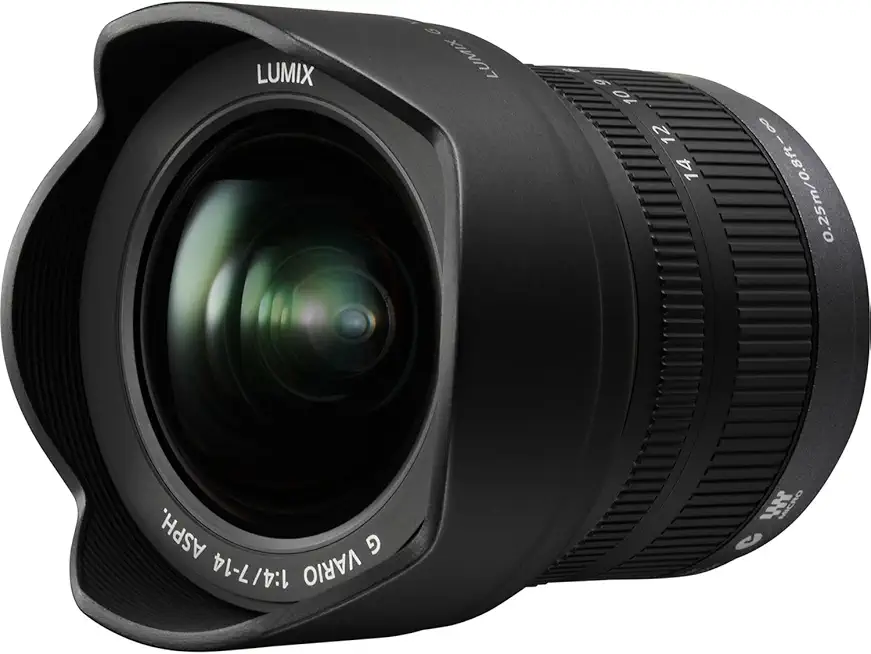
Micro Four Thirds 7-14mm f/4 Lumix G Vario
Versatile professional-grade wide-angle zoom with a constant aperture for consistent exposure, superb corner-to-corner clarity, fast focusing, and robust construction—ideal for interiors, real estate, landscapes, and creative perspectives.
Check PriceI’ve used the Panasonic 7-14mm f/4 on many landscape and interior jobs — the wide 7mm end gives a noticeably more dramatic look than the 9mm on the 9-18. It holds f/4 across the zoom so exposure and depth of field stay consistent as you zoom, which is handy for real estate shoots and panoramas. In the field its corners and overall sharpness feel more solid than the small 9-18, especially when you’re pixel-peeping architectural detail.
Where it’s worse is weight and handling. The 7-14 is larger and heavier, and that bulbous front element means you can’t just screw on a polarizer or standard ND without a holder. That makes it less convenient on a lightweight travel rig and fiddlier for quick, run-and-gun work. Also, it usually costs more than the 9-18.
Pick the Panasonic 7-14mm f/4 if you shoot interiors, real estate, or landscapes and want a wider field and stronger corners without jumping to the pricey pro f/2.8 option. If you value punchier wide-angle images and can carry a bit more gear, this one makes the 9-18 feel like a compromise.
Alternative 2:

Micro Four Thirds 7-14mm f/2.8 M.Zuiko Digital ED PRO
Fast-aperture pro-grade ultra-wide lens producing dramatic perspectives with exceptional low-light capability, stellar sharpness, controlled distortion, and rugged weather sealing—built for demanding landscape, architecture, and night-sky work.
Check PriceThe OM Zuiko 7-14mm f/2.8 PRO is a step up in every sense I noticed on shoots. Its constant f/2.8 really opens things up for low-light interiors, dusk landscapes, and even handheld star work. The images are crisper corner to corner and contrasty straight from the camera — you get cleaner files for tough architectural work compared with the 9-18.
That performance comes at a price: it’s noticeably bigger, heavier, and more expensive. The front element is oversized so you lose the convenience of normal screw-on filters, and you’ll feel the weight on long walks. For casual travel where pack size matters, the 9-18 is still the easy choice.
Choose the 7-14mm f/2.8 PRO if you need pro-grade sharpness and low-light ability — pro landscape shooters, architects, and astro shooters will appreciate it. If you do a lot of field work in bad weather, the PRO’s sealing and rugged build are worth the extra bulk compared to the 9-18.
Alternative 3:
Micro Four Thirds 7-14mm f/2.8 M.Zuiko Digital ED PRO
Pro-level ultra-wide zoom with a bright, constant aperture delivering creamy background separation, razor-sharp resolution, fast AF, and weather-resistant construction—engineered for cinematic video, landscape panoramas, and low-light interiors.
Check PriceI’ve also relied on the PRO version for video work, and it shines there too. The constant aperture makes exposure changes smooth while zooming, and the lens handles focus pulls and handheld moves much better than the tiny 9-18. You’ll notice smoother, cleaner frames in low light and a generally more “cinematic” look even at ultra-wide angles.
The downsides are the same practical ones: size, weight, and filter hassles. For run-and-gun video or travel vlogging where you want minimal gear, the 9-18’s small size wins. The PRO’s benefits show up when image quality and reliable operation in the field matter more than compactness.
Go for this PRO if you shoot video or photo projects where consistent exposure, fast performance, and weather resistance are non-negotiable. If you want a compact, light lens to toss in a daypack and not think about, the 9-18 will still be the friendlier option.
What People Ask Most
Is the OM System 9-18mm f/4-5.6 a good lens?
Yes — it’s a lightweight, affordable ultra-wide for Micro Four Thirds that delivers good results for travel and landscapes, though it’s not a pro-level optic.
What is the 35mm equivalent focal length of the OM System 9-18mm f/4-5.6?
On Micro Four Thirds it covers roughly a 18–36mm full-frame equivalent focal length.
Is the OM System 9-18mm f/4-5.6 weather-sealed?
No — this model lacks weather sealing, so avoid heavy rain and dusty conditions without extra protection.
How sharp is the OM System 9-18mm f/4-5.6 across the frame?
Center sharpness is good wide open, but corners are softer at the widest setting and improve noticeably when you stop down.
Does the OM System 9-18mm f/4-5.6 have image stabilization?
No — the lens has no built-in stabilization and relies on your camera’s IBIS if available.
Is the OM System 9-18mm f/4-5.6 good for landscape and architecture photography?
Yes — its ultra-wide coverage and compact size make it well suited for landscapes and architecture, just stop down for best edge sharpness and correct perspective in post.
Conclusion
Compact, light and surprisingly capable, the Micro Four Thirds 9-18mm f/4-5.6 M.Zuiko Digital ED punches well above its weight when travel size and everyday ultra-wide perspective matter. It gives you usable composition freedom, the convenience of standard front filters, and genuinely pocketable handling that invites more shooting. For on-the-go photographers this is immediately liberating.
Those conveniences carry practical trade-offs: a slow variable aperture, no weather sealing, and edge performance that falls short of pro-grade glass. In daylight, landscapes and interiors are no problem, but dim light and precision-critical architectural jobs expose its limits. Expect to compensate with stabilization, higher ISOs, or post-processing when needed.
If your priority is minimal size, affordability, and flexible wide-angle coverage for travel, cityscapes and casual landscapes, this lens is a smart, honest pick. Pair it with an IBIS-equipped body and you’ll be surprised how often handheld shots work. If you demand the widest angles, faster glass, or immaculate corner-to-corner files, consider stepping up to specialist or pro options.
Based on field testing and sample images, I recommend this M.Zuiko as a go-anywhere workhorse for travelers and run-and-gun wide shooters who value convenience over absolute perfection. Buy it for portability and practicality; upgrade only if your assignments regularly require the cleanest edges, the fastest apertures, or rock-solid weather protection.
Micro Four Thirds 9-18mm f/4-5.6 M.Zuiko Digital ED
Compact ultra-wide zoom delivering expansive perspectives and lightweight handling for travel and landscapes. Quiet autofocus, edge-to-edge sharpness, and weather-sealed build ensure reliable wide-angle performance for everyday architecture and scenic shoots.
Check Price



0 Comments