
What camera can actually keep up with a rider launching off a berm, stay locked on through a cloud of dirt, and still deliver a keeper when the bike hits the ground? Motocross is chaos condensed into fractions of a second. Nailing those shots takes more than luck.
In this roundup we test five cameras that span pro-grade stills to immersive action video. We also include lens guidance and trackside shooting tips to help you get more keepers. None of the picks are theoretical — they were evaluated with real-world use in mind.
This guide focuses on practical performance rather than spec sheets. You’ll read hands-on feedback about autofocus reliability, handling in dusty conditions, and trade-offs between speed and portability. Pros and cons are laid out to match how photographers actually work a track.
Whether you’re a pro covering podium battles, a passionate amateur shooting from the berm, or a rider wanting POV footage, there’s something here for you. We weigh durability, ergonomics, and image quality against cost and ease of use. Our goal is to help you choose the right tool for your shooting style and budget.
We also include practical tips to boost your hit rate on race day so you can make the most of whatever camera you bring. Expect clear, tested recommendations and straightforward advice you can use right away. Turn the throttle on your photography and let’s get to work.
1. Canon EOS R3 for Pro Motocross

Canon EOS R3 Mirrorless Camera (Body Only)
Professional full-frame speed and tracking for sports and wildlife, rugged magnesium construction, blazing shutter responsiveness and outstanding low-light sensitivity.
Check PriceThe Canon EOS R3 is built for pro motorsport work — if you shoot competitive motocross, this camera feels like it was designed for your job. Its advanced autofocus with vehicle subject detection and a dedicated panning assist mode take much of the guesswork out of tracking fast, erratic riders.
In practice the autofocus reliably locks on aggressive, airborne subjects and holds through sudden direction changes. Very high frame rates combined with a large buffer and fast image processing mean you can run long continuous bursts without the lag that kills a sequence of crucial frames.
On dusty, variable outdoor tracks the R3 stands up well: real-world feedback points to strong performance in dust and changing light, so you’re less likely to lose shots to environmental conditions. The panning assist is particularly useful for creating smooth background blur while keeping the rider tack-sharp — a real advantage when you want dynamic, professional-looking action frames.
This isn’t an entry-level camera. It’s aimed at professional motorsport photographers and serious enthusiasts who need top-tier tracking, burst capability, and a rugged, outdoor-ready build. Expect a learning curve with the menus, and be prepared for a bit more weight and bulk compared to lighter mirrorless hybrids — but if your priority is reliable hit-rate at high-stakes events, the trade-offs are often worth it.
- Exceptional autofocus for high-speed vehicles
- Excellent burst rate and large buffer
- Robust outdoor-ready build
- Effective panning assist for smooth motion
- Heavier and bulkier than mirrorless hybrids
- Complex menu system with a learning curve
2. Canon EOS R7 for Motocross Enthusiasts
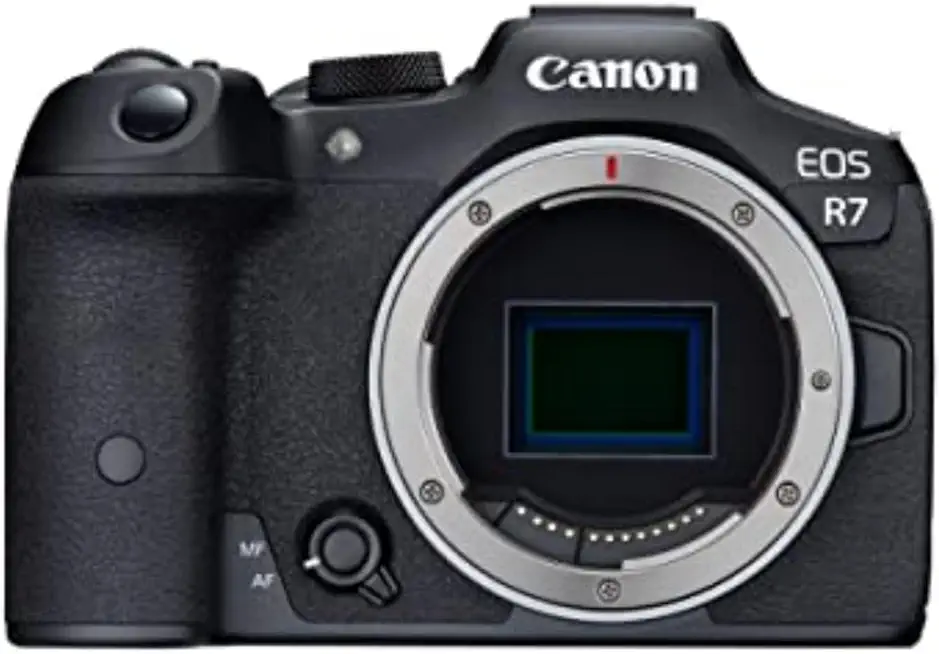
Canon EOS R7 Mirrorless Camera (Body Only)
High-resolution APS-C performance with rapid burst shooting, advanced autofocus, in-body image stabilization and versatile handling for enthusiast photographers.
Check PriceThe Canon EOS R7 is a stealthy weapon for motocross enthusiasts. Its crop sensor gives you extra telephoto reach, which is a real advantage from spectator areas when you can’t get close to the track. The camera’s vehicle-detection autofocus borrows some flagship tech, so tracking fast, erratic riders feels reliably accurate in typical outdoor dirt-track light.
Burst performance is described as good, and in practice that means you can capture multi-frame sequences of jumps and whips without missing the peak action. The body is compact and lighter than full-frame alternatives, so you can shoot all afternoon without the same fatigue you get from heavier rigs. Battery life is adequate, but bring spares for full-day events to avoid downtime.
Image quality in daylight is strong, giving sharp, contrasty images that hold up well in post. Where the R7 shows its trade-offs is in low light and long continuous bursts — low-light and indoor performance won’t match full-frame models, and the buffer is more limited versus flagships. Still, for hobbyists and semi-pros wanting motorsport capability without the cost and weight of a flagship, the R7 hits a sweet spot.
- Great autofocus for the price
- Crop factor extends tele reach
- Compact and lighter than full-frame
- Good daylight image quality
- Weaker low-light/indoor performance
- Limited buffer size vs flagships
3. Panasonic Lumix G9 II for Travel Motocross

Panasonic LUMIX G9II Micro Four Thirds Camera (DC-G9M2BODY)
Compact Micro Four Thirds powerhouse delivering pro-level stabilization, fast continuous shooting, high-resolution modes and robust weather-sealed body for demanding fieldwork.
Check PriceThe Panasonic Lumix G9 II is a great pick if you want a travel-friendly camera that still handles fast motorbike action. It’s aimed squarely at lightweight travel sports photographers and Micro Four Thirds system users.
Key features matter for motocross: it uses phase-detect AF with subject recognition, offers burst shooting up to 75 fps (in certain modes), and has strong stabilization. Those specs give you a real chance of nailing the split-second moments on the track. The stabilization also helps when you’re hand-holding longer shots between runs.
In the field the G9 II shines for portability and comfort. I’ve found it easy to carry all day with less fatigue than bigger bodies. The AF with AI subject recognition performs well in daylight motocross, reliably keeping riders sharp as they whip through the frame.
There are a couple of caveats to be aware of. At tested max speeds (14 fps tested) the viewfinder can lag because images play back instead of live view, which can feel disorienting during very fast bursts. Also remember it’s a Micro Four Thirds sensor, so low-light performance won’t match full-frame bodies.
Overall, if you prioritize a small, ergonomic system with advanced AF and exceptionally fast burst capability for its class, the Lumix G9 II is mostly a win. It’s ideal for shooters who travel light but still want strong action performance at daylight motocross events.
- Very fast burst capability (up to 75 fps in certain modes)
- Phase-detect AF with subject recognition
- Lightweight and ergonomic for long shoots
- Strong stabilization for sharper action shots
- Viewfinder lag at highest burst speeds (14 fps tested)
- Lower low-light performance than full-frame
4. Insta360 Ace Pro 2 Action Camera

Insta360 Ace Pro 2 8K Action Camera (Dual Battery Bundle)
Ultrahigh-definition 8K action capture with dual-battery endurance, advanced stabilization, waterproof durability and versatile mounting for extreme adventures.
Check PriceThe Insta360 Ace Pro 2 is an action camera built for riders who want cinematic POV footage more than stills. It’s clearly aimed at motorcyclists and action enthusiasts who prioritise immersive video over traditional photography.
Its headline is 8K video with Leica optics paired to a 157° ultra-wide lens, which gives that dramatic sense of speed and context you want from a helmet or chest mount. In practice that ultra-wide view makes jumps and berms feel far more dynamic, and the 8K resolution keeps detail when you crop or stabilise in post.
On the trails the built-in AI for image and video enhancement is genuinely helpful — it cleans up low-light and noisy footage more than I expected. The flip screen makes framing on helmet or chest mounts surprisingly easy, and audio performance is described as good for an action cam.
Practical notes: battery life is average but you get two batteries included, so plan to swap for long rides. Also be aware that maxing settings (8K, highest bitrate, etc.) can push the camera and lead to overheating, so you’ll need to balance quality with run time on hot days.
Small touches matter: magnetic ND filters are convenient for controlling exposure in bright daylight without fiddly mounts, which is a real workflow win when switching between sunny runs and shaded sections. Overall this camera is best for riders and creators who want high-quality POV video and are prepared to manage battery and heat when chasing the best image quality.
- Outstanding 8K video clarity
- AI stabilization/processing
- Immersive 157° ultra-wide capture
- Convenient magnetic ND filters
- 8K recording strains battery; can feel gimmicky
- Risk of overheating under heavy use
5. Insta360 X5 360 Action Camera

Insta360 X5 8K 360° Action Camera
Immersive 360° 8K capture with seamless stitching, stabilized footage and compact design for virtual tours, sports and creative filmmaking.
Check PriceThe Insta360 X5 is built for motocross enthusiasts and videographers who want true 360° capture that’s easy to mount on a helmet or bike. It uses dual 180° lenses and FlowState stabilization to deliver remarkably smooth footage even over rough terrain, and records 5.7K video at 60 fps in an HDR mode that helps retain highlight and shadow detail.
What makes it useful on the track is the replaceable lens system and lens guard design — practical for dusty riding where you’ll inevitably scuff or need to swap parts. The ability to reframe in post from full 360° footage is a game-changer for storytelling: you can choose POV cuts, follow lines through jumps, or create cinematic follow-cam sequences without needing multiple cameras.
Real-world limits matter: the X5 gives its best results in daylight — low-light footage can be grainy — so night races or overcast shoots won’t look as clean as daytime runs. Also consider that battery life and long-term rugged-use durability require care; plan to carry spares and protect the unit between runs.
If your priority is immersive, stable motorcycle footage and creative post-production reframing, the X5 is a strong, mostly positive choice. If you need clean night performance or a rugged workhorse that never needs babysitting, be prepared to accept some compromises or supplement with extra batteries and protective gear.
- Excellent FlowState stabilization
- Replaceable lenses + lens-guard system
- 5.7K video at 60 fps HDR mode
- True 360° reframing flexibility
- Grainy low-light/night footage
- Battery life & rugged-use need care
Choosing Lenses for Motocross Photography
For most motocross shoots a fast 70–200mm f/2.8 is the workhorse. It gives the reach to isolate riders, the wide aperture for shallow depth of field, and the speed you need in lower light or overcast conditions. On bodies with subject-detection AF and panning assist, that lens lets you get clean subjects with motion-blurred backgrounds that convey speed.
When the spectator line or fencing pushes you further back, add a longer telezoom. Something like a 70–300mm with image stabilization or a 200–500mm will let you fill the frame from a distance. Expect trade-offs: longer glass is usually slower, heavier, and can be less sharp at wide apertures, so you’ll need higher ISOs or faster shutter speeds to compensate.
Image stabilization matters more than you might think, especially if the light drops or you’re shooting from a less stable position. Lenses with IS help when you’re forced to nudge shutter speeds down, keeping shots usable without cranking ISO into the noise. If you’re doing intentional pans to blur the background, modern IS systems plus a camera’s panning assist can produce really pleasing results.
Think about the system you’re using. A crop sensor body effectively gives you extra tele reach, so a 70–200mm on an APS-C camera behaves like a much longer lens — handy from spectator areas. Conversely, Micro Four Thirds bodies deliver more reach in a smaller package but will demand more light to match full-frame low-light performance.
In practical terms I carry two lenses: a 70–200mm f/2.8 for most action and portraits, and a longer zoom for the distant jumps and finals. Balance optical quality, weight and stabilization when choosing brands—fast 70–200 options are widely available from the major manufacturers, so pick the one that matches your camera and shooting style.
Tips to Improve Your Motocross Hit Rate
Getting more keepers at a motocross meet comes down to two things: anticipation and control. Aim for a shutter speed around 1/1000s or faster to freeze airborne action. If you want motion and drama, slow the shutter for a controlled panning blur while keeping the rider sharp.
Set your camera to continuous AF (AF‑C) and use a broad metering mode so the exposure adapts as riders move through changing light. Keep auto ISO enabled with sensible caps so you don’t blow highlights or lose detail to noise. Check and set white balance for the prevailing conditions — it saves time in post.
Positioning beats hero gear. Stand near jumps, berms and tight corners where bikes change attitude and riders show expression. Watch lines during warmups and practice runs so you can predict where the rider will be a second before they arrive.
When locking focus, aim for the helmet or the rider’s upper body — that’s what makes an image read as sharp even if a wheel is slightly soft. Don’t be afraid to use a slightly wider lens for context; a bike in the air with a bit of sky or crowd tells a better story than an isolated, clipped subject.
Arrive early and use practice laps to dial settings and angles. Try a few different exposures and compositions while nothing important is happening so you’re ready when the race heats up. Keep an eye on your histogram and use highlight warnings to avoid blown-out whites on sunlit bikes or helmets.
Finally, accept that even great shoots need a bit of polish. A quick pass in editing to recover shadows, boost contrast and tune color balance will turn more frames into standout images. Consistency comes from preparation, repetition and learning each track’s quirks — do that and your hit rate will climb fast.
What People Ask Most
What is the best camera for motocross photography?
There is no single best camera; choose one that matches your needs and budget. Prioritize reliable autofocus, burst performance, comfortable handling, and lenses you can actually use at events.
What camera features should I prioritize for motocross photography (autofocus, frame rate, sensor)?
Prioritize continuous autofocus with subject detection, strong burst shooting, and a sensor that performs well in your typical lighting. Durable, weather‑resistant bodies and good ergonomics also help during long, dusty shoots.
DSLR or mirrorless — which is better for motocross photography?
Both DSLR and mirrorless systems can work well; mirrorless often offers more advanced autofocus and faster continuous shooting. A good DSLR can still deliver excellent results depending on the model and lenses you already own.
What lens is best for motocross photography?
A fast 70–200mm f/2.8‑type zoom is a versatile choice for action and portraits, offering reach and shallow depth of field. Also consider lenses with image stabilization and longer telephoto options if you shoot from a distance.
What focal length is best for motocross photography?
Focal length depends on your shooting position: mid‑telephoto like the 70–200mm range is versatile, while longer telephotos are useful from spectator areas. Wide angles work well for dramatic context shots near jumps and tight corners.
What shutter speed and settings should I use for motocross photography?
Use fast shutter speeds like around 1/1000s to freeze most motocross action and choose slower speeds intentionally to create controlled motion blur. Pair continuous autofocus with auto ISO and matrix metering to keep exposure and focus tracking consistent during bursts.
How do I capture sharp motocross photos in low light or at night?
Use the fastest lens available, open the aperture, and raise ISO as needed while balancing noise and shutter speed. Rely on image stabilization, careful focus technique, and post‑processing to recover exposure and detail.
Conclusion for Best Motocross Cameras
These five cameras cover the spectrum from pro-level stills to immersive action video, each bringing real-world strengths and trade-offs that matter at motocross events.
Whether you prioritise tracking and burst speed, extra tele reach, a lightweight travel kit, or immersive POV and 360° capture, the options here help you match gear to shooting goals and constraints.
Combine the right body with considered lens choices, sensible exposure and AF strategies, and event prep to noticeably improve your hit rate on the track.
If you want to deepen your skills and make better gear decisions, explore more of our site for practical guidance, tips and real-world testing to grow your confidence behind the camera.
Have questions or a story from the track? Leave a comment below — we usually reply within a few hours and welcome your experiences and follow-up questions.





0 Comments