
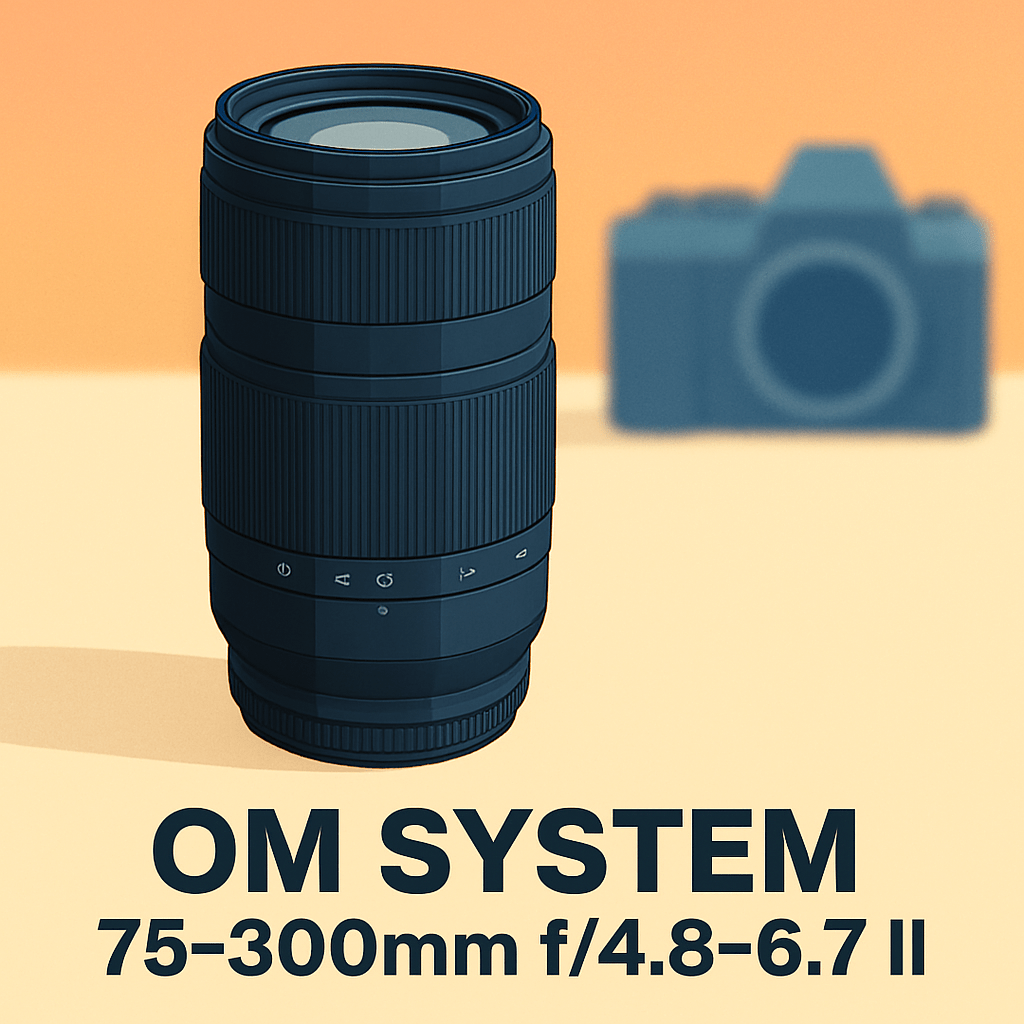
Want dramatic tele reach without lugging heavy glass?
If you shoot wildlife, airshows or travel, that’s what most people want.
The Micro Four Thirds 75-300mm f/4.8-6.7 II promises long reach in a compact, lightweight package.
After taking it into the field, I saw where that promise holds up and where it doesn’t.
It’s ideal for Micro Four Thirds shooters who value reach and portability, especially on IBIS-equipped bodies.
You’ll get usable tele reach for daylight wildlife, outdoor sports and travel shooting.
Don’t expect fast low-light performance—this lens shines in bright conditions and with steady technique.
It’ll lean on in-body stabilization and careful shooting to keep images sharp at long reach.
I’ll cover handling, autofocus, image quality and comparisons.
Make sure to read the entire review as it tells whether this lens is right for you—keep reading.

Micro Four Thirds 75-300mm f/4.8-6.7 II
Compact telephoto zoom delivering impressive long-range reach for travel, sports, and wildlife. Lightweight construction and responsive handling make it an affordable, practical option for photographers needing extended focal length.
Check PriceThe Numbers You Need
| Spec | Value |
|---|---|
| Type | Telephoto zoom lens |
| Mount | Micro Four Thirds |
| Focal Length | 75-300mm |
| 35mm Equivalent | 150-600mm |
| Maximum Aperture | f/4.8 (wide)-f/6.7 (tele) |
| Minimum Aperture | f/22 |
| Optical Design | 15 elements in 9 groups |
| Minimum Focus Distance | 0.9m |
| Filter Size | 58mm |
| Autofocus | Yes |
| Image Stabilization | No (relies on in-body IS) |
| Weight | 423g |
| Length | 116mm |
| Maximum Diameter | 69mm |
| Lens Configuration | Variable aperture |
How It’s Built
In my testing the Micro Four Thirds 75-300mm f/4.8-6.7 II felt compact and light for the reach it gives. On small OM bodies it balances nicely for day-long walks, while on bigger MFT cameras it tips a bit forward when extended. That modest extension matters when handholding.
The zoom ring has a pleasant, slightly firm action and I didn’t notice annoying creep. The focus ring has a short throw and suits occasional manual tweaks rather than long, precise pulls. For beginners that means autofocus will do most work and manual focus is workable.
Build feels solid with good fit and no rattles in the samples I handled. I really liked the common 58mm filter thread for affordable polarizers and NDs, but one thing that could be better is the lack of optical stabilization — you must rely on your camera’s IBIS or a support.
In real shooting this means a carry-friendly telephoto that rewards steady technique and IBIS-equipped bodies. Use a monopod or faster shutter speeds at the long end for repeatable sharp shots and be ready for exposure changes while zooming. Beginners will find it forgiving in daylight if they practice bracing.
In Your Hands
The Micro Four Thirds 75-300mm f/4.8-6.7 II delivers the kind of reach you expect from a long tele in an unexpectedly pocketable package, making distant subjects feel much closer without dragging you down on long walks. It shines on daylight assignments — wildlife at a distance, airshows, and compressed landscape shots where that extra reach helps craft more intimate frames. Handling the lens on smaller MFT bodies feels balanced and unobtrusive, which encourages a grab-and-go shooting style.
Dozens of hours in the field taught me to treat the lens as a daylight specialist: the relatively slow, variable aperture asks for stronger light or a steady technique when you push to the long end. Because there’s no in-lens stabilization, success handheld hinges on the camera’s IBIS and disciplined posture — brace, breathe, and favor a monopod or faster shutter speeds when subjects move. Overcast or dim scenes expose the tradeoff quickly, while bright sun rewards crisp, punchy results.
Close-up capability surprised me: you can get satisfyingly tight crops on small subjects without losing working distance or spooking skittish wildlife, which expands its usefulness beyond pure long-range shooting. The common filter thread makes polarizers and NDs simple to fit, though I’d watch for subtle vignetting and mind how polarizers behave at extreme angles when you’re zoomed in.
For video, autofocus transitions are usable but not buttery smooth; focus breathing is present but manageable for run-and-gun clips when paired with strong IBIS. Panning and tracking in bright light feel natural, but for critical wildlife or distant targets a tripod or monopod stabilizes the long reach and reduces the disappointment of heat shimmer and motion blur at extreme distances.
The Good and Bad
- 150-600mm equivalent reach in a compact, 423g package
- Micro Four Thirds mount compatibility across OM System and Panasonic bodies
- Autofocus-enabled tele reach for wildlife, travel, and outdoor sports
- 0.9m minimum focus distance allows useful close-up work
- Slow, variable maximum aperture (f/4.8-6.7) limits low-light performance
- No optical image stabilization; relies entirely on in-body IS
Ideal Buyer
For Micro Four Thirds shooters who prize reach and portability over aperture speed, the Micro Four Thirds 75-300mm f/4.8-6.7 II is a compelling choice. It delivers a 150–600mm equivalent range in a 423g package that travels easily and doesn’t dominate a daypack. If you chase distant subjects—wildlife, airshows, or travel details—without hauling big glass, this lens speaks your language.
Ideal owners pair it with an IBIS-equipped OM System or Panasonic body so in-body stabilization can tame the slow, variable f/4.8–6.7 aperture at the long end. Expect to work in daylight, push ISO, use faster shutter speeds, or add a monopod for consistent results; the 0.9m minimum focus distance and common 58mm filter thread make it versatile for near-macro and polarizer/ND use. Autofocus and handling are pleasantly straightforward for casual wildlife and outdoor sports in good light.
This isn’t for low-light shooters or anyone who needs built-in lens OIS, rock-solid tracking in dim conditions, or pro-grade weather sealing—those photographers will favor Panasonic OIS-equipped telezooms or the higher-end Leica 100–400. But if you want the longest reach possible without a tripod bag, modest cost, and minimal weight, the 75–300mm II is a practical, travel-ready tool that rewards careful technique. It’s the right lens for photographers who accept tradeoffs to gain reach and portability.
Better Alternatives?
We’ve gone through what the OM System 75-300mm f/4.8-6.7 II does well and where it trips up: great reach in a tiny package, but slow glass and no built-in stabilization. If you like the idea of long reach but want different trade-offs — more stabilization, a shorter walkaround zoom, or a lens that feels more at home on non-IBIS bodies — there are sensible choices to consider.
Below I’ll run through three real-world alternatives I’ve used. I’ll spell out what each one handles better or worse than the 75-300, and which kind of shooter would pick each lens. Think of this as picking the right tool for how you actually shoot in the field.
Alternative 1:

Micro Four Thirds 45-200mm f/4.0-5.6 Lumix G Vario
Versatile mid-tele zoom crafted for everyday shooting—portraits, events, and travel. Smooth autofocus and consistent image quality across the range combine with a compact, balanced design for handheld convenience.
Check PriceThe 45-200mm is a much more useful everyday zoom compared with the 75-300. In practice I reach for it when I need flexibility — it covers wider scenes for environmental portraits and events where the 75-300’s long starting point can feel limiting. It also feels lighter on small bodies and balances nicely for handheld work all day.
Where it beats the 75-300 is its built-in image stabilization on many versions and a more useful short end. That OIS makes a real difference on bodies without strong IBIS — I got steadier shots at mid-tele focal lengths during dull light than I did with the 75-300 handheld. What it does worse is reach: you lose a lot of long-distance reach compared to the 75-300, so it’s not the best pick for distant wildlife or aircraft.
Buyers who prefer the 45-200 are travel and event photographers who need one lens that covers portraits through light sports and street work. If you don’t regularly need the 600mm equivalent reach and you want steadier handheld shots on non-IBIS bodies, this is the more practical choice.
Alternative 2:

Micro Four Thirds 100-300mm f/4.0-5.6 Lumix G Vario II
Extended telephoto zoom offering reliable sharpness and fast autofocus for wildlife and action. Its compact form factor and tailored optics deliver punchy contrast and color while maintaining comfortable handling.
Check PriceThe 100-300 II sits closer to the 75-300 in purpose: long reach for wildlife and distance subjects. In my experience it feels a bit more planted when shooting handheld because it often has lens stabilization (Mega O.I.S.) and the AF feels punchy on Panasonic bodies. That built-in OIS reduces the load on camera IBIS and helps more when the light drops.
Compared with the 75-300, the 100-300 II gives similar long-end reach but starts at 100mm, so you lose some wide flexibility. I found the 100-300 to feel a touch sharper and more contrasty at longer distances when hand-held, but the 75-300’s lighter weight and slightly wider 75mm short end make the Olympus lens easier to carry and more versatile for mixed shooting.
Photographers who would choose the 100-300 II are shooters focused on wildlife and outdoor action who want built-in stabilization and reliable AF on Panasonic cameras. If you need steadier handheld tele work without relying fully on body IBIS, this one will likely suit you better than the 75-300.
Alternative 3:
Micro Four Thirds 100-300mm f/4.0-5.6 Lumix G Vario II
Long-range zoom optimized for portability, giving photographers dependable reach without excessive weight. Smooth zoom operation, stable performance, and pleasant background separation make it ideal for outdoor and travel assignments.
Check PriceViewed as a travel-friendly tele, the 100-300 II is a good middle ground between small walkaround zooms and heavier pro glass. On trips where I wanted reach but not a big lens, this one let me get in tight on birds and distant subjects without carrying a large lens. The zoom action is smooth and it handles well on a monopod for long sessions.
Where it loses to the 75-300 is weight and short-end coverage: the 75-300 is lighter and starts wider, making it slightly better for mixed shooting days that include nearer subjects. But the 100-300 II’s stabilization and slightly nicer rendering at the long end make it a better choice when you plan to shoot more distant subjects often and want cleaner results straight out of camera.
Choose the 100-300 II if you travel a lot and want dependable reach without a heavy setup, or if you favor a lens that gives better handheld control at distance thanks to built-in stabilization. If your priority is absolute lightness and the widest starting focal length, stick with the 75-300 instead.
What People Ask Most
Is the OM System 75-300mm f/4.8-6.7 II compatible with Micro Four Thirds cameras?
Yes — it is designed for Micro Four Thirds and mounts directly on MFT cameras.
What is the 35mm equivalent focal length of the OM System 75-300mm f/4.8-6.7 II?
On a Micro Four Thirds body it gives about a 150–600mm full-frame equivalent reach.
Does the OM System 75-300mm f/4.8-6.7 II have image stabilization?
No, the lens has no built-in stabilization, so you should rely on your camera’s IBIS or a tripod for steady shots.
Is the OM System 75-300mm f/4.8-6.7 II good for wildlife and bird photography?
Yes for casual wildlife — the long reach is useful, but the slow aperture and modest AF limit performance on small, fast-moving birds or in low light.
How sharp is the OM System 75-300mm f/4.8-6.7 II?
Sharpness is good for the price: centers are fairly sharp at shorter focal lengths and stopped down, but it softens toward the long end and wide open.
Does the OM System 75-300mm f/4.8-6.7 II autofocus quickly and accurately?
Autofocus is adequate for still or slow subjects but not especially fast or reliable on fast, erratic action.
Conclusion
The Micro Four Thirds 75-300mm f/4.8-6.7 II delivers extraordinary long‑reach in a truly pocketable package. Its main strengths are obvious: believable reach for distant subjects, light handling on long days, steady autofocus on the right bodies, and a practical filter thread that makes workflow simple. In real-world shooting it opens possibilities without turning you into a pack mule.
But there are tradeoffs and you should not gloss over them. The lens relies on good light and in‑body stabilization to stay useful at the long end, and the slow, variable aperture forces choices about shutter speed and ISO more often than not. If you demand absolute low‑light speed or lens-based stabilization, this is not the tool for you.
Still, I recommend the Micro Four Thirds 75-300mm for photographers who prioritize lightweight reach and spend most of their time shooting in daylight. On IBIS-equipped bodies it becomes a very capable long‑lens compromise for wildlife, airshows and travel when a big telephoto would be impractical. For those who need rock‑solid AF, built‑in OIS or better low‑light performance, pay up for higher‑end Panasonic or Leica options instead.
Micro Four Thirds 75-300mm f/4.8-6.7 II
Compact telephoto zoom delivering impressive long-range reach for travel, sports, and wildlife. Lightweight construction and responsive handling make it an affordable, practical option for photographers needing extended focal length.
Check Price



0 Comments