

Which Nikon DSLR will make your subjects look their best — with flawless skin tones, pin‑sharp eyes, and rich tonal depth?
In this guide I compare five Nikon DSLRs built for portraiture and explain who each is best suited to — from studio pros to weekend enthusiasts.
I evaluated each body across the key portrait criteria: image quality, sensor size, dynamic range, autofocus (including eye‑detection), low‑light performance, ergonomics, and the realities of large file sizes and workflow.
The list spans full‑frame and APS‑C Nikon DSLRs, because both sensor formats offer clear advantages depending on your style, print size, and budget.
Throughout the guide we tested real‑world portrait scenarios from studio headshots to candid outdoor sessions to evaluate consistency and skin‑tone rendering, so you can match camera strengths to your workflow and output goals.
1. Nikon D850 for Portraits

Nikon D850 Body
45.7MP full-frame powerhouse delivering exceptional resolution, dynamic range, and professional durability for studio, landscape, and commercial photography.
Check PriceThe Nikon D850 is the benchmark DSLR for portrait work thanks to its 45.7MP full-frame BSI CMOS sensor. At base ISO 64 it delivers exceptional dynamic range — the kind of tonal latitude that approaches medium format — which means you can retain subtle highlight and shadow detail in skin tones.
Autofocus is no compromise: the D850 uses a 153-point AF system (derived from the D5) with reliable eye-detection that locks onto subjects and holds them. You also get a large, bright optical viewfinder and a 3.2″ tilting touchscreen, plus a smooth, quiet shutter and a weather-sealed, ergonomic grip that makes long portrait sessions less fatiguing.
In practice the D850 produces razor-sharp images and pleasing skin tones straight out of camera, and its huge resolution gives you freedom to crop tightly without losing detail. It handles higher ISOs reasonably well, but image quality drops noticeably above ISO 3200, so plan lighting or stop down accordingly for low-light portraits.
The trade-offs are practical: those 45.7MP files are very large and demand a powerful storage and workflow strategy, and the camera is a substantial body to carry during long shoots. If you’re a professional or advanced enthusiast who prioritizes top-tier image quality, wide dynamic range, and robust AF over compact size, the D850 is hard to beat for studio, event, and outdoor portrait work.
- Outstanding resolution and detail
- Huge dynamic range and excellent skin-tone rendition
- Reliable eye AF and advanced AF coverage
- Durable build and comfortable ergonomics
- Very large file sizes; needs powerful storage/workflow
- Low-light ISO performance diminishes above ISO 3200
2. Nikon D750 for Portraits

Nikon D750 Body
Versatile full-frame performer with impressive low-light autofocus, smooth ergonomics, and tilting LCD for hybrid photo and video use.
Check PriceThe Nikon D750 is a quietly excellent full-frame portrait camera that gives you strong image quality without the bloat. Its 24.3MP full‑frame CMOS sensor delivers pleasing, natural skin tones and accurate color straight out of the camera, which is exactly what you want for portrait work.
Autofocus is reliable thanks to a 51‑point AF system with good coverage, and the camera also offers dependable eye‑detection in live view for nailing expressions. The AF is quick and sharp in real shoots, so you spend less time worrying about focus and more time engaging your subject.
Ergonomically the body is lighter and comfortable to hold for long sessions, and it includes weather sealing so you can shoot outdoors with confidence. The tilting rear screen makes composition and low-angle shots easier, especially when working with clients in dynamic poses.
For many portrait photographers the D750 strikes a sweet spot: full‑frame look, manageable file sizes, and solid low‑light performance. It’s a great option for enthusiasts and semi‑pros who want a dependable, value‑oriented portrait DSLR without chasing the highest megapixel counts or the newest connectivity bells and whistles.
- Great low-light performance and color accuracy
- Comfortable ergonomics and weather sealing
- Fast, reliable AF suited to portraits
- Good balance of resolution and manageable file sizes
- 24.3MP may limit very large prints or heavy cropping
- Older model lacking the latest AF and connectivity features
3. Nikon D780 for Portraits
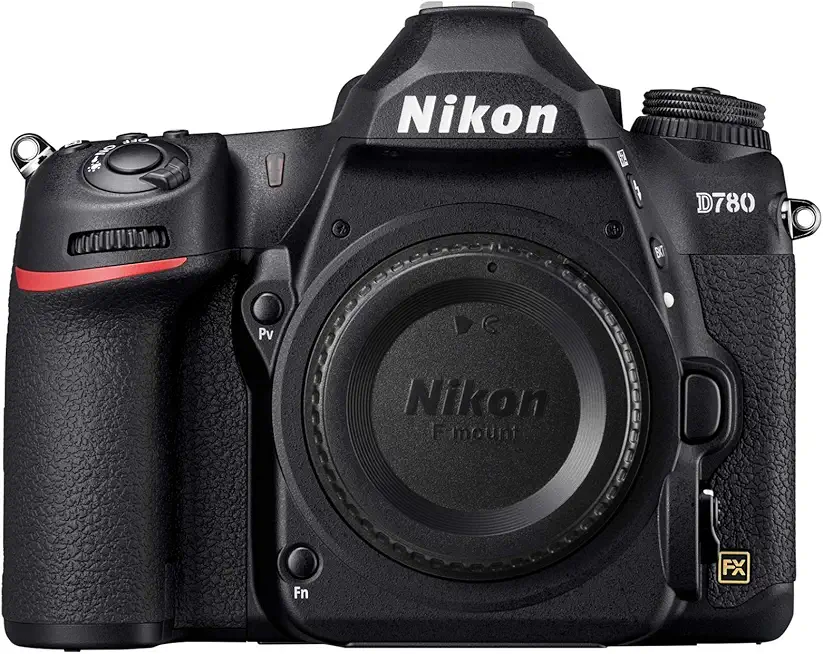
Nikon D780 Body
Hybrid DSLR-mirrorless agility with fast live-view autofocus, 4K video, and robust battery life for demanding creators.
Check PriceThe Nikon D780 is a 24.5MP full‑frame hybrid DSLR that gives you mirrorless‑style live view performance with familiar DSLR ergonomics. It’s a camera built for portrait shooters who want reliable handling and modern focusing without abandoning an optical viewfinder feel.
Its on‑sensor phase‑detection brings faster live‑view autofocus and improved eye‑detection, and in practice the eye AF rarely misses during portraits. You also get silent live‑view focusing and a silent shutter mode, which are game changers for discreet or intimate portrait sessions.
The D780 is practical for a mixed stills/video workflow: it shoots up to 7 fps, and includes Wi‑Fi and Bluetooth connectivity for easier image transfer and tethering. Images are sharp with pleasing skin tones straight out of camera, and the tilting screen helps with low‑angle or high‑angle compositions without contorting yourself.
As a working portrait photographer you’ll appreciate the better low‑light AF performance and the updated features packed into a solid, durable body. It’s especially useful for hybrid shooters who want to move between studio portraits and short documentary video work without changing systems.
- Advanced live‑view AF with eye detection
- Excellent image quality and skin‑tone reproduction (24.5MP full‑frame)
- Silent shooting modes for discreet portraits
- 7 fps shooting plus Wi‑Fi and Bluetooth for easy workflow
- Higher price than the D750 for similar resolution
- Bulkier/heavier than mirrorless alternatives
4. Nikon D500 for Portraits

Nikon D500 Body
APS-C flagship engineered for speed: rapid continuous shooting, advanced autofocus, and rugged build for sports and wildlife shooters.
Check PriceThe Nikon D500 is a compelling choice for portrait shooters who prioritize speed and autofocus performance. Its 20.9MP DX (APS‑C) sensor delivers good detail, and the body is built like a tank—robust, weather‑sealed, with a clear optical viewfinder that’s a pleasure to use on long shoots.
Where the D500 really shines is its flagship‑level AF: the 153‑point system (the same architecture as Nikon’s D850) is extremely fast and accurate. That AF, combined with up to 10 fps continuous shooting, makes it effortless to capture fleeting expressions and candid moments that often define great portrait work.
Do keep in mind the tradeoffs inherent to the APS‑C format. You’ll get less natural background blur and a narrower dynamic range than you would with full‑frame bodies like the D850, so the D500 isn’t the best pick if your priority is ultra‑large prints or the smoothest tonal gradation in highlights and shadows.
In practice, the D500 is an excellent tool for event, outdoor, and lifestyle portraiture where speed, tracking, and ruggedness matter most. If your work involves children, active subjects, or fast-moving scenes and you value dependable AF and burst capability, the D500 is mostly a very good fit. If you need maximum background separation or the highest possible dynamic range for studio‑style retouching, consider a full‑frame alternative instead.
- Superb AF performance and tracking
- Up to 10 fps for fleeting expressions
- Rugged, weather‑sealed build
- Clear, bright optical viewfinder
- Less background blur and lower dynamic range vs full‑frame
- Not ideal for very large print portraits needing ultra‑high resolution
5. Nikon D7200 for Portraits

Nikon D7200 Body
High-resolution DX DSLR with improved battery life, refined autofocus, and solid build for enthusiasts upgrading their kit.
Check PriceThe Nikon D7200 is an excellent APS‑C DSLR that punches above its class for portrait work. Its 24.2MP APS‑C sensor delivers plenty of resolution for tight headshots and modest cropping without becoming a workflow burden.
In real shooting the D7200 gives pleasing color rendering and solid subject separation, and its dependable battery life means long portrait sessions without constant recharging. The comfortable grip and lightweight, compact body make it easy to hold steady for extended shoots and to move between setups quickly.
Autofocus is a practical strength here — the 51‑point AF system is accurate and fast for portrait use, locking onto faces reliably in most situations. Do note that the D7200 lacks the advanced eye‑detection AF found on newer Nikons, so you’ll rely more on traditional AF point placement and technique for precise eye focus.
Overall this is a smart choice for beginner to enthusiast portrait photographers on a modest budget who want solid image quality, dependable AF, and a rugged camera they can carry all day. If you need the absolute shallowest depth of field or the latest eye‑AF conveniences, a full‑frame or newer body would be a better fit — but for many portraits the D7200 is mostly a very good, practical tool.
- 24.2MP APS‑C sensor
- Reliable 51‑point AF
- Solid, weather‑sealed build
- Lightweight and easy to handle
- No advanced eye‑detection AF
- APS‑C limits natural shallow depth of field vs full‑frame
Low-Light Performance for Portraits
Low-light portrait work rewards two things above all: a sensor that gathers light well and fast glass that lets you use it. Full-frame bodies simply give you an advantage here — cleaner high-ISO files, wider dynamic range and more natural background separation — but you can still make stunning low-light portraits with APS‑C if you lean on fast primes and technique.
I usually start by opening the aperture as far as the lens will allow. Shooting between f/1.4 and f/2.8 gives you shallow depth of field and lets you keep ISO lower. Pair that with a sensible shutter speed — for head-and-shoulder portraits 1/125s is a safe baseline, slower only if your subject is very still or you’re on a tripod.
Autofocus is the other critical piece. In dim rooms I rely on reliable eye-detection or on-sensor phase detection during live view to lock on quickly. If your camera offers advanced live‑view AF, use it; if not, back-button focus and single-point AF give you control when light is scarce.
Expose to the right (ETTR) when safe, and shoot RAW. Pushing a slightly brighter exposure reduces luminance noise when you bring files down in post. Moderate noise reduction and careful highlight recovery in Lightroom or Capture One will preserve skin texture without making files look plastic.
If higher ISO is unavoidable, test each body and lens combo to find the sweet spot where grain is acceptable and skin tones remain pleasing. Many Nikon full-frame bodies hold up nicely to ISO 3200; beyond that, prioritize composition and light placement over chasing lower ISO numbers.
Finally, don’t underestimate small helpers: a fast off‑camera LED, a reflector to fill shadows, or a wide aperture prime will transform a dim scene more than toggling settings. Low-light portraits are as much about mood and craft as gear — choose the combination that keeps your subject sharp, eyes bright, and the skin tones flattering.
Dynamic Range for Portraits
Dynamic range is the invisible ingredient that makes portraits feel three‑dimensional. It’s the camera’s ability to hold both bright highlights and subtle shadow detail, and for skin tones that means the difference between smooth gradations and flattened, blown‑out highlights.
Some Nikon bodies — notably the high‑resolution models — give you a huge tonal window to work with. On a camera with wide dynamic range you can expose more of the scene and still pull back highlight detail in RAW. That freedom lets you keep specular highlights on cheekbones while retaining texture in the shadows under the jaw.
Shoot RAW every time if you care about dynamic range. Use a flatter picture profile in camera to avoid baked‑in contrast and preserve midtones. Those two small decisions buy you the most recovery latitude in Lightroom or Capture One.
Trust the histogram and the highlight warning more than the LCD preview. Meter toward protecting highlights on skin and, if needed, bracket or dial in negative exposure compensation to avoid clipping. Nikon’s metering systems are very capable, but the camera can still be fooled by bright backgrounds or specular reflections.
On location, manage contrast with light—add a reflector or a fill flash rather than trying to lift deep shadows later. Lowering contrast in the scene reduces the amount of recovery you’ll need and preserves cleaner shadow tones.
When you do lift shadows in post, treat noise carefully. Pushing shadow recovery aggressively will reveal grain, so pair it with targeted noise reduction and gentle local dodging rather than a global brightness sweep.
Finally, learn your camera’s sweet spot: the base ISO and how many stops of recoverable highlight/shadow detail it offers. Run a few exposure tests, note how far you can pull shadows before noise becomes unacceptable, and you’ll get consistent, flattering portrait files every time.
What People Ask Most
What is the best Nikon DSLR for portrait photography?
That depends on your priorities such as resolution, dynamic range, autofocus and workflow needs. Choose the model that balances image quality, handling and file management for the type of portrait work you do.
Which Nikon DSLR has the best image quality for portraits?
Full-frame flagship models with high-resolution sensors and wide dynamic range typically deliver the most detailed and tonally rich portrait images. Those bodies are often preferred by professionals who need maximum flexibility in editing and cropping.
Is a full-frame Nikon DSLR better for portraits than an APS-C model?
Full-frame bodies generally offer shallower depth of field, improved low-light performance and broader dynamic range, which can benefit portrait work. APS-C cameras can still produce excellent portraits and may be preferable for those seeking a smaller, lighter system or more reach from lenses.
What Nikon lenses are best for portrait photography?
Fast prime lenses in classic portrait focal lengths are commonly recommended because they provide subject isolation and pleasing background rendering. Versatile short telephoto primes and flattering focal lengths help achieve natural perspective and smooth bokeh.
What features should I look for in a Nikon DSLR for portraits?
Prioritize strong dynamic range, reliable eye-detection autofocus, good low-light performance and comfortable ergonomics for extended shoots. Also consider file sizes and your workflow needs to ensure manageable postprocessing and storage.
Is the Nikon D850 good for portrait photography?
Yes, it is widely regarded as a benchmark for portrait work due to its high resolution and excellent tonal range paired with reliable eye-detection autofocus. Keep in mind it produces large files and benefits from a robust storage and editing workflow.
How many megapixels do you need in a Nikon DSLR for portrait work?
The ideal megapixel count depends on your print sizes and how much you plan to crop; higher resolution is helpful for very large prints and heavy cropping. For many portrait applications, moderate resolution balances image quality with easier file handling and storage.
Conclusion for Nikon Portrait DSLRs
Choosing the right Nikon DSLR for portraits is about balancing image detail, dynamic range, autofocus behavior, low‑light capability and the workflow you can comfortably manage.
The D850 remains the benchmark for ultimate detail and tonal range, the D780 brings DSLR ergonomics with mirrorless-style live‑view AF, the D750 is a versatile full‑frame value, the D500 delivers APS‑C speed and flagship AF, and the D7200 is a strong budget/enthusiast APS‑C option.
Match sensor size, eye‑AF and tracking needs, dynamic‑range priorities, low‑light performance and file‑handling to the way you shoot and the sizes you print or deliver.
If you want to sharpen your portrait technique and camera choices, keep exploring more articles on the site to build skills and confidence behind the lens.
Have questions or want to share your experience with any of these bodies? Leave a comment below and we usually reply within a few hours.



0 Comments