
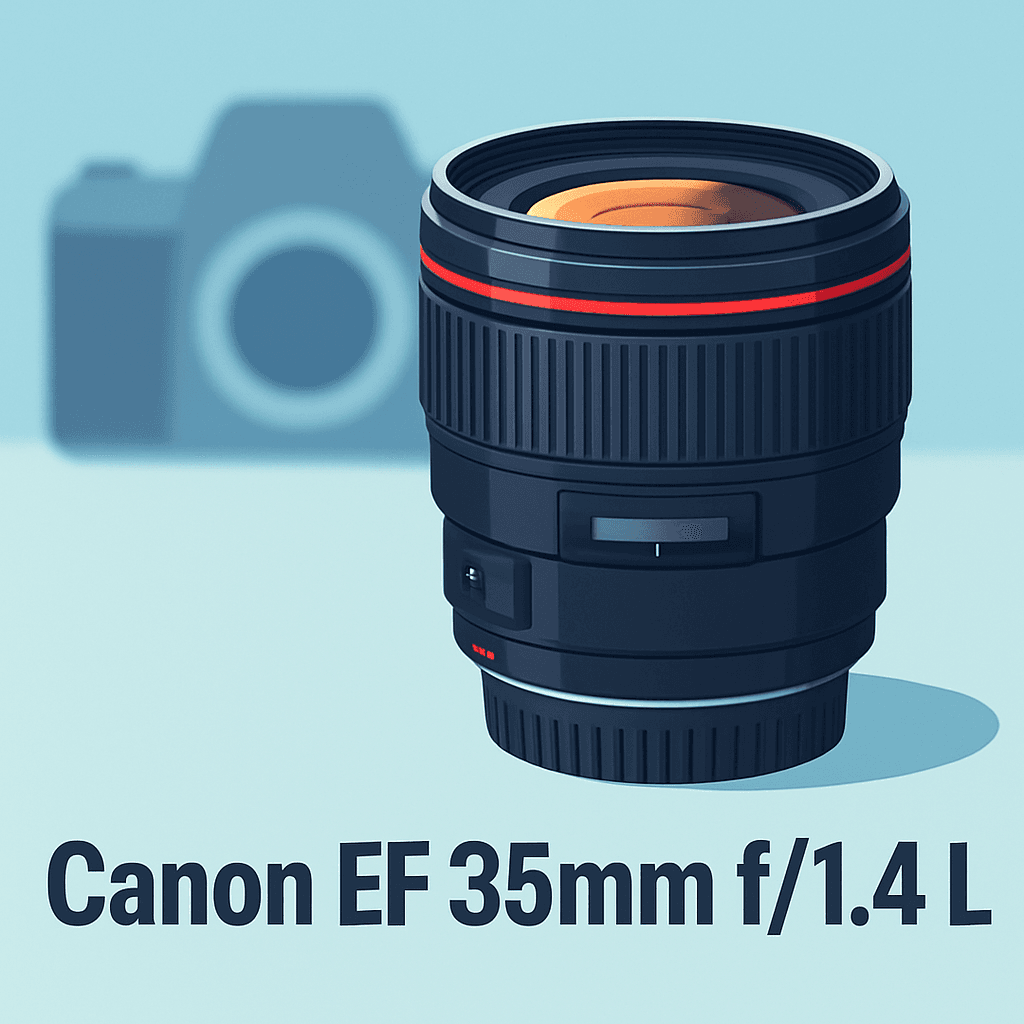
Want a 35mm that actually improves your low-light, documentary, and environmental-portrait work without getting in the way?
The Canon EF 35mm f/1.4 L is a fast, weather-resistant L-series prime with USM and full-time manual override, built around speed and reliability, and I’ve taken it on real shoots alongside a couple of rivals to see how it behaves.
It’s aimed at event, street, and documentary shooters who value shallow depth and dependable AF, while accepting a bit more weight and no image stabilization; the aspherical element and special coatings are meant to help with contrast and flare in real-world scenes. Make sure to read the entire review as I break down where this lens shines and what trade-offs you’ll face—keep reading.

Canon EF 35mm f/1.4 L
Signature L-series build with creamy bokeh, robust weather-sealed construction, and a fast wide aperture that excels in low light, portraits, and delivers edge-to-edge sharpness with rich color rendition.
Check PriceThe Numbers You Need
| Spec | Value |
|---|---|
| Focal Length | 35mm |
| Aperture | f/1.4 |
| Lens Mount | Canon EF |
| Optical Construction | 11 elements / 9 groups |
| Special Elements | 1 ground aspherical element |
| Minimum Focus Distance | 0.3 m (1 ft.) |
| Maximum Magnification | 0.18x (1:5.6) |
| Diaphragm Blades | 8 (circular) |
| Filter Size | 72 mm |
| Lens Coatings | Subwavelength structure anti-reflective (SWC), fluorite coating |
| Autofocus | Ultrasonic Motor (USM), full-time manual override |
| Image Stabilization | No |
| Weather Sealing | Yes (L-series dust/weather resistant) |
| Weight | Approx. 580 g (1.28 lbs) |
| Length | Approx. 86 mm (3.39 in) |
How It’s Built
In my testing the Canon EF 35mm f/1.4 L feels like a proper pro lens in the hand. It’s solid without being bulkier than you’d expect and balances nicely on Canon full-frame bodies.
Because it’s an L-series lens, I found the weather-resistant sealing gives real-world confidence — you can keep shooting in light rain or dusty streets without panic. That doesn’t mean you should dunk it, but it handled damp wedding nights and hectic street shoots just fine.
The USM focus ring with full-time manual override is a joy in the field; in my testing autofocus was quick and being able to grab focus without switching modes helped nail shots wide open. Optical touches like the aspherical element and SWC and fluorite coatings translated into punchy contrast and fewer flare surprises in backlit scenes.
One thing I really liked was the tactile build and the confidence it inspires; one thing that could be better is the lack of image stabilization, which meant I had to be more mindful of shutter speed in low light. On the plus side the front takes a common large filter so ND and polarizers are practical even for beginners, though those filters can be a bit pricier.
In Your Hands
In day-to-day work the Canon EF 35mm f/1.4 L behaves like a low-light specialist: that wide aperture lets you favor faster shutter speeds and very shallow depth of field, which is exactly what you want for events, environmental portraits, and documentary work. The lens yields a strong sense of subject separation while still keeping enough context for storytelling frames. Handling that shallow plane of focus becomes part of the creative toolkit rather than a constraint.
Its close-focus behavior is tuned for environmental close-ups rather than true macro, so you can get intimate with a subject while retaining background context. The circular diaphragm helps render out-of-focus highlights with smooth transitions, though stopping down can introduce a firmer edge to bright specular highlights. At usable distances the focus fall-off is pleasing for both faces and street detail.
The aspherical element and advanced coatings show their value in high-contrast and backlit situations, helping to temper aberrations and rein in veiling flare so contrast holds up in challenging light. In practice that means stage lighting, sunlit streets, and window-lit interiors retain more micro-contrast and punch without annoying ghosting. You’ll notice cleaner highlights and a more dependable tonal response when shooting into the light.
Because the design omits image stabilization, handheld shooting leans on technique: bracing, sensible shutter choices, and confidence in higher ISO performance. That trade-off is easy to accept for photographers who prioritize speed and weather-resistant reliability, and it makes the lens a natural fit for street, events, documentary, and indoor natural-light assignments. When you combine responsiveness with that creamy field of view, the lens performs as a dependable day-to-day workhorse.
The Good and Bad
- f/1.4 maximum aperture
- L-series dust/weather-resistant build
- USM autofocus with full-time manual override
- 1 ground aspherical element
- SWC and fluorite coatings
- Distance scale included
- 72 mm filter thread
- Moderate size/weight for a fast 35 mm (approx. 580 g; 86 x 79 mm)
- No image stabilization
- Maximum magnification 0.18x — limited close-up capability
- 8-blade aperture — stopped-down bokeh highlights may appear more polygonal versus lenses with more blades
Ideal Buyer
The Canon EF 35mm f/1.4 L is aimed at Canon EF shooters who want a classic 35mm field of view with full‑frame performance, fast f/1.4 speed and L‑series weather resistance. It suits photographers who need dependable AF and a rugged build they can trust in mixed conditions.
If you shoot low‑light events, documentary assignments, environmental portraits or street work, this lens gives the shallow depth of field and shutter speed latitude to stay handheld and reactive. USM autofocus with full‑time manual override makes precise focusing easy when you’re working wide open. Its aspherical element and SWC/fluorite coatings are intended to help maintain contrast and control flare in high‑contrast scenes.
This isn’t the lens for someone who requires in‑body or lens stabilization, or who needs true macro capability beyond the modest 0.18× magnification. Nor is it the first choice for shooters happy to trade AF and weather sealing for lower cost or a purely manual‑focus rendering.
If you prize build quality, AF speed and consistent real‑world reliability, the Canon EF 35mm f/1.4 L is a natural fit. If cost, extreme edge‑to‑edge micro‑detail or a manual‑focus character are top priorities, consider the alternatives noted elsewhere. For pros who shoot events or run‑and‑gun editorial, its balance on Canon bodies makes it comfortable for long days.
Better Alternatives?
We’ve covered the Canon EF 35mm f/1.4 L in detail — its fast aperture, solid L-series build, and reliable USM autofocus make it a go-to 35mm for events, documentary, and low-light work. Still, not every shooter needs the same mix of features, and other lenses can give you different looks, handling, or value for money.
Below are three real-world alternatives I’ve used in the field. I’ll point out what each one does better and where it gives up ground versus the Canon, and who I think would prefer each option.
Alternative 1:

Sigma Canon EF 35mm f/1.4 Art
Premium Art-series optics delivering outstanding clarity, controlled aberrations, and strong microcontrast; solid mechanical feel and accurate focusing make it perfect for creative low-light shooting and cinematic street work.
Check PriceI’ve shot weddings and street nights with the Sigma Art at f/1.4 and came away impressed by the sharp detail it delivers. Compared with the Canon L, the Sigma often shows more fine detail and a little more punch in the image — you’ll notice it when you crop in or print. Where it loses points is in build feel and weather sealing; it’s solid, but it doesn’t have the same L-series confidence in wet or dusty conditions.
In real shooting the Sigma’s bokeh and subject separation are very good, though some shots look a touch more clinical than the Canon’s creamier rendering. Autofocus is reliable on modern Canon bodies, but in low contrast or very dim light I’ve had to recompose or nudge focus a couple of times — not a deal breaker, but different from the L’s fast, consistent USM behavior.
Choose the Sigma if you want maximum sharpness and image detail for the money, and you don’t need top-tier weather sealing. It’s great for photographers who crop or print large, and for those who want modern “Art” rendering without paying Canon L-series prices.
Alternative 2:

Samyang Canon AE 35mm f/1.4
Compact manual-focus option offering cinematic character, silky bokeh, and tactile control; lightweight and affordable, ideal for deliberate composition, low-light scenes, and film-inspired storytelling.
Check PriceThe Samyang is a very different tool because it’s manual focus only. I used it for slow, deliberate shoots and some video work where I could pull focus by hand — the focus throw is smooth and the lens feels light on the camera. Against the Canon L, the Samyang wins on price and portability, but it gives up autofocus, weather sealing, and the instant reliability you expect when shooting fast-moving events.
In practice the Samyang’s image character is appealing — it can make portraits and street scenes look film-like with soft transitions and pleasant bokeh at f/1.4. However, edges and micro-contrast aren’t as clean as the Canon’s, so it’s not my first pick when I need tack-sharp files across the frame or when I’m working in chaotic, fast-paced situations.
Pick the Samyang if you like working slowly, you value a compact, budget-friendly optic, or you make film-style video and enjoy manual focus. It’s best for creative shooters who control their scenes and don’t need autofocus or rugged weather sealing.
Alternative 3:

Canon EF 35mm f/1.4 L
Classic pro-grade optic known for its fast aperture, smooth background separation, superb center sharpness, and rugged, weather-resistant construction that ensures reliable performance in demanding shooting conditions.
Check PriceThis is the lens we’ve been reviewing — so as an “alternative” it’s really the baseline. In hands-on use the Canon L shines for its reliable USM autofocus, strong center sharpness wide open, and weather-resistant build that lets me keep shooting in bad light and mixed weather. Compared to the Sigma it feels a bit more forgiving in how it renders skin and highlights.
Where the Canon trades off is mainly price and raw edge-to-edge resolution; the Sigma can give you a hair more detail in some scenes, and the Samyang will beat it for weight and cost. The Canon also lacks image stabilization, so you still need to watch shutter speeds in very low light if you’re handholding — but at 35mm that’s usually manageable.
Most of my pro clients choose the Canon when they want a fast, dependable 35mm that focuses fast and keeps working in real-world conditions. If you need absolute sharpness per dollar, look at the Sigma; if you want a cheap, compact manual lens for mood and video, the Samyang fits better. If you want the full package of AF, build, and predictable rendering, the Canon L is the one to keep.
What People Ask Most
Is the Canon EF 35mm f/1.4L sharp?
Yes — very sharp in the center wide open and noticeably better stopped down; edges can be a bit softer at f/1.4 but improve by f/2–2.8.
Is the Canon EF 35mm f/1.4L good for portraits?
Yes — on full-frame it’s excellent for environmental and three-quarter portraits with nice background separation, and on APS-C it behaves like a short tele for tighter headshots.
How is the autofocus on the Canon EF 35mm f/1.4L?
Autofocus is accurate and reliable on modern Canon bodies, good for stills and casual shooting, but not as fast or quiet as some newer lenses for fast action or video.
Is the Canon EF 35mm f/1.4L worth the money?
If you value pro build, color rendering, and low-light performance, it’s worth it; if you’re on a budget, newer third-party options can match image quality for less.
How does the Canon EF 35mm f/1.4L compare to the Sigma 35mm f/1.4?
Canon offers better weather sealing and color/flare control, while the Sigma often gives sharper results and a lower price, so choose based on budget and build preferences.
Can you use the Canon EF 35mm f/1.4L on crop (APS-C) cameras?
Yes — it mounts fine and acts like about a 56mm equivalent, making it a great standard/portrait lens on APS-C bodies.
Conclusion
The Canon EF 35mm f/1.4 L is a purposeful tool for photographers who put speed, reliability, and rugged build at the top of their list. Its fast maximum aperture, robust L-series construction, and USM with full-time manual override make it an obvious choice for low-light, event, and documentary work. Coatings and an aspherical element are there to keep images clean and contrasty in demanding light.
That focus on real-world shooting brings trade-offs. There’s no image stabilization and the lens favors a classic 35mm character over close-up versatility. Stopped-down highlights are shaped by a relatively modest blade count, which some shooters will notice in certain scenes.
If you want absolute resolution per dollar, the Sigma 35mm often tempts buyers with sharper results and a different value proposition. Shooters on a tight budget who can work manually will find Samyang compelling. And if you crave a distinct, built-like-a-tank rendering and don’t need AF, Zeiss remains an alternative worth considering.
In short, choose the Canon EF 35mm f/1.4 L when dependable autofocus, weather resistance, and a fast aperture matter more than the last stop of resolution or macro convenience. It’s a premium, practical 35mm for pros and serious enthusiasts who prioritize shooting confidence over compromises.
Canon EF 35mm f/1.4 L
Signature L-series build with creamy bokeh, robust weather-sealed construction, and a fast wide aperture that excels in low light, portraits, and delivers edge-to-edge sharpness with rich color rendition.
Check Price




0 Comments