
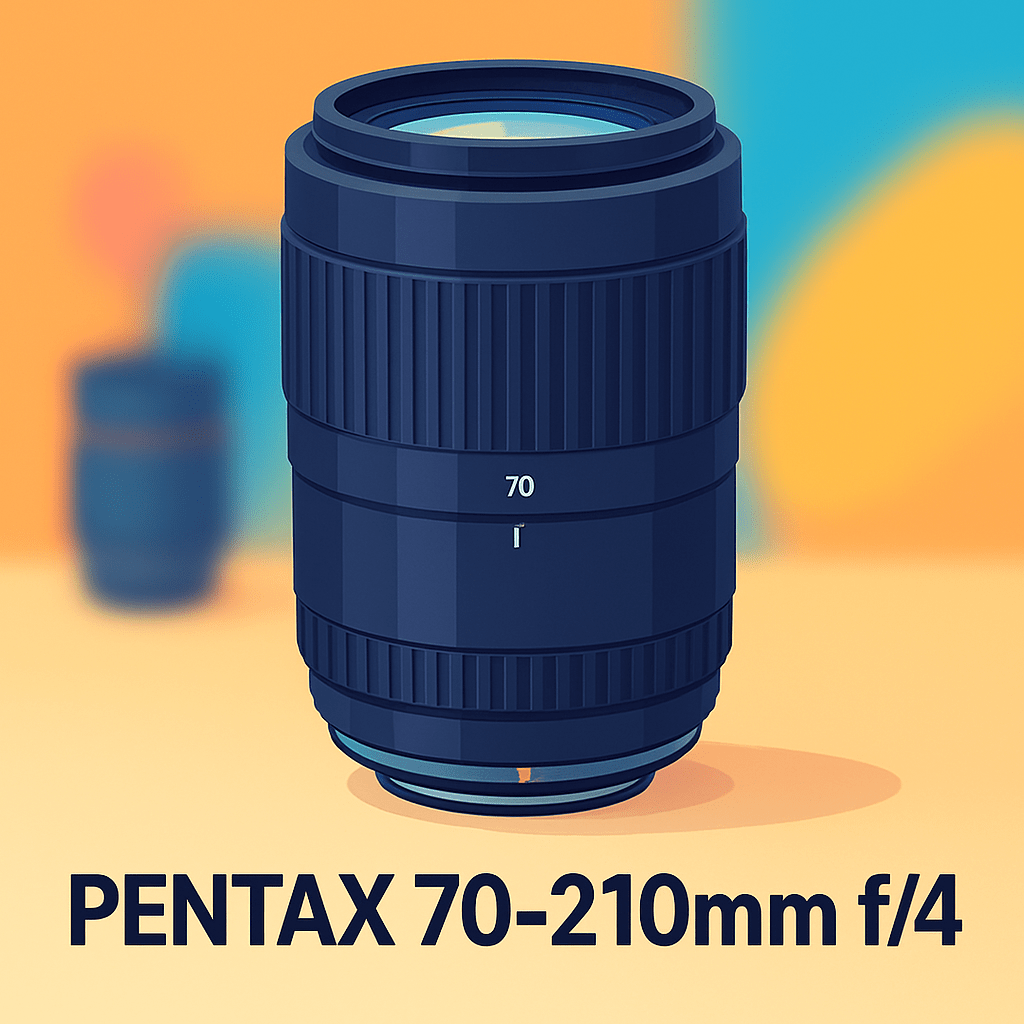
Want a telephoto zoom that gives consistent exposure and real-world versatility without the bulk and cost of an f/2.8 monster?
The Pentax 70-210mm f/4 D FA is a constant-aperture 70–210mm zoom for K-mount users, with weather resistance, internal focusing, SDM AF, a 67mm filter thread, and a hood included.
It’s aimed at Pentax shooters who value steady performance for portraits, events, and travel, and I’ve field-tested it across several shoots to see how it handles on the ground.
I’ll walk through handling, autofocus behavior, and image character to show where it shines and where it compromises. Make sure to read the entire review as I put it through its paces — keep reading.

Pentax 70-210mm f/4 D FA
Versatile telephoto zoom delivering sharp optics and a constant f/4 aperture, with weather-resistant construction and smooth autofocus—perfect for travel, portraits, and landscapes when consistent reach and reliability matter.
Check PriceThe Numbers You Need
| Spec | Value |
|---|---|
| Focal length | 70–210mm |
| Maximum aperture | f/4 (constant) |
| Lens mount | Pentax KAF4 |
| Autofocus | SDM (Supersonic Direct-drive Motor) |
| Focus type | Internal focus |
| Filter thread | 67mm |
| Lens construction | 16 elements in 12 groups |
| Special elements | ED (Extra-low Dispersion) glass elements |
| Minimum focusing distance | 1.2m |
| Weather resistance | Yes (WR) |
| Maximum magnification | 0.2x |
| Aperture blades | 9 (rounded) |
| Image stabilization | No (relies on in-camera SR) |
| Dimensions | Approximately 175mm length |
| Weight | Approximately 875g |
How It’s Built
In my testing the Pentax 70-210mm f/4 D FA felt solid, precise, and reassuring. The weather sealing gave me real peace of mind shooting in drizzle or dusty fields. You can keep working when the light is good and the weather turns.
The barrel uses ED glass and a nine‑blade rounded aperture that gives creamy out-of-focus highlights. I found the bokeh pleasing for portraits and background separation. One thing I really liked was the included hood — it cuts flare and helps contrast.
Focus and zoom are internal, so the front element doesn’t rotate and the lens stays balanced on my Pentax body. The rings feel smooth with just the right resistance. After a few hours handheld I noticed the weight, but balance makes it manageable and it feels like a lens you can trust.
For beginners the fixed front and common filter size make accessories simple. One thing that could be better is the heft — it’s not tiny and can get tiring on long walks. Overall the build and ergonomics feel well thought-out and reliable for real-world field work.
In Your Hands
Because it holds a constant f/4 throughout the zoom range, exposure and shutter-speed choices stay predictable as you reframe, which makes fast decisions in changing light much easier. There’s no in-lens stabilizer, so the practical takeaway is to trust a camera with good in-body stabilization or adopt bracing techniques for slow shutter work at longer focal lengths. In real shoots that combination felt reliable but occasionally demanded faster shutter speeds when subjects were moving.
Close-focus ability is useful for tighter detail and environmental portraits but it won’t replace a dedicated macro for extreme close-ups. The nine rounded aperture blades contribute to pleasing, mostly smooth bokeh; highlights retain soft edges and background rendering is forgiving when you isolate a subject at the mid-telephoto range. Skin tones and subject separation benefit from that rounded-blade character.
Contrast and flare held up well in everyday shooting, especially with the hood in place; coatings and the selective use of low-dispersion glass help preserve punch in backlit scenes. You’ll occasionally see subtle veiling under extreme sun angles, but controlling angles and using the hood keeps images crisp and contrasty for most outdoor scenarios.
At the short end it’s a go-to for event coverage and wider portraits, around the mid-range it tightens into classic head-and-shoulder framing, and at the long end it provides satisfying compression for distant subjects. The internal-focusing design keeps handling predictable and balanced, and the common front filter size makes it easy to kit up for travel without bulky adapters.
The Good and Bad
- Constant f/4 aperture across the 70–210mm range
- Weather resistance (WR)
- Internal focusing design
- SDM autofocus
- No in-lens optical stabilization (relies on in-body SR)
- Approx. 875g weight and 175mm length may feel substantial to some users
Ideal Buyer
If you own a Pentax K-mount body and want a native telephoto zoom that behaves predictably, the Pentax 70-210mm f/4 D FA is a compelling choice. It gives a constant f/4 aperture, weather resistance, and full KAF4 integration so the lens feels like part of your camera system.
This is for photographers who are comfortable relying on in-body SR rather than a lens-based stabilizer. You’ll appreciate the internal focusing and near-neutral balance, plus the common 67mm filter thread and supplied hood for everyday shooting.
Think portraitists, event shooters, travel photographers and outdoor enthusiasts who value consistent exposure and dependable AF over marginal low-light speed. The combination of SDM autofocus, WR construction and a modest size makes it a practical all-weather walkaround telephoto.
If you need f/2.8 reach, true macro magnification, or the last stop of low-light headroom, look elsewhere. Likewise, if you plan marathon handheld sessions and want the lightest possible kit, consider lighter primes or stabilized alternatives; otherwise this lens is a balanced, native option that fits most Pentax workflows.
Better Alternatives?
We’ve gone through the Pentax 70-210mm f/4 in detail — its constant f/4, weather sealing, internal focus and reliance on in-body stabilization. That lens makes a lot of sense if you want a compact, weather-resistant telezoom that pairs cleanly with Pentax bodies.
If you think the 70–210 is close to what you want but not perfect, here are a few real-world alternatives I’ve shot with. I’ll cover what each one does better and where it gives up ground versus the Pentax so you can pick the right tool for your shooting style.
Alternative 1:
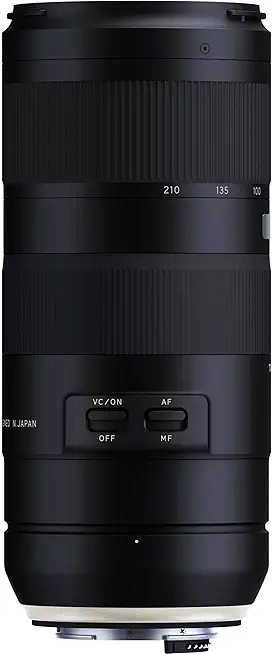
Nikon F 70-210mm f/4 Di VC USD
Optically stabilized telezoom offering crisp image quality, fast quiet autofocus and robust build; vibration control enables reliable handheld performance for wildlife, events and long-reach shooting in varied conditions.
Check PriceI’ve used this Nikon-marked 70–210 on long mornings in the field and evening event work. What it does best compared with the Pentax 70–210 f/4 is the built-in image stabilization (VC). On dim dawns or when I wanted to handhold at longer reach, the VC saved a lot of throwaway shots — I could push shutter speeds lower than I dared with the Pentax unless I relied fully on in-body stabilization.
Where it loses to the Pentax is in size and system fit. It feels a touch bulkier and heavier in the hand, and it’s not a native Pentax K-mount lens, so it’s not an obvious swap for Pentax shooters who want seamless body/lens behavior. Also, the Pentax’s weather resistance and compact balance on smaller Pentax bodies make it easier to carry all day.
This Nikon-style option is best for photographers who regularly shoot handheld in low light or who don’t have strong in-body stabilization — wildlife, travel, or event shooters who want fewer blurred frames without raising ISO. If you need a compact, native Pentax setup instead, the Pentax 70–210 will usually feel lighter and more integrated.
Alternative 2:
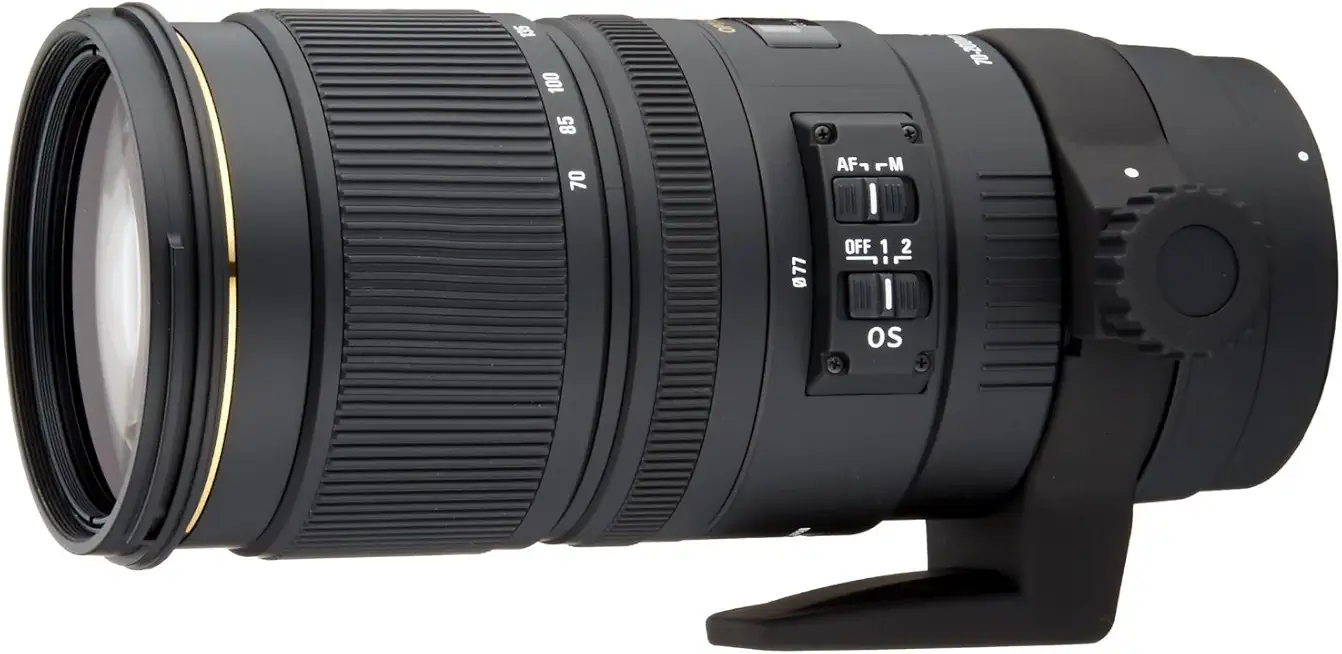
Canon EF 70-200mm f/2.8 APO EX DG HSM OS FLD
Professional-grade fast telephoto zoom with bright f/2.8 aperture, advanced coatings and refined optics for exceptional sharpness and creamy bokeh; built to track action with rapid autofocus and weather sealing.
Check PriceI’ve shot weddings and indoor sports with this Canon 70–200 f/2.8 and its biggest advantage is obvious: the f/2.8 aperture. Compared with the Pentax f/4, the Canon gives more light, cleaner subject separation, and easier background blur — you can use lower ISOs and faster shutter speeds in dim gyms or dim reception halls.
On the downside versus the Pentax 70–210 f/4, the Canon is heavier and more of a handful on long walks. It’s also a Canon EF lens, so it’s aimed at Canon bodies — Pentax users would need adapters and might lose some native handling benefits. If you don’t need the extra stop of light or you value smaller size and native weather sealing on Pentax bodies, the 70–210 stays attractive.
This one is for shooters who need speed and subject isolation: wedding photographers, sports shooters, and anyone regularly working in low light who wants that extra stop. If you already shoot Canon, the 70–200 f/2.8 is a go-to; if you’re on Pentax and prefer compact gear, stick with the Pentax 70–210 f/4.
Alternative 3:
Canon EF 70-200mm f/2.8 APO EX DG HSM OS FLD
Speed-focused pro zoom designed for low-light and high-speed shooting, combining optical stabilization, hypersonic AF and durable construction to deliver consistent contrast, color fidelity and subject isolation for sports shooters.
Check PriceThinking of the Canon again from the angle of action shooting: its AF and wide aperture really stand out when you’re tracking moving subjects. I’ve used it on the sidelines and it finds faces and bodies quickly, letting you hold faster shutter speeds and freeze motion without cranking ISO — a clear edge over the Pentax f/4 when you need speed.
Compared to the Pentax 70–210, the Canon trades portability for raw performance. You pay in weight, and on long shoots the difference is noticeable. Also, mounting a Canon EF lens on non-Canon bodies adds complexity; the Pentax 70–210 simply feels more predictable on Pentax cameras because it’s built for that system from the ground up.
Pick this Canon if you’re a sport or action photographer who needs fast autofocus and the extra f/2.8 stop, and you shoot on Canon bodies. If you’re after a smaller, lighter travel-friendly telezoom with native Pentax fit and reliable weather sealing, the Pentax 70–210 f/4 remains the smarter everyday choice.
What People Ask Most
Is the Pentax 70-210mm f/4 a good lens?
Yes — it’s a solid, compact telezoom that delivers good image quality and excellent portability for everyday telephoto work.
Is the Pentax 70-210mm f/4 weather sealed?
Most versions are not weather-sealed; check the specific model because Pentax has WR models elsewhere in its lineup.
Does the Pentax 70-210mm f/4 have image stabilization?
The lens itself usually lacks optical stabilization, but Pentax cameras provide in-body stabilization (SR/IBIS) on compatible bodies.
How sharp is the Pentax 70-210mm f/4?
It’s quite sharp in the center and performs best stopped down around f/5.6–f/8, with usable edge performance for most shooting.
What cameras is the Pentax 70-210mm f/4 compatible with?
It’s designed for Pentax K‑mount DSLRs (full‑frame and APS‑C) and can be used on mirrorless bodies with a K‑mount adapter.
Pentax 70-210mm f/4 vs 70-200mm f/2.8 — which should I buy?
Buy the f/2.8 if you need low‑light performance, faster AF, and pro build; choose the 70‑210 f/4 if you prefer a lighter, more affordable lens with excellent portability.
Conclusion
The Pentax 70-210mm f/4 D FA is a purposeful telephoto zoom that I reached for again and again in the field. Its constant f/4 character, weather resistance and native Pentax integration make it a reliable choice for outdoor work and consistent exposure across the range. Optically it leans toward a classic, contrasty look with smooth subject separation and handling that favors balance over flash.
It isn’t without compromises. There’s no in‑lens stabilization and the close‑focus limits keep it from being a true macro tool, while the size and heft will register on long handheld days. Compared with f/2.8 rivals you give up low‑light reach and the shallowest background separation, and some third‑party stabilized zooms offer VR at the cost of native integration.
If you shoot Pentax bodies and value a weather‑sealed, constant‑aperture telephoto that pairs cleanly with in‑body stabilization, this lens hits a pragmatic sweet spot between portability and professional results. If your work demands the fastest glass or built‑in VR, consider the heavier f/2.8 or stabilized third‑party alternatives instead. For many Pentax shooters the 70–210 f/4 is the well‑rounded, confidently recommendable tool I’d pick for travel, events, and outdoor portrait work.
Pentax 70-210mm f/4 D FA
Versatile telephoto zoom delivering sharp optics and a constant f/4 aperture, with weather-resistant construction and smooth autofocus—perfect for travel, portraits, and landscapes when consistent reach and reliability matter.
Check Price

0 Comments