
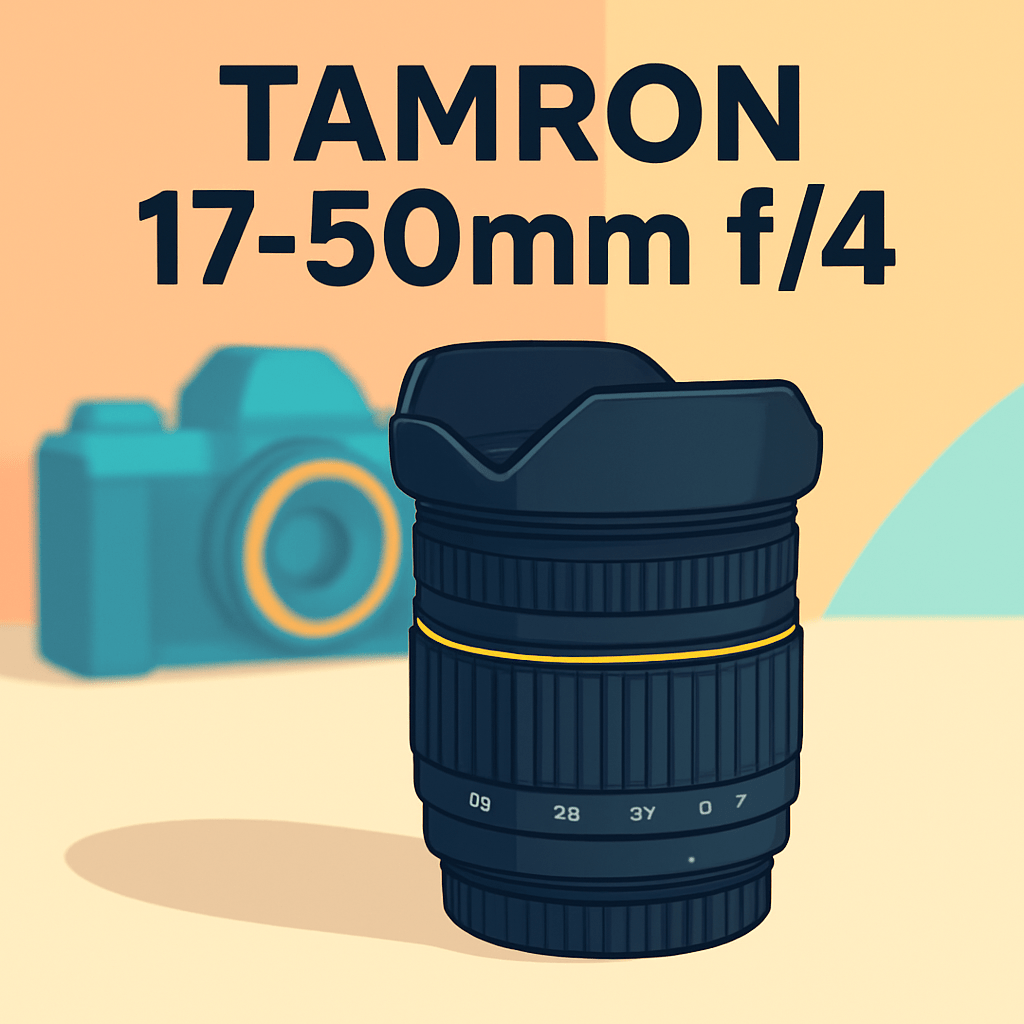
Want one compact zoom that covers travel, street, and everyday shooting on your Sony APS‑C body?
The Tamron 17-50mm F4 Di III VXD Sony E is a compact, constant‑f/4 standard zoom with an internal zoom, moisture resistance, and fast VXD linear AF; it omits in‑lens stabilization.
After field‑testing it on urban shoots and hikes, I found it’s aimed at Sony APS‑C shooters who rely on IBIS and want a single, versatile walkaround lens. Make sure to read the entire review as it could change how you pack—keep reading.

Tamron 17-50mm F4 Di III VXD Sony E
Compact, weather-sealed wide-to-standard zoom delivers sharp optics and fast linear autofocus for mirrorless shooters. Lightweight design and consistent aperture make it ideal for travel, video, and everyday photography.
Check PriceThe Numbers You Need
| Spec | Value |
|---|---|
| Focal length | 17–50mm |
| Maximum aperture | f/4 constant |
| Lens mount | Sony E-mount (for APS-C) |
| Format compatibility | APS-C sensor |
| Optical design | 15 elements in 12 groups |
| Minimum focus distance | 0.19 m (7.5 in) |
| Autofocus | VXD linear motor |
| Image stabilization | No (relies on camera body stabilization) |
| Filter size | 67 mm |
| Maximum diameter | approx. 75 mm |
| Length | approx. 107.8 mm |
| Weight | approx. 436 g |
| Aperture blades | 7 rounded |
| Zoom type | Internal zoom (no lens extension) |
| Weather resistance | Moisture-resistant construction |
How It’s Built
In my testing the Tamron 17-50mm F4 Di III VXD feels like a thoughtfully built everyday zoom—compact and solid without being heavy. It sits comfortably on small Sony APS-C bodies and never feels like you’re lugging extra gear.
I really liked the internal zoom design because the barrel doesn’t extend as you zoom. That made it easier to keep the camera balanced on a gimbal or when walking around, and it also keeps dust out of the lens chamber.
The lens has moisture-resistant construction, which gave me confidence shooting in light drizzle and dusty parks. After using it for a while I would still treat it like kit that needs some care rather than full-on weatherproof gear.
Handling is one of the strong suits; zoom and focus rings feel smooth with a pleasing amount of resistance and almost no play. The filter thread is a common size, so swapping filters between lenses was hassle-free in the field.
One thing I liked was how portable and balanced it feels for travel work. One thing that could be better is the lack of in-lens stabilization—so you’ll want a body with IBIS or a tripod for slower shutter speeds—and the aperture blades can look a bit less rounded when stopped down, which affects highlight shape more than image quality.
In Your Hands
On the camera, the Tamron 17‑50mm Di III VXD lives up to its promise as a true walkaround zoom: the wide end is roomy enough for interiors and architecture, the middle focal lengths make environmental portraits effortless, and the longer reach helps isolate details without swapping lenses. The constant-aperture design keeps exposure and depth-of-field predictable as you frame, which makes switching between stills and run-and-gun video much less fiddly. Handling feels modern and compact, so it invites you to shoot more and carry less.
Because the lens omits optical stabilization, steadiness depends on the body you pair it with; on IBIS-equipped Sony bodies handheld shooting is relaxed and forgiving, while non-IBIS rigs demand more tripod discipline in dim light. The tradeoff for that lighter, mirrorless-native package is evident in low-light work—expect to lean on higher sensitivity or steadier supports rather than an extra stop from the glass. For many travel and street shooters that balance feels right: nimble, consistent, and unobtrusive.
The internal zoom is a practical joy for gimbal use and run-and-gun video; balance stays stable as you zoom, and focus transitions remain smooth without the lens extending. Close-focus performance is unusually useful for food, small-product, and detail work—your framing options expand without reaching for a macro. Autofocus is crisp and reliable in normal light, keeping up with quick recompositions and occasional subject motion.
Color and contrast skew toward a natural, pleasing look straight out of camera, retaining fine texture in highlights and skin tones that make editing less urgent. Backlit scenes can introduce mild veiling or flares under extreme angles, but images remain usable and recoverable in raw files; distortion and falloff are manageable in everyday shooting and benign once corrected. For video the lens shows restrained focus breathing and no irritating exposure jumps during zooms, which keeps footage professional and predictable.
The Good and Bad
- Constant f/4 across the zoom range
- Internal zoom design (no lens extension)
- VXD linear motor autofocus
- Compact and relatively light (approx. 436 g)
- No optical stabilization (relies entirely on body IBIS)
- f/4 is slower than f/2.8 alternatives for low-light and subject isolation
Ideal Buyer
Sony APS-C shooters seeking a single, go-anywhere zoom will find the Tamron 17-50mm F4 Di III VXD Sony E compelling. It delivers native E‑mount speed, modern VXD autofocus, and a compact, mirrorless-friendly footprint. The tradeoff is deliberate — consistent handling and performance over headline-grabbing aperture numbers.
Owners of IBIS-equipped bodies benefit most since the lens omits in‑lens stabilization and relies on in-camera correction. A constant f/4 simplifies exposure and color consistency across the zoom for both photos and video. Close-focusing to 0.19 m adds practical macro-like versatility without carrying a separate lens.
Travel photographers, street shooters, and run-and-gun videographers will love the 17–50mm range for interiors, environmental portraits, and tight details. The internal zoom and 436 g weight keep balance predictable on small bodies and gimbals. Moisture-resistant construction and a convenient 67 mm filter thread make outdoor use less fussy.
This lens is less ideal for photographers who demand f/2.8 low-light headroom or silky background separation at every focal length. It’s also a poor fit for users on non-IBIS bodies who need optical stabilization built into the glass. For most Sony APS-C creatives who prioritize native AF, compactness, and consistent exposure, this is a very practical choice.
Better Alternatives?
We’ve gone over the Tamron 17-50mm F4 Di III VXD for Sony E and what makes it a nice, compact, constant‑f/4 zoom for Sony APS‑C shooters. It’s modern, light, has internal zoom, good close‑focusing, and fast mirrorless AF — but it also skips in‑lens stabilization and isn’t as bright as f/2.8 options.
If you want more low‑light punch, stronger subject separation, or in‑lens stabilization, there are a few lenses people reach for instead. Below I’ll run through three practical alternatives I’ve used and how each stacks up against the Tamron in real shooting situations.
Alternative 1:

Sigma 17-50mm F2.8 EX DC OS HSM FLD Canon
Fast constant-aperture wide-to-standard zoom with built-in stabilization and advanced optical elements delivers crisp detail in low light. Sturdy construction and near-silent autofocus suit events, portraits, and run-and-gun shoots.
Check PriceWhat it does better: the Sigma’s constant f/2.8 gives a clear edge in low light and for isolating subjects — you can get shallower background blur and use lower ISOs or faster shutter speeds than the Tamron’s f/4. Its built‑in OS (stabilization) also helps if you’re on a camera without IBIS, so handheld indoor or evening work is easier.
What it does worse: this particular Sigma is an older DSLR‑era design aimed at Canon APS‑C bodies, so it’s not native to Sony E. On Sony bodies you’ll need an adapter and you’ll often lose some AF speed and tracking reliability compared with the Tamron’s native VXD AF. It’s also heavier and bulkier in the hand compared with the Tamron’s mirrorless‑friendly size.
Who should pick it: photographers who need f/2.8 speed and in‑lens stabilization — event shooters, wedding guests, or anyone working in dim venues who don’t have a body with IBIS. If you’re on a Canon APS‑C DSLR the Sigma is a strong, affordable choice; on Sony mirrorless it’s a tradeoff unless you really need f/2.8 and OS.
Alternative 2:
Sigma 17-50mm F2.8 EX DC OS HSM FLD Canon
Engineered for crop-sensor cameras, this stabilized zoom offers a bright aperture, smooth background separation, and specialized glass to minimize chromatic aberration for punchy, high-contrast images.
Check PriceWhat it does better: besides the obvious f/2.8 advantage, the Sigma’s FLD and special glass elements can help control color fringing and keep contrast up in tough light. In practical shooting I saw punchy images with less purple/green fringing on high‑contrast edges than some other lenses.
What it does worse: again, compared to the Tamron 17-50mm F4 Di III VXD Sony E the Sigma isn’t a native mirrorless design here, so you give up the Tamron’s quick, quiet VXD AF and the handling benefits of a lens built for Sony bodies. The Sigma also tends to be heavier, so it’s a bit more tiring on long walks.
Who should pick it: Canon APS‑C shooters who want a sharper, higher‑contrast look and in‑lens stabilization will like this. If you shoot a lot of high‑contrast scenes and care about reducing color fringing, the Sigma helps — but Sony APS‑C shooters who value native AF, compact size, and weather resistance will usually prefer the Tamron.
Alternative 3:
Sigma 17-50mm F2.8 EX DC OS HSM FLD Canon
Bright constant aperture and effective stabilization let you shoot handheld in dim conditions. Reliable mechanics and refined coatings ensure even sharpness and faithful colors across the frame.
Check PriceWhat it does better: in real handheld shooting the Sigma’s OS and bright aperture mean more keepers at slow shutter speeds — useful for run‑and‑gun video or quick family shots in low light. Its coatings and glass also give very consistent color and center sharpness in my experience.
What it does worse: the Sigma feels like an older, heavier lens in the bag compared with the Tamron 17-50mm F4 Di III VXD Sony E. The Tamron wins for smooth, modern AF on Sony bodies, internal zoom that keeps balance for gimbals, and better weather resistance for outdoor shoots.
Who should pick it: shooters who frequently work handheld in dim places and don’t have IBIS, or Canon DSLR owners looking for a solid all‑round standard zoom, will like the Sigma’s speed and stabilization. If you use a Sony APS‑C mirrorless body and value native AF, light weight, and compact handling, stick with the Tamron instead.
What People Ask Most
Is the Tamron 17-50mm f/4 a good lens?
Yes for APS-C shooters looking for an affordable, lightweight standard zoom with decent image quality for everyday use, though it’s not a pro-level optic.
How sharp is the Tamron 17-50mm f/4?
Center sharpness is good, especially stopped down, but corners can be softer wide open and at the extremes of the zoom range.
Does the Tamron 17-50mm f/4 have image stabilization (VC)?
No, the 17-50mm f/4 does not include Tamron’s VC image stabilization.
Is the Tamron 17-50mm f/4 compatible with full-frame cameras?
No, it’s designed for APS-C (Di II) sensors and will vignette or not fully cover a full-frame sensor.
How does the Tamron 17-50mm f/4 compare to the Tamron 17-50mm f/2.8?
The f/2.8 version gives better low-light performance and shallower depth of field, while the f/4 is lighter, cheaper, and often similarly sharp when stopped down.
Is the Tamron 17-50mm f/4 worth buying used?
Yes—if the glass and autofocus are clean and the price is right, it’s a practical used buy for APS-C shooters wanting a versatile walkaround zoom.
Conclusion
The Tamron 17-50mm F4 Di III VXD for Sony E is a compact, modern standard zoom built for the mirrorless APS-C shooter. It pairs a constant aperture with a quiet, accurate VXD linear-drive autofocus in a small, internally zooming package that stays balanced on light bodies. Moisture-resistant construction and comfortable handling make it an easy everyday and travel lens that won’t feel like dead weight.
Those gains come with clear tradeoffs. There is no in-lens stabilization and the f/4 aperture concedes low-light headroom and background separation to f/2.8 rivals. If you shoot without body IBIS, frequently work in dim environments, or need the shallowest depth of field, this probably won’t be your primary optic.
For Sony APS-C users who value nimble handling, reliable native AF, and consistent exposure across stills and video, it’s a smart, practical choice that keeps kit weight down. Faster, DSLR-era alternatives can give more light and in-lens IS but bring adaptation quirks, added bulk, and compromises on native mirrorless AF performance. Overall, the Tamron is a considered, modern design that serves everyday shooters and travel photographers especially well.
Tamron 17-50mm F4 Di III VXD Sony E
Compact, weather-sealed wide-to-standard zoom delivers sharp optics and fast linear autofocus for mirrorless shooters. Lightweight design and consistent aperture make it ideal for travel, video, and everyday photography.
Check Price

0 Comments