
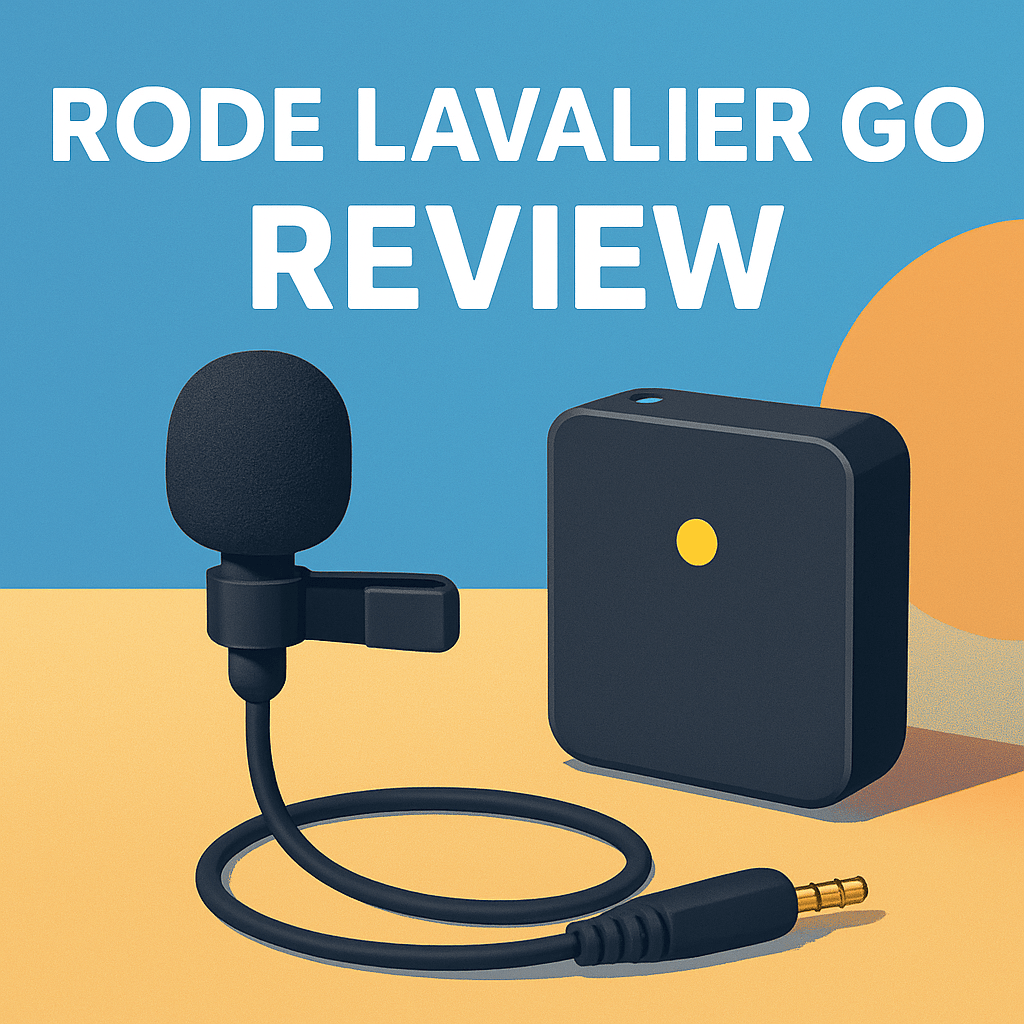
Looking for a clear answer in this rode lavalier go review: isn’t this tiny lapel mic the missing piece for better on‑camera audio?
It’s a compact omnidirectional lavalier with a 3.5mm TRS plug, meant to pair with the Rode Wireless GO while still working with other TRS devices.
I’ve taken one into the field on shoots to see how it behaves in real situations, and I tested it paired with a Wireless GO, into TRS recorders, and with a TRRS phone adapter (sold separately).
If you shoot interviews, vlogs, or on‑camera pieces and want reliable, simple lav audio, this review’s for you. Make sure to read the entire review as I break down the real takeaways — keep reading.

Rode Lavalier GO Microphone
Compact professional clip-on microphone delivering clear, natural vocal capture for interviews, presentations, and on-camera work. Durable build, reliable omnidirectional pattern, and easy plug-and-play setup for fast field use.
Check PriceThe Numbers You Need
| Spec | Value |
|---|---|
| Microphone type | Lavalier (lapel) microphone |
| Polar pattern | Omnidirectional |
| Compatibility | Designed for Rode Wireless GO; compatible with other devices via 3.5mm TRS connector |
| Connector type | 3.5mm TRS |
| Connector compatibility | Can be used with smartphones via TRRS adapter (sold separately) |
| Cable length | Approximately 1.2 meters (4 feet) |
| Frequency response | 20 Hz – 20 kHz |
| Sensitivity | -35 dB ± 3 dB (0 dB = 1V/Pa at 1 kHz) |
| Impedance | 3.3 kΩ |
| Signal-to-noise ratio | 74 dBA SPL |
| Maximum SPL | 110 dB SPL |
| Power requirement | Plug-in power (from transmitter or recorder) |
| Build material | Durable, flexible cable with reinforced strain relief |
| Weight | Approximately 16 grams |
| Included accessory | Foam pop shield for wind noise reduction |
How It’s Built
In my testing the Rode Lavalier GO Microphone feels like a straightforward, well-made lapel mic. Its tiny, lightweight capsule and flexible cable make it easy to hide under shirts and not weigh talent down.
The cable balances thickness and suppleness nicely, and the reinforced strain relief actually matters in day‑to‑day use. I found the 3.5mm TRS plug fits snugly into packs and recorders with no annoying wiggle, so I wasn’t babysitting connections on set.
The fixed 1.2 meter length is practical for routing to a transmitter or camera without excess slack to snag. The included foam pop shield stayed put through walking and talking, which I really liked, but the non‑removable cable means you can’t swap ends if you need a different connector.
After using it for a while the overall build felt solid enough for interviews and vlogging, and beginners will find it easy to rig and conceal. One thing that could be better is offering a detachable cable or a firmer pop shield fit for rougher work. For most everyday shooters this mic is simple, reliable, and ready to go.
In Your Hands
In everyday use the Rode Lavalier GO Microphone’s omnidirectional capsule is refreshingly forgiving — placement can be a touch off and voices still read consistently as talent turns or glances around. That even pickup makes it easy to get usable takes quickly without obsessive mic-positioning, which is a huge time-saver on fast interviews and run‑and‑gun vlogs.
Paired with a wireless pack or a recorder that supplies plug‑in power, the mic comes alive without fuss; you’ll typically dial in a moderate amount of gain on common transmitters and cameras to reach solid levels. In quiet rooms the mic’s noise floor sits unobtrusively under speech, while in typical street or office ambiences the room noise becomes the dominant element rather than any obvious self‑noise from the capsule.
For spoken word the Lavalier GO offers comfortable headroom and retains clarity through normal delivery and energetic takes, though extreme loud sources can push it toward saturation. Its tonal balance keeps dialogue intelligible without harshness, so you’re rarely chasing distortion on standard interview or presentation material.
In the field the fixed mid‑length cable is easy to route and conceal under clothing, and the strain relief keeps the connector secure during movement. The included foam wind shield knocks down light wind and plosives effectively, and handling or clothing rustle is minimal when clipped and dressed carefully.
Bottom line: for interviews, on‑camera presentation, and vlog work this lav is reliably predictable — quick to rig, tolerant of modest placement errors, and capable of producing clean, ready‑to‑mix dialogue with only light post work. Monitor levels, dress the cable, and you’ll have consistent results take after take.
The Good and Bad
- Omnidirectional pattern for consistent capture with movement
- Lightweight (~16 g) and easy to rig
- Foam pop shield included for plosive/light wind control
- Direct 3.5 mm TRS compatibility; designed to pair with Rode Wireless GO
- Smartphones require a separate TRRS adapter
- Requires devices that provide plug-in power (no onboard battery)
Ideal Buyer
If you own a Rode Wireless GO and want a matched, no‑fuss lav, the Rode Lavalier GO Microphone is made for you. It clicks straight into the pack and behaves predictably under real‑world pressure. Pros and hobbyists alike get a predictable, plug‑and‑play experience.
Interviewers, vloggers, and on‑camera presenters who prioritize clear speech and fast rigging will appreciate its balanced response and omnidirectional pickup. Placement is forgiving, so you can focus on the conversation instead of mic positioning. That steadiness pays off when schedules are tight or setups are rushed.
Run‑and‑gun shooters who need a lightweight, low‑profile mic with a durable cable and reinforced strain relief will find this reliable. The included foam pop shield and 1.2 m cable are practical for body routing, concealment, and light outdoor work. It’s a small kit that performs like a pro tool during interviews and live takes.
If you mainly record to smartphones without adapters, or require an onboard battery or a distinct tonal character, you might explore other options. But for TRS‑equipped cameras, field recorders, and especially Wireless GO users, this mic is a sensible, repeatable choice that simply gets the job done.
Better Alternatives?
In this rode lavalier go review we’ve covered the mic’s design, real-world use, sound, and who it suits best. The Lavalier GO is a solid, simple choice for on-camera interviews and for pairing with the Rode Wireless GO, but there are times you might want something different — whether that’s a more “broadcast” tone, phone-ready wiring, or a very low price.
Below I list a few alternatives I’ve used in the field, how they compare to the Rode Lavalier GO, and what kind of buyer would prefer each one. I’ve kept the notes practical — what you’ll notice on set when you clip them on, walk around, or plug into a phone or pack.
Alternative 1:

Sennheiser ME 2 Lavalier Microphone
Broadcast-quality clip-on microphone engineered to reproduce balanced, transparent speech for stage, broadcast, and film. Low handling noise and lightweight design deliver discreet, reliable performance with wireless transmitters.
Check PriceI’ve used the Sennheiser ME 2 on corporate shoots and small film sets. Compared to the Rode Lavalier GO, the ME 2 often sounds a touch fuller in the midrange and a bit smoother on the highs — that translates to a more “broadcast” voice right out of the recorder with less EQ work. If you need someone to sound immediately polished for interviews or broadcast, the ME 2 gets you there.
Where it’s worse than the Rode is price and plug compatibility. The ME 2 is usually pricier and is most at home with Sennheiser wireless packs. When I tried to use it with generic camera inputs I needed the right connector or an adapter, and that adds hassle. It also isn’t dramatically more rugged in every way — it just feels more tuned for pro wireless rigs.
Buyers who should pick the ME 2 are pros who want that broadcast tone and low handling noise, or people already in the Sennheiser wireless ecosystem. If you rent gear or work on corporate/TV shoots where that smoother voice and reliability matters, the ME 2 is worth the extra cost. If you need a simple TRS plug-and-play lav for a Rode Wireless GO, the Rode is still the easier choice.
Alternative 2:
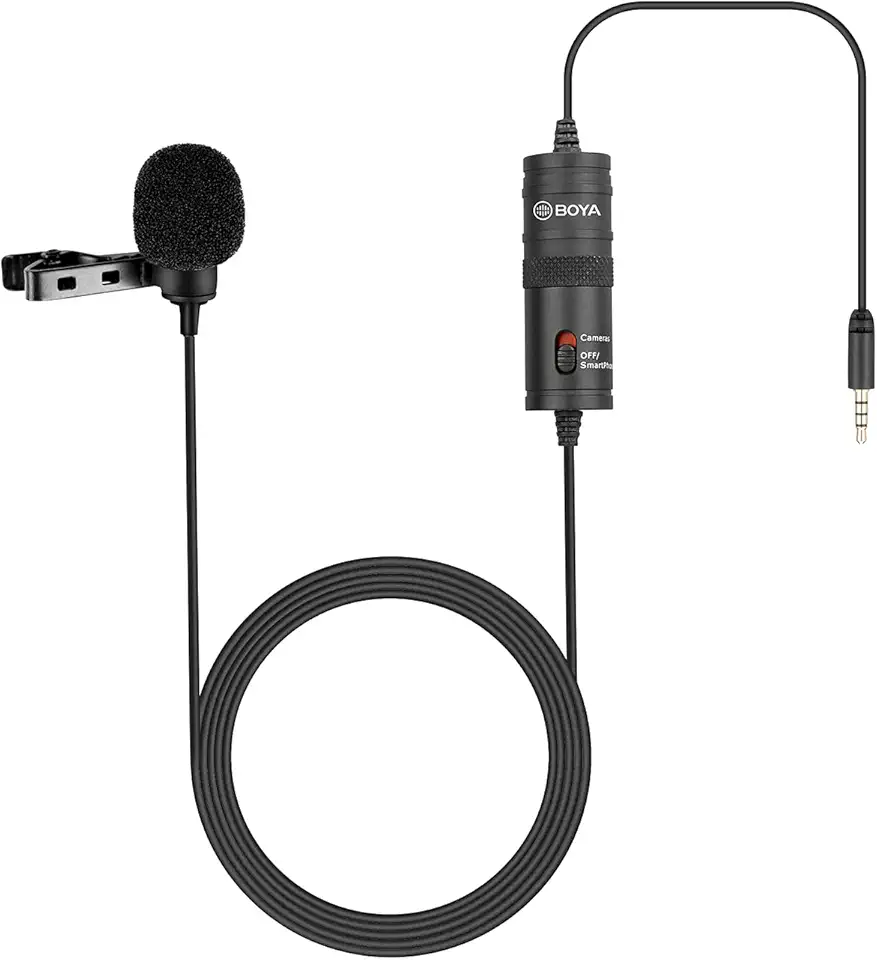
BOYA BY M1 Lavalier Microphone
Affordable wired clip-on microphone offering clear vocal pickup and broad device compatibility for smartphones, cameras, and recorders. Long cable, lightweight profile, and plug-and-play simplicity make it ideal for vlogging and interviews.
Check PriceThe BOYA BY-M1 is the budget hero I’ve used for run-and-gun vlogs and student interviews. Compared to the Rode Lavalier GO, the BY-M1’s big advantage is cost and a long cable — you can clip it on and walk far from the camera, or hand it to someone without worrying about cable reach. It’s also phone-friendly out of the box thanks to its TRRS plug and simple battery option.
Where it falls short vs the Rode is in build and consistent sound. The BY-M1 feels flimsier, the clip and cable aren’t as durable, and on quiet recorders you’ll hear more hiss or self-noise. In the field I often needed more gain and careful placement to avoid rustle or handling noise. It’s great for quick, cheap setups but not as repeatable for professional jobs.
If you’re a content creator on a tight budget, a student, or you need a phone-first mic with a long cable for interviews, the BY-M1 is a smart pick. If you want steady, pro-level reliability or are pairing with a Rode Wireless GO for regular client work, the Rode Lavalier GO is the safer long-term tool.
Alternative 3:
BOYA BY M1 Lavalier Microphone
Versatile plug-and-play clip microphone designed for creators seeking dependable audio on a budget. Includes lengthy cable and discreet clip, delivering consistent speech capture for tutorials, podcasts, interviews, and field recording.
Check PriceThinking of the BY-M1 again but from a different angle: I’ve used it for tutorials and podcasts where the speaker stays put. Its long cable and plug-and-play nature mean I can mic someone and walk away to set framing without fuss. Compared to the Rode Lavalier GO, the BY-M1 gives you flexibility and phone compatibility that’s immediate — no TRS/TRRS adapters required for many phones.
However, that same long cable can be a pain on fast-moving shoots and the mic is more prone to clothing noise and variable capsule quality. In scenes where people move a lot or you need to hide the mic under wardrobe, the Rode’s shorter, heavier cable and more consistent build make it less fussy to work with. The BY-M1 is more of a “set and forget” option where portability and price beat ruggedness.
Choose this version of the BY-M1 if you make tutorial videos, run a podcast from a fixed spot, or need a cheap spare mic for occasional field recording. If your work demands low handling noise, tight concealment, and repeatable pro results (especially with Wireless GO), stick with the Rode Lavalier GO or step up to something like the Sennheiser ME 2 for that broadcast feel.
What People Ask Most
How good is the sound quality of the Rode Lavalier GO?
It delivers clear, natural vocal sound with low handling noise and good signal-to-noise for interviews and video; it’s not a studio condenser but excellent for run-and-gun work.
Is the Rode Lavalier GO compatible with smartphones and DSLRs?
It works directly with DSLRs and audio recorders that have a 3.5mm mic (TRS) input, and with smartphones if you use the correct TRRS or USB-C/Lightning adapter.
Can the Rode Lavalier GO be used with the Rode Wireless GO transmitter?
Yes — it was designed to plug straight into the Wireless GO transmitter and gives reliable, locked-in connection and clean audio.
What’s the difference between the Rode Lavalier GO and the Rode SmartLav+?
The Lavalier GO is built for cameras and the Wireless GO with a TRS plug and tougher cable, while the SmartLav+ is a TRRS mic made primarily for smartphones.
Does the Rode Lavalier GO require batteries or external power?
No, the mic itself has no batteries; it draws power from the device or transmitter it’s plugged into (e.g., Wireless GO or camera).
How do you connect the Rode Lavalier GO to an iPhone or Android phone?
Use a TRRS adapter or a compatible interface (for iPhone add the Lightning-to-3.5mm adapter or a Lightning audio interface; for Android use a TRRS or USB-C audio adapter) to convert the Lavalier GO’s plug for phone use.
Conclusion
In this rode lavalier go review the verdict is straightforward: the Rode Lavalier GO Microphone is the no‑nonsense lav you reach for when reliable, on‑camera speech is the priority. It earns that recommendation with consistently clear vocal capture, a forgiving omnidirectional pickup and a cable/clip package that survives real world use. The included foam wind shield is a practical bonus that keeps files usable from quick interviews to run‑and‑gun vlogs.
It isn’t flawless, and those compromises are honest. The mic depends on plug‑in power and a standard TRS connection, so phones and some ecosystems need adapters or specific inputs to behave. If you want a radically different tonal character or a phone‑first workflow out of the box, other options deserve a look.
Bottom line: buy this if you use a Wireless GO or a TRS‑equipped camera/recorder and you want lightweight, repeatable results without fuss. Consider alternatives if you need a particular brand ecosystem, ultra‑long cabling, or the absolute lowest handling noise for broadcast work.
Based on hands‑on testing across transmitters, recorders and phone adapters, the Rode Lavalier GO Microphone represents excellent, practical value for creators who want dependable voice capture with minimal setup. It’s a smart, professional pickup that gets the job done—consistently and simply.
Rode Lavalier GO Microphone
Compact professional clip-on microphone delivering clear, natural vocal capture for interviews, presentations, and on-camera work. Durable build, reliable omnidirectional pattern, and easy plug-and-play setup for fast field use.
Check Price

0 Comments