
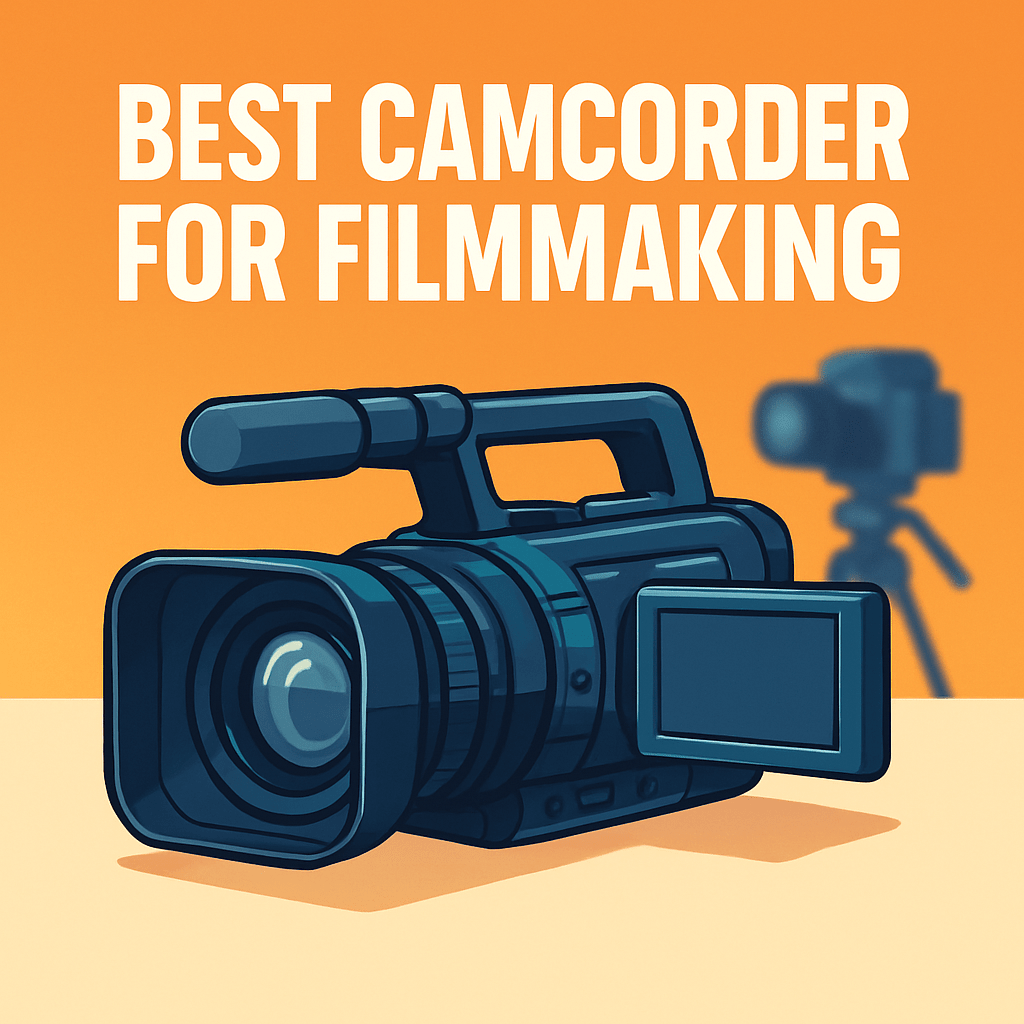
Which camcorder will actually make your footage look more cinematic and speed up your workflow?
Choosing the right tool still feels like a juggling act between image quality, ergonomics, and real-world demands on set. From nimble run-and-gun rigs to cinema-oriented workhorses, today’s camcorders blur the lines between convenience and creative control.
This roundup is built from real-world user feedback, professional reviews, and practical considerations drawn from active productions. We prioritized reliability, usability, and image flexibility—things that matter on set, in the edit bay, and across a busy delivery schedule.
Coverage spans broadcast, live events, documentary, cinematic, and semi-pro workflows, so you can find gear that fits your process. Whether you’re covering breaking news, running a one-person documentary shoot, or crafting a cinematic short, the right camcorder varies with your needs and postproduction workflow.
This article helps filmmakers match models to shooting style and workflow so buying decisions are faster, smarter, and less risky. Selections and advice are current as of 2026 and aimed at real production scenarios rather than lab specs alone, tuned to common budgets and crew sizes; read on to find the camcorder that best fits how you work, shoot, and edit.
1. Canon XF605 Broadcast and Documentary Workhorse

Canon XF605 4K UHD Camcorder
Broadcast-ready 4K capture with dual-pixel autofocus, robust connectivity, and compact shoulder-mount design for event and news production.
Check PriceThe Canon XF605 is a true workhorse when you need broadcast-ready results without fuss. Its 1-inch CMOS sensor and 10-bit 4K HDR at up to 60fps give you clean, gradeable footage straight out of the camera.
Color is a standout—Canon Log 3 plus the Cinema Color Matrix deliver rich tones and wide dynamic range that survive heavy grading. That 10-bit pipeline means you can push highlights and shadows without nasty banding.
Autofocus is a practical joy in the field: Dual Pixel AF with Eye AF and head detection keeps subjects sharp during fast-paced events and live shoots. The 15x optically sharp zoom covers everything from tight interviews to stage work, and the camera’s sensitivity (effective to f/12, 2000 lux) helps in tougher light.
Ergonomics and connectivity are built for pro workflows: a professional build, intuitive controls, and proper audio inputs mean less rigging and faster turnarounds. Users report broadcast-quality color science and reliable dynamic range, which is exactly what producers and news crews need.
If you’re a professional filmmaker, news producer, live event shooter, or documentarian who needs quick setup and broadcast-level quality, this is a strong pick. Expect great image quality and dependable AF, though the fixed lens and the camera’s weight are tradeoffs to consider for long handheld days.
- Reliable autofocus (Dual Pixel AF + Eye/head detection)
- Professional build, ergonomics, and audio inputs
- 10-bit 4K + Canon Log 3 for flexible grading
- Smooth, optically sharp 15x zoom
- Fixed lens
- Heavier than mirrorless — can fatigue on long handheld shoots
2. Panasonic HC-X2000 Compact Event Workhorse

Panasonic HC-X2100 4K Camcorder
Versatile 4K field camera offering long zoom, professional audio inputs, and reliable stabilization for ENG, documentary, and corporate shoots.
Check PriceThe Panasonic HC-X2000 is a genuine run-and-gun workhorse aimed at enthusiast and professional videographers shooting events, documentaries, and ENG pieces. It’s built to be carried and deployed quickly, which makes it a favorite for solo shooters who need dependable results without a lot of rigging.
Image-wise it records 4K60p internally (10-bit 4:2:2 up to 30p; 4:2:0 at 60p) and starts at a useful wide 25mm, paired to a 24x optical zoom. Stabilization is excellent for its class thanks to 5-axis hybrid O.I.S., and users report the stabilization holds up well even when zoomed in.
Audio and workflow are where it really shines for run-and-gun jobs: dual XLR inputs with 24‑bit audio, dual SD slots for overflow or backups, built-in Wi‑Fi for live streaming, and a detachable handle with LED and an ND filter for quick adjustments on location. It also offers 120fps slow motion for cutaways and a long battery life — over 4 hours at 4K60p — so you can stay on an event all day without constant battery swaps.
If you shoot events, documentaries, or solo ENG, this camcorder gives pro-level connectivity and dependable mobility in a compact package. Keep in mind the smaller sensor means it won’t match larger-sensor cameras in extreme low light, and the menu system is fairly feature-rich, so expect a learning curve if you want to unlock everything it can do.
- Quick deployment; lightweight and compact
- Long battery life (over 4 hours at 4K60p)
- Effective 5-axis hybrid stabilization even when zoomed
- Professional audio (dual XLR, 24‑bit)
- Smaller sensor limits very low‑light performance
- Feature-rich menu can feel complex to learn
3. Sony FX6 for Cinematic Filmmaking

Sony ILME-FX6 Cinema Line Full-Frame Camera
Compact full-frame cinema body delivering exceptional low-light sensitivity, cinematic color science, and fast hybrid autofocus for narrative and run-and-gun filmmaking.
Check PriceSony’s FX6 is a camcorder built with cinematic filmmaking in mind. It packs a full-frame sensor into an interchangeable-lens body, so you get that shallow depth of field and low-light performance that cinematic work demands.
Image specs are impressive: 4K up to 120fps, 10-bit internal recording, and 16-bit RAW output via HDMI for high-end post workflows. That combination gives you flexibility for slow motion, heavy grading, and archival-quality masters.
On set the FX6 feels engineered for real productions. Advanced autofocus eases run-and-gun or handheld shooting, while the built-in variable ND filter lets you control exposure and depth of field without swapping gear. XLR inputs and professional codecs mean your audio and delivery formats are production-ready.
As a working cinematographer I appreciate the interchangeable lenses—creative control over framing and bokeh is a huge advantage versus fixed-lens cams. The camera’s low-light performance also stands out; it lets you shoot with a more naturalistic look and fewer lights in tight locations.
Be realistic about the trade-offs. The FX6 comes at a higher price than traditional camcorders, and to unlock its full potential you’ll often add cages, mounts, and lenses—so there’s extra kit to manage. It also benefits from an operator who understands RAW workflows and color grading.
In short, if you’re an independent filmmaker, cinematographer, or commercial shooter looking for cinematic image quality in a compact, production-ready package, the FX6 is a strong choice. Expect superior low-light performance, flexible optics, and professional I/O at the expense of a higher budget and some added complexity.
- Full-frame cinematic image quality and shallow depth of field
- Flexible lens options for varied shooting scenarios
- Reliable autofocus for dynamic subjects
- Built-in ND and RAW output for high-end workflows
- Higher price than traditional camcorders
- Steeper learning curve; benefits from additional rigging and accessories
4. Canon XA75 Compact Professional Camcorder

Canon XA75 4K UHD Camcorder
Handheld 4K performer with large-sensor clarity, professional audio, built-in ND filters, and user-friendly controls for ENG and event videography.
Check PriceI reach for the Canon XA75 when I need a genuinely compact professional camcorder that won’t announce itself at a wedding or a sensitive documentary shoot. Its small footprint and thoughtful ergonomics let you move fast and stay unobtrusive while still delivering proper broadcast-style outputs.
Under the hood it’s built around a 1-inch CMOS sensor with 4K up to 30p and a useful 15x optical zoom. That combination gives you a balance of resolution, reach, and manageable depth of field for interviews and run‑and‑gun work.
Audio and connectivity are where the XA75 really shines for serious workflows: Dual XLR inputs, professional audio controls, and a 3G‑SDI output mean you can patch straight into broadcast mixers or ENG rigs without jury‑rigging adapters. For anyone who values clean, record-ready sound, that matters a lot.
Autofocus is robust—strong face‑detection keeps talking heads locked on even when you’re moving through crowded rooms. In my experience it’s dependable for long takes and event coverage, and the unit supports uninterrupted recording without overheating or battery hiccups.
Who should pick this up? Documentary filmmakers, event videographers, and broadcast professionals who need a compact, reliable camcorder with pro audio and connectivity will find it a natural fit. It’s particularly good when discretion and continuous capture are priorities.
Be aware of two practical limits: there’s no built‑in Wi‑Fi for quick sharing, and 4K is capped at 30p—so if you need higher frame rates in 4K or instant wireless transfers, this might not be your ideal tool. For steady, professional capture in a small package, though, it’s hard to beat.
- Compact, discreet, and reliable for live events
- Professional audio/connectivity (Dual XLR, 3G‑SDI)
- Strong face‑detection autofocus
- Uninterrupted recording without overheating or battery issues
- No built‑in Wi‑Fi for quick sharing
- 4K limited to 30p
5. Panasonic HC-X1500 Affordable Pro Features

Panasonic HC-X1500 4K Professional Camcorder
Ultra-compact professional 4K camcorder with advanced stabilization, pro connectivity, and flexible frame rates for fast-paced production and live streaming.
Check PriceThe Panasonic HC-X1500 is a surprisingly capable compact camcorder I reach for when I need pro features without the bulk. It records 4K 60p in 10‑bit 4:2:2 internally and pairs that high-bitrate footage with cinematic manual control rings, which makes grading and precise exposure work very practical for run‑and‑gun projects.
Its 24x optical zoom and 5‑axis hybrid O.I.S. give you flexibility across event and documentary situations — I’ve used it to smoothly capture both wide establishing shots and tighter interview framing without swapping glass. Dual SD card slots and long battery life (over 4 hours) mean fewer interruptions during all‑day shoots.
Built‑in ND and Wi‑Fi live‑streaming are standout features for solo creators and event shooters; being able to drop in a neutral density filter and go live from the camera saves time and simplifies workflow. Reviewers and users call it a “compact beast” — and in practice it lives up to that when you need broadcast‑grade codecs and manual control in a small package.
Keep in mind the tradeoffs: the sensor is smaller than full‑frame or larger APS‑C options, so very low‑light performance won’t match bigger‑sensor cameras. Also, while it’s compact, extended handheld use can feel tiring compared to ergonomically larger bodies.
- 4K 60p 10‑bit 4:2:2 internal recording
- 24x optical zoom
- Built‑in ND + 5‑axis hybrid O.I.S.
- Wi‑Fi live‑streaming; long battery life (over 4 hours)
- Smaller sensor limits very low‑light performance
- Handling less comfortable for extended handheld use
Manual Focus Techniques for Filmmaking
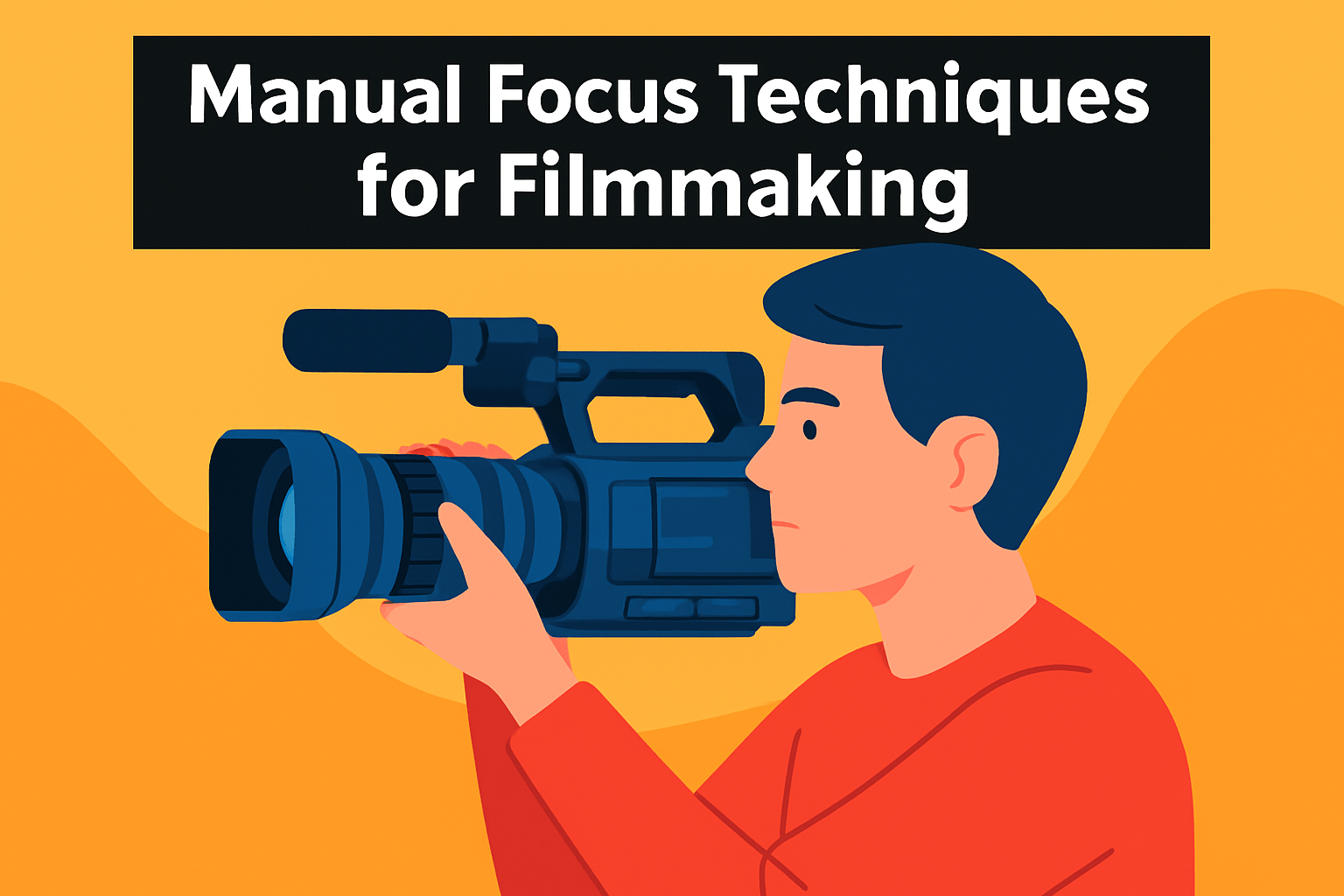
Manual focus is where deliberate filmmaking begins. It gives you creative control over what the viewer sees and when they see it, and it’s often far more reliable than autofocus in low light, busy frames, or when you want intentional focus shifts. On pro sets, manual focus is the default for anything cinematic.
Use every tool the camera gives you. Turn on focus peaking to quickly see edges that are sharp, and use magnification to confirm on eyes or tiny details. A quick trick I use: autofocus to get me close, then switch to manual for the fine tuning. That saves time and avoids hunting when the scene starts rolling.
Marking focus points is your friend. With rehearsals, note your start and end marks on the lens or with gaffer’s tape so pulls are repeatable. If you have a follow focus, take a few minutes to calibrate and label those marks; it transforms sloppy attempts into smooth, confident moves.
If the action is unpredictable, stop down a touch—moving from wide-open to around f/4 or smaller gives you more forgiveness without losing too much cinematic separation. For static setups, simply lock focus once everything is framed; it prevents accidental shifts from grips, zooms, or a nervous finger on the ring.
Practice predictive focusing: watch the rhythm of your subject and move the focus ahead of them rather than chasing. Communicate with talent and shooters—timing a focus pull is a collaborative beat. Rehearse the pull a few times so everyone knows the cue and the exact moment to hit the mark.
On set, run a quick mental checklist: peaking and magnify to verify, mark your points, use a follow focus for smooth pulls, stop down if needed, and always rehearse with talent. Those simple habits will lift your shots from competent to confidently cinematic.
Audio Recording Tips for Camcorder Filmmaking
Good sound makes your images feel intentional; bad sound makes them feel amateur. I treat audio as a second camera on every shoot and plan for it before I press record. That mindset saves hours in post and keeps subjects relaxed during takes.
Always use external mics instead of the built-in microphone. For interviews I prefer a lavalier hidden just out of sight and a shotgun on a boom for room presence. In run‑and‑gun situations I’ll pair a lav with a compact shotgun or a field recorder to give myself options in editing.
Whenever possible go XLR. It’s reliable, balanced, and handles phantom power for condenser mics—double‑check compatibility and phantom settings before you plug in to avoid surprises. For critical dialogue I record a second, lower‑level safety track (around −18 dB) while keeping my main peaks between −12 dB and −3 dB to avoid clipping and preserve headroom.
Monitor everything with closed‑back headphones during takes. You’ll catch rustles, clothing noise, wind rumble, and gain issues long before the editor does. If you’re recording separately, use a clapper or timecode so sync is painless later.
Wind protection and mic placement are non‑negotiable outdoors. Use deadcats, position the mic close to the subject just out of frame, and keep speakers and monitors out of mic bleed range. In echoey interiors, bring along a couple of sound blankets or move the subject nearer soft surfaces to tame reflections.
Capture ambience and room tone for each location; that thirty seconds of silence is a lifesaver in post. Finally, set and walk through your gain staging before rolling, then re‑check between takes—levels drift, conditions change, and being proactive keeps your audio usable without magic fixes later.
What People Ask Most
What is the best camcorder for filmmaking?
There is no single best camcorder for every filmmaker; the right choice depends on your shooting style, workflow, and budget. Choose a model that matches your priorities like sensor size, lens options, audio and ergonomics.
Are camcorders suitable for professional filmmaking?
Yes, many camcorders are designed for professional work and are used in broadcast, documentary, and live event production. They offer reliability, strong audio and connectivity, and ergonomics that support long shoots.
What features should I look for in a camcorder for filmmaking?
Prioritize sensor performance, lens flexibility or zoom range, and manual controls for exposure and focus. Also look for professional audio inputs, stable recording options, and useful connectivity for your postproduction workflow.
How does a camcorder compare to a mirrorless or DSLR for filmmaking?
Camcorders often provide integrated ergonomics, long continuous recording, and built-in professional audio and connectivity. Mirrorless and DSLR bodies tend to offer interchangeable lenses and shallower depth of field but may require more rigging for pro audio and long takes.
Can camcorders deliver cinematic image quality?
Many modern camcorders can deliver cinematic-looking footage when paired with proper lenses, exposure control, and color grading. Features like log profiles and good low‑light performance help achieve a filmic aesthetic.
Which camcorder settings produce the best results for filmmaking?
Use flat or log picture profiles for greater grading flexibility and set exposure and white balance manually for consistency. Monitor audio levels closely and prefer manual focus or assist tools for critical shots.
Do camcorders have good audio and connectivity options for filmmaking?
Yes, many camcorders offer professional audio inputs and outputs and multiple ways to integrate into larger productions. Common features include XLR connectivity and standard video outputs to support versatile workflows.
Conclusion on Best Filmmaking Camcorders
Choosing the right camcorder comes down to matching the camera’s strengths to your specific needs, shooting style, and workflow rather than chasing a single “best” model.
Whether you value portability for run‑and‑gun work, broadcast reliability, or cinematic control, the options covered here each shine in different real‑world scenarios to help you make a practical decision.
Remember that techniques such as thoughtful manual focusing and solid audio workflows are often more important to the final result than any single spec sheet, and they apply across all these cameras.
This guide is built on real user feedback, professional reviews, and practical considerations current as of 2026, so use it as a starting point for hands‑on testing that matches your projects.
If you want to deepen your skills and compare more workflows, explore the other articles on the site for tips and hands‑on advice to level up your filmmaking.
Have questions or experiences to share? Leave a comment below and we usually reply within a few hours.


0 Comments