
Ever wondered which waterproof camera will survive a tumble off your kayak and still deliver story-worthy shots? This guide narrows the field to five top waterproof picks for paddlers and water lovers. No fluff—just straightforward, field-tested guidance.
You’ll get candid real-world feedback and clear pros and cons for each camera. We explain waterproof depth and how it affects performance on lakes, rivers, and coastal paddles. We also summarize key buying features and provide a concise FAQ to answer common concerns.
Our evaluation centers on durability, native waterproof depth, and image and video quality in real conditions. Handling matters too—controls for wet hands or gloves can make or break a shot. We also look at accessory ecosystems for mounting, flotation, and protective housings.
Stabilization, battery life, and physical size are common tradeoffs we break down plainly. We weigh optical performance against ruggedness so you won’t sacrifice shaky footage for toughness. The goal is to help you pick a camera that fits your paddling style and risk tolerance.
Whether you prefer sweeping landscape shots, action-packed rapids, or close-up marine life, this guide helps you choose practical options. Expect honest testing notes, simple pros and cons, and a focus on real-world usability. Read on to find the best waterproof camera for kayaking that keeps your shots safe and memories vivid.

BM Premium 2-pack DMW-BCM13E batteries and charger for Panasonic Lumix (DC-TS7, DMC-FT5A, LZ40, TS5, TS6, TZ37, TZ40, TZ41, TZ55, TZ60, ZS27, ZS30, ZS35, DMC-ZS40, DMC-ZS45, DMC-ZS50)
1. OM System Tough TG-7

OM System Tough TG-7 waterproof camera
Rugged underwater companion built for adventure photographers—shockproof, freezeproof, high-resolution imaging, and advanced macro modes for stunning close-ups in extreme conditions.
Check PriceThe OM System Tough TG-7 is a photographer’s tool built for real-world paddling, snorkeling, and hiking. It’s repeatedly praised for its ruggedness and reliability, often described as “indestructible” after surviving drops, crushing, freezing, and repeated submersion.
Handling is one of its strongest points. The tactile button layout is easy to operate with wet hands, which matters when you’re balancing a paddle and trying to frame a shot.
Where this camera really shines is close-up work underwater. Macro and microscope modes let you get detailed images of marine life that most compact rugged cameras can’t match. Built-in sensors — GPS, depth, temperature, and compass — add invaluable contextual data for mapping dives and keeping track of conditions.
Its native waterproof rating of around 45 m (147 ft) gives you confidence for serious snorkeling and shallow diving without extra housing. Battery life is practical for field use too, offering upwards of 300 shots or long video times on a single charge.
There are trade-offs to consider. Image quality isn’t as sharp as modern smartphones or higher-end cameras, especially in low light. Video is capable, but 4K is limited to 30 fps, so it won’t deliver high-frame-rate footage for fast-action slow motion.
- Excellent grip and button layout
- Highly durable—survives drops, crushing, freezing, repeated submersion
- Macro and microscope modes for strong close-ups
- Built-in sensors: GPS, depth, temperature, compass
- Image quality not as sharp, especially in low light
- 4K video limited to 30 fps
2. DJI Osmo Action 5 Pro

DJI Osmo Action 5 Pro Essential Combo
Professional-grade action kit delivering ultra-stable 4K footage, dual screens for vlogging, long battery life, and essential accessories for on-the-go creators.
Check PriceAs a photographer who shoots from a kayak, the DJI Osmo Action 5 Pro stands out for practical reasons. It offers deep native waterproofing up to 20 m, so you don’t need extra housing for most paddling and snorkeling scenarios.
The dual OLED touchscreens make framing and playback easy, even in bright sunlight or when you’re half-submerged. The larger 1/1.3-inch sensor gives excellent dynamic range and noticeably better low-light detail than many action cameras I’ve used.
Stabilization is strong and subject tracking holds well during paddling, producing smooth footage when you’re fighting chop or turning quickly. Build quality feels robust and the camera tolerates a wide temperature range, which is reassuring for multi-season outings.
For someone prioritizing image quality and reliable handling on the water, this camera is a great fit. If you want top-tier video resolution beyond 4K or interchangeable lenses, this isn’t the model for you.
Overall, the Osmo Action 5 Pro is a solid, photographer-friendly action camera for kayaking: waterproof without extra gear, great screens, very good low-light performance, and dependable stabilization for dynamic water shots.
- Deep native waterproofing up to 20 m
- Dual bright OLED touchscreens
- 1/1.3-inch sensor — excellent dynamic range & low-light
- Advanced stabilization and subject tracking
- Video resolution tops out at 4K
- No modular lens options
3. Nikon Coolpix AW100

Nikon COOLPIX AW100 waterproof camera
Ready-for-anything waterproof compact capturing crisp photos and Full HD video, GPS-tagged, ruggedized for snorkeling, hiking, and everyday adventures.
Check PriceThe Nikon Coolpix AW100 is a practical choice for kayak photographers who want reach and simplicity. Its long telephoto reach — 140 mm — lets you frame distant wildlife and shoreline details from a stable seat in the cockpit without leaning overboard.
Nikon optics and a solid build give confidence when conditions get rough, and the camera is described as lightweight and easy to carry for day trips. That balance of decent glass and portability means you can carry it in a small dry bag or strap it to a deck bungee without upsetting your boat’s trim.
SnapBridge wireless transfer is a genuine convenience on the water; you can send keepers to your phone for quick sharing or remote control, which saves you from fumbling with memory cards between paddling sessions. The built-in GPS, barometer, and electronic compass add real value for trip logging and for retracing a route where you found good photo opportunities.
Overall, the AW100 suits paddlers who prioritize reach, straightforward operation, and location-aware features over advanced menu depth or the highest-resolution displays. If you want a rugged, travel-friendly point-and-shoot that covers wildlife distance and basic trip tracking, it’s a solid, mostly no-nonsense tool — but bring realistic expectations about settings and screen clarity.
- Long telephoto reach (140 mm)
- Reliable Nikon optics and build
- SnapBridge wireless transfer and remote control
- Built-in GPS, barometer, and compass
- Limited menu settings and features versus advanced rugged cameras
- Lower display resolution than some competitors
4. GoPro HERO13 Black

GoPro HERO13 Black action camera
High-performance action camera with hyper-smooth stabilization, stunning low-light performance, high-frame-rate recording, and durable waterproof design for extreme sports.
Check PriceThe GoPro HERO13 Black is a photographer’s and paddler’s delight when you want punchy action footage from the kayak. Its rugged, waterproof design is built for water sports, and the camera delivers very high-resolution output with 5.3K video and 27 MP stills to capture both sweeping scenery and fine detail.
What really stands out on the water is GoPro’s advanced stabilization and subject-tracking, which keep footage smooth and usable even during choppy paddling. That makes it far easier to produce shareable clips without hours of post stabilization work.
Practicality is another strong suit: the large ecosystem of mounts and accessories means you can rig the HERO13 to a paddle, hull, or helmet for compelling POVs and steady angles. Integration with the GoPro app speeds control, review, and quick sharing, so you’re not fumbling with settings between runs.
That said, there are real-world tradeoffs to consider. Native waterproofing is limited to about 10 m (33 ft) without housing, so if you expect deeper immersion or extended submersion you’ll want protective housing. Also, the camera’s compact footprint is a benefit for portability but makes it easy to misplace if it isn’t securely mounted or tethered on the boat.
Overall, if your paddling adventures prioritize high-resolution video, reliable stabilization, and flexible mounting options, the HERO13 Black is an excellent fit. Just plan for a housing when diving deeper than its native limit and secure the unit on the kayak to avoid losing it in open water.
- 5.3K video and 27 MP stills
- Advanced stabilization & subject tracking
- Extensive mounts and accessories
- Easy GoPro app integration
- Waterproof only to 10 m without housing
- Small size — easy to lose if not secured
5. Panasonic Lumix DC-TS7
BM Premium 2-pack DMW-BCM13E batteries and charger for Panasonic Lumix (DC-TS7, DMC-FT5A, LZ40, TS5, TS6, TZ37, TZ40, TZ41, TZ55, TZ60, ZS27, ZS30, ZS35, DMC-ZS40, DMC-ZS45, DMC-ZS50)
Two reliable replacement batteries plus fast charger offering extended runtime and safe charging for compatible compact and rugged cameras.
Check PriceThe Panasonic Lumix DC-TS7 is a workhorse for serious paddlers who need confidence in their gear. It’s noted as the most waterproof camera tested and goes deeper than many models, so you won’t be constantly worried about splashes or an accidental dunk. The rugged build survives drops, submersion, and extreme temperatures, which matters when you’re hauling a kayak across rocks or capsizing in cold water.
Image and video quality are strong for a rugged point‑and‑shoot. The TS7 records 4K video and uses a 20.4 MP sensor, giving you sharp stills and detailed clips to edit later. As a photographer I appreciate the balance here: it’s not a mirrorless body, but the results are more than usable for travel galleries and social sharing.
Handling is refreshingly simple. The interface is easy to use with intuitive controls, so you can operate it quickly between strokes or while standing on a slippery deck. Built‑in GPS and a compass add valuable location data for mapping routes and marking favorite photo spots, a small feature that pays off on longer trips.
Consider the tradeoffs before you buy. If you want a compact, barely-there camera the TS7 is slightly larger and heavier than some competitors, which matters when kayak storage and balance are tight. Also, its straightforward menu won’t satisfy users who crave advanced customization or pro-level controls.
Overall, the Lumix DC-TS7 is an excellent choice if your priority is deep native waterproofing, rugged reliability, and solid 4K/20.4 MP capture without fuss.
- Deepest native waterproofing among tested models
- Highly durable and reliable in tough conditions
- High-quality 4K video and 20.4 MP sensor
- Built-in GPS and compass
- Simple interface may disappoint power users
- Size and weight slightly larger than some competitors
Waterproof Depth and IP Ratings for Kayaking
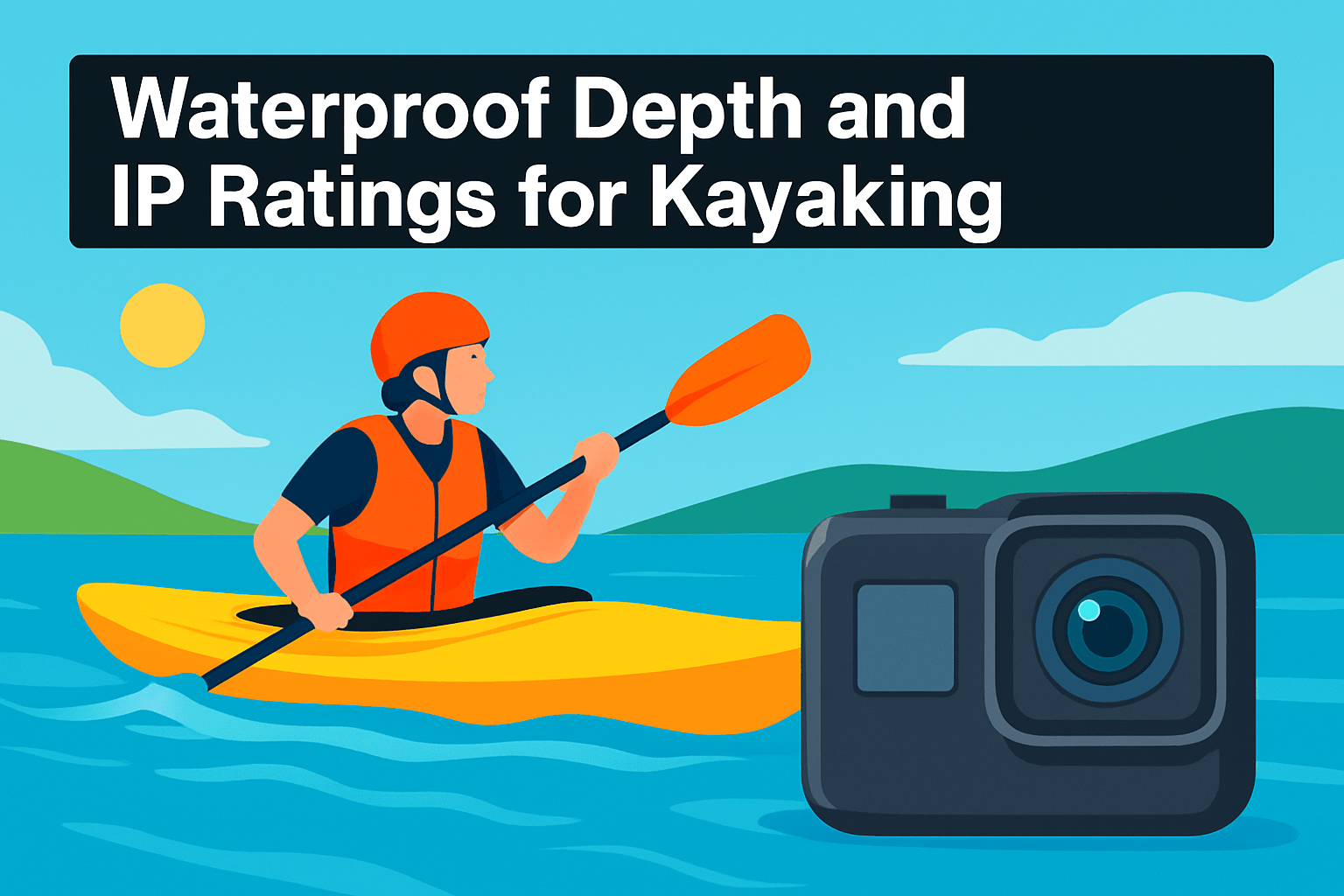
When you’re choosing a camera for kayaking, the IP rating is the quick way to tell how much water abuse it can handle. IPX7 means the camera survives being submerged to 1 meter for 30 minutes — a practical baseline if you’re worried about a dunk from a capsize or a short swim with gear. IPX8 means it’s tested for continuous immersion beyond 1 meter, but the exact depth and time are set by the manufacturer, so read the fine print.
Think about how you paddle. Calm lakes and slow rivers mostly demand splash-resistance and a confident seal; whitewater or surf work benefits from true immersion protection. For shallow snorkeling or regular submersion choose IPX8-rated gear or a proper housing; for casual day trips IPX7 is often enough. In my experience you don’t want to gamble on a camera that’s only splashproof when you’re heading into rollers or rapids.
Cameras differ widely even within the same rating. Some action cams like many GoPros are IPX8-rated to roughly 10 m out of the box, while rugged compacts such as the OM System TG-7 can be rated for far deeper (around 45 m). Models like the DJI Osmo Action 5 Pro and Panasonic tough models push deeper without housings, giving you more flexibility for snorkeling and underwater scouting.
Beyond the numbers, check usability: buttons that work with wet hands or gloves, bright screens or secondary displays for framing, and secure latches on battery and card doors. Also plan for accidental loss — use tethers, float mounts, and dry bags. A lightweight protective housing expands depth dramatically but adds size and complexity.
Finally, always test seals before a big trip and rinse gear in fresh water after salt use. IP ratings tell you the baseline, but careful handling, secure mounting, and practical backups will keep your camera delivering great shots on the water season after season.
Key Features for a Waterproof Kayaking Camera
When you’re shooting from a kayak, waterproofing isn’t a marketing term — it’s your lifeline. Aim for at least IPX7 (immersion to 1 m for 30 minutes) but prefer IPX8 or manufacturer‑rated depths if you expect repeated submersion or snorkeling; some cameras are rated for tens of meters, which matters if you’re anchoring and getting hands‑on with reefs or currents.
Rugged build goes hand in hand with waterproofing. Look for shockproof and crushproof construction so the camera survives deck slips, bounces on rocks, and the occasional kayak capsize; real‑world models described as “indestructible” give you peace of mind when stowing gear in a wet cockpit.
Image quality and stabilization are what turn chaotic paddle footage into cinematic clips. Prioritize a camera with strong stabilization and at least 4K video; larger sensors and good dynamic range matter for low‑light mornings or cloudy days. If you want high‑resolution stills of wildlife or surf, higher megapixels and quality optics make a difference.
Handling under wet conditions is often underrated. Tactile buttons that work with wet hands or gloves, bright OLED/LCD screens, or even a small viewfinder allow consistent framing in glare and spray. Dual screens or a clear front display are a bonus when you’re trying to self‑film or check composition quickly between strokes.
Battery life and connectivity matter on multiday trips. Carry spares or a waterproof power bank and prioritize cameras with easy Wi‑Fi or Bluetooth pairing for quick transfers when you’re on shore. Also check storage limits and whether the camera supports large microSD cards for long video sessions.
Finally, factor in accessories and safety. A reliable float strap, secure kayak mounts, and optional housings or dry bags are invaluable — the right mount keeps a small action cam from disappearing in a chop. Match the camera’s native depth rating and accessory ecosystem to the kind of water you paddle in.
In short, prioritize waterproof depth and durability first, then stabilization, handling, and battery life to suit your typical trips; get those right and you’ll spend more time shooting and less time worrying about gear.
What People Ask Most
What is the best waterproof camera for kayaking?
There is no single best camera for everyone; the right choice depends on your desired depth, durability, image and video needs, and handling preferences. Pick a model that matches your typical water exposure and how you plan to shoot from the kayak.
Can you take a DSLR or mirrorless camera kayaking?
You can bring a DSLR or mirrorless camera but they are not inherently waterproof and usually need protective housing or a dry bag. Many paddlers prefer smaller waterproof or action cameras for convenience and lower risk of water damage.
Are action cameras or waterproof point-and-shoots better for kayaking?
Both types have advantages: action cameras are compact and mountable while waterproof point-and-shoots often offer better handling and optical zoom. Choose based on whether you prioritize portability and mounting options or control and image quality.
Can a GoPro be used for kayaking?
Yes, GoPro-style action cameras are commonly used for kayaking because of their rugged, waterproof design and wide accessory ecosystem. Always secure the camera with a mount or tether to reduce the chance of losing it.
How deep can waterproof cameras go while kayaking?
Depth capability varies by model and any additional housing; some cameras are rated for surface activities while others can withstand deeper immersion. Match the camera’s rated depth to the conditions you expect to encounter on the water.
Do waterproof cameras float if dropped in water?
Not all waterproof cameras float—buoyancy depends on the camera and any accessories or housings attached. Use a floaty mount or tether to keep the camera on the surface and prevent loss if it falls overboard.
What features should I look for in a waterproof camera for kayaking?
Look for a reliable waterproof rating, durable shockproof construction, good stabilization, and controls that are usable with wet hands or gloves. Also consider battery life, connectivity for quick transfers, and available mounts or accessories for secure attachment.
Conclusion for Best Waterproof Camera for Kayaking
This guide compared five waterproof cameras with real-world feedback, clear pros and cons, and practical depth and feature guidance to help you pick gear that survives and performs on the water.
Focus on the core decision factors—waterproof depth, durability, image/video quality, handling, battery life, and available accessories—and weigh which of those matter most for your typical paddling conditions.
Match your choice to expected water exposure and shooting needs rather than chasing every spec, since the right camera for a calm lake day differs from what you’d trust in surf or cold, rough conditions.
If you want to sharpen your shooting and gear-handling skills, explore more articles on the site for tips, techniques, and practical advice to get better results from whatever camera you pick.
Have questions or experiences to share from your own kayaking shoots? Leave a comment below and we usually reply within a few hours.




0 Comments