
Want a compact ultra‑wide that makes travel vlogs, interiors, and sweeping landscapes look pro without fuss?
I took the Nikon Z DX 12-28mm f/3.5-5.6 PZ VR into the field, and it’s clearly aimed at vloggers, hybrid creators, travel shooters, and interior/architecture work.
It pairs true ultra‑wide reach with built‑in VR, an electronic power zoom, quiet STM autofocus, close focus, and a featherweight build. This review focuses on real‑world handling, image quality impressions, and the trade‑offs you’ll live with—variable aperture and no weather sealing—so keep reading.

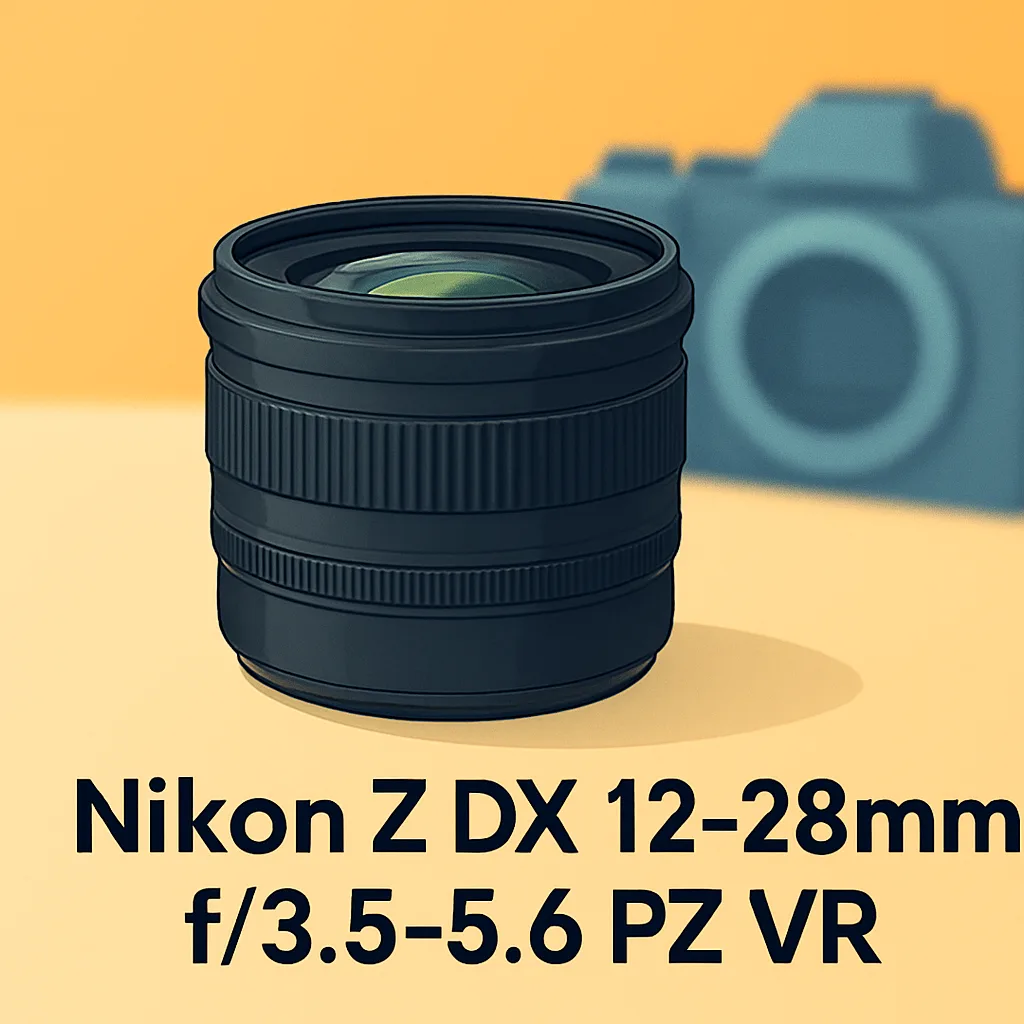
Nikon Z DX 12-28mm f/3.5-5.6 PZ VR
Ultra-wide power zoom designed for cropped-sensor cameras, delivering smooth motorized zoom and effective stabilization for steady handheld video, plus sharp optics and fast, quiet focusing—ideal for vlogging and landscapes.
Check PriceThe Numbers You Need
| Spec | Value |
|---|---|
| Lens type | Wide-angle power-zoom |
| Mount type | Nikon Z-mount DX (APS-C) |
| Focal length | 12–28mm (18–42mm full-frame equivalent) |
| Maximum aperture | f/3.5–5.6 (variable) |
| Vibration Reduction (VR) | Built-in optical stabilization |
| Power Zoom | Electronic power-zoom mechanism |
| Minimum focusing distance | 0.15 m (approx.) |
| Optical construction | 15 elements in 11 groups |
| Filter size | 55 mm diameter |
| Diaphragm blades | 7 rounded blades |
| Dimensions | Approx. 70 mm diameter × 75.5 mm length |
| Weight | Approx. 250 g |
| Weather sealing | No (not fully weatherproof) |
| Autofocus | Stepping motor (STM) for smooth, quiet focusing |
| Zoom range | 2.3× power zoom |
How It’s Built
In my testing the Nikon Z DX 12-28mm f/3.5-5.6 PZ VR feels like a purpose-built ultra-wide that’s been shrunk down for travel and run‑and‑gun use. It’s compact and light, and it balances nicely on smaller Z bodies so you don’t end up with a front‑heavy setup. For real life that means it’s easy to carry all day and plays well on gimbals without fuss.
The electronic power‑zoom is the headline here. I found the zoom ramps smooth and quiet, which is fantastic for video and solo shooting where you want even, repeatable moves. Photographers who like the tactile snap of a mechanical ring might miss that direct feel, though.
Construction is mostly lightweight materials but feels solid in hand, with tight tolerances and no sloppy play in the rings. The zoom does extend as you change focal length, but it stays controlled and doesn’t wobble, and the focus ring is fine for small adjustments. One thing I really liked was how the rounded aperture blades give pleasing, soft highlights and smooth transitions when stopping down.
One thing that could be better is the lack of weather protection, so you’ll want a cover or quick access to gear in bad weather. For beginners that simply means treating it like a favorite gadget to keep dry — but the lens’s small size and ease of use make it a very friendly companion for travel, vlogging, and interiors.
In Your Hands
In the field the lens’s AF felt purpose-built for hybrid shooters: the stepping motor is quiet and almost imperceptible on video, and it locks onto faces and contrasty subjects with a steady, unflappable gait for stills. I noticed only minor focus breathing during dramatic repurposes, nothing that disrupted a take, and the overall responsiveness makes it easy to track moving subjects without hunting or distracting noise in on‑camera audio.
Built‑in stabilization is a genuine practical advantage for handheld work; walk‑and‑talk sequences smooth out nicely and slower handheld shutter work benefits from added steadiness when you need to rely on ambient light. The power‑zoom behaves predictably in run‑and‑gun situations—smoother than thumb‑twist tricks and friendly for solo creators who reframe mid‑shot—though it rewards deliberate, gentle inputs for filmic push‑ins.
The close‑focusing capability opens up immersive foreground storytelling that feels at home in tabletop, product, and vlog setups, letting you exaggerate perspective for dramatic foregrounds without losing subject detail. Its compact footprint and light carry make it one of those lenses you forget is in your bag until you need a sweeping ultra‑wide, which is perfect for long days of street or travel shooting and for balancing on gimbals.
Low‑light shooting asks for sensible trade‑offs: the modest aperture range means you’ll lean on higher ISO or steadier shutter choices, but the in‑lens VR and nimble AF keep more frames usable than you might expect. In practice this lens excels for arm’s‑length vlogging, tight interiors where every degree of width counts, expansive travel scenes, and handheld video where VR plus the smooth zoom delivers professional‑feeling moves.
The Good and Bad
- True ultra-wide 12mm on DX (18mm full-frame equiv) for interiors, landscapes, vlogging
- Built-in VR for steadier handheld stills and video
- Electronic power-zoom for smooth, video-friendly zooming
- Lightweight and compact (approx. 250 g; 70 x 75.5 mm) for travel and gimbals
- Variable f/3.5–5.6 aperture limits low-light performance and background blur
- No weather sealing—less ideal for harsh conditions
Ideal Buyer
If you shoot on Nikon Z DX bodies and crave ultra‑wide perspectives, the Nikon Z DX 12-28mm f/3.5-5.6 PZ VR is tailored for you. It’s perfect for interiors, architecture, sweeping landscapes, and vlogging where every inch of frame matters. Its ultra‑wide 12mm DX field of view opens creative framing you can’t get with standard kit lenses.
Hybrid creators who switch between stills and video will appreciate the smooth electronic power‑zoom, built‑in VR, and quiet STM autofocus. The lens makes controlled push‑ins, walk‑and‑talks, and single‑operator framing far more reliable. Quiet AF and stabilization are real benefits when you flip from handheld photos to rolling footage.
Weighing roughly 250 grams and packing a true 12mm DX view, it’s a travel‑friendly companion for minimal kits. Close‑focus capability also makes it great for product, tabletop, and POV vlogs without carrying extra glass. The compact footprint plays nicely on gimbals and in carry‑on packs for days when weight matters.
That said, it’s not the best choice for low‑light specialists who need fast primes, or for shooters who demand weather sealing or long tele reach. If you trade focal range, optical top‑end, or rugged build, consider whether the PZ/VR/video‑first strengths match your workflow. For vloggers, travel shooters, and hybrid creators who prioritize width and smooth video control, it’s an excellent, purpose‑built lens.
Better Alternatives?
We’ve covered how the Nikon Z DX 12-28mm f/3.5-5.6 PZ VR shines as a lightweight ultra‑wide with power zoom and VR, and where it asks you to accept a limited tele range and a variable aperture. If that mix fits your work, great—but a lot of shooters will want something that trades one strength for another.
Below are a few real-world alternatives I’ve used in the field. Each one gives up some of the 12–28’s video‑friendly power‑zoom or extreme width in exchange for reach, pocketability, or all‑around flexibility. I’ll say what each does better and worse, and who I think would prefer it.
Alternative 1:

Nikon Z DX 16-50mm f/3.5-6.3 VR
Compact, travel-friendly zoom offering versatile focal coverage for everyday shooting; lightweight design collapses for easy packing, includes stabilization and responsive autofocus to capture sharp street, portrait, and landscape images.
Check PriceThe 16‑50mm is the more pocketable, everyday kit lens. Compared to the 12–28 PZ VR it gives you extra reach out to 50mm, so portraits and tighter shots are easier without changing lenses. In real use I found it great for street work and travel when I wanted one lens that stayed on the camera all day. It’s lighter and collapses for packing, which the 12–28 doesn’t do.
What it loses versus the 12–28 is the true ultra‑wide 12mm field of view and the smooth power‑zoom action. For vlogging or tight interiors the 16mm end simply can’t match the dramatic wide look of the 12–28. Also, while its VR and AF are useful, the zoom is a conventional mechanical ring so you don’t get the silky, motor-driven zoom ramps that make the 12–28 so handy for video push‑ins.
If you’re a casual traveler, street photographer, or someone who wants a tiny, light walkaround lens that covers everyday needs and occasional portraits, the 16‑50 will be more appealing. Choose it if you value pocketability and a bit more reach over extreme width and power‑zoom video control.
Alternative 2:

Nikon Z DX 18-140mm f/3.5-6.3 VR
All-in-one telephoto zoom that spans wide to long focal lengths, delivering reliable image stabilization and steady autofocus performance; perfect for travel, events, wildlife at moderate distances, and everyday versatility.
Check PriceThe 18‑140mm is the classic one‑lens travel option. In the field it replaces the need to swap lenses for everything from wide landscapes to moderate telephoto pulls. Compared to the 12–28, it gives you far more reach — useful for events, family trips, and picking out distant details — and its VR is very helpful when shooting handheld at long focal lengths.
What it can’t do like the 12–28 is deliver that true ultra‑wide perspective for tight interiors or close‑up vlogging. It also lacks the power‑zoom feel that makes the 12–28 nice for video framing, and it’s noticeably bigger and heavier — you lose some of the ultra‑light, gimbal‑friendly advantage. Optically, it’s a solid generalist, but you’ll see more compromise at the extremes than you would with a dedicated wide zoom.
Pick the 18‑140mm if you want a single, do‑it‑all lens for travel, events, or family shoots and you dislike changing glass. It’s for photographers who need reach and convenience more than the absolute widest angle or pro video zoom control.
Alternative 3:
Nikon Z DX 18-140mm f/3.5-6.3 VR
One-lens solution for photographers seeking flexibility without lens changes: balanced optics, dependable stabilization, smooth zoom action and accurate autofocus produce consistent results from landscapes to distant subjects in varied conditions.
Check PriceThis second 18‑140 listing is worth mentioning again because of how it performs when you actually shoot all day with it. Compared to the 12–28, the 18‑140 is a much more flexible field tool — I’ve used it for hikes, festivals, and backyard wildlife where the longer reach saved the day. Autofocus is reliable and the VR gives you usable shutter speeds that let you avoid bumping up ISO in many cases.
On the downside, the 18‑140 doesn’t match the 12–28’s close‑focus wide look or the smooth electronic zoom that helps solo video work. The images won’t have the same dramatic ultra‑wide perspective, and the lens’s size and weight make it less ideal for minimal kits or long handheld video takes where balance and lightness matter.
Choose this if you want dependable, consistent results across a wide range of situations and prefer one lens that does most jobs well. It’s aimed at travelers, event shooters, and anyone who values range and convenience over the specialized ultra‑wide/video features of the 12–28 PZ VR.
What People Ask Most
Is the Nikon Z DX 12-28mm f/3.5-5.6 PZ VR compatible with Z50, Z fc and Z30 cameras?
Yes; it’s a Z DX lens made for Nikon APS‑C Z bodies like the Z50, Z fc and Z30 and will mount and autofocus normally.
Does the Nikon Z DX 12-28mm PZ VR have Vibration Reduction (VR)?
Yes — the lens includes built‑in VR to help steady handheld shots and video.
How sharp is the Nikon Z DX 12-28mm f/3.5-5.6 PZ VR?
It’s reasonably sharp in the center for everyday use, with some edge and corner softness, especially wide open and at the long end.
Is the 12-28mm PZ VR a good lens for travel, vlogging and video?
Yes — its compact size, power zoom and VR make it excellent for travel and run‑and‑gun vlogging/video, though it’s aimed at casual and enthusiast use rather than pro cinema work.
What is the 35mm equivalent focal length of the 12-28mm DX lens?
On APS‑C bodies it’s roughly 18–42mm in 35mm/full‑frame terms (12–28mm × 1.5 crop factor).
Can the Nikon Z DX 12-28mm PZ VR be used on full-frame Z cameras?
You can mount it on a full‑frame Z body, but the camera will use crop mode or you’ll get heavy vignetting since it’s a DX lens, so it’s not ideal for full‑frame shooting.
Conclusion
The Nikon Z DX 12-28mm f/3.5-5.6 PZ VR is a compact, purpose-built tool for hybrid creators who put video and mobility at the top of their checklist. Its power-zoom, in-lens stabilization and quiet focus behavior make it an easy choice for vlogging, handheld travel work and tight interior shots. In everyday use it feels like a thoughtful compromise rather than a universal solution.
That compromise has clear limits: the lens trades aperture speed and tele reach for convenience, and it isn’t built for wet, punishing environments. Expect practical, usable images in most light, but recognize this won’t replace a faster or more rugged optic when situations demand it. The power-zoom personality will delight video-first shooters and frustrate photographers who prefer tactile, mechanical control.
All told, the 12-28 PZ VR is a strong value for Z DX owners who want ultra-wide coverage, smooth zoom ramps and steady handheld performance in a tiny package. If your priority is maximum reach, low-light speed or pro-level weather sealing, look to alternatives that trade portability for those strengths. For its intended audience, however, this lens earns a firm recommendation as a versatile, video-friendly everyday wide.
Nikon Z DX 12-28mm f/3.5-5.6 PZ VR
Ultra-wide power zoom designed for cropped-sensor cameras, delivering smooth motorized zoom and effective stabilization for steady handheld video, plus sharp optics and fast, quiet focusing—ideal for vlogging and landscapes.
Check Price


0 Comments