
What is a photo double? This article explains the job, common uses, and why productions hire them.
Photo doubles stand in when the actor’s face is not shown. They appear in over-the-shoulder shots, wide shots, hand close-ups, and as child or intimate alternates.
You’ll learn about casting, measurements, wardrobe, and on-set kits. Expect camera, lighting, and VFX tips plus practical checklists for doubles and crews.
We also include real examples, behind-the-scenes photos, and links to current union rules. Read on to learn what is a photo double and how they keep film sets running smoothly.
What is a Photo Double?
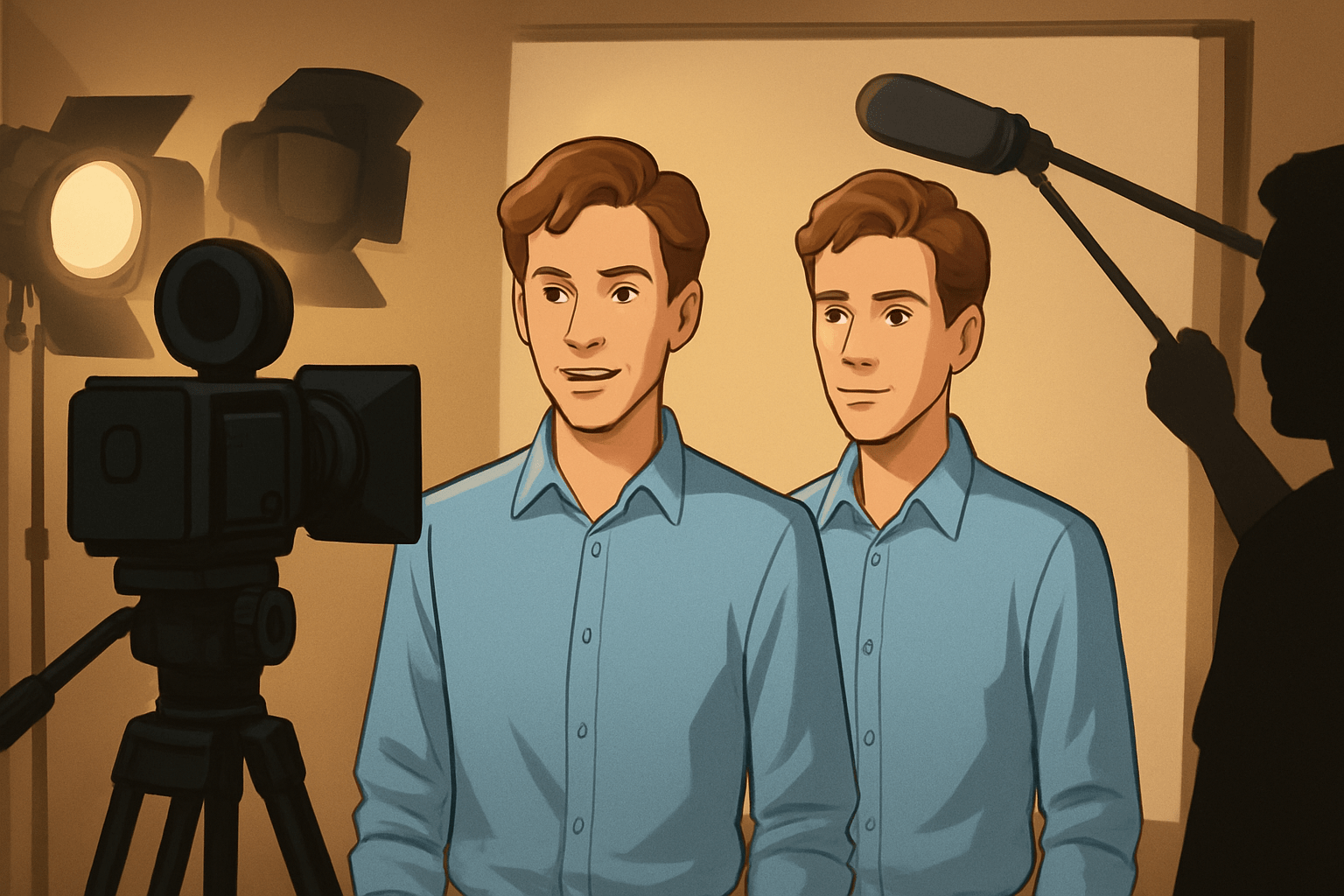
A photo double is a performer who substitutes for a principal actor in shots where the actor’s face is not required. The double’s body, silhouette, or a specific body part appears in the final cut, preserving the illusion that the star is on screen.
In one line of clarity: a photo double appears in the finished shot, a stand-in helps with lighting and rehearsals, and a stunt double handles risky action. The goal is to keep production moving without compromising story or safety.
Productions use doubles for over-the-shoulder angles, wides, and long lenses that hide the face. They also cover cutaways like hands opening a letter, a back-of-head reflection, or a shoulder crossing frame to connect two takes.
Specialized doubles are common too. Hand doubles step in for product inserts or delicate tasks, and body doubles take mirror, shower, or implied nude shots when privacy is preferred or contracted.
Doubles help when schedules are tight or a star is in makeup, press, or locked to another set. They are also used to meet child labor hour limits, or to protect an actor’s comfort during intimate coverage with an intimacy coordinator present.
Think of a “fast facts” snapshot in words. Doubles are used for final images where the face is hidden, and they are not used for dialogue-driven close-ups or emotional performances that need the actor’s expressions.
Union language typically calls this role a photo double or body double, depending on the contract. Terms and conditions vary by jurisdiction, so productions check current SAG-AFTRA guidelines before hiring.
Here’s a common setup. The lead is shooting a close-up on Stage A, while a double in matching wardrobe crosses a hallway on Stage B to finish an insert the editor needs. No one feels the swap because continuity locks the puzzle pieces together.
If you want a brief refresher on what is a photo double, think of it as the on-camera stand‑in whose face stays off screen. The illusion works because framing, wardrobe, and movement all match the principal actor.
Understanding the Role of a Photo Double in Film Production
The double arrives camera-ready with wardrobe, or goes straight to a fitting on call. They step onto marks, match blocking, and repeat movements with the same weight shift and timing as the lead.
Once cast, the process is simple. Production collects measurements and reference photos, schedules a fitting, and adds the double to call sheets where they replace the principal for planned setups.
Continuity notes guide every move. The double studies which hand holds the prop, how the jacket falls, and the exact watch position or lipstick shade so the cut feels seamless.
Collaboration is constant. Wardrobe mirrors the hero’s costume, hair and makeup shape the same silhouette, and camera and lighting confirm the angle hides the face while preserving the star’s outline.
Doubles can be body plates for visual effects. Crews capture clean plates, high-res reference stills, and passes for potential face-replacement, giving editors and VFX artists options in post.
On shows with minors, doubles help manage legal work limits. Productions also lean on doubles when intimacy coordination, privacy, or religious considerations call for adjusted coverage.
Everyone benefits from clear direction. As one continuity supervisor told me on a drama set, “The best doubles hold still like living tripods, then repeat a move the exact same way five times in a row.” That consistency saves shots when the cut gets tight.
In practice, the double’s day might ping-pong between units. They rehearse the cross, shoot the insert, and then stand by while lighting tweaks a small practical, ready to repeat the action on a different lens.
Difference between Photo Double, Stand-In, and Stunt Double
A photo double is filmed for final shots when the character’s face is not shown. They perform story actions that look like the principal’s body and silhouette.
A stand-in is primarily a lighting and rehearsal tool. They help the crew set exposure, eyelines, and blocking, and their footage is almost never used in the edit.
A stunt double performs dangerous or highly technical actions that require training and safety rigs. Their work is captured on camera and often hidden by framing, pads, wigs, and wardrobe.
There is overlap, but roles are distinct. A single person can sometimes stand in and photo double, yet stunt work usually demands a dedicated specialist with safety certifications and insurance approvals.
Expectations differ. Photo doubles must match body and movement while fitting hero wardrobe; stand-ins prioritize reliability for lighting; stunt doubles coordinate with stunt coordinators, riggers, and medics under strict safety plans.
Rates, credits, and union rules are not interchangeable. Productions check current union policies and local labor laws before posting a call or drafting contracts.
The DP needs to prelight a dining-room scene while the star is at makeup. That is a job for a stand-in.
The editor needs a distant back walk to bridge two takes while the lead records ADR. That is a job for a photo double.
The script calls for a high-speed motorcycle laydown in traffic. That is a job for a stunt double.
Do not mix up the film term with the photography technique called double exposure. A photo double is a performer on set, not an in-camera blend of two images.
Physical and Practical Requirements for a Photo Double
Matching the principal actor’s silhouette is the core requirement. Height, build, shoulder width, limb length, posture, gait, and skin tone all matter because the camera reads outlines and edges first.
Head and hair shape are key to back-of-head and ear shots. For hand doubles, nails, veins, knuckle shape, and even how fingers rest on an object can make or break an insert.
Casting teams request front, back, and side photos in neutral clothing. They also ask for measurements like height, weight, chest, waist, hips, inseam, shoulder width, sleeve and neck, plus shoe size.
Good doubles arrive with neutral underwear, black and skin-tone socks, and shoes that can pad to size. A small kit with hair ties, skin-safe tape, a travel sewing kit, and a charged phone for continuity photos keeps the day smooth.
Makeup and hair should sit at a neutral baseline unless directed. Be comfortable with wigs, hair pieces, temporary tattoos or covers, and quick adjustments that mimic the principal’s profile.
Paperwork matters. Releases, NDAs, and proof of eligibility are standard, and productions follow union and local labor rules, especially with minors or intimate scenes.
To book consistently, keep a clean portfolio with recent body shots, accurate measurements, and clear notes on availability. Update photos when your hair length, weight, or visible markings change.
Before stepping on set, review the scene breakdown and continuity notes. Confirm watch hand, ring side, sleeve roll, and prop positions so you do not drift off match between takes.
The Craft of Body Doubling: Practical Techniques and On-Set Tips
Preparation starts at the fitting. Wardrobe tests silhouettes, adds subtle padding, and notes fabric behavior so movement matches the principal under the same light.
The camera team captures reference stills of posture and angles. You might rehearse a walk, a reach, or a sit-down while the crew tags exact marks on the floor.
Study the actor’s baseline stance, weight distribution, and pace. Copy the way they rest their shoulders, lead with a foot, or hold a cup, then keep it consistent across lenses.
When mimicking, focus on rhythm rather than face acting. Small habits like how the thumb tucks or how a jacket is shrugged on read clearly in close inserts.
Framing hides differences when used well. Over-the-shoulder angles, shallow depth of field, edge lighting, and quick editorial cuts sell the illusion without calling attention to the swap.
Wardrobe and makeup offer subtle fixes. Shapewear evens lines, a wig or clip-in matches hair volume, and temporary tattoos or covers sync visible skin areas to the principal.
Reflective fabrics and jewelry can betray a swap. Match texture and sheen, remove conflicting accessories, and check monitors for unexpected highlights before rolling.
Post loves options. Log takes, shoot a few extra plates with and without the double, and hand continuity stills to the editor so they can stitch the scene cleanly.
Common pitfalls include mismatched shoes that change height, stray personal jewelry, and a stride that is either too bouncy or too flat. Correct by aligning footwear, clearing extras, and doing a quick side-by-side walk with the principal if time allows.
A practical routine helps. Arrive early, check wardrobe fit, review continuity notes, rehearse the action on marks, confirm with camera, shoot, then verify playback for any tells that need a second pass.
An experienced double once told me, “I practice the action with my eyes closed, then open them on the last beat to hit the mark.” That trick keeps movement smooth while keeping focus on precision.
For deeper context on hiring language and expectations, see the industry definition. It aligns with what you will experience day to day on a set of any size.
By now, the phrase what is a photo double should be easy to answer. It is the craft of invisibly standing in so that story and schedule never stop, while the audience never notices a thing.
What People Ask Most
What is a photo double?
A photo double is a person who stands in for someone else in photographs or still shots to match visual appearance. They help create consistent images when the main subject is unavailable or needs a backup.
How is a photo double different from a body double?
A photo double is used mainly for still images and matching facial or visual traits, while a body double typically stands in for moving scenes or stunts. Photo doubles focus on look and continuity rather than action performance.
When would a production use a photo double?
Productions use photo doubles for close-ups, continuity shots, publicity photos, or when the main person can’t be present. They help keep schedules on track and ensure visual consistency.
Can anyone be a photo double?
Anyone with a similar look can potentially be a photo double, but productions prefer people who closely match face shape, skin tone, hair, and height. Good doubles also learn the subject’s posture and expressions for better results.
How do photographers use a photo double to save time?
Photo doubles let photographers capture different angles, lighting setups, or backup shots without waiting for the main subject, speeding up the shoot. Editors can then blend the best elements to make seamless final images.
Is using a photo double deceptive or unethical?
Using a photo double is a common industry practice and not inherently deceptive, especially for editorial or logistical reasons. It becomes unethical only if it’s used to intentionally mislead viewers about who performed an action or made an endorsement.
What common mistakes should I avoid when using a photo double?
Avoid poor feature matching, inconsistent lighting, and not briefing the double on posture or expression, as these make the swap obvious. Always do test shots to confirm a seamless match before finalizing images.
Final Thoughts on What Is a Photo Double
If you came in asking “what is a photo double” and wanted the nuts-and-bolts, this guide — with 270 concise tips and examples — showed who doubles are and why they’re used on set. You now have a clear picture of the role: a non-facing substitute that keeps production moving and preserves continuity.
The core benefit is practical: it saves time, protects actors’ privacy and smooths scheduling, letting crews capture needed coverage without disrupting principals. A realistic caution: mismatches in gait, wardrobe or continuity can break the illusion, so careful measurements and communication matter. The checklists and on-set tips will help casting crew, continuities, doubles and indie producers get consistent results.
We opened with a simple hook — who steps in when the camera doesn’t need a face? — and closed it by spelling out when, why and how to make those moments look seamless. Use the workflow notes and quick checklists to keep shots consistent and save time in post. Trust the process and you’ll find small prep pays off big on set.


0 Comments