
How does a photographer dress to stay unseen, move fast, and still look professional? This short guide gives clear, practical rules for any shoot in 2026.
We answer the question: “how does a photographer dress” for weddings, concerts, portraits and travel. You will find sample outfits, dos and don’ts, and a printable packing checklist.
Learn what to wear for comfort, safe movement and changing weather. We also share footwear advice, brand-smart choices and short pro tips from wedding and editorial photographers.
Ready to pick outfits that work and look right? Read on for quick outfit combos, a simple pre-shoot checklist, and gear-ready packing tips you can use today.
How does a photographer dress? (Clear, practical answer)
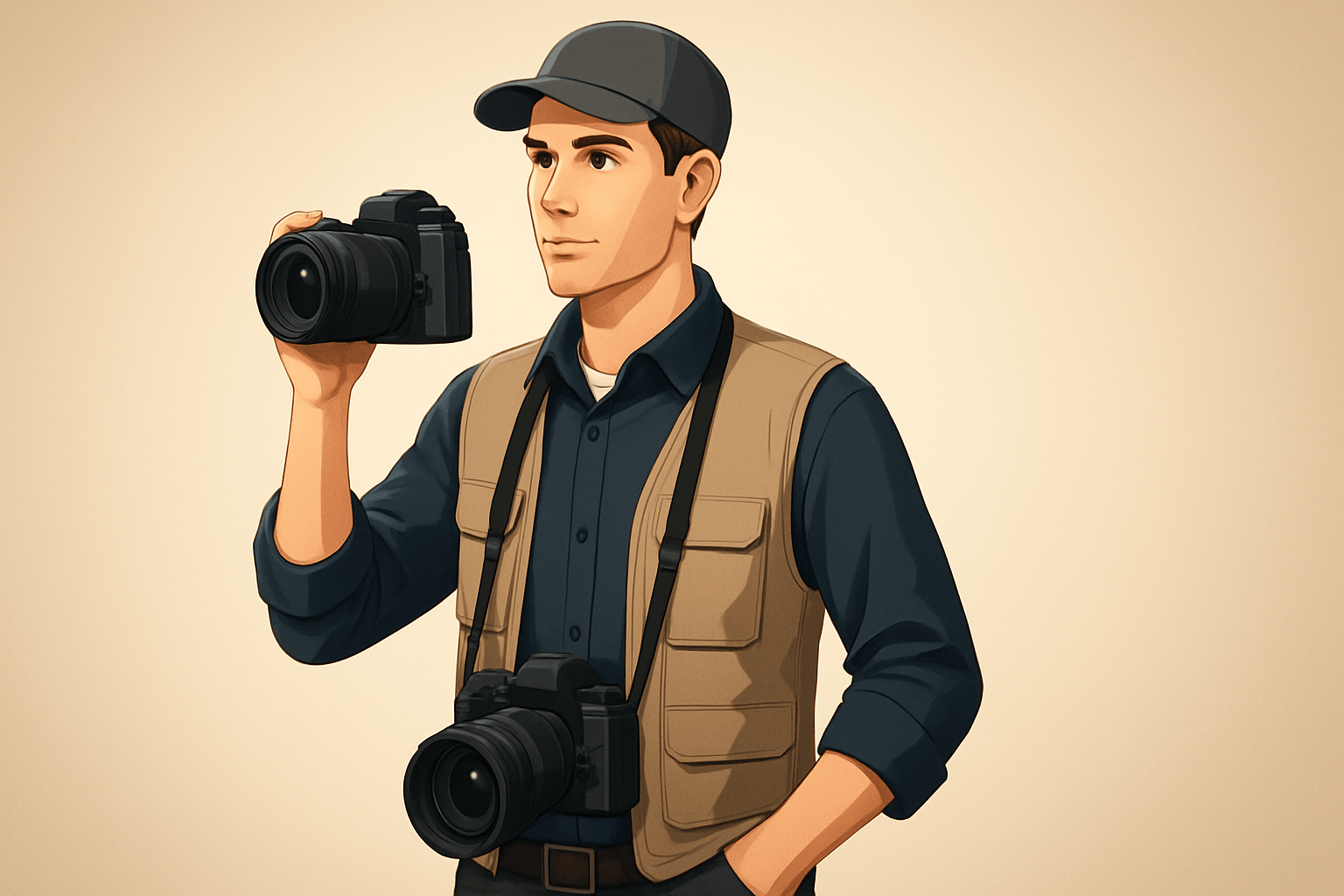
A photographer dresses to be comfortable, functional, and visually unobtrusive while matching the shoot’s formality and their brand. That is the bottom line, and it will serve you on every job. When in doubt, keep it neutral, quiet, and ready to move.
Do: choose breathable fabrics that stretch, so you can crouch, climb, and run without thinking about seams. Do: stick to dark neutrals that blend into a crowd and look polished in quick behind-the-scenes snaps.
Do: wear low-profile supportive shoes that feel great after eight hours. Do: bring one light outer layer you can remove fast and stash when the action heats up.
Don’t: wear white to weddings or anything that steals attention from the couple. Don’t: bring noisy jewelry, jangly keychains, or Velcro that rips loudly during quiet moments.
Don’t: wear slippery soles or heels that sink into grass. Don’t: show big logos that draw eyes away from the story in front of your lens.
Core staples that work across most gigs include neutral tops in black, gray, navy, or olive, stretch chinos or dark tech trousers, low-profile supportive shoes, a light weather layer, and a comfortable camera harness or strap. Add breathable socks, a slim belt that won’t snag, and zip pockets for security. This simple kit covers 90% of jobs.
Weddings call for dressy neutrals and a step above the guest dress code, without outshining the couple. Events need smart-casual pieces that look polished but let you move fast in dense crowds.
Portrait and studio work favors crisp, wrinkle-resistant shirts and dark trousers that vanish in reflections. Travel and street shoots demand moisture-wicking layers and secure pockets for tickets and cards.
Concerts and night events benefit from dark, low-reflective fabrics and quiet soles, so you move like a shadow. If you must wear a vest or harness, keep it slim and black.
Wedding formal sample outfit: dark blazer, black button-up, dark stretch chinos, and low-profile dress shoes that are actually supportive. Add a slim belt and a quiet strap.
Event hybrid sample outfit: breathable button shirt, dark stretch cargo pants, and cushioned black sneakers with a grippy, quiet sole. Keep accessories matte and minimal.
Travel and street sample outfit: moisture-wicking tee, lightweight jacket, zip-off or zip-pocket pants, and broken-in walking shoes. Tuck a packable shell in your bag.
Author note: the goal is to blend in so attention stays on your subjects, which improves trust, safety, and the final images. When you vanish, your clients shine.
If you want more visual inspiration, keep a folder of simple photographer outfits you can copy before a job. Save two dressy and two casual looks you can rebuild from staples.
Comfort & Function: choosing clothes, footwear and layering
Function comes first because you work for long hours, move constantly, and face changing light and weather. If you can’t sprint, kneel, or look professional after six hours, the clothes aren’t working. Ask yourself how does a photographer dress for eight hours, not one.
Fabrics that move with you are worth the investment. Stretch twill or chino fabrics let you crouch, while polyester-spandex blends stay light, dry fast, and resist wrinkling on travel days.
Merino or performance base layers keep you warm without bulk and don’t hold odor. Look for wrinkle-resistant shirts that still feel soft, so you can roll sleeves and not worry about creases.
Pants make or break your day. Choose stretch chinos or discreet cargo-style trousers with secure zip pockets for cards and keys. Skip tight, restrictive jeans unless they have real stretch and a medium rise.
If you kneel a lot for kids or details, consider pants with subtle knee reinforcement. If not built-in, pack soft knee protection you can slip under your pants before a ceremony or field session.
Footwear criteria are simple: supportive insoles, non-slip and quiet soles, and closed-toe protection. Minimalist boots are great for rugged locations, trail-running shoes for mixed terrain, and cushioned trainers for city events.
Whatever you pick, break in new shoes before a job. Take a brisk walk, a short run, and a few sets of stairs to make sure they stay quiet and supportive under pressure.
Layering keeps you ready for any room or weather. Start with a moisture-wicking base layer, add an insulating mid-layer like a thin fleece or light down, and top with a weatherproof shell if rain or wind threatens.
Use packable pieces so you can stash layers in a sling or rolling case. Choose zippers you can operate one-handed, so you can add or remove layers between shots without drama.
Small comfort accessories can save a day. Bring supportive insoles, blister plasters, breathable socks, and those soft knee pads for low angles. Keep a compact hat and gloves for winter work.
Checklist you can test at home: squat fully, kneel and stand, climb stairs with gear, and jog across a lawn. If anything pulls, slips, squeaks, or reveals too much, swap it out before showtime.
If you want a reference across environments, skim a general photographers dress code and then tailor for the job on your calendar. The right layer at the right time is an image saver.
Dress for the shoot: weddings, events, portraits, travel & location
Your outfit should adapt to the shoot type, venue, and culture. When you are unsure, ask the client or coordinator what guests will wear, and match or slightly exceed the formality.
For weddings, avoid white and loud colors, respect cultural or religious rules, and follow any published dress code. A safe approach is dressy neutrals with quiet tailoring and nothing that jingles or flashes.
Safe wedding options for women include a black or navy pantsuit with a breathable blouse and low block-heel or flat dress shoes. A dark midi dress with opaque tights and structured flats also works.
Safe wedding options for men include a dark blazer, black or charcoal trousers, and a breathable button-up with no tie or a simple knit tie if the event is formal. Keep the silhouette slim but not tight.
Shoes for long ceremonies and receptions should be supportive and discreet. Leather sneakers with a dressy profile or soft-soled oxfords are better than shiny dress shoes that slip or squeak.
Corporate and conferences vary from tailored to smart-casual. For headshots and panels, keep colors neutral and skip logos, which can reflect in glass and distract from the brand on stage.
Portraits and studio shoots are a neat-and-neutral game. You may appear in reflections or behind-the-scenes posts, so pick tailored layers, minimal patterns, and a lint-free finish.
Concerts and night events reward darker, low-profile clothing. Choose breathable, non-reflective fabrics and zip pockets so your phone, passes, and cards stay safe in tight crowds.
Travel and destination sessions call for packable pieces that do double duty. Wear light rainproof outerwear, quick-dry layers, and respect local customs by covering shoulders and knees at religious sites.
For beaches, wear breathable UPF fabrics, a hat that won’t blow away, and sandals only if they are secured and quiet. For winter, build insulation into your base and pick waterproof footwear with grip.
Rustic fields can be muddy, so wear stain-resistant pants and a shell that wipes clean. If you’ll climb fences or rocks, keep hems and straps tidy and snag-free.
Sample wedding outfit: navy blazer, black stretch chinos, black blouse or button-up, and low-profile leather sneakers. Add a slim belt bag under the blazer for cards and keys.
Sample corporate outfit: charcoal tech trousers, graphite merino tee, and a dark overshirt jacket. Finish with matte black trainers that pass as dress shoes.
Sample portrait outfit: black crew, dark chinos, and a soft cropped jacket. Keep jewelry minimal and matte, and carry a lint roller.
Sample travel outfit: moisture-wicking tee, light insulated vest, zip pocket pants, and trail-running shoes. Tuck a packable shell into your camera backpack.
Sample concert outfit: black long-sleeve breathable top, black cargos, quiet low boots, and a slim harness. Wear ear protection and stash backup cards in a chest pocket.
Sample beach outfit: airy black polo, quick-dry shorts or cropped pants, water-friendly shoes with grip, and a light sun shirt you can throw on between sets.
As one wedding pro put it, “If guests remember my outfit, I wore the wrong thing. My job is to keep the spotlight on the couple,” says Maya L., wedding photographer. Keep that in mind with every wardrobe choice.
If you are building a wedding-ready kit, here’s a deep primer on what to wear to a wedding as a working photographer. Save a dressy and a garden-friendly version for different venues.
Dressing for your brand & client expectations
Your clothes speak before you do, so dress like the photographer your ideal clients expect to meet. An editorial or creative persona might favor sharp silhouettes, all-black layers, and modern sneakers.
A documentary or stealth persona leans on muted tones, soft fabrics, and pieces that blend without fuss. A luxury or high-end persona dresses a notch above guests with impeccable fit and minimal, high quality shoes.
Choose by venue and client, not mood. If you’re shooting at a luxury hotel, elevate your tailoring; if you’re in a gritty warehouse, choose refined workwear that moves and cleans easily.
When you need clarity, ask politely. You can write, “To make sure I match the tone of your day, is there a dress code you’d like me to follow, or a color to avoid?” Clients appreciate the care.
All-black can be a powerful uniform. It blends in, hides stains, and reads professional, but it can be hot outdoors and sometimes looks severe at sunny garden weddings.
A brand-focused approach lets your tone shine with signature colors or textures. Keep logos subtle, and never compete with the scene; choose versions that look elegant at arm’s length.
A pre-assembled uniform speeds your prep and keeps your look consistent. Build a kit with two identical tops, two pairs of dark stretch pants, one light jacket, and one dressier shoe that still supports.
Branded apparel helps at trade shows, vendor tables, or educational gigs. Skip visible branding for formal weddings or editorial shoots where neutrality protects the story.
Research cultural or religious venues beforehand. Be ready to cover shoulders, remove shoes, or wear modest layers, and communicate that you understand and honor the space.
As editorial photographer Jon R. says, “My wardrobe is quiet by design. I want art directors to notice my eye, not my outfit, and clients to feel calm around me.” That is a brand choice you can build into your closet.
When clients ask how does a photographer dress for different vibes, show two or three outfit photos that match your brand tiers. Consistency builds trust long before the shutter clicks.
What not to wear + practical prep & packing checklist
Avoid white at weddings, neon or bright colors that reflect on skin, and big logos that show up in glass or mirrors. Skip noisy jewelry, loose scarves that snag, and slippery soles that squeak in quiet aisles.
Watch for safety hazards like reflective fabrics that flare under flash, long dangly items that catch on stands, and high heels that sink into grass or wobble on cobblestones. Your outfit should help you move like a pro.
On the day, check clothes for wrinkles, lint, and stains under real light. Test full movement in your complete outfit, break in shoes ahead of time, and bring a lint roller and stain wipes for fast fixes.
Printable packing checklist you can copy: spare top and compact spare shoes, a light rain jacket or umbrella, extra socks, stain wipes, lint roller, a tiny sewing kit and safety pins, and gaffer tape. Add a power bank, extra batteries, spare SD cards, a comfortable camera harness, snacks, water, blister plasters, and a small first aid pouch.
Quick emergency fixes to remember: gaffer or duct tape can secure a peeling sole or loose hem, a safety pin can rescue a broken zipper pull, and deodorant wipes solve hot rooms before a first dance. Keep these in a side pocket you can reach while walking.
Pre-shoot five-minute checklist to memorize: confirm dress code text from the client, lay out the outfit and test squats, check shoes and socks for comfort, pack the weather layer and spare top, and load the pocket kit with wipes, tape, and pins. If every step is green, you are ready to roll.
Save these photographer outfit ideas, print the packing checklist, and build your own quick uniform. Share your go-to shoe and pant combo in the comments or with your team, and help answer the question how does a photographer dress for real-world jobs.
When the brief changes, return to the core principle: blend, move, and match the room. That is the photographer dress code that keeps your focus on the frame, not the clothes.
What People Ask Most
How does a photographer dress?
They wear comfortable, practical clothes that let them move freely and blend into the background. Neutral colors and layers help handle changing conditions and keep the focus on the subject.
How does a photographer dress for a wedding?
Choose semi-formal, dark or neutral colors that match the event while staying comfortable for a long day. Avoid logos and bright patterns so you don’t draw attention away from the couple.
How does a photographer dress for outdoor shoots?
Wear weather-appropriate layers, sturdy footwear, and neutral tones to stay comfortable and safe. Bring a hat and waterproof gear if needed to protect yourself and your equipment.
Can a photographer dress casually for client sessions?
Yes, casual is fine if it still looks neat and professional and suits the client’s vibe. Always check the event or client expectations beforehand.
How does a photographer dress to avoid distracting from subjects?
Stick to low-contrast, solid colors and simple clothing to keep attention on your subjects. Avoid reflective materials and noisy accessories like jingling jewelry.
What common dressing mistakes should photographers avoid?
Don’t wear loud patterns, bright logos, or uncomfortable shoes that limit movement. Also avoid clothes that collect dust or snag easily during shoots.
What shoes should a photographer wear?
Choose supportive, slip-resistant shoes that let you move quickly and stand for hours. Closed-toe shoes protect your feet and are safer around gear.
Final Thoughts on Dressing as a Photographer
If you wondered “how does a photographer dress” this guide—and the 270 checklists and outfit combos—makes it clear that the right clothes let you move freely, handle weather and gear, and quietly match the event’s tone. Rather than fashion for fashion’s sake, you’ll gain real ease of movement, consistent client-facing polish, and fewer on-set interruptions from wardrobe or equipment. One realistic caution: break in footwear, test full outfits with movement, and pack spares, because even carefully chosen pieces can fail on a long or awkward shoot.
This approach suits shooters from beginners to seasoned pros, especially wedding, event, portrait and travel photographers who need to blend comfort, safety and style. We answered “how does a photographer dress” with concise dos/don’ts, role-specific outfit lists, layering tips, and a printable packing checklist so you’ll arrive prepared and unobtrusive. Try a few combos, refine them to your brand and venues, and you’ll head into your next assignment feeling steadier and more confident.



0 Comments