
Ever missed the perfect sunrise because your tripod was too heavy to carry to the overlook?
This quick guide rounds up the top-rated travel tripods for solo travel in 2026, based on expert reviews and thousands of user experiences. Whether you hike, fly, or wander city streets alone, the right tripod transforms your images and frees your hands.
We’ll walk through short, honest reviews and clear pros and cons for the models that matter. You’ll also get straightforward buying criteria, a head-to-head material comparison, and answers to common FAQ concerns—no technical overload, just practical advice so you can pack lighter and shoot smarter.
Every recommendation is informed by hands-on tests and traveler feedback, focusing on portability, stability, and versatility. Read on to find the best tripod for solo travel in 2026 and travel lighter without sacrificing image quality.

FALCAM TreeRoot Lite F38 Carbon Fiber Travel Tripod with Ball Head (C141K-301)
1. Ulanzi Falcam TreeRoot Lite
FALCAM TreeRoot Lite F38 Carbon Fiber Travel Tripod with Ball Head (C141K-301)
Ultra-light, compact tripod delivering rock-solid stability and smooth ball-head control for photographers on the move.
Check PriceThe Ulanzi Falcam TreeRoot Lite consistently shows up as the best overall travel tripod for 2026, and for good reason: it’s aimed squarely at solo photographers and filmmakers who want a serious balance of portability, stability, and versatility. As someone who shoots alone, I appreciate gear that minimizes compromise—this tripod clearly prioritizes travel-friendly stability without feeling toy-like.
It folds compactly for travel and is optimized for varied outdoor environments with solid leg stability. The round legs are inherently stiffer than many competitors’ flat or tubular designs, which translates to noticeably less vibration when you’re shooting handheld-style compositions or doing timelapse work.
In real-world use the TreeRoot Lite delivers excellent rigidity for its size and sets up quickly on uneven ground—valuable when you’re scouting locations solo or racing light. Reviewers and users compare its feature set to higher-priced tripods, so if you want professional-grade performance without stepping up to a bulkier studio rig, this is a compelling option.
Who should buy it? If you travel light but demand stability for photo and video, this tripod is an ideal middle ground. If you obsess over every ounce, be aware it’s slightly heavier than ultra-minimalist options, and the price sits above entry-level models—though most find the features justify the cost.
- Excellent stability despite compact size.
- Lightweight and easy to carry.
- Stiff leg design reduces vibration.
- Versatile for photo and video applications.
- Slightly heavier than ultra-minimalist options.
- Higher price than some entry-level models, though good value for features.
2. Peak Design Carbon Fiber Travel Tripod
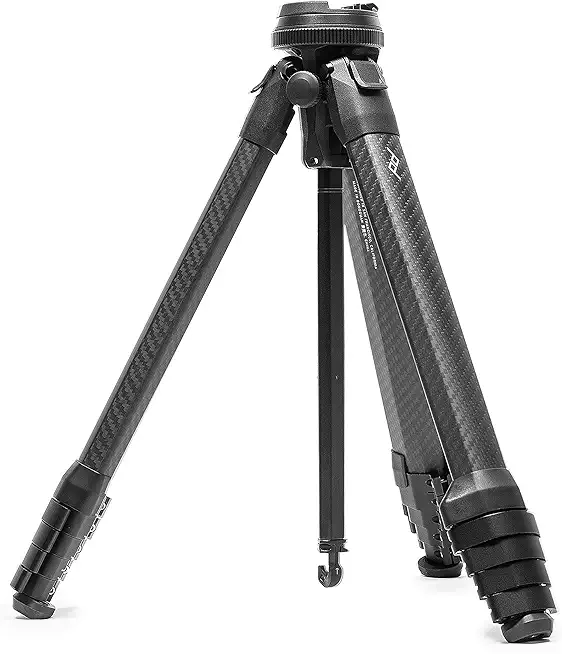
Peak Design Travel Tripod Carbon Fiber
Premium, pocketable support engineered for speed, strength, and effortless portability during fast-paced travel shoots.
Check PriceAs a photographer who travels solo, I appreciate the Peak Design Carbon Fiber Travel Tripod for how compact it becomes without sacrificing thoughtful engineering. Its critically acclaimed, innovative compact design and unique ball head (which operates without traditional knobs) make it a joy to pack and set up on the go.
It collapses very compactly to fit tight backpack pockets, so I can stash it in side compartments that other tripods won’t fit into. The reversible center column and integrated quick release are small touches that speed up workflow when I’m moving between locations quickly.
The built-in smartphone mount is genuinely useful if you shoot hybrid stills and vlogs; I’ve used it for quick timelapses and for framing smartphone clips while on the move. The ball head feels intuitive and smooth in actual use, though some users (and I at times) miss the tactile feel of traditional knobs when trying to pan precisely.
In practice this tripod shines for solo travel where packing space and weight are premium. Its lightweight construction makes long carries far less fatiguing, and the build quality holds up to daily use. Do note that native vertical shooting capability is limited without extra accessories, so if vertical framing is core to your work you’ll want to budget for add-ons.
- Packs down smaller than nearly any other tripod.
- Excellent build quality and innovative engineering.
- Lightweight for extended carrying.
- Versatile for cameras and smartphones.
- Premium price point.
- Lack of a dedicated pan lock limits panoramic shooting.
3. 3 Legged Thing Punks Brian 2.0

3 Legged Thing Punks Brian 2.0 Carbon Fiber Tripod
Rugged, versatile tripod with rapid-lock legs and rock-solid load capacity for creative framing anywhere.
Check PriceThe 3 Legged Thing Punks Brian 2.0 is a travel-focused tripod that photographers in the solo-travel community often recommend for its multi-mode versatility and striking looks. It’s designed to serve as a tripod, monopod, or tabletop support, which makes it a flexible tool when you’re carrying limited gear.
Built from carbon fiber with five leg sections, the Brian 2.0 folds down to a compact 16.5 inches and extends to a very usable maximum height of approx. 73 inches. Those dimensions mean you can shoot over crowds or obstacles without lugging a heavy stand.
In the field you’ll appreciate the quick leg locks that speed setup and teardown—handy when you’re working alone between locations. The convertible design to monopod or tabletop modes is genuinely useful for run-and-gun work, and the available vibrant colors make it easy to spot in a bag.
That said, the five leg sections are a double-edged sword: they enable a short folded length yet can introduce more flex and slightly longer setup compared with fewer-section alternatives. Also, the Brian 2.0 doesn’t have an articulating center column, so low-angle or awkward-angled compositions are less convenient.
Overall, if your priority is maximum height in a travel-sized package and you value conversion options and lightweight carbon construction, the Punks Brian 2.0 is a very appealing choice. If ultimate rigidity or extreme low-angle articulation are must-haves, consider those trade-offs before you buy.
- Tallest in its category — approx. 73 inches
- Carbon fiber frame
- Converts to monopod or tabletop
- Stylish, vibrant color options
- Five leg sections can reduce stability and increase setup time
- No articulating center column limits some shooting angles
4. Sirui T-005X Travel Tripod

Sirui T-005X Travel Tripod with C-10S Ball Head
Compact engineering delivers precise ball-head control and dependable stability for landscape and travel photographers.
Check PriceI travel light and the Sirui T-005X is one of those tripods I reach for when my kit needs to stay compact. It weighs just over 1 kg and packs down extremely small thanks to its five-section legs with twist locks, so it slips into a backpack without fuss.
The removable ball head with a separate pan lock is a real pleasure for framing precisely. That smooth head gives you quick adjustments for landscapes or street portraits, and the pan lock helps when I need level panning for video or stitched panoramas.
Where this tripod truly shines is portability and build quality. The finish feels durable and the legs are stiff enough for small to medium-size DSLRs and mirrorless setups when you keep the center column retracted. For solo travel shoots at moderate heights it’s a dependable choice.
Be aware of the limits: extend it fully to the maximum 139 cm and you’ll notice increased wobble, especially in breezy conditions or with heavier lenses. I usually avoid the center column at full height and keep shots lower, which preserves stability and gives much better results.
If you’re a traveler who values minimal weight, quick setup, and a clean-feeling ball head for composition, the T-005X is a strong candidate. If you routinely shoot at maximum height or carry heavy glass, you’ll want something stiffer. Otherwise it’s a practical, well-built travel tripod that balances portability with usable performance.
- Very compact and light (just over 1 kg)
- Five-section legs with twist locks fold very small
- Removable smooth ball head with separate pan lock
- Sturdy enough for small to medium-size cameras; durable finish
- Stability reduces significantly at full extension (max height 139 cm)
- Basic carry case and limited features for very heavy cameras
5. 3 Legged Thing Leo 2.0
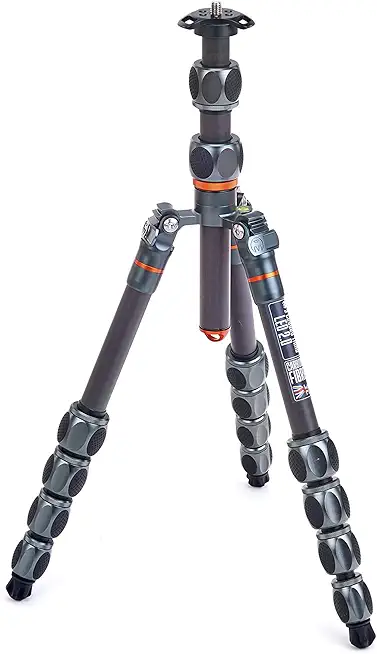
3 Legged Thing LEO 2.0 Carbon Fiber Tripod System (LEOGREY2)
Pro-grade carbon fiber system offering exceptional stiffness, quick setup, and flawless support for heavy lenses.
Check PriceAs a photographer who often hauls heavy glass and gimbal rigs on solo trips, the 3 Legged Thing Leo 2.0 has become my go-to when rigidity matters most. It’s praised for exceptional sturdiness and vibration resistance, so it’s clearly aimed at shooters carrying bulky or heavy gear.
In practical terms the Leo folds down to 35 cm and extends to 146 cm, with a payload capacity of 30 kg. It’s carbon fiber built, includes a detachable monopod leg, and features a two-section center column—specs that explain why it feels so solid under big setups.
On location the tripod’s rigidity is obvious: vibration damping is excellent and it won’t micro-shake with long telephotos or panoramic stitching. The monopod conversion and accessory mounts add creative flexibility for run‑and‑gun scenarios, but be prepared—setup can be more cumbersome because of the multiple clamps and components.
If you prioritize sturdiness and load capacity over ultralight carrying comfort, the Leo 2.0 is worth the trade-off. It’s not the fastest tripod to deploy, nor the lightest to carry, but for anyone needing best-in-class build quality and the ability to trust a 30 kg payload on uneven ground, it’s a strong, reliable choice.
- Extremely stable and rigid
- Folds to 35 cm for packing
- Two-section column & accessory system
- Detachable monopod for versatility
- Heavier and bulkier to carry
- More complex, slower setup
How to Choose the Right Travel Tripod

When I pick a tripod for a solo trip I think about how I’ll move and what I’ll shoot. If I’m hiking all day I prioritize carbon fiber because it’s usually 20–30% lighter than aluminum, quieter to operate, and better at damping vibration. If I’m traveling by car or expect strong winds, a heavier aluminum model can actually help keep the rig steadier without adding ballast to my pack.
Folded size matters as much as weight. Measure the packed length against your pack’s dimensions — a tripod that won’t fit in your bag is dead weight. Also consider how it unfolds: more leg sections mean a shorter packed length but generally less stiffness and slightly longer setup time.
Height is another trade-off. I aim for something that reaches eye level with one or two leg sections left for stability; avoid relying on a long center column because that’s the weakest link for vibration. For panoramas and panning video, make sure the head has a positive pan lock or choose a head type you’re comfortable with.
Ease of setup slows you down on the road, so pick simple, reliable locks. I prefer smooth twist locks for fast, quiet adjustments, especially in cold or wet conditions. Also look for a quick-release system you trust — it’s the difference between capturing a fleeting light and missing it.
Finally, think of features that suit your workflow. A built-in phone mount or reversible column helps hybrid shooters and vloggers, while convertibility to a monopod can be invaluable for crowded festivals or long walks. In short: match material and folded size to your travel style, favor fewer compromises in stability if you use heavy glass, and always test how it packs and deploys before you leave home.
Aluminum vs Carbon Fiber for Solo Travel
When I pack for a solo trip the first thing I think about is weight. Every extra ounce adds up on long hikes and city walks, so material choice becomes a real travel decision rather than a technicality.
Carbon fiber is the go-to for many solo shooters because it’s typically 20–30% lighter than aluminum. It also has a superb strength-to-weight ratio, excellent vibration damping, and resists corrosion—so it stays quiet and reliable in humid or salty conditions.
Aluminum isn’t without virtues. Its extra mass can actually help when shooting in stiff winds, and it’s more forgiving if you accidentally dent or bang it. Repairs and replacement parts tend to be easier and cheaper, which matters if you travel to remote places.
There are trade-offs to keep in mind. Carbon fiber can crack under a bad drop and is harder to repair in the field. Aluminum will creak and may corrode over time, especially near the ocean, but it often survives impacts that would catastrophically damage a carbon leg.
Match the material to your itinerary. For long backpacking trips, city-hopping, or wet climates, carbon fiber’s lighter weight and weather resistance make it the smarter pick. If your route is mostly short transfers, windy coasts, or you expect rough handling, aluminum can be a sensible, budget-friendly choice.
Also remember that design matters as much as material. Fewer leg sections, thicker leg tubes, a stable head, and avoiding long unlocked center columns will give you more real-world stability than material alone.
My practical tip: lift a few models in a store or at a meetup. Feel the packed size, test the leg locks, and imagine carrying it all day. In most solo-travel scenarios I lean carbon fiber, but pick what fits your travel style and gear weight—not just the label.
What People Ask Most
What is the best tripod for solo travel?
The best tripod balances portability, stability, and build quality to suit your gear and travel habits. Choose one that fits your camera weight and packs easily into your bag.
How do I choose a travel tripod for solo photography?
Consider material, folded size, weight, ease of setup, and head type based on your shooting needs. Prioritize the features that match how you travel and the kinds of shots you take.
What features should I look for in a tripod for solo travel?
Look for a lightweight, compact folding design with sturdy leg locks and a reliable head that suits your shooting style. Additional features like a removable monopod or a phone mount can add useful versatility.
How tall should a travel tripod be for solo travel?
Pick a tripod that reaches eye level when extended and collapses small enough for your bag. Think about your preferred shooting angles and whether you need extra height for crowds or landscapes.
Are lightweight carbon fiber tripods worth it for travel?
Carbon fiber models often offer a favorable balance of strength and lower carry weight, which is helpful for travel. Weigh the cost and repairability against how much you value lighter weight and weather resistance.
Can a compact travel tripod support a DSLR and lens for solo travel?
Many compact travel tripods can support typical DSLR setups when used within their intended capacity. Always follow the manufacturer’s guidance and use a sturdy head and proper attachment for safe shooting.
How do I use a tripod for self-portraits and solo travel vlogging?
Use a quick-release plate and a remote or timer to trigger shots, and position the tripod on stable ground at the right height and angle for framing. A phone mount or swivel head helps when switching between portrait and landscape or when recording video.
Conclusion for Best Tripod for Solo Travel
Choosing the right travel tripod comes down to a simple trade-off between portability, stability, height, and the extra features that suit your shooting style.
Use the product summaries above to match those priorities—some options lean toward extreme compactness, others toward balanced performance, maximum reach, or load-bearing rigidity.
Material and build choices matter for weight, durability, and how a tripod behaves in real travel conditions, so weigh those factors against how you move and shoot.
Whenever possible, try a setup in the field or at home with typical gear and shooting angles to confirm the feel and stability before committing.
If you want to sharpen your travel-photography workflow and gear decisions, explore more of our site’s articles for practical tips and deeper buying guidance.
Have questions or want gear-specific experiences shared—leave a comment below and we’ll usually reply within a few hours.



0 Comments