
Ever tried to steady a heavy lens on a windswept ridge while your tripod wobbles like a reed? Choosing the best tripod for outdoor travel can make or break a shoot. We tested setups in wind, on uneven ground, and during quick roadside stops to see what works under pressure.
This guide presents five travel tripods chosen from real‑world use and extensive user feedback. Each pick was judged by practical pros and cons rather than glossy marketing claims. You’ll read the kind of hands‑on observations photographers actually rely on in the field, and honest user reports from long‑term owners.
We compare key factors like portability, stability, and weight. We also assess outdoor‑specific features such as terrain adaptability, setup speed, and how each tripod behaves under real conditions. The goal is to map trade‑offs so you can match a tripod to your travel style, gear, and shooting priorities.
Whether you hike all day with a mirrorless rig, drive to remote overlooks with a telephoto, or shoot video on rugged trails, there’s a right fit. Read on for clear, practical guidance that turns technical choices into confident buying decisions. By the end you’ll know which compromises make sense and which to avoid for your next trip.
1. Peak Design Carbon Fiber Travel Tripod
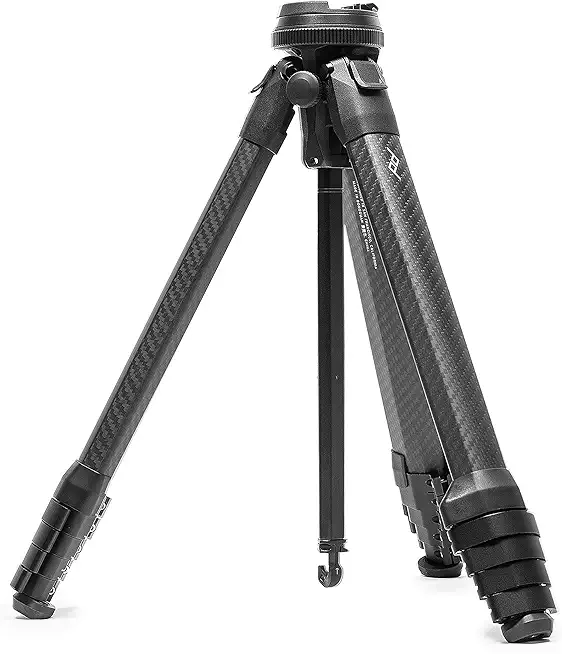
Peak Design Travel Tripod Carbon Fiber
Ultralight, compact support for photographers; rapid setup, rock-solid stability and smooth panning for travel and landscape shoots.
Check PricePeak Design’s Carbon Fiber Travel Tripod is one of those rare travel tools that actually makes you want to carry a tripod on long walks. It collapses compactly without wasted space and sets up fast, which for outdoor shoots means more time composing and less fumbling with gear.
Weighing just 2.8 lbs, it’s genuinely light for photographers who hike or move between locations all day. Despite that low weight it’s reported as portable and stable across varied terrains, so you won’t be sacrificing steadiness for compactness on most shoots.
The reversible center column is a real practical feature for low‑angle and macro perspectives, and the innovative ball head (designed without knobs) speeds adjustments when you need responsiveness. There’s also an integrated phone mount, which is handy for hybrid shooters or quick social media captures in the field.
From user feedback it’s been called a travel game‑changer for compactness and functionality, though there are tradeoffs to weigh. Some outdoor shooters miss a dedicated ball panning lock for precise panoramas, and the model sits at a higher price point than many competitors—so think about how much you’ll use those smart features before committing.
In short, if you prioritize compactness, sensible modern features, and a lightweight carbon build for travel, this tripod is an excellent match. If you need specialized panorama controls or are on a tight budget, you may want to consider those limitations first.
- Packs down very small
- Innovative, easy-to-use ball head
- Reversible center column for low-angle shots
- Integrated phone mount
- Higher price point than some competitors
- No dedicated ball panning lock
2. 3 Legged Thing Punks Brian 2.0

3 Legged Thing Brian 2.0 Carbon Fibre Tripod
Sturdy, lightweight legs deliver precise height control and reliable load capacity for professional photo and video work.
Check PriceAs a photographer who spends a lot of time shooting landscapes and travel portraits, the 3 Legged Thing Punks Brian 2.0 stands out for balancing a tall working height with genuine portability. Its carbon fiber build keeps the weight down to ≈3.7 lbs while giving you a max height of 73.2 in, so you can comfortably work standing with longer lenses or compose from a higher vantage.
Folded length is 16.5 in, which makes it packable in most checked luggage or larger backpacks without wasting space. It also converts cleanly into a monopod and a tabletop configuration, so you get multiple tools in one piece of kit — very handy when you’re switching between hiking, street, and quick tripod-less scenarios.
In the field users report it feels robust yet easy to carry, and you notice the stiffness carbon fiber provides compared with similarly light aluminum models. The Brian 2.0 also comes in multiple colors, which is a small but nice touch if you like gear that’s easy to spot or matches your kit.
There are a couple of things to consider before you buy: it lacks an articulating center column, so very low-angle or awkward overhead shots may be less convenient. And while 16.5 in folded is compact, it’s slightly bulkier than the smallest travel tripods if absolute pack size is your top priority.
If you need a tall, lightweight tripod that doubles as a monopod and offers real-world height without a lot of extra weight, the Punks Brian 2.0 is an excellent fit. It’s especially good for travel photographers who want height and versatility without hauling a heavy rig.
- Max height 73.2 in
- Folds to 16.5 in
- Lightweight carbon fiber (~3.7 lbs)
- Converts to monopod/tabletop; multiple colors
- No articulating center column
- Slightly bulkier folded length than smaller travel tripods
3. Neewer LiteTrip LT38 Carbon Fiber Tripod

Neewer LITETRIP LT38 61
Telescoping center column and anti-slip feet provide versatile framing options and steady shots on uneven terrain.
Check PriceAs a photographer who spends a lot of time shooting outdoors, the Neewer LiteTrip LT38 immediately stood out for its rock‑solid feel without feeling bulky. Its carbon fiber construction with flattened leg profiles packs down neatly, which makes it easy to slip into a backpack or carry bag.
The tripod covers an impressive height range from a very low 15 cm up to 155 cm, so you can shift from tabletop or macro work straight to eye‑level or higher landscape compositions. It also carries a healthy 10 kg load capacity, so heavier DSLRs and telephoto lenses feel stable rather than precarious.
In the field I noticed minimal vibrations even when fully extended, which is crucial for long exposures and focus‑stacking. That stiffness comes through in adverse conditions too — reviewers and I both found it durable and steady on trails and windy ridgelines.
Setup uses 12 quick‑lock leg clamps that are very secure; they lock solidly and contribute to the tripod’s confidence under load. The trade‑off is that twelve clamps mean a few more flips per setup, and with frequent use they can feel a bit cumbersome.
One downside to be aware of is that spiked feet aren’t included, so on soft or icy ground you may want to add aftermarket spikes for better bite. Overall, if you want a travel tripod that prioritizes stability, low‑angle capability, and a high payload without excessive bulk, the LiteTrip LT38 is a compelling choice.
- Extremely stable with minimal wobble
- 15 cm–155 cm versatile height range
- Durable carbon fiber, 10 kg load capacity
- 12 quick‑lock leg clamps for secure setup
- No spiked feet included
- Twelve leg clamps can slow repeated setups
4. Manfrotto Befree Travel Tripod
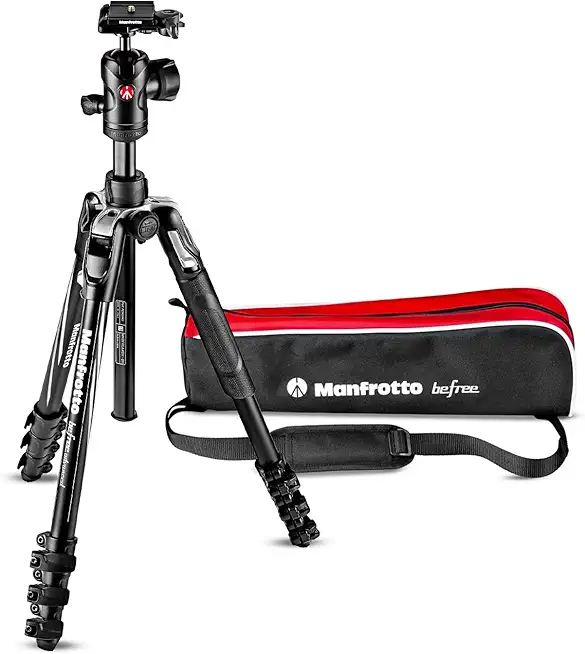
Manfrotto Befree Advanced Aluminum Tripod with Ball Head
Durable aluminum build with smooth ball-head movement for fast composition, stable support, and effortless portability.
Check PriceThe Manfrotto Befree Travel Tripod is built around being a dependable companion on extended outdoor trips. It’s stable and durable in real‑world use, giving you confidence when you’re shooting landscapes or long exposures away from home.
It folds down to about 16.9 in and extends to a useful maximum height of roughly 64.6 in, striking a familiar balance between compactness and working height. Weighing around 2.3 lb, it’s slightly heavier than ultra‑light carbon options but still very packable for most travel scenarios.
A standout practical detail is the quick‑release metal mounting plate. That makes mounting and dismounting your camera fast and secure — handy when light changes or wildlife appears and every second counts.
Multiple leg angle settings add real versatility in the field. You can drop a leg for low‑angle macro work or spread them wide on uneven terrain and still get a rock‑steady platform without fuss.
User reports emphasize a solid feel, fast setup, and a reliable grip that lasts over time. If you value long‑term durability and a tripod that inspires confidence rather than worrying about flex, this is a sensible choice.
One practical compromise: there’s no built‑in bubble level. That missing feature matters if you frequently need pixel‑perfect horizons in the field. Also, at ~2.3 lb it’s not the absolute lightest option for multi‑day hikes where every ounce counts.
If stability, a quick‑release workflow, and moderate compactness are your priorities, the Manfrotto Befree is a strong pick. If ultra‑light backpacking or an integrated level are musts, consider those trade‑offs first.
- Stable and durable outdoors
- Quick‑release metal mounting plate
- Multiple leg angle settings
- Lightweight and reasonably compact (~2.3 lb)
- No built‑in bubble level
- Slightly heavier than ultra‑light models (~2.3 lb)
5. SmallRig x Potato Jet Tribex Hydraulic Outdoor Focused

SmallRig x Potato Jet Tribex Hydraulic Carbon Fiber Tripod with 4-step Counterbalance Fluid Head
Precision hydraulic damping and multi-step counterbalance ensure silky-smooth camera moves for dynamic video production.
Check PriceThe SmallRig x Potato Jet Tribex Hydraulic is built for fast, confident outdoor use. Its 3‑section legs with X‑clutch hydraulic tech make deployment almost instant and repeatable in the field.
Rubber feet with integrated spikes give excellent bite on soft or muddy terrain. That terrain adaptability is why I reach for this tripod on damp shoots and uneven trails.
The hydraulic fluid head delivers buttery-smooth panning, which is a real benefit for run‑and‑gun videography and tracking moving subjects. A fast center column lock further speeds repositioning between setups.
Construction is durable carbon fiber, so the Tribex balances stiffness and portability without feeling toy‑like. Videographers using longer lenses particularly appreciate the stability and damping under load.
Users also report consistently stable shots in adverse conditions and very quick deployment. The trade‑off is the added weight from the hydraulic components, so it’s less ideal if you’re pursuing ultralight backpacking.
- Ultra‑fast setup with X‑clutch hydraulics
- Spiked rubber feet for soft/muddy grip
- Smooth hydraulic head panning
- Durable carbon fiber build
- Hydraulic head may be overkill for casual photographers
- Slightly heavier due to hydraulic components
Assessing Tripod Stability for Travel
Stability is the difference between a keeper and a throwaway frame when wind, long exposures, or heavy glass come into play. As a travel shooter, you want a tripod that feels solid under your kit, not just light on a spec sheet.
Think in terms of stiffness and damping. Stiffness is how much the tripod resists movement; damping is how quickly any vibration dies away. Both matter: a stiff leg that rings like a bell will still blur long exposures.
Start with simple hands‑on checks before you leave the shop or campsite. Press and twist each leg and the head to feel for flex or loose joints; any perceptible wobble usually translates to blurred photos later.
Surface testing is telling. Set the tripod on concrete, grass and gravel to see how it sits and whether it rocks. Use spikes or rubber feet when appropriate, and widen the leg spread on uneven ground to lower the center of gravity.
Mount your camera and use Live View zoomed to a high‑contrast target while you tap the tripod and timing the decay of vibration. Shoot a rapid burst of the same static scene to spot microscopic shifts or softness that your eye might miss.
Remember design trade‑offs: more leg sections pack smaller but usually lose stiffness, and extending the center column raises the center of gravity and reduces stability. Prefer wider leg profiles and high‑quality carbon fiber for the best strength‑to‑weight outcome.
Finally, test with your heaviest lens and habitually avoid full center‑column extension when possible. A small weight hung from the hook, spiked feet on soft ground, and a low, wide stance will often fix marginal stability in the field.
Prioritizing Weight in Travel Tripods
When you’re packing for a photo trip the scale will scream at you, but your images will tell the truth. Weight matters, but it shouldn’t be the only metric. Think in terms of weight‑per‑stability: how much carry penalty are you willing to endure for steadier shots and taller reach.
Material is the first big decision. Carbon fiber gives you the best strength‑to‑weight ratio, so it’s the go‑to for long hikes. Aluminum can be more budget friendly, but expect extra heft for similar stiffness.
Leg design and section count also shape the equation. Fewer leg sections generally mean a stiffer, lighter setup, while many sections pack smaller but can flex more. Likewise, using the center column often lowers stability by raising the center of gravity, so avoid extending it unless you must.
Practical tests beat specs every time. Mount your heaviest camera and lens, then press the head and tap the legs to feel vibration and damping. Put the rig on concrete, grass and gravel to see how it settles; Live View on a fixed subject will quickly reveal any wobble.
Match the tripod to how you travel. If you’re backpacking all day, prioritize ultra‑light carbon fiber even if it means less absolute stiffness. For car‑based trips or shoots with long lenses, accept a slightly heavier, rock‑steady tripod—you’ll thank yourself when the wind picks up.
Finally, don’t chase the lowest number on the spec sheet. Look for the best balance between carry weight and usable stability for your gear and shooting style. If possible, try a hands‑on demo or rent a model on a short trip before committing—real world use exposes compromises that specs hide.
What People Ask Most
What is the best tripod for travel photography?
There is no single best tripod; the right choice balances portability, stability, and the features you need for your shooting style. Prioritize the trade‑offs that match how and where you travel.
What features should I look for in a travel tripod for outdoor use?
Look for sturdy leg construction, reliable leg locks, adaptable feet for different terrain, and a head that suits your shooting (smooth panning for video or a precise ball head for stills). Fast setup, compact folded size, and useful extras like a quick‑release plate or phone mount also improve field efficiency.
How tall should a travel tripod be for outdoor photography?
Choose a height that lets you work comfortably without overextending the center column, since higher setups can reduce stability. Consider both maximum usable height and the ability to shoot low angles when evaluating options.
Are carbon fiber tripods better for travel than aluminum?
Carbon fiber typically offers a better strength‑to‑weight ratio and reduced vibration, making it popular for travel, while aluminum tends to be more affordable and durable in rough use. The best material depends on your priorities between weight, cost, and ruggedness.
Can a travel tripod support a DSLR and telephoto lens?
Many travel tripods can support a DSLR and telephoto lens, but suitability depends on the tripod’s stiffness and rated payload. Always match the tripod to your heaviest setup and perform a field test to confirm stable performance.
How much weight can a travel tripod hold?
Load capacity varies widely by model, so check the manufacturer’s rating and consider that real‑world stability also depends on stiffness and damping. When in doubt, choose a tripod with a higher capacity than your heaviest gear and test it before critical shoots.
How compact should a travel tripod be for backpacking?
For backpacking, prioritize a tripod that stows small and is comfortable to carry while still providing adequate stiffness for your kit. Fewer leg sections and a low folded length help with compactness, but don’t sacrifice necessary stability for minimal size.
Conclusion for Outdoor Travel Tripods
Choosing the right travel tripod comes down to balancing portability, stability, weight, and the terrain‑specific features you actually need in the field.
Use simple, real‑world checks—setups with your own camera, surface tests, and a quick Live View or handheld observation—to judge stiffness and damping before you commit.
Prioritize a tripod that offers the best weight‑to‑stability ratio for your travel style, whether you’re hiking long distances or working from a vehicle, and accept the trade‑offs that fit your shooting priorities.
If you want to build your skills and make smarter gear choices, read more of our site’s practical guides and gear roundups to deepen your understanding and workflow.
Have questions or experiences to share about tripods you’ve used outdoors? Leave a comment below and we usually reply within a few hours.




0 Comments