
Can a pocketable camera really freeze a cheetah’s sprint across the savanna in crisp, frame-ready detail? Safari shooting is relentless — wide open spaces, fast action, and dawn-to-dusk light swings that punish anything slow.
This guide shortlists five point-and-shoot and bridge cameras tuned for African safaris. They balance reach, speed, and low-light performance while keeping lens changes off the itinerary.
We evaluated candidates on zoom reach, autofocus speed and tracking, sensor size and low-light performance, image stabilization, portability, battery life, and video capability. Those factors separate memorable frames from missed chances on a dusty game drive.
Whether you’re a traveler packing light, a wildlife enthusiast craving sharp behavior shots, or a hybrid shooter who wants stills and cinema-ready video, this shortlist speaks to you. If you want pro results without lugging a kit lens arsenal, keep reading.
Expect practical, field-tested insight rather than lab numbers and specs you won’t use in the bush. By the end you’ll know which compact approach — long reach, pocketable speed, or low-light punch — suits your safari style.
From first-light leopards to late-evening elephant silhouettes, picking the best point-and-shoot camera for an African safari boils down to choosing the right trade-offs. Let’s find the camera that helps you tell your safari story without missing a beat.
1. Sony RX10 IV For Safari

The Sony RX10 IV is a bridge camera I reach for on safaris when I want one body that does almost everything. Its 24–600mm equivalent f/2.4–4 Zeiss lens covers wide landscapes and tight wildlife frames without swapping glass, and the 1-inch stacked CMOS sensor delivers pro-level detail and manageable high‑ISO noise for dawn and dusk work.
Autofocus is a real strength — phase-detect AF with real-time Eye AF and subject tracking means you can lock onto running cheetahs and birds in flight, and the 20fps burst with AF/AE keeps sequences coming. I’ve found images remain sharp even at full tele, with pleasing subject separation and bokeh that’s unusual for a bridge camera.
For hybrid shooters the RX10 IV is excellent: 4K video uses full-pixel readout, there’s a built-in ND filter for bright scenes, and the camera’s stabilization is solid enough for handheld long-tele work from a game vehicle. The body is weather-sealed and rugged, which matters on dusty, bumpy drives.
The trade-offs are practical. It’s heavier and bulkier than typical compacts, so it can tire you on long walks or when hand‑holding all day. It’s also a premium-priced camera compared with simpler compacts, so it suits photographers who prioritise speed, image quality and versatility over ultra-light packing.
If you want DSLR-like control and speed in a single, weather-resistant package without changing lenses, the RX10 IV is a top choice for serious safari shooters. If weight or budget is your main concern, consider lighter or less costly alternatives.
- Covers landscapes to tight wildlife without lens changes
- DSLR-like speed/control in a more compact package
- Excellent image stabilization for handheld long-tele shooting
- Strong hybrid (still/video) capabilities
- Bulkier/heavier than typical point-and-shoots
- Premium price compared with simpler compacts
2. Canon PowerShot SX70 HS For Safari

Canon PowerShot SX70 HS 20.3MP 65x Optical Zoom 4K
Superzoom travel camera offering 65x optical reach, 4K capture, intuitive controls and versatile shooting for distant subjects and everyday adventures.
Check PriceWhen I’m on a game drive and want reach without hauling a bag full of glass, the Canon PowerShot SX70 HS is the practical choice. Its staggering 21–1365mm (65x optical) zoom — and up to 260x digital zoom — lets you frame distant subjects tightly from inside the vehicle, so you don’t disturb skittish wildlife.
The camera uses a 20.3MP 1/2.3″ CMOS sensor, which produces clean, printable images in good daylight and delivers perfectly serviceable files for web sharing and small prints. Image quality does drop in dimmer dawn or dusk light because of the small sensor size, so expect more noise as the sun falls.
Autofocus is solid for most situations, with subject-detection that handles stationary or slowly moving animals well. It isn’t class-leading for high-speed action, so you may miss a fraction of very fast behaviour like a sprinting cheetah or quick bird flights.
One of the SX70 HS’s strengths is usability: beginner-friendly Auto and scene modes mean you can get consistent results quickly, yet manual controls are available when you want more creative control. The built-in electronic viewfinder is a real benefit on bright African days, keeping glare off the screen and helping you track subjects through windows.
Handling is relatively lightweight and less taxing than lugging a DSLR kit, and battery life is decent for its class — both practical advantages on long safaris. In short, this camera is ideal if your priority is maximum reach and simple operation, provided you accept some low-light and high-speed limitations.
- Massive zoom in a compact, relatively lightweight body
- Simple operation accessible to beginners/casual shooters
- EVF helpful in harsh sunlight
- Decent battery life for its class
- AF reliable but not class-leading; can struggle with fast-moving subjects
- Small sensor limits low-light performance; noisier images in dim conditions
3. Nikon Coolpix P950 For Safari

Nikon COOLPIX P950 16MP 83x Optical Zoom 4K
Ultra-telephoto enthusiast camera delivering 83x zoom, 4K video and precise subject tracking for wildlife, aviation and long-distance photography.
Check PriceThe Nikon Coolpix P950 is a bridge camera built around an astonishing 24–2000mm equivalent zoom, giving you reach that makes distant birds and far-off animals visible in-camera. Its 16MP 1/2.3″ CMOS sensor is small but delivers clean, sharp images in daylight where the P950 really shines.
Autofocus is contrast-detect, which works well for stationary or slow-moving subjects but is less snappy than phase-detect systems for chases and quick turns. You also get a high-resolution EVF and a tilting LCD, which make composing from a vehicle or awkward angles straightforward.
For hybrid shooters the P950 offers 4K UHD video, a built-in stereo mic and an external mic input — useful if you want better audio when recording game drives. Real-world users praise how lightweight it is for a superzoom, and how simple controls and scene modes welcome beginners and enthusiasts alike.
There are trade-offs to accept. The small 1/2.3″ sensor limits low-light and dusk performance, so dawn and twilight shots will show more noise and less dynamic range than larger-sensor cameras. Also, while the zoom reach is unmatched, the contrast-detect AF can struggle with very fast or erratic wildlife.
If your primary need is extreme reach in an easy-to-manage package — and you mostly shoot in good light or want long-range capability from a single body — the P950 is a compelling, travel-friendly choice. Just pack spare batteries and temper expectations for low-light action.
- Unmatched 24–2000mm zoom range
- Lighter/portable vs DSLR kits with similar reach
- Good daylight image quality (16MP 1/2.3″ sensor)
- 4K UHD video with external mic support
- Limited low-light/dusk performance (small sensor)
- AF can struggle with fast, erratic subjects
4. Sony Cyber-shot RX100 VII For Safari
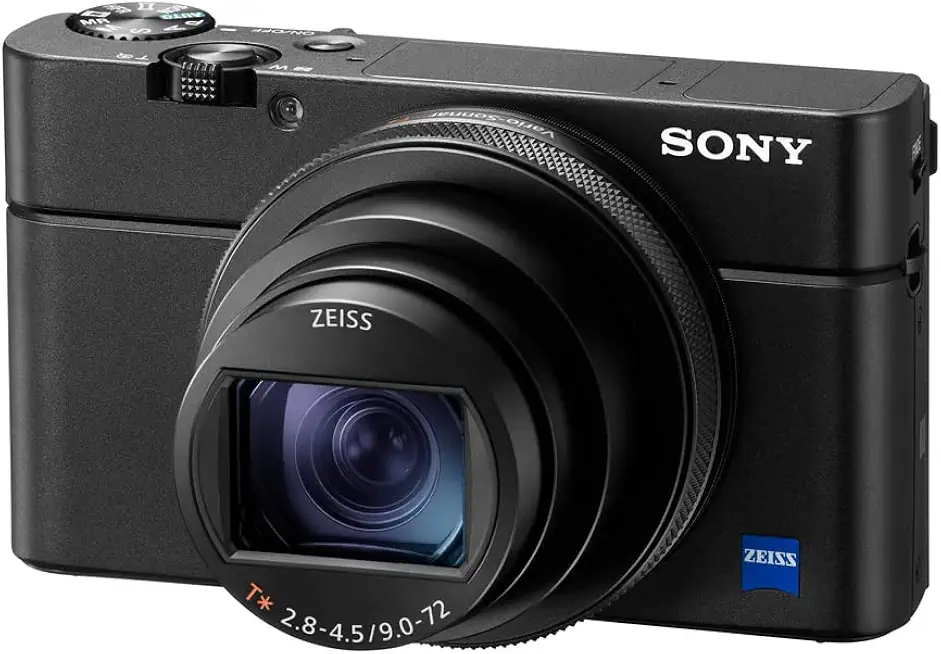
Sony Cyber-shot RX100 VII DSC-RX100M7
Pocket-sized flagship offering pro-level image quality, lightning-fast autofocus, versatile zoom and high-speed continuous shooting for travel and vlogging.
Check PriceThe Sony Cyber-shot RX100 VII is a compact powerhouse for safari travel, pairing a 24–200mm equivalent zoom with a 1-inch stacked CMOS sensor that delivers excellent image quality and usable low-light performance. Its pocketable size makes it easy to carry on long game drives and to pull out quickly when a scene unfolds.
Autofocus is the star here — Real-time Tracking and Eye AF for humans and animals are among the fastest and most reliable in the compact class. Combine that with up to 20fps burst shooting with AF/AE and you have a camera that consistently nails fleeting wildlife moments.
For hybrid shooters the RX100 VII is especially attractive: 4K video with no crop plus S-Log and HLG support gives real flexibility for creative grading and clean footage straight from a small body. The bright f/2.8–4.5 lens helps at dawn and dusk, so you get usable depth and subject separation without hauling larger gear.
The trade-offs are real but sensible depending on your priorities. The 24–200mm zoom is modest compared with superzooms, so you’ll need to be closer for distant birds or skittish animals. Also there’s no weather sealing and battery life is average, so bring spares and be cautious in dusty or wet conditions — if portability and class-leading AF/video matter most, this camera is an excellent fit.
- Pocketable with 24–200mm reach
- Bright f/2.8–4.5 lens aids low light
- 1-inch stacked CMOS sensor — excellent image quality
- Real-time Tracking & Eye AF; 20fps AF/AE; 4K no-crop + S-Log/HLG
- Limited zoom compared with superzooms
- No weather sealing (take care in dust/wet)
5. Panasonic Lumix FZ1000 II For Safari

Panasonic LUMIX FZ1000 II DC-FZ1000M2 20.1MP 25-400mm LEICA 4K
High-performance bridge camera featuring a bright Leica zoom, large sensor, 4K recording and refined handling for creative photography and video.
Check PriceAs a working photographer who’s spent long days on game drives, the Panasonic Lumix FZ1000 II feels like a sensible compromise between reach and image quality. Its 25–400mm equivalent f/2.8–4 bright zoom covers most safari situations — wide landscapes to tight head-and-shoulders of distant subjects — without swapping glass.
The 1-inch MOS sensor is a real advantage over typical superzooms; you’ll notice cleaner files and better low-light performance at dawn and dusk. The lens’ bright aperture helps isolate subjects and keeps shutter speeds up in the golden hours, which matters when animals are moving.
Autofocus is DFD contrast-detect with subject tracking, and in practical terms it’s reliable for standard safari encounters. It’s not as fast as phase-detect systems for very fast, erratic action, so expect a few missed frames in high-speed chases.
Video shooters will like the 4K feature set: 4K video plus post-focus and 4K Photo modes let you extract stills or refocus after the fact — handy when you can’t afford to miss a fleeting pose. The fully articulating touchscreen LCD makes composing from vehicle windows and awkward angles straightforward.
Ergonomically it’s relatively lightweight and comfortable for long days in the field, so you won’t tire as quickly as with bulkier bridge rigs. Overall, the FZ1000 II is a strong pick if you want better-than-average image quality, a bright zoom, and solid hybrid video features in a single, travel-friendly body.
- 25–400mm f/2.8–4 bright zoom
- 1-inch MOS sensor — better low-light IQ
- 4K video with post-focus and 4K Photo
- Fully articulating touchscreen LCD
- AF not as fast as phase-detect systems
- No weather sealing
Choosing Safari Telephoto Focal Lengths
On safari the focal length you pack often decides whether you come home with frame-filling portraits or a gallery of distant dots. As a rule of thumb, aim for at least 400mm equivalent; 600mm or more is a real advantage for skittish subjects and birds perched high in trees.
That said, not every park demands extreme reach. If you’ll be in places where animals routinely come close to the vehicle — think South Luangwa or many private reserves — 200–400mm will cover most encounters with elephants, giraffes and big cats.
Park terrain matters. Open plains like Etosha or Amboseli expose animals at huge distances, so longer reach is invaluable there. Dense bush means you’ll be composing through branches, where flexibility and quick framing beat sheer range.
Don’t overlook speed and steadiness. Fast continuous autofocus and strong image stabilization are more important than a few extra millimetres when a leopard climbs or a herd bolts past the vehicle; those specs help you lock focus and steady long-tele shots over bumpy tracks.
A fast aperture helps at dawn and dusk. Lenses that start at f/2.8 or f/4 give better low-light performance and nicer subject separation, which makes a huge difference for portraits of cats and birds against busy backgrounds.
You’ll also have to balance versatility against reach. A flexible zoom (100–500mm range) lets you react to unpredictable movement, while a long prime or extreme superzoom excels at distant, static subjects but limits how quickly you can recompose. Choose according to the parks you’ll visit and whether you prefer portability or maximum reach.
Batteries For Safari Photography
On safari your shots will be dictated by the light and the animal — not by your battery meter. I always travel with at least two to four spare batteries per camera so a full day of dawn-to-dusk drives never leaves me hunting for a plug. Mirrorless and compact hybrids tend to drain faster than DSLRs, so if you’re using a 1‑inch or mirrorless body factor that into your count and carry the higher end of the spare range.
If you want long shelf life for gear you won’t use every day, lithium AA cells are hard to beat for accessories and emergency power because they hold charge for years. They’re less eco-friendly than rechargeables, though, so for camera bodies I prefer high-quality rechargeable lithium‑ion spares and a compact charger that will run from campsite power or a car adapter.
Small habits really extend shooting time. Turn off image stabilization when you’re on a tripod or not actively tracking, minimise LCD use by composing through the viewfinder if available, and set the camera to sleep quicker between uses. Those simple changes often buy you an extra hour or two of shooting when it matters most.
Think about practical storage and rotation. Mark batteries with a number and keep partially used cells separate from fully charged ones so you don’t empty freshly charged spares by mistake. Carry your spares in an insulated pocket overnight — cold reduces capacity — and use zip‑lock bags or a small dry box to protect contacts from dust and moisture when you’re in dusty parks.
Finally, treat extra batteries as insurance. In remote reserves a failed battery or charger can ruin a day of shooting. Between spare cells, a reliable charger, and a small power bank or solar option, you’ll stay shooting when the light and the wildlife cooperate.
What People Ask Most
What is the best point-and-shoot camera for an African safari?
There is no single best option; the right choice depends on your priorities such as reach, autofocus speed, low-light ability, stabilization, portability, and battery life. Match the camera to the types of parks and encounters you expect to have.
What features should I look for in a point-and-shoot camera for wildlife on safari?
Prioritise long telephoto reach, fast continuous autofocus with subject tracking, a larger sensor for better low-light performance, and strong image stabilization. Also consider battery life, build quality, and whether you need advanced video features.
What zoom range is ideal in a point-and-shoot camera for safari?
Aim for at least four hundred millimetres of reach, with six hundred millimetres or more helpful for very distant subjects like birds. Shorter reaches can be fine when animals come close to the vehicle or in more open parks.
Are point-and-shoot cameras adequate for photographing fast-moving animals on safari?
Many advanced compacts and bridge cameras are capable of handling fast action when they offer fast autofocus and high burst rates. Some superzoom models with slower AF may struggle with very rapid or erratic movement.
How important is low-light performance in a point-and-shoot camera for safari mornings and evenings?
Low-light performance is important because much of the best wildlife activity happens at dawn and dusk. Cameras with larger sensors and brighter lenses will deliver cleaner images and more usable shutter speeds in those conditions.
Should I prioritise image stabilization in a point-and-shoot for safari use?
Yes, strong image stabilization is very useful for handheld long-tele shooting and to counter bumps from safari vehicles. It makes it much easier to get sharp images at longer focal lengths and in lower light.
Can point-and-shoot cameras compete with DSLRs or mirrorless cameras for safari wildlife photos?
High-end point-and-shoots and bridge cameras can be very competitive because they combine long reach, portability, and hybrid video/still features in one body. Yet interchangeable-lens DSLRs and mirrorless systems may still have an edge in sensor size, ultimate low-light capability, and certain aspects of autofocus performance.
Conclusion For Best Safari Point And Shoot
Choosing the right point-and-shoot or bridge camera for safari is all about trade-offs: longer reach often means less portability, and extreme zoom can come at the expense of sensor size and low-light performance, while the fastest autofocus systems usually live in more advanced bodies.
Plan around the parks and encounters you expect—open landscapes and skittish birds call for reach, while dawn and dusk game drives reward low-light capability and quick tracking.
Practicalities matter as much as specs: balance optics with handling for long drives, carry spare batteries, and pick gear you’re comfortable operating under dusty, bumpy conditions.
No single camera is perfect for every safari, so prioritise the features you value most—reach, speed, low-light response or video—and you’ll be happier with your results in the field.
If you’d like more guidance and real-world tips, explore other articles on the site to refine your choice and shooting approach before your trip.
Have questions or want to share your safari shots and setup? Leave a comment below — we usually reply within a few hours.


0 Comments