
How to turn camera off in Zoom when you need privacy fast? This guide shows short, easy steps you can use before or during any meeting.
You’ll get a quick TL;DR and clear step-by-step instructions for desktop, mobile, and the web. We also cover joining without video and how to set your camera off by default.
Find handy keyboard shortcuts, simple troubleshooting tips, and host controls to stop participants’ video. Plus brief privacy and etiquette notes so you know what others see when your camera is off.
Follow the short platform-specific steps below to stop your video in seconds. Updated for 2026 and easy to follow for beginners.
How to Turn Off Camera on Zoom
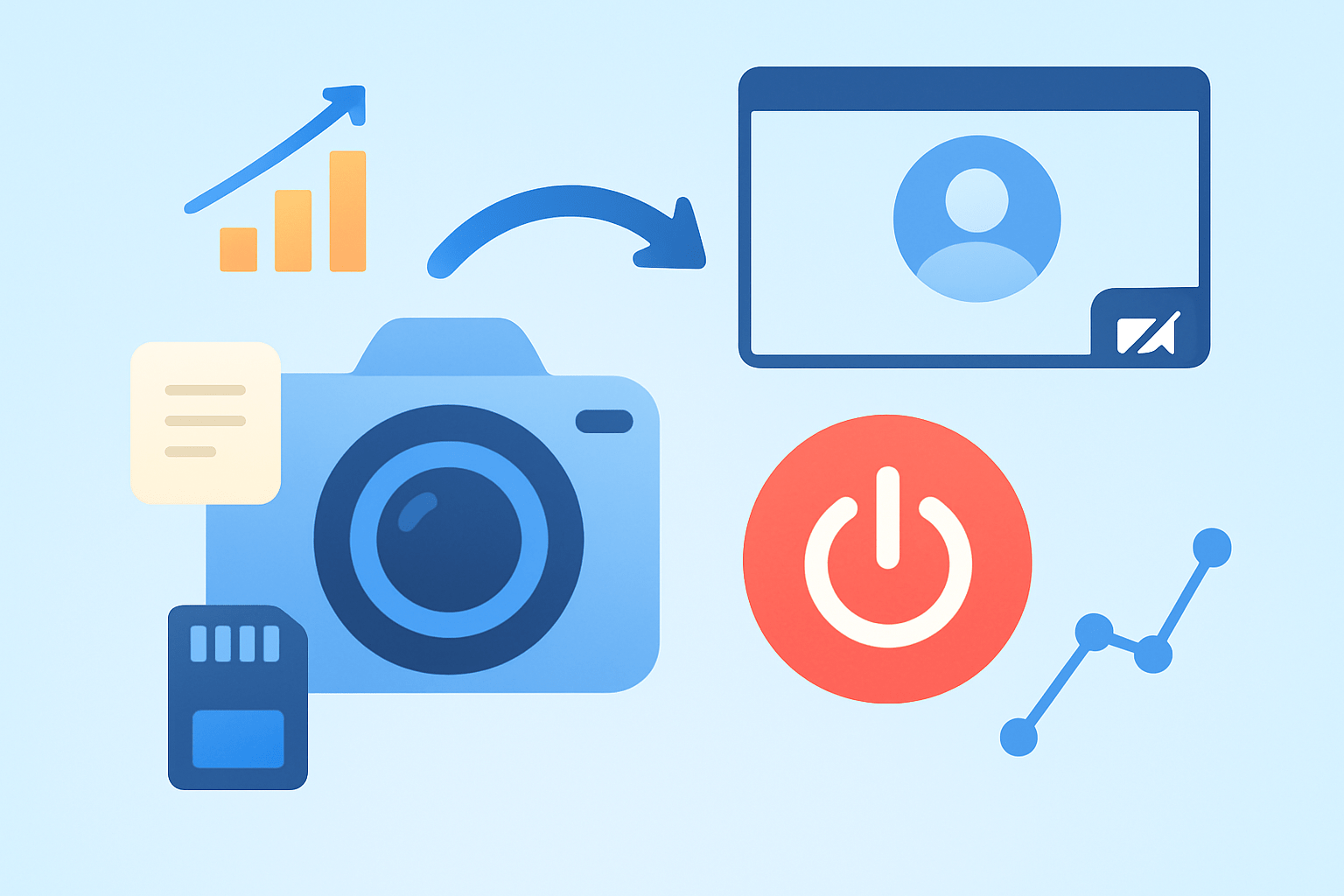
If you’re searching for how to turn camera off in zoom, click Stop Video on the toolbar or press Alt+V on Windows or Shift+Command+V on Mac to go dark instantly.
On desktop, look at the bottom-left of the meeting window and find the video camera icon. Click Stop Video and the icon changes to Start Video with a diagonal slash, showing your camera is off.
The fastest method is the keyboard: press Alt+V on Windows, or press Shift+Command+V on macOS. Press the same shortcut again to toggle your video back on when ready.
On iPhone and Android, tap the screen once to reveal controls, then tap the camera icon labeled Stop Video. If the toolbar hides, just tap the screen again to bring it back and confirm the icon shows a slash.
If you join from a browser, use the camera icon in the Zoom web controls to stop your video. If the browser asks for camera permission, you can deny it or allow once and then click Stop Video after joining.
When your camera is off, others see either your profile photo or your name on a neutral tile. If you want a more polished look with camera off, add a profile picture in your Zoom profile before the meeting.
Stopping video does not mute your microphone, so your voice may still be heard and recorded. If you also need silence, click Mute or press Alt+A on Windows or Shift+Command+A on Mac, or learn basics like how to turn your camera on/off alongside muting.
Quick cheat sheet to remember it in one breath: Stop Video equals Alt+V on Windows and Shift+Command+V on Mac, Start Video uses the same keys, Default Off lives in Settings under Video, and hosts can stop all video from the Participants panel.
For accessibility, keyboard toggles help you control video without hunting for icons, and screen readers announce “video stopped” or “video started” as you toggle. If you rely on a screen reader, confirm that announcement in a test meeting before you go live.
Interface labels can shift between updates, so the exact wording may vary slightly as of 2026. If a button moved, look for the same camera icon at the bottom bar and the Start/Stop Video text nearby.
Join a Meeting Without Video
On desktop, you can join with your camera off before you enter the room by checking Turn off my video on the join screen. Type the Meeting ID, tick that box, and you will appear with your photo or name only.
On iPhone or Android, tap Join and toggle off the video switch on the pre-join screen so you enter without video. If you don’t see the switch, join first and tap Stop Video immediately after your square appears.
From the browser, choose Join from Your Browser, allow audio, and either deny camera permission or click the Stop Video button during the preview. If you accidentally granted camera, use the site permissions in your address bar to block it and refresh.
Direct join links sometimes drop you into the meeting fast, which can flash your camera if your defaults are on. To avoid surprises, set camera off by default in Settings, or keep a finger ready over Stop Video as soon as the window opens.
For a beginner-friendly visual, capture a screenshot of the desktop join dialog with the Turn off my video box ticked, plus a mobile pre-join screen with the video toggle off. Annotate the little camera icon so readers can spot it quickly and consider a tiny screen recording showing the toggle in action.
If you want another straightforward walkthrough of how to turn camera off in zoom before joining, this quick guide on how to turn off camera covers the same idea from a different angle. Practice the pre-join step once and it becomes second nature.
Optional: Set Camera Off by Default
On desktop, sign in, click your profile picture, open Settings, then Video, and check Turn off my video when joining a meeting. From now on you will enter every meeting with video off unless you manually start it.
On mobile, open the Zoom app, tap Settings, tap Meetings, and toggle Always Turn Off My Video. This is the safest option if you commute or switch rooms and want privacy by default.
On the web portal, sign in at zoom.us, open Settings, then Meeting, and in the Video section set Participant video to Off. When scheduling a meeting, you can set Host video Off and Participant video Off so everyone joins without cameras unless they choose to enable them.
There is a key difference between default off and enforced off. Default off starts you with camera off, but you can still turn it on, while enforced restrictions come from host or account settings that can prevent participants from starting video at all.
Use default off for large classes, low bandwidth meetings, or privacy-first organizations where faces are only needed when speaking. It is the calm answer to how to turn camera off in zoom without policing everyone.
If you are new to Zoom settings and scheduling, skim a beginner primer like getting started with Zoom and then set your default video preference. You only need to do it once, and your choice carries across devices after sign-in.
Turn Camera Back On (If Needed)
When you are ready to be seen, click Start Video on the toolbar to re-enable your camera. The same shortcuts work in reverse, so tap Alt+V on Windows or Shift+Command+V on Mac to toggle back on.
If you have more than one camera, click the arrow next to Start Video and pick the device from the Camera list. You can also open Settings, go to Video, and choose your external webcam so Zoom remembers it.
If your camera refuses to start, first check operating system permissions for Zoom. On Windows, open Privacy and Security and allow Camera access for Zoom, and on macOS, open System Settings, Privacy and Security, Camera, and grant access to Zoom.
Next, close other apps that might be using the camera, like Teams, Skype, FaceTime, OBS, or browser tabs with camera access. Only one app can own the webcam at a time, and background apps often hold it hostage.
Update Zoom to the latest version, then test under Settings and Video to see a live preview. If you use an external webcam, unplug and reconnect it, try another USB port, or swap the cable to rule out hardware issues.
Virtual camera tools such as ManyCam or OBS Virtual Camera can interfere if Zoom is set to the virtual device by mistake. Switch back to your real camera in the Camera dropdown, or start the virtual source intentionally if that is your plan.
If problems persist, reboot the computer or phone, test with the built-in Camera app to confirm the device works, and update drivers or firmware from the manufacturer. A clean restart clears the camera from stuck states more often than you think.
For accessibility, keep using the same keyboard toggle so you can control video without hunting for a small icon. Screen readers typically announce the state change, which helps you stay confident about whether you are visible.
Disable participants to share their video in a Zoom meeting
As host, open the Participants panel, hover over someone’s name, click More, and choose Stop Video to turn off that person’s camera. You can also click the carrot next to the camera icon on their tile in Gallery view and stop video there.
To pause visuals quickly, open the Participants panel, click More, and select Stop Video for All. This is useful at the start of class or when you need attention on shared content for a few minutes.
To prevent video on entry, set Participant video to Off while scheduling, or lock it at the account level under Meeting settings. We covered how to set default off above, which pairs well with this host control.
Understand the limits though, because stopping video is often temporary and participants can re-enable it unless you disable that ability in settings. If you need strict control for a town hall or broadcast, consider Webinar mode or a policy that disallows participant video entirely.
Give clear microcopy up front so people know the rule, such as “Please keep cameras off unless speaking,” or “For bandwidth, video stays off until Q&A.” You can also mention, “We are recording audio,” so expectations and consent are clear.
Respect privacy and never try to turn on someone’s camera remotely, because Zoom does not allow that and it is not appropriate. Good etiquette, waiting rooms, and clear invites do more to keep a meeting smooth than any button, and they answer how to turn camera off in zoom in a humane way.
What People Ask Most
How to turn camera off in Zoom?
Click the video camera icon in the meeting toolbar to stop your video, or press the Stop Video button on the mobile app. Your profile picture or name will show instead of live video.
Can I turn my camera off before joining a Zoom meeting?
Yes, use the Join Audio/Video preview screen and toggle off Start Video before you enter the meeting. This keeps your camera off when you join.
Will others know if I turn my camera off in Zoom?
People will see your name or profile picture instead of a live video, but Zoom does not notify attendees when you stop your video. Hosts can usually see who has their camera off in participant lists.
Does turning off my camera improve Zoom performance?
Yes, stopping your video can reduce bandwidth and make audio clearer, especially on slow connections. It also uses less CPU on your device.
Can I use a virtual background if my camera is off?
No, virtual backgrounds need your camera on to detect your image and replace the background. If the camera is off, the virtual background won’t display.
How do I make Zoom always start with my camera off?
Open Zoom settings, go to Video, and check the option to turn off video when joining a meeting. This ensures your camera stays off by default.
What common mistakes should I avoid when turning my camera off in Zoom?
Don’t forget to check both the Zoom toolbar and system camera privacy settings, and remember some hosts can request you to turn your camera on. Also double-check before sharing your screen so you don’t accidentally reveal video.
Final Thoughts on Turning Off Your Zoom Camera
Turning off your Zoom camera gives you simple, immediate control over privacy, bandwidth and presence — and the quick steps and settings in this guide make that easy to do (we tested shortcuts like Alt+V and Shift+Command+V and checked the UI up to 270). We opened with a TL;DR and step‑by‑step instructions for desktop, mobile and web, and those bite‑size steps show you exactly how to stop video and how it looks to others. A realistic caution: stopping video won’t mute your mic, so keep that in mind if you need quiet — hosts and attendees who value privacy, low bandwidth or classroom order will get the most out of this.
If you need to turn video back on, the Start Video button, camera selector and keyboard shortcuts are easy to find, and the troubleshooting checklist covers permissions, other apps and drivers. Hosts should use Stop Video for All or scheduling defaults thoughtfully, and remember people can usually re‑enable their camera unless account settings or webinar mode prevent it. You’ve now got clear steps, default options and polite microcopy for rules, so step into your next meeting with more calm and confidence.


0 Comments