

Which flash will turn your Canon 5D Mark IV into a low‑light powerhouse without turning your kit into a burden?
This guide compares five standout flash options built to pair with the 5D Mark IV and shows which approach—raw power, portability, creative light shaping, or budget practicality—fits different shooting styles.
We cover everything from hard‑charging professional units with weather resistance and strong recycle behavior to compact mid‑tier lights that are easy to carry for weddings and events, plus affordable entry‑level choices and inventive third‑party designs that favor softer, more flattering portrait light. The focus is on real‑world strengths, typical weaknesses, and the kinds of shoots where each style shines.
Rather than a laundry list of numbers, you’ll get clear comparisons that help weigh tradeoffs like power versus portability, native camera integration versus ecosystem flexibility, and durability versus cost. Read on to find the flash that complements your workflow, suits your budget, and helps the 5D Mark IV produce the light you’re after.
1. Canon Speedlite EL-1 Overview

Canon Speedlite EL-1 Version 2
Pro-level portable flash delivering blazing recycle speeds, dependable power, and weather-sealed durability for demanding shooters and flawless lighting control.
Check PriceThe Canon Speedlite EL-1 is Canon’s flagship professional Speedlite, built for high performance and durability. It feels like a pro tool in your hand, with weather‑sealed, robust construction comparable to Canon professional cameras.
Battery life is impressive — roughly ~330 full‑power flashes per charge — and recycle times stay fast at about ~1 second even after full output. A built‑in fan cooling system lets you sustain continuous shooting, helping prevent overheating for up to 170 full‑power flashes.
Light quality and control are precise thanks to a Xenon flash tube and very fine manual power steps down to 1/8192. For off‑camera work you get full wireless control via RF and infrared master/slave modes, which makes it flexible for group control and TTL setups.
If you shoot weddings, events, or commercial work the EL‑1 is a dependable workhorse: long runtime, extremely consistent output, fast recycling and rugged weatherproofing. The tradeoffs are its heft from the robust battery pack and a price point that’s aimed more at pros than casual shooters.
- ~330 full‑power flashes per charge
- ≈1s recycle even at full output
- Weather‑sealed, pro‑grade build
- Precise output control (manual to 1/8192)
- Heavier/bulkier due to battery pack
- Higher cost for hobbyists
2. Canon Speedlite 430EX III-RT Overview
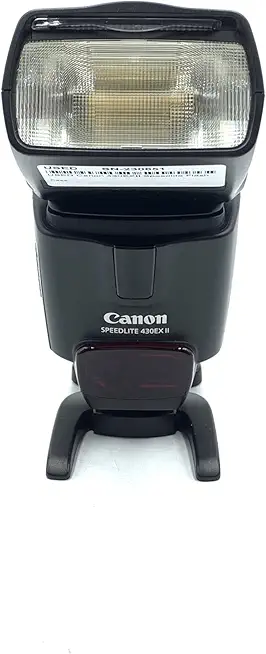
Canon Speedlite 430EX II
Compact, reliable on-camera flash offering consistent illumination, easy bounce options, fast operation, and balanced fill light for portraits and event photography.
Check PriceThe Canon Speedlite 430EX III-RT is a versatile mid‑tier flash I reach for when I need reliability and native Canon integration without the bulk of a flagship unit. It strikes a good balance of power and size, making it comfortable to carry for long shoots and quick enough for most run‑and‑gun situations.
It’s noticeably lighter and more compact than Canon’s top‑end Speedlites, so it feels less tiring on a camera during an all‑day event or when shooting handheld portraits. That compactness doesn’t mean weak output — it delivers good power relative to its size, which is often all you need for bounce and fill work.
One of the biggest practical advantages is built‑in Canon wireless radio triggering, so you can use it off‑camera with reliable radio TTL without extra transmitters. It also plays well with third‑party triggers, which makes the 430EX III‑RT flexible in mixed kit setups.
On the practical side, the flash has a reliable AF assist beam and solid bounce capability, so it handles both low‑light focusing and softer, more flattering light when you swivel and tilt the head. Photographers commonly use it on‑camera for events or as a remote slave when building small multi‑flash setups.
There are a couple of real‑world caveats: the bright “ready” indicator light can be distracting in quiet or dim environments (some users even tape it down), and its recycle speed is slower than higher‑end options, so it’s less ideal for heavy continuous burst work. For most portrait, event, and travel shooters looking for a dependable, integrated Canon flash, the 430EX III‑RT is a very good middle ground.
- Lightweight and comfortable for long on‑camera use
- Solid Canon features including radio TTL
- Good power relative to size
- Compatible with many third‑party triggers
- Distracting ready light
- Recycle speed slower than higher‑end options
3. Canon Speedlite 430EX II Overview
Canon Speedlite 430EX II
Lightweight power boost with versatile tilt/swivel head, user-friendly controls, and dependable TTL performance for weddings, travel, and run-and-gun shoots.
Check PriceThe Canon Speedlite 430EX II is a solid, no-nonsense flash that I often recommend to photographers stepping up from a basic on‑camera unit. It’s the core affordable Speedlite in Canon’s lineup and delivers proven reliability for fill and bounce flash, which is exactly what you want for portraits, events, and travel work.
Physically it’s compact and lightweight, so it’s comfortable for long handheld shoots and won’t unbalance your 5D Mark IV on a rig. You get full manual control and a dependable focus‑assist beam, making it straightforward to shape light and maintain AF performance in low light.
Keep in mind this unit lacks radio wireless capability and relies on infrared wireless, which is more limiting outdoors and when you need flexible off‑camera setups. It’s also less powerful and has slower recycle than pro‑level flashes, so if you routinely work in large venues or need rapid full‑power bursts, you’ll feel the difference.
That said, for most photographers who need a reliable, portable flash for on‑camera fill, bounce, and basic off‑camera work using wired or IR triggering, the 430EX II is a pragmatic choice. It’s simple to use, produces consistent output, and is an easy upgrade that won’t overwhelm you with advanced features you may not need yet.
- compact and lightweight
- full manual control
- focus‑assist beam
- consistent output
- no radio TTL triggering
- lower power and slower recycle than pro flashes
4. Canon Speedlite 600EX II-RT Overview

Canon Speedlite 600EX II-RT
High-output radio-enabled flash delivering consistent, wireless multi-flash control, rapid recycling, and advanced exposure accuracy for professional studio and location work.
Check PriceAs a working photographer I often reach for the Canon Speedlite 600EX II-RT when I need dependable punch and control. It’s a former Canon flagship flash, and although discontinued it’s still prized for its capabilities.
The unit delivers powerful output and excels in wireless radio transmission and control via Canon’s RT system. That combination makes it reliable for large venues and outdoor shoots where you need consistent remote performance.
Build quality is professional-grade with weather resistance, so it stands up to demanding event and location work. I’ve found it consistently reliable across long shoots in both studio and unpredictable outdoor conditions.
It’s designed for performance rather than featherweight handling, so expect a larger, heavier head that can feel bulky for extended on-camera use. For handheld or long-duration run-and-gun work you may notice the weight.
Operationally it gives you strong manual control alongside robust radio TTL functionality, and the flash recycles quickly which keeps you shooting without long pauses. That balance of speed, power, and control is why many pros still favor it.
If you’re an event, wedding, or location photographer who values power, weather sealing, and reliable radio TTL, this Speedlite is a solid choice—provided you’re comfortable with its size and the realities of buying a discontinued model.
- high power for large venues/outdoor shoots
- excellent radio TTL and manual control
- durable and weather‑sealed
- fast recycle times
- heavier/bulkier
- discontinued status limits availability and support
5. Godox V1-C Overview

GODOX V1C Round Head TTL Flash for Canon
Round-head flash offering natural light distribution, powerful battery, fast recycle, TTL accuracy, and magnetic modifier compatibility for creative on-location lighting.
Check PriceThe Godox V1-C is the Canon-specific version of Godox’s round‑headed flash and it’s a real favorite for portrait work. The circular flash tube produces more natural, even light than traditional rectangular heads, which makes skin tones and catchlights look much more pleasing straight out of camera.
It delivers strong TTL and HSS performance with the Canon 5D Mark IV, so you can confidently use it on‑camera or off‑camera for fast-paced event work and controlled studio‑style portraits. The built‑in 2.4GHz wireless radio ties it into the wider Godox ecosystem, making multi‑flash setups and remote control straightforward.
Battery life and recycle are tangible upgrades over AA‑powered speedlites thanks to the rechargeable lithium‑ion battery, offering fast recycle times and longer runtime than AA models. That makes it especially useful for long events where you don’t want to swap cells every hour.
Ergonomics are another strong point — the V1‑C is lightweight and comfortable to hold for long handheld stints, which matters when you’re shooting weddings or reportage. That said, the build quality isn’t as rugged or weather‑sealed as Canon’s premium flashes, so treat it a bit more carefully in rough conditions.
Overall, if you want softer, flattering light, reliable TTL/HSS with your 5D Mark IV, and easy integration into a wireless Godox system, the V1‑C is a very compelling, affordable professional option. Just be aware of occasional minor TTL quirks in complex setups and its less beefy construction compared to Canon pro units.
- Softer, pleasing portrait light
- Fast recycle and steady power
- Excellent Godox wireless control
- Lightweight and ergonomic
- Build quality less rugged than Canon premium flashes
- Occasional minor TTL inconsistencies in complex setups
Key Features When Choosing a Flash
When shopping for a flash for your Canon 5D Mark IV, start with compatibility. Full E‑TTL II support is not negotiable if you want reliable automatic exposures and seamless communication between camera and flash.
Power matters, but context matters more. A higher guide number gives you headroom for large venues and bounce lighting, while a lower‑GN unit can still work beautifully for portraits if you can get close or bounce the light.
Look for a zooming head that tracks your lens focal length. It concentrates light when you need throw and widens the spread for group shots, saving you fiddling with gels or modifiers on the fly.
High‑Speed Sync is the feature that makes flash useful in bright daylight. Because the 5D Mark IV’s X‑sync sits around 1/200s, HSS lets you shoot wide open and keep the background exposed without ugly black bands.
Small things yield big differences: second‑curtain sync makes motion look natural, and a bounce/swivel head is the fastest route to flattering, soft light in interviews, events, and portraits. Flash exposure compensation in fine 1/3‑stop steps gives you precise control when TTL tries to overcook a scene.
Battery type and recycle time are a practical concern. Lithium‑ion packs recycle fast and last longer on a wedding day than AAs, reducing missed moments. If you shoot long runs of frames, pay attention to recycle specs as much as guide number.
If you work outdoors, weather sealing can save a shoot. Also consider whether your flash can be controlled from the camera menu or via built‑in wireless—both speed up multi‑flash setups and keep you shooting instead of climbing up a ladder to tweak power.
Wireless Flash Capabilities
Wireless flash control is probably the single biggest convenience upgrade you can make once you start pushing past on‑camera fill. In practice this means choosing radio over optical whenever possible — radio works in bright daylight, doesn’t need line‑of‑sight, and is far more forgiving on distance and angles.
Built‑in master/slave capabilities let a flash on the camera act as a controller for off‑camera units, or you can use a small transmitter for cleaner handling and longer range. I often put a small transmitter on the hot shoe at events to keep the on‑camera flash free for subtle catchlights while larger off‑camera heads take care of the key and rim light.
Being able to set independent groups and channels matters more than you might think. Multi‑group control lets you dial precise lighting ratios between key, fill and background without climbing back to your camera. It’s a huge time‑saver in fast‑moving shoots and gives predictable results when balancing flash with ambient light.
Wireless TTL and HSS are lifesavers for run‑and‑gun portrait work and daylight shooting. TTL handles exposure automatically across off‑camera units so you can focus on composition, while HSS lets you use wide apertures and fast shutter speeds away from the 1/200s sync limit. Make sure your flash and transmitter both fully support Canon TTL and HSS to avoid surprises.
Range and latency are practical concerns — most good systems are reliable out to ~30 meters with negligible lag, but interference can happen at crowded events. Selectable channels, solid transmission protocol, and a quick test before a job will prevent most frustrations.
When choosing gear, prioritize robust radio TTL with multi‑group control, HSS, second‑curtain sync, and sensible battery performance. Test your exact combination of camera, flash and trigger in real conditions; that little rehearsal is where theoretical specs turn into dependable lighting.
What People Ask Most
What is the best flash for the Canon 5D Mark IV?
It depends on your needs and shooting style; prioritize compatibility with the camera’s metering, desired power, wireless features, battery type, and weather sealing. Choose the balance of portability versus performance that matches your typical shoots.
Can I use third-party flashes like Godox or Yongnuo with the Canon 5D Mark IV?
Many third-party flashes work well with the 5D Mark IV and offer good TTL and wireless options. Always verify compatibility with Canon’s TTL system and check for firmware updates or specific feature support before buying.
How do I set up TTL flash on the Canon 5D Mark IV?
Attach the flash and enable TTL on both the camera and the flash unit, then take test shots to check exposure. Use flash exposure compensation and the camera menu settings to fine tune output for your scene.
How do I use off-camera flash with the Canon 5D Mark IV?
Use compatible radio or optical triggers or a master flash to control remote units, set groups or channels as needed, and position flashes for desired lighting. Start with simple setups and test exposures, then adjust power and placement to refine the look.
Which flash is best for portrait photography on the Canon 5D Mark IV?
For portraits, prioritize quality of light and control: a head or modifier that produces softer, even illumination and the ability to bounce or swivel is ideal. Also consider reliable TTL performance and a form factor comfortable for handheld or on-stand use.
Does the Canon 5D Mark IV support wireless radio flash control?
Yes, the camera can be used with radio-based flash systems when paired with compatible flashes or external transmitters. Confirm that the chosen system supports the camera’s TTL features and any high-speed sync needs for your workflow.
Conclusion: Best Flash for 5D Mark IV
In short, the Canon EL‑1 offers pro‑grade durability and precision, the 600EX II‑RT brings legacy flagship power and reliable radio control, the 430EX III‑RT balances size and functionality for long use, the 430EX II remains a solid affordable option for basic bounce and fill, and the Godox V1‑C delivers pleasing, softer portrait light with fast lithium‑ion performance.
Each unit has clear tradeoffs between size, battery type, wireless flexibility and build ruggedness, so choosing the right flash comes down to which compromises suit your shooting style and typical locations.
Prioritize the features that matter most to you—wireless reliability and multi‑group control for complex setups, HSS for bright‑light wide‑aperture work, battery runtime for events, or weather sealing for outdoor assignments.
If you want to deepen your flash technique and camera+flash workflow, browse more guides and gear roundups on the site to sharpen your skills and confidence behind the light.
Have questions or experiences to share about these units? Leave a comment below and we usually reply within a few hours to help you decide or troubleshoot.


0 Comments