
What single light would make your portraits pop, your product shots sing, and your run‑and‑gun shoots worry‑free?
Finding the best light for photography in 2026 demands balancing power, color accuracy, and real‑world usability. This quick roundup curates five standout lighting solutions for 2026 chosen from expert roundups, aggregated user satisfaction, and hands‑on testing across studio, location, video, and outdoor environments.
They highlight real pros and practical trade‑offs you’ll actually encounter on set and on location. We focused on reliability, ease of use, and versatility so you can choose with confidence regardless of your workflow.
Whether you’re a portrait photographer chasing creamy catchlights, a content creator who needs flicker‑free continuous light for video, or a documentary shooter who requires rugged, weather‑resistant kits, there’s something relevant here. If you’re upgrading from speedlights, assembling a minimal portable kit, or building a professional studio, thinking about the right light will change how you work.
Expect clear guidance on the trade‑offs that actually matter—power versus portability, strobe freeze versus continuous control, and wireless control and weather resistance that stand up to real shoots. Think practical choices over gear envy: how each lighting style impacts setup speed, repeatability, and the look you can reliably achieve today.
1. Godox AD300Pro Review

GODOX AD300Pro 300W TTL HSS Portable Flash Strobe
Compact 300W battery strobe delivering reliable TTL and high-speed sync for professional on-location portrait and event photography.
Check PriceI reach for the Godox AD300Pro when I need a genuinely portable strobe that doesn’t force compromises. It’s a battery-powered off-camera flash that balances affordability with pro-level features, so it works well in both studio portraits and on-location shoots.
In practice the AD300Pro feels solid—robust construction, consistent output and power for its size, and fast recycle times mean fewer missed frames during a busy session. The unit handles bright sunlight surprisingly well as a fill or key light when paired with the right modifier.
Wireless control is a major plus: it supports multiple groups and lets you build cable-free, complex setups quickly. For run-and-gun location work or blended studio/location shoots that need dependable remote triggering, it’s a very practical pick.
There are trade-offs to keep in mind. It isn’t as powerful as large high-end strobes, so for massive group shots or very high-key commercial setups you’ll need either more units or bigger lights. Also, accessories and modifiers are extra investments if you want to shape the light professionally.
If you’re upgrading from speedlights or need a compact strobe that behaves like a studio unit, the AD300Pro is mostly a smart buy. It’s especially appealing to photographers who value portability, reliable wireless features, and consistent output without the premium price tag.
- Compact, battery-powered pro features
- Exceptional value for price
- Reliable wireless control (multiple groups)
- Consistent output with fast recycle times
- Not as powerful as larger high-end strobes
- May need careful placement or modifiers for large/high-key shots
2. Profoto B10X Plus Review

Profoto B10X Plus Off-Camera Flash & Continuous Light
Versatile studio-grade flash and continuous lamp with refined color stability, powerful output, and quick recycle for seamless shoots.
Check PriceThe Profoto B10X Plus is a premium, battery-powered studio strobe built for photographers who need real portable punch without sacrificing control. With a 500Ws output — literally double the original B10X — it gives you genuine strobe power that handles larger modifiers and tougher ambient light situations that smaller battery units struggle with.
In practice that 500Ws feels reliable and consistent; Profoto’s engineering means fast recycling and repeatable output so skin tones and exposure remain predictable across a session. The unit’s weather-sealed construction and top‑notch build make it robust enough for location work, while intuitive onboard controls keep setups quick between frames.
What seals the deal for many pros is system integration: there’s mains and direct-battery power options for long studio days, an iPhone companion app for remote control and deeper settings, and seamless compatibility with Profoto’s modifier ecosystem. If you already own Profoto modifiers or want simple, pro-grade accessories, the B10X Plus fits right in.
Be realistic about the trade-offs. The headroom comes at a premium — this is an expensive tool and triggers/modifiers will add to the bill. Also, if you rely on full-power bursts all day, battery life becomes a practical limit: expect roughly 200 full‑power flashes per charge, so plan for spare batteries or mains power on extended shoots.
Bottom line: choose the B10X Plus if you’re a professional or studio prioritizing reliable, high portable power, rugged build, and seamless Profoto integration, and you can justify the premium. If budget or ultra-long battery endurance are top concerns, you’ll want to weigh those trade-offs carefully.
- 500Ws output (doubles original B10X)
- Portable battery design with fast recycling and consistent output
- Weather-sealed, top‑notch build and intuitive controls
- iPhone app remote control + mains/direct-battery power options
- High cost; triggers and modifiers add significant expense
- Limited battery life at full power — approx. 200 full‑power flashes per charge
3. Godox SL300II Bi Review

GODOX SL300II-BI 320W Bi-Color LED Video Light 2800-6500K
Bright bi-color LED providing accurate, flicker-free 320W illumination with adjustable 2800–6500K tones for video and hybrid production.
Check PriceAs a working photographer I reach for the Godox SL300II Bi when I need high-output continuous light that behaves predictably for both video and stills. It’s a purpose-built LED that gives you daylight-balanced, flicker-free output so skin tones and colors stay reliable across takes.
On paper it’s striking: the SL300II Bi produces 99,300 lux at 1m, which translates to real headroom for key or fill duties without constantly cranking ISO. That level of output means I can light medium-sized scenes or overpower modest ambient light without stress.
The unit uses a Bowens S-mount, so modifier compatibility is extensive — softboxes, grids, beauty dishes; you name it, it will accept industry-standard attachments. Color consistency and temperature control are excellent, which is crucial when matching to other lights or maintaining continuity during extended video shoots.
Thermals are handled with a cooling fan that’s audible in standard mode, but Godox thoughtfully includes a silent mode for quieter shoots and critical audio situations. In practice I leave it in silent mode for interviews and switch to standard when audio isn’t a concern and I need maximum cooling for long runs.
There are trade-offs: it requires mains power and is larger/heavier than low-power LED panels, so it’s less ideal for ultra-mobile setups. Also, as a continuous source it can’t “freeze” motion like a strobe’s instantaneous burst, so for fast-action stills you’ll need to adapt technique or use higher shutter speeds.
If you primarily shoot video, run interviews, or need a dependable continuous key light in the studio, the SL300II Bi is a strong, professional option that balances raw output with real-world usability.
- Very bright — 99,300 lux at 1m
- Flicker-free with excellent color consistency
- Bowens S-mount for wide modifier compatibility
- Silent fan mode suitable for video
- Fan noisy in standard mode
- Larger/heavier and requires mains power (less portable)
4. Elinchrom D-Lite RX 4/4 To Go Review

Elinchrom D-Lite RX 4 400Ws AC Studio Flash Monolight
Reliable 400Ws studio flash offering consistent power, simple controls, and fast recycle times for portrait and commercial studio workflows.
Check PriceThe Elinchrom D-Lite RX 4/4 To Go is a compact, affordable studio flash kit that I often recommend to photographers moving into proper studio work. It’s built around simplicity and reliability, delivering consistent, predictable output that’s excellent for tethered shoots and batch work where repeatable results matter.
In practice the D-Lite’s strength is how unglamorous but dependable it is — you set power, shape with a modifier, and you get the same light every time. That predictability makes it a strong choice for portrait, product, and fashion photographers who need fast turnarounds and consistent exposures without fuss.
It’s also pleasantly lightweight and portable compared with larger studio strobes, so it suits small studios and location sessions where you don’t want to wrestle with heavy gear. The control set is intuitive, so beginners and mid-level users can be productive very quickly.
There are trade-offs: the D-Lite RX isn’t as powerful as high-end strobes, so very large studios, oversized modifiers, or extreme high-key setups may expose its limits. It also lacks battery operation and has less wireless flexibility than more modern systems, so plan for mains power or wired setups if you need absolute mobility.
Overall, if you want straightforward, repeatable studio lighting without a steep learning curve or budget stretch, the D-Lite RX 4/4 To Go is a smart, mostly-good option — especially for portraits, product work, and fashion shoots where consistency and ease-of-use win out.
- Simple, intuitive operation
- Reliable, consistent output
- Lower entry price point
- Lightweight and portable
- Lower power than high-end strobes
- No battery option / less wireless flexibility
5. Harlowe Avant Max Weather Resistant Review
The Harlowe Avant Max Weather Resistant is a premium continuous LED built for professionals working in tough outdoor conditions. Its weather-resistant design is meant for rain, dust, and rough environments, so you can keep shooting when others would pack up.
Build quality feels robust and purposeful. In the field it inspires confidence — you know it was made to take a beating and keep working.
Where it really shines is in output and color. The Avant Max delivers high output with excellent color accuracy, which is invaluable for both stills and video when you need consistent, repeatable light.
Because it’s continuous, it’s especially useful for video, lit portraits, and situations where you want to see light on the subject as you work. That said, don’t expect it to replace a strobe when you need to freeze motion or overpower bright sunlight.
Expect trade-offs: it’s larger, heavier, and more expensive than a basic LED panel. If your work prioritizes ultra-portability and minimal kit, this may feel like overkill. But if you regularly shoot outdoors or in variable weather, the Avant Max’s durability and color accuracy make it a practical, long-term investment.
In short: choose the Avant Max if you need a rugged, high-quality continuous light that survives the elements and delivers consistent color for both photo and video work. If you need flash-level power to freeze action or beat the sun, pair it with strobes or consider a different primary source.
- Unmatched durability and weather resistance
- Professional build quality
- High-quality, consistent output
- Excellent color rendering and control
- Cannot freeze action or overpower the sun like a strobe
- Higher cost and larger/heavier than standard LED panels
Ring Light Setup Tips
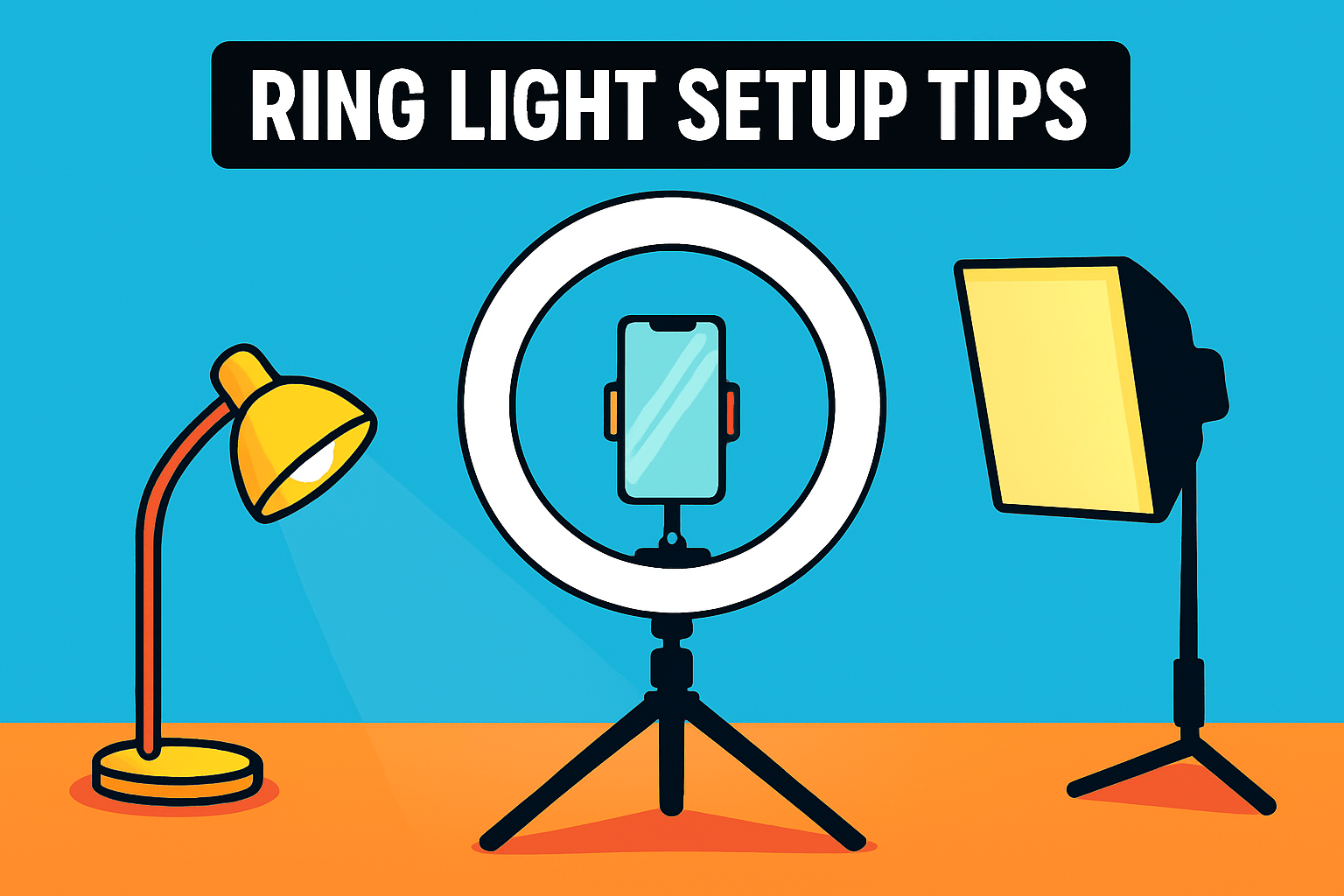
Ring lights give a clean, flattering wrap of light and that signature circular catchlight in the eyes. They’re forgiving on skin texture and work especially well for beauty, close-ups, and video.
Set the ring directly in front of your subject and slightly above eye level. Thread the camera lens through the ring center when you can. That placement maximizes the halo in the eyes and minimizes side shadows for a smooth, even look.
Distance matters. Start about two to three feet from your subject and move closer to soften skin and reduce contrast. Larger rings feel softer at the same distance, while smaller rings read more specular and punchy.
Match brightness and color temperature to the ambient light to keep skin tones natural. Slight warmth often flatters skin, while daylight temps work better for clean product shots. Set white balance in-camera and tweak the light rather than relying on heavy color correction in post.
Reflections can be tricky with glasses and shiny props. Rather than cranking power, tilt the ring or angle your subject to move highlights out of view. If hotspots persist, offset the light slightly and add a softer modifier or use a bounce to preserve the look while eliminating glare.
Use the ring as a key light for classic beauty portraits or as a subtle fill in a multi-light setup. Keep it close to smooth skin, then add a strobe or rim light to sculpt form and separation.
Get creative. Use the ring as a background rim for a halo, let subjects interact with it as a prop, or shoot wide-angle close-ups to emphasize circular catchlights for a modern, stylized feel.
Always test and tweak. Check catchlights in both eyes and make small moves until the light flatters the face and matches your vision.
Window Light Photography Tips
A window is basically a giant softbox. Move your subject closer and the light becomes softer and more glowing, which is why window light is perfect for portraits and close-ups.
For flat, even results have your subject face the window. Front lighting minimizes shadows and reveals detail cleanly—great for product work and flattering headshots. Keep the window slightly above eye level to create natural catchlights.
Turn the subject about 45° to the window for sidelight. That angle sculpts the face, brings out texture, and adds gentle shadow for depth and mood. If the dark side gets too heavy, soften it with a reflector, white wall, or foam board opposite the window.
Place the subject between camera and window for backlighting to get rim light and a luminous hair glow. Metering is critical here: meter for the face or add a reflector or small fill flash so skin doesn’t collapse into shadow. If you want a silhouette, expose for the bright background instead.
If the sun makes the window harsh, diffuse the light with a sheer curtain, a translucent scrim, or even a stretched white sheet. Diffusion drops contrast and creates smooth transitions that are kinder to skin. You can also move your subject into the edge of the light to keep direction while softening intensity.
Use reflectors, white walls, or foam boards opposite the window to bounce light back and fill shadows without killing the dimensionality. A silver reflector gives punch, white keeps tones soft. Small changes in angle will alter catchlights and shadow fall dramatically.
Adapt to time of day and weather: on bright sunny days step the subject a few feet back to reduce contrast; on overcast days move them closer to retain brightness and softness. Watch white balance and keep ISO low for cleaner skin tones. For portraits, a wider aperture helps separate the subject from the background while preserving that creamy window light.
Think in layers: window as key, reflector as fill, and a small LED or speedlight for hair or rim if you need separation. Pay attention to distance and angle more than gear—those little moves make the biggest difference. Experiment; once you learn how your window behaves, it’s the easiest, most beautiful light you’ll have.
What People Ask Most
What is the best light for portrait photography?
Soft, diffused light that flatters skin and sculpts facial features is usually best. This can come from a window or a diffused strobe or LED, positioned a bit above eye level to create gentle shadows and catchlights.
Is natural light better for photography than artificial light?
Neither is inherently better; each has strengths. Natural light is flattering and easy to work with, while artificial light gives more control and consistency for challenging conditions or specific looks.
What color temperature is best for photography?
Choose a color balance that matches the scene and preserves natural skin tones. Neutral daylight-like tones are a safe starting point, and warmer or cooler shifts can be used intentionally to create mood.
What is the best lighting for product photography?
Even, controlled illumination that reveals texture and accurate color works best for products. Diffused light, reflectors, or shooting inside a light tent help minimize harsh reflections and emphasize details.
What is the best light for indoor photography?
Make use of window light when available, and supplement with continuous or strobe lighting and modifiers for consistent results. Balance the light with reflectors or fill sources to control shadows and maintain detail.
What is the best time of day for natural light photography?
Times when the sun is lower tend to produce softer, warmer light with gentler shadows, while overcast days give very even, diffused light. Choose the time based on the mood and contrast you want to achieve.
How do you choose the best light for photography?
Consider the subject, location, mobility needs, and the look you want to achieve. Weigh the trade-offs between control and naturalness, then test and adjust settings and placement until the light complements your subject.
Conclusion on Best Light for Photography
This roundup brings together five top lights that represent the main options photographers and videographers use today—battery strobes, continuous LEDs, compact studio flash kits, and weather‑resistant panels—chosen for practicality, user satisfaction, and versatility across studio, location, video, and outdoor work.
Each category shows clear trade‑offs—power versus portability, continuous output versus freezing strobes, wireless control options, and weather resistance—so the best choice is the one that aligns with your shooting style and typical conditions.
If you shoot fast action or need to overpower sun you’ll lean toward powerful strobes, while content creators and outdoor pros may prefer high‑output continuous fixtures or rugged weather‑rated units for reliability and color consistency.
If you want to build skills and make smarter gear decisions, keep exploring the other practical guides and reviews on our site to broaden technique and lighting know‑how.
Got a question or a setup to share? Leave a comment below and we’ll usually reply within a few hours to help you fine‑tune your lighting choices.


0 Comments