
What is a full spectrum camera — and why would you want one?
This guide answers that question in simple words and shows what you can actually shoot with one.
A full spectrum camera records light beyond what our eyes see. It does this by removing or replacing the camera’s internal IR/UV-cut filter so the sensor can capture UV, visible and infrared light.
You will learn how it works, what wavelengths it captures, and how to use external filters and shooting workflows. We also cover real uses like infrared art, astrophotography, plant imaging, and forensic or medical applications, plus the main trade-offs and quick tests to try.
What is a full spectrum camera?
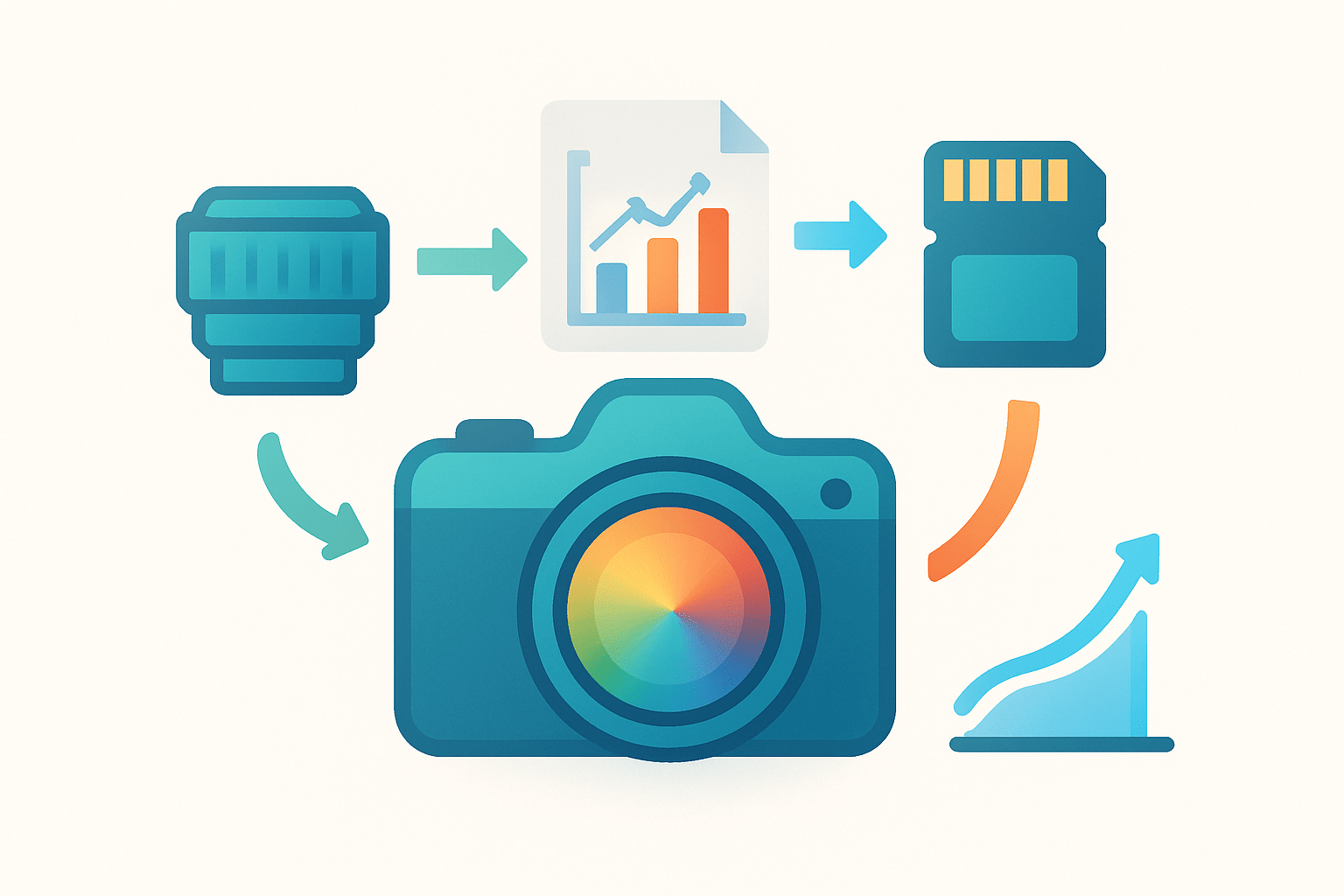
A full spectrum camera is a camera whose internal IR-cut “hot mirror” is removed or replaced so the sensor can record ultraviolet, visible, and near‑infrared light. If you have ever wondered what is a full spectrum camera, that is the precise answer in one line.
A stock camera ships with a hot mirror that blocks UV and IR so colors look normal. A full‑spectrum conversion swaps that filter for clear or broadband glass so the sensor sees beyond the visible band. Dedicated IR-only or UV-only conversions do the opposite by adding a single narrow filter inside the camera so it only captures that one region.
During conversion the hot mirror is usually replaced with clear optical glass of matching thickness, or with broadband glass that passes UV, visible, and IR. The immediate result is a camera body that becomes sensitive to wavelengths the factory design normally blocks.
Photographers convert for many reasons, from false‑color infrared art to UV texture studies, from astrophotography that benefits from H‑alpha sensitivity to plant health and forensic imaging. To see where this fits in the broader field, explore full-spectrum photography and how creators use it in practice.
So when someone asks what is a full spectrum camera, you can say it is a versatile platform that records more of the spectrum and lets you pick what to show using external filters.
How does a full spectrum camera work?
Digital sensors made of silicon are naturally sensitive from roughly the near‑UV through around 1100 nm in the near‑IR. Camera makers add an internal UV/IR‑cut filter to block the extra light so colors stay accurate under normal scenes.
A full‑spectrum conversion removes that internal block and replaces it with clear or carefully chosen glass. The replacement maintains the optical path length so focus remains correct, which is why the work demands high mechanical precision and clean-room handling. You can attempt DIY on some models, but most photographers use professional services for reliability and dust sealing.
Autofocus and metering can change when you shoot through strong filters. Infrared focuses slightly differently than visible light, so some lenses show an IR focus shift and may need AF calibration or a tweak to lens micro‑adjustment. On mirrorless bodies, live view focusing helps because the camera focuses on the actual wavelength passing through the filter.
There are also practical build considerations. The conversion glass must match the original filter thickness to avoid altering back focus, and the sensor chamber should be sealed against dust since you will be swapping external filters often. After conversion, test each lens, because some combinations can show hot spots or mild softness in IR.
A quick test can tell you if your camera sees IR. Point a TV remote at the lens and press a button while watching live view; if you see a bright flicker from the remote’s LED, the sensor is passing IR. You can also hold a 720 nm IR-pass or a UV-pass filter in front of the lens and see whether the live view brightens when pointed at sunlight or a strong UV source, which confirms spectral response. For a gentle overview of the practical basics, read a helpful primer before your first shoot.
What wavelengths does a full spectrum camera capture?
Think of the spectrum in three useful bands: UV around 300–400 nm, visible roughly 380–700 nm, and near‑IR from about 700–1100 nm. The exact ranges you capture depend on the sensor, microlenses, and the replacement glass used in the conversion.
UV reveals subtle surface detail and fluorescence that visible light hides. It often requires UV‑capable lenses and powerful UV illumination, because most regular glass and coatings block UV, and exposures can be long even in bright light.
Visible light is still available to a full‑spectrum body when you add an external hot‑mirror filter. With that on the lens you can shoot normal color scenes, though you may need a custom white balance for best results, especially if the internal replacement glass is broadband rather than an OEM‑matched hot mirror.
Near‑IR penetrates haze and creates striking tonal shifts, turning foliage bright and skies dark. Astrophotographers value the increased response around 656 nm for H‑alpha nebulae, which are strongly suppressed in most stock cameras. Expect longer exposures and different contrast compared to visible light.
Full spectrum does not mean equal sensitivity at every wavelength. Sensor quantum efficiency varies by color filter array, and lens glass and coatings change transmission, so each lens and filter combo will have its own character. A simple chart in your notes listing ranges, filters used, and typical exposure offsets is helpful for repeatable results.
Using external filters with full spectrum cameras (practical shooting workflow)
External filters are the steering wheel of a full‑spectrum system. They isolate the slice of light you want, whether that is IR‑only with a 720 nm or 850 nm pass, UV‑only with a strong UV-pass, visible‑only with a hot mirror, or a narrowband H‑alpha filter for deep‑sky work.
Begin with RAW capture so you keep all the data, and bring a sturdy tripod because IR and UV often need longer exposures. If you are curious about handheld options in dim scenes, a full‑spectrum body with a mild IR‑pass can also aid low light use when the scene contains strong IR reflectance.
Set a custom white balance for each filter and lighting setup. Aim at grass or a neutral gray card under the filter you plan to use, and save that preset because auto white balance is unreliable in IR and UV.
Expect exposure shifts with dense filters. A 720 nm IR-pass typically needs several stops more light than visible, and an 850 nm pass often needs even more, especially in shade. UV-pass filters can demand long exposures plus high ISO, so bracket generously until you learn your lenses and filters.
Focus with care because IR can shift focus compared to visible. Use live view or focus peaking while the filter is on, and if your camera allows, micro‑adjust per lens to dial out consistent front‑ or back‑focus in IR. For critical work, focus slightly beyond the visible focus point and confirm in magnified live view.
In post, start with a neutral RAW conversion and correct white balance again if needed. For false‑color IR, swap red and blue channels or use a channel mixer to create classic white foliage and cyan skies, or convert to high‑contrast black and white for a clean infrared look. Note your filter in the filename, and add alt text to shared images such as “720 nm IR-pass, foliage rendered white, 1/60s at f/8,” so viewers understand the effect and exposure.
Filter choices shape the final aesthetic. A 720 nm pass gives strong false color while 850 nm leans toward deep B&W contrast, UV-pass emphasizes textures and fluorescence, and H‑alpha narrowband is ideal when you want nebula detail with minimal light pollution. Side‑by‑side comparisons of stock versus full‑spectrum with the same scene can teach you more in one afternoon than a week of reading.
Drawbacks and limitations of full spectrum cameras
A conversion is a permanent modification that can void the camera’s warranty and carries risk if done poorly. Precision and dust control matter, so treat the decision like a lens purchase rather than a casual accessory.
Autofocus can be less predictable through dense filters, and some lenses show IR hot spots or corner smearing, especially wide‑angles with complex coatings. You may also notice metering quirks or color casts that require extra white balance work and post‑processing time.
Full‑spectrum bodies are not plug‑and‑play replacements for everyday cameras. You will need external filters, longer exposures, and careful processing, and not all lenses transmit UV or IR well. Testing each lens for hot spots and transmission before a critical shoot saves headaches later.
For forensics or medical imaging, calibration and documentation standards apply, and a converted consumer camera is not a substitute for specialized instruments. If you mainly want occasional IR looks, consider using an external IR‑pass on a stock body and accept long exposures, but for frequent IR or astro work, a dedicated converted body plus a separate daily camera is the most flexible path. Understanding what is a full spectrum camera helps you decide which route matches your goals and budget.
What People Ask Most
What is a full spectrum camera?
A full spectrum camera is a camera modified or made to capture visible, infrared, and sometimes ultraviolet light, letting you see beyond normal human vision.
How is a full spectrum camera different from a regular camera?
Unlike standard cameras that block most infrared and ultraviolet light, a full spectrum camera records those wavelengths as well, producing different colors and details.
What can I photograph with a full spectrum camera?
You can shoot night scenes, wildlife, landscapes, and creative infrared or ultraviolet images that reveal textures and contrasts not seen in regular photos.
Do I need special lenses or filters to use a full spectrum camera?
You don’t need special lenses, but using appropriate filters helps control which wavelengths reach the sensor for specific effects and clearer images.
Will a full spectrum camera help with night or low-light photography?
Yes, it can capture more detail in low light by using infrared sensitivity, though you still need proper exposure techniques like longer shutter speeds or a tripod.
Is using a full spectrum camera safe for my camera and subjects?
Taking photos is safe for people and animals, but modifying a camera to be full spectrum can void the warranty, so consider using external filters instead.
What are common mistakes beginners make with full spectrum cameras?
Beginners often forget to adjust white balance, expect normal color photos, or skip filters, which can lead to unexpected colors and contrast issues.
Final Thoughts on Full Spectrum Cameras
As we teased at the start — what can a full spectrum camera really do? — the simple answer is it opens your sensor to UV and infrared so you can make images that reveal hidden detail, new colors, or nebulae otherwise faint in visible light. If you first landed here searching for 270 or a helpful starting point, this guide showed how removing or replacing the hot‑mirror, using external filters, and adjusting focus and exposure delivers creative and scientific payoff, though you’ll want to accept tradeoffs like longer exposures, autofocus quirks, and possible warranty issues.
Photographers, astronomers, and forensic or botanical practitioners who need access beyond visible light will get the most from a converted body, while casual shooters are usually better off using filters on a stock camera. This piece answered the opening question by defining a full spectrum camera, outlining the conversion and testing steps, and showing practical filter, focus, and exposure workflows so the path from curiosity to usable images is clear. You’ll find the results rewarding as you explore new wavelengths with curiosity and care.




0 Comments