
What does objective lens diameter mean, and why should it change how you pick binoculars, telescopes, or camera lenses?
This article answers what does objective lens diameter mean in plain English. You’ll learn what the number measures (like 8×42 or Ø72), how it affects light gathering, exit pupil, and image detail, and how it differs from magnification and f‑number.
We give simple math and clear examples (8×42 vs 10×42, 50mm f/1.8). You will also get labeled diagrams, calculators, and a practical buying checklist.
Read on for a quick definition, real‑world comparisons, and easy rules of thumb to help you choose the right optics with confidence.
What Is Objective Lens Diameter?
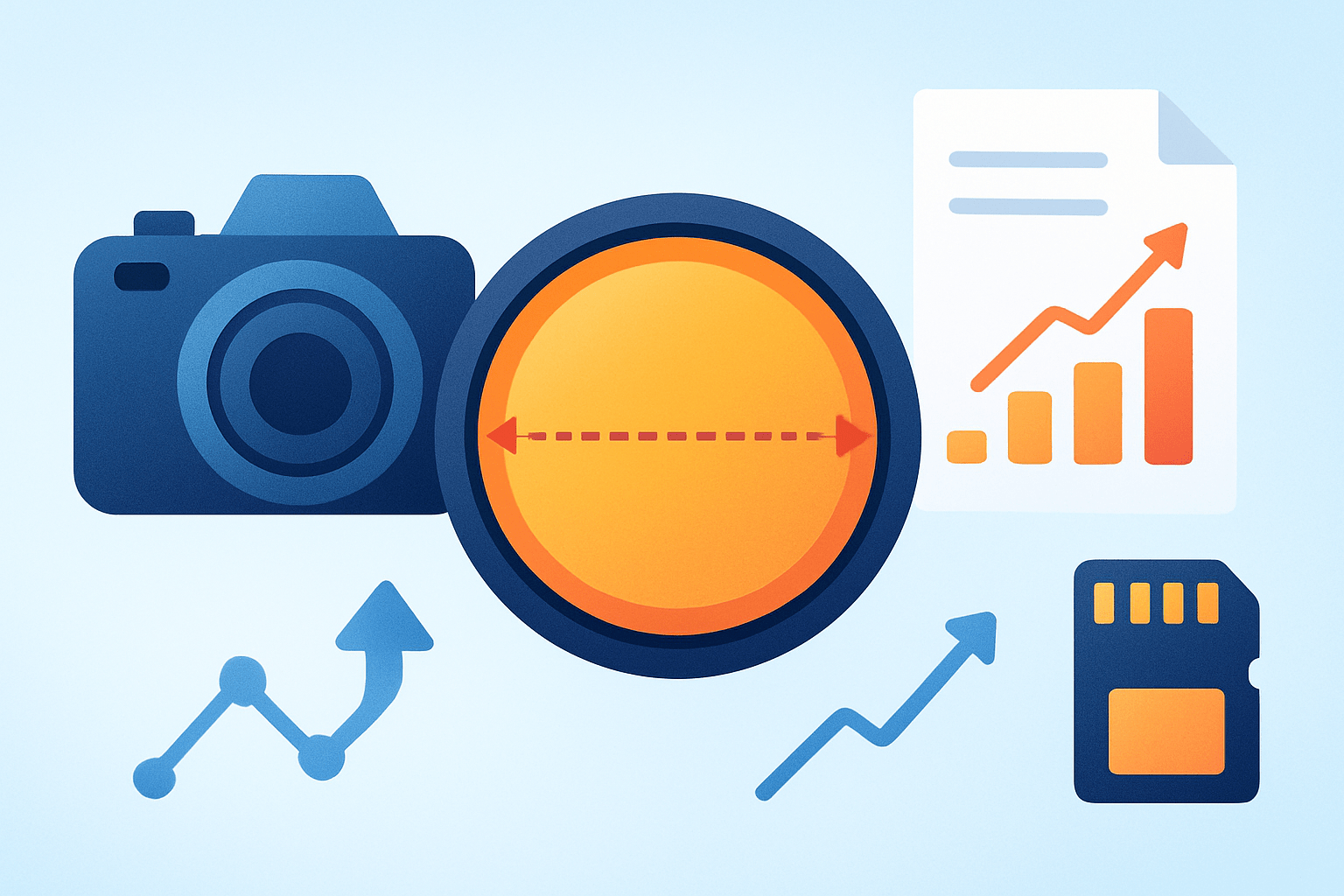
If you’re wondering what does objective lens diameter mean, here’s the short answer: it’s the width of the main front lens element, measured in millimetres. In binoculars or scopes, it’s the second number in specs like 8×42, meaning a 42 mm objective.
Think of the objective as the “window” that gathers light. A larger window can collect more light, which can make dim scenes look brighter or allow finer detail to be resolved. Manufacturers usually print this as a simple number for binoculars and telescopes, while camera lenses often carry different markings.
You’ll often see the Ø symbol on camera lenses, such as ø72 mm, which indicates the filter-thread size rather than the actual opening that controls exposure. Optical guides call the measured light-passing opening the effective diameter, and it can be slightly smaller than the physical glass due to mechanical vignetting.
Photographers usually talk about focal length and f-number, not objective diameter. That’s because exposure on the sensor depends on the entrance pupil set by the aperture blades, not the sheer size of the front element. In contrast, for binoculars and telescopes the objective diameter is a headline spec because it drives light-gathering and potential resolution.
Objective diameter is not magnification and it’s not the f-number. A handy side note is the relationship aperture diameter = focal length / f-number, which is how a camera lens sets brightness. When you read labels, 8×42 means 8× magnification with a 42 mm objective, ø72 mm is a filter size, and f/2.8 is the maximum aperture ratio.
How Objective Lens Diameter Affects Light Gathering
The core idea is simple: light-gathering power scales with area, and area scales with the square of the diameter. Double the diameter and you quadruple the light, so a 100 mm objective collects about four times as much light as a 50 mm one.
For binoculars and telescopes, objective size also sets the exit pupil when paired with magnification. Exit pupil is objective diameter divided by magnification, so 8×42 yields about 5.25 mm and 10×42 gives about 4.2 mm, which you can see as a small bright circle floating in the eyepiece.
Your own eyes then complete the system. In daylight, human pupils are around 2–4 mm, while in the dark they open to roughly 6–7 mm. If the instrument’s exit pupil is larger than your eye’s pupil, some light is wasted and the view won’t look brighter, though a larger exit pupil can still make viewing more comfortable.
Camera lenses behave differently because image brightness at the sensor is governed by f-number. Two lenses at the same f-number deliver the same exposure regardless of front element size; for instance, a 50 mm f/1.8 corresponds to an entrance pupil of roughly 28 mm, whether the filter thread is 52 mm or 58 mm.
Still, a larger objective can bring practical benefits. In low light, more light can improve contrast and detail through a binocular or telescope, but the cost is more weight, bulk, and price. That’s why you’ll see a tradeoff charted in comparisons of area and exit pupil across common specs.
A common misconception is that a bigger objective always looks brighter. It only does so when exit pupil matches or exceeds what your eye can use under current lighting, and when magnification and optical quality are well chosen.
Objective Lens Diameter vs. Magnification
Objective size alone doesn’t determine how bright or sharp the image feels. Magnification works with diameter to set the exit pupil and to control how steady and wide the view appears, so you always evaluate both together.
Compare 8×42 to 10×42. The 8×42 has a larger 5.25 mm exit pupil and usually looks brighter and easier to hand-hold, with a wider field of view and less shake. The 10×42 shows more detail at distance but looks a bit dimmer and is more sensitive to hand movement.
In telescopes, aperture sets both light-gathering and the baseline resolving power, while magnification is adjusted via eyepieces. A good rule of thumb for “useful magnification” is about 2× per millimetre of aperture, or roughly 50× per inch; push beyond that and you mainly get a dimmer, blurrier image because you’re exceeding what the objective lens can resolve and what the atmosphere allows.
In photography, “magnification” translates to focal length and framing. At a constant f-number, brightness at the sensor stays the same even as focal length changes, but your field of view and subject scale change dramatically, affecting perceived detail and camera shake.
Objective Lens Diameter and Resolution
Bigger apertures can resolve finer detail because diffraction blur shrinks as diameter increases. In plain terms, a larger objective produces tighter points and cleaner edges, so the image can support higher magnification before it turns mushy.
For the technically curious, the Rayleigh criterion says angular resolution improves roughly in proportion to 1/D, approximated by 1.22 times the wavelength divided by diameter. The exact numbers aren’t essential here, only that larger D means better theoretical resolving power.
Real scenes are messier than theory. Lens design and aberrations, sensor pixel size, atmospheric turbulence for astronomy, and even the limits of the human eye can cap sharpness before diffraction does, especially with compact optics.
Photographers balance resolution with depth of field by stopping down, but there’s a point where diffraction softens the image. Many lenses are sharpest around one to two stops down from wide open; beyond that, increased depth of field comes at the cost of micro-contrast.
Objective Lens Diameter and Lens Selection
Start by defining your use. If you value brightness at dawn or dusk, a larger objective helps, but if you hike all day, weight and size matter more; also note filter-thread sizes for hoods and filters so your accessories fit without vignetting.
For binoculars, 8×42 is a versatile all-rounder with a bright, forgiving 5.25 mm exit pupil. 10×42 brings more reach but trims brightness and stability, 8×32 is lighter for travel, and 7×50 excels at night with a generous 7 mm exit pupil if your eyes can use it.
For telescopes, a 70–100 mm refractor is a friendly start for the Moon and planets, while a 6–8 inch reflector opens up deep-sky targets with more light and resolution. Remember that bigger aperture improves both brightness and resolving power, provided your mount is steady and collimation is good.
For camera lenses, prioritize the maximum aperture you’ll actually use, because f-number governs exposure and subject isolation. If you’re unsure about markings, a short refresher on lens numbers and symbols can prevent confusion between filter thread and aperture.
Use quick rules to decide fast. For dusk viewing, aim for an exit pupil of at least 4–5 mm; for all-day carry, many people prefer objectives at or below 42 mm; for photography, choose the widest max aperture you can afford and will carry. Do the mental math: 10×50 yields a 5 mm exit pupil, 8×32 gives 4 mm, and a 100 mm objective gathers about four times the light of a 50 mm one—clear answers to what does objective lens diameter mean in real use.
As you compare gear, keep asking yourself what does objective lens diameter mean for your specific needs. It shapes brightness, potential resolution, and comfort, but only alongside magnification or f-number. With a few example calculations and a careful read of the specs, you can pick optics that fit your eyes, your subjects, and your shoulders.
What People Ask Most
What does objective lens diameter mean?
It refers to the width of the front lens on binoculars or a telescope, and it mainly tells you how much light the instrument can gather. A larger diameter usually means brighter views in dim conditions.
Why does objective lens diameter matter when choosing binoculars?
It helps determine how bright the image will be and how well you can see in low light, which is useful for dawn, dusk, or indoor use. It’s one of several factors to consider with weight and optical quality.
Does a larger objective lens diameter always make the image better?
No, bigger lenses can give brighter images but don’t guarantee sharpness or color accuracy, which depend on optical design. Larger lenses also add weight and bulk.
How does objective lens diameter affect low-light performance?
Bigger objective lenses collect more light, making dim scenes look brighter and easier to see. This is especially helpful for stargazing or early-morning wildlife watching.
Will a larger objective lens diameter make the view clearer or sharper?
Not necessarily—clarity and sharpness come from the lens quality and coatings, not just size. Diameter mainly affects brightness and depth of field.
Can objective lens diameter affect the size and weight of my optics?
Yes, larger objective lenses increase the overall size and weight, which can make gear harder to carry for long periods. Consider how portable you need your optics to be.
How should I pick an objective lens diameter for birdwatching or stargazing?
Choose based on the light conditions you expect and how much you want to carry, balancing brightness with comfort. Think about whether you’ll use a tripod or need handheld convenience.
Final Thoughts on Objective Lens Diameter
Grasping objective lens diameter — the size of the front glass element — is the single most useful thing you can learn when choosing optics; think of 270 as a reminder that numbers on a barrel guide brightness and detail. That understanding helps you match gear to the light you’ll get, the fine detail you want, and the weight you’ll carry, though bigger glass comes with penalties in cost and heft. Photographers, birders, and stargazers benefit most because they rely on brightness and resolution in real-world conditions.
We began by asking what objective lens diameter means, and we showed it’s the diameter of the primary lens and why that number links to light‑gathering, exit pupil, and resolving power. That practical walk‑through — reading labels, calculating exit pupil, comparing tradeoffs — gives you rules to judge specs without guessing.
Keep in mind optical design, your eye, and the atmosphere can limit gains from sheer size, so aim for the sweet spot that matches your use. With a few side‑by‑side comparisons, choosing gear will feel less mysterious and more personal.




0 Comments