
Want your selfies to look like they were shot by a pro instead of a hurried phone snap? This short guide distills five cameras that make flattering, reliable self-portraits and vlogs easy. Think better light, cleaner focus, and framing that actually flatters.
Selections were based on popularity and practical selfie-friendly features — front or vari-angle screens, strong face and eye AF, stabilization, and pleasing color rendering. We also weighed image quality and hands-on user feedback to favor gear that performs where it matters most: in your hand and on your feed.
The recommendations draw from multiple expert reviews and thousands of user reports compiled across 2026 camera roundups and hands-on tests. Rather than chasing headline specs, we emphasized real-world performance for everyday shooting, low-light selfies, and vlog-ready video. That means you’ll see cameras that balance autofocus reliability, ease of composition, and consistent results without heavy post-processing.
Whether you want creamy bokeh portraits, steady vlog footage, or a compact travel companion, this guide helps you find the best camera for selfies that matches your priorities. Expect concise recommendations tailored to different budgets and shooting styles. Flip the screen, frame the shot, and get results that look like you knew what you were doing.
1. Sony A7 IV for Selfies
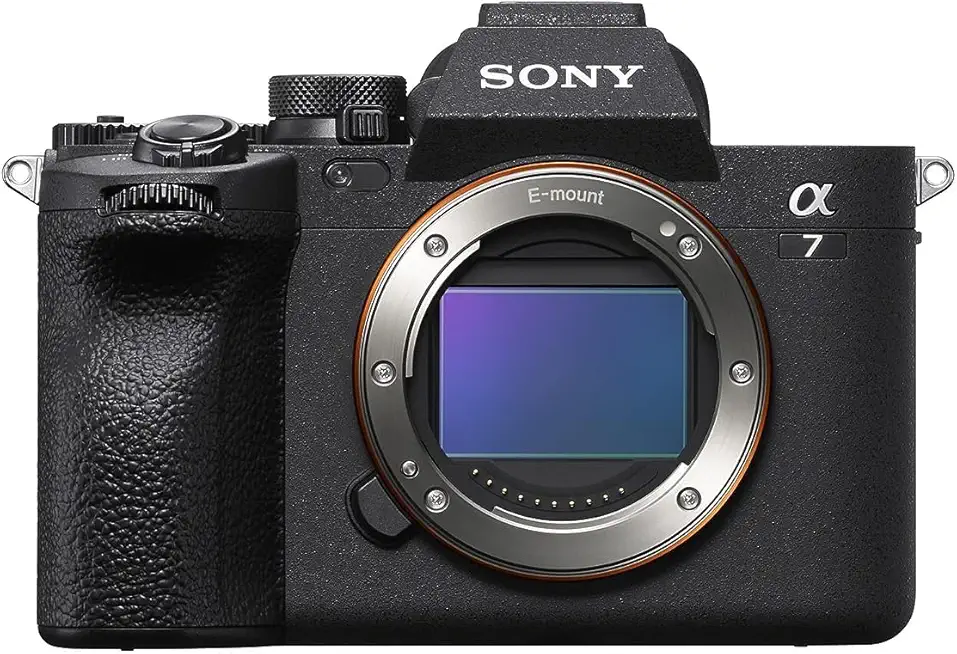
Sony Alpha 7 IV Full-Frame Mirrorless Camera
Hybrid powerhouse delivering exceptional image quality, advanced autofocus, 4K video, and unmatched low-light performance for professionals and enthusiasts.
Check PriceAs a photographer who often shoots self-portraits and client headshots, I reach for the Sony A7 IV when I want full-frame quality in a compact body. The 33MP full-frame sensor delivers sharp, detailed selfies with strong low-light performance that preserves skin texture and background detail.
Where the A7 IV really shines is autofocus. It has outstanding autofocus, especially face and eye detection, so you rarely miss focus when shooting yourself handheld. That reliability makes it easier to compose quickly and trust your frames are sharp.
For video-forward creators, the camera offers smooth 4K 60 fps video with in-body stabilization, which keeps handheld selfie footage steady and cinematic. Videographers and vloggers will appreciate how well the IBIS pairs with the sensor and AF for polished clips without a gimbal.
The body is compact and lighter than some other full-frame bodies, so it’s more comfortable for extended handheld selfies and travel shooting. There’s also a large lens ecosystem available, which means you can choose lenses optimized for portrait-style selfies as your needs grow.
Be aware there are trade-offs: some users find Sony’s color science less satisfying straight out of camera, so you may want to tweak profiles or do minimal post for preferred skin tones. Also, the handling and menu complexity can feel intimidating if you’re new to full-frame mirrorless systems.
- Very accurate face and eye autofocus.
- Excellent image and video quality with 4K 60 fps and in-body stabilization.
- Compact and relatively lightweight for handheld shooting.
- Large lens ecosystem for portrait-style selfies.
- Color rendering less natural/pleasing for some users without tweaking.
- Handling and menu complexity can be intimidating for beginners.
2. Fujifilm X-T5 for Selfies

Fujifilm X-T5 Mirrorless Camera Body
Classic styling with cutting-edge sensor, rich color science, high-resolution stills, and responsive handling for creative photographers.
Check PriceThe Fujifilm X-T5 is a delight if you treat selfies as crafted portraits rather than quick phone snaps. Its 40MP APS-C sensor delivers exceptional detail, so you can crop tightly or print larger without losing texture in hair and skin.
The vari-angle screen makes composing from high or low angles effortless, and it’s genuinely useful for handheld vlogging or creative selfie perspectives. Add tactile dials and a classic design, and you get precise manual adjustments that feel satisfying and fast to use.
Autofocus is solid for static portraits, locking onto faces reliably in most lighting. That said, the AF isn’t optimized for fast action or rapid subject switching, so if you often capture moving people you may notice a few missed moments.
Where the X-T5 really shines is color. Fujifilm’s Film Simulation modes render skin tones beautifully straight out of camera, which cuts down on editing and gives a signature film-like look that many photographers crave. The camera’s handling and color profile make it a strong choice for enthusiasts who prioritize image quality and creative control in their selfies.
In short, choose the X-T5 if you want high-resolution, characterful color, and tactile controls. If you need blazing-fast tracking AF or in-camera audio monitoring while recording selfie videos, be aware of its limitations.
- Superb image detail with 40MP APS-C sensor.
- Vari-angle LCD great for framing selfies and vlogging.
- Stylish, intuitive controls favored by enthusiasts.
- Excellent color reproduction with Film Simulations.
- Autofocus may lag behind Sony and Canon in face/eye tracking speed.
- No headphone jack for audio monitoring when recording selfie videos.
3. Canon EOS R10 for Selfies
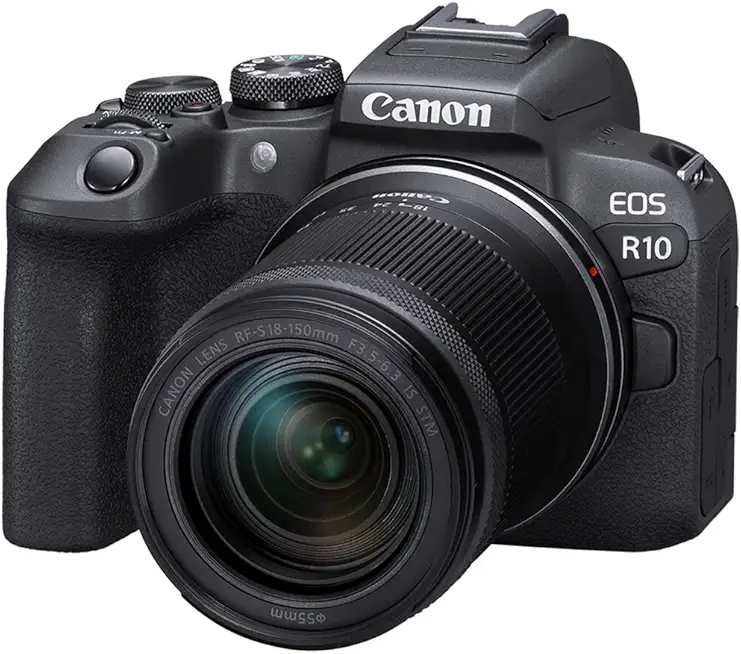
Canon EOS R10 with RF-S 18-150mm f/3.5-6.3 IS STM Lens Kit
Lightweight APS-C system combining fast autofocus, burst shooting, and a versatile all-in-one zoom — perfect for travel, vlogging, and everyday photography.
Check PriceThe Canon EOS R10 is a great fit if you want a camera that makes selfies and vlogging simple and reliable. It’s targeted at beginners and vloggers, with a user-friendly operation that gets you shooting fast without wrestling with menus.
One of the R10’s biggest practical advantages is its flip-out, fully articulating touchscreen — composing high and low angles or framing yourself for video becomes effortless. Paired with Canon’s Dual Pixel CMOS AF, you get very reliable face and eye tracking, so subjects stay sharp even when you’re moving the camera around for dynamic selfies.
Physically the R10 is compact and lightweight, which matters more than people realize for handheld selfie work and travel; you’ll actually carry it and use it. The APS-C sensor (~24MP) gives good image quality for social posts and YouTube, though it does deliver slightly less detail than some higher-resolution competitors if you plan to crop heavily or print large.
Lens-wise the RF mount is expanding, so you have growing options for focal lengths and accessories, but keep in mind the selection is still maturing — specialists like certain portrait-centric glass may be less available right now. For most users — social creators, casual photographers, and vloggers — the R10 strikes a strong balance: approachable controls, dependable AF, a selfie-friendly screen, and a form factor that invites use.
- Dual Pixel CMOS AF — reliable face/eye tracking
- Fully articulating screen for selfies and video
- Easy-to-understand interface for beginners
- Lightweight and compact for handheld shooting
- RF lens selection still growing
- APS-C sensor (~24MP) — slightly less detail than higher-resolution competitors
4. Panasonic Lumix S5 II for Selfies

Panasonic LUMIX S5 II (DC-S5M2) Full-Frame Mirrorless Camera Body
Compact full-frame hybrid offering advanced stabilization, pro-level video features, and excellent dynamic range for run-and-gun filmmakers and photographers.
Check PriceThe Panasonic Lumix S5 II is a very capable option if you want full-frame image quality in a selfie-friendly package. It uses a 24MP full-frame sensor that delivers robust, sharp results for portraits and close-up shots.
Autofocus is phase-detect and includes effective face and eye tracking, so it keeps subjects sharp even when you move the camera around for different angles. That reliability makes it easy to concentrate on expression and composition rather than fiddling with focus.
Where this camera really shines for handheld selfie work is its in-body image stabilization (IBIS). The S5 II’s IBIS is described as best-in-class, which translates to much smoother handheld selfies and steadier vlog footage without a gimbal.
Video features are strong too, with good options for creators and explicit support for 6K recording. If you make selfie videos or vlogs, you’ll appreciate the extra resolution and the camera’s overall video capabilities.
Physically the S5 II adopts a minimalist modern design with a straightforward interface, so it’s approachable if you prefer clean controls and an easy learning curve. Keep in mind it’s heavier than APS-C alternatives and offers fewer tactile control dials, so it’s a trade-off: excellent stabilization and full-frame imaging versus some portability and manual-control immediacy.
- 24MP full-frame image quality
- Best-in-class in-body image stabilization (IBIS)
- Reliable phase-detect face and eye tracking
- Good video options including 6K recording support
- Heavier than APS-C cameras — can fatigue on long handheld shoots
- Fewer tactile control dials for manual shooters
5. Canon EOS M50 Mark II for Selfies

Canon EOS M50 Mark II with EF-M 15-45mm IS STM Lens Kit
User-friendly kit delivering sharp images, easy connectivity, responsive autofocus, and lightweight handling ideal for beginners and content creators.
Check PriceThe Canon EOS M50 Mark II is a compact, entry-level mirrorless that punches above its weight for selfies and streaming. With a 24MP APS‑C sensor it delivers pleasing detail for social media and framed portraits without the bulk of larger bodies.
Autofocus is one of its strengths — Canon’s face and eye detection works reliably in most selfie scenarios, so you spend less time refocusing and more time composing. The vari‑angle touchscreen makes framing from high or low angles effortless, which is invaluable when you’re shooting solo or vlogging.
Video is usable but worth understanding: 4K is available, however it comes with a crop and noticeable rolling shutter, so many users stick to 1080p for smooth, full‑frame framing and fewer artifacts. Where the M50 Mark II really shines is live streaming and quick YouTube setups thanks to its clean HDMI support and user‑friendly operation.
It’s very compact and lightweight, making it an easy camera to carry for travel and everyday selfies. The tradeoffs are typical for an affordable, small camera — battery life is average, so plan for a spare if you’re filming longer sessions or day trips.
- 24MP APS-C sensor
- Effective face/eye autofocus for selfies
- Fully articulating touchscreen for easy framing
- Very compact and lightweight — great for travel and streaming
- 4K limited by crop and rolling shutter
- Average battery life; bring a spare
Key Selfie Camera Features
When I talk about “selfie features,” I’m thinking about what actually makes you look good and keeps the process painless. Screen type, autofocus, stabilization, sensor size and lens field of view matter more than raw megapixels on paper. Choose the features that match how and where you shoot.
A vari-angle or fully articulating screen is a game changer. If you vlog or frequently frame yourself, a flip-out screen lets you compose at arm’s length and check exposure in real time. Cameras like the Canon R10 and M50 Mark II excel here, while the X-T5 gives you great flexibility with its tilting screen.
Fast, reliable face and eye-detection autofocus is non-negotiable. It keeps expressions sharp whether you’re static or moving, and systems like Sony’s A7 IV and Canon’s Dual Pixel AF deliver that confidence. If you plan on quick, candid shots, prioritize AF performance over headline specs.
Stabilization and sensor choices affect sharpness and low-light performance. In-body stabilization, like Panasonic’s S5 II, smooths handheld selfies and video, while full-frame sensors (Sony A7 IV, S5 II) offer better low-light and shallower depth of field. APS-C bodies can still produce superb detail, particularly high-resolution sensors such as Fujifilm’s 40MP X-T5.
Lens field of view matters for single and group selfies. A wider angle (roughly a 100° field of view) lets you include background or friends without distortion if you pick the right glass. Don’t forget lens ecosystem — Sony has a vast selection, Canon RF is growing, and L-mount options suit Panasonic bodies.
Finally, consider color profiles, audio and battery life. Fujifilm’s Film Simulations give beautiful skin tones out of camera, while Sony may need slight tweaks. If you shoot long sessions, bring spare batteries and favor bodies with higher capacity or better efficiency for all-day use.
In short: prioritize a screen you can see, autofocus that locks on, stabilization for steady hands, and a lens that gives the framing you want. Balance those against portability and you’ll find a camera that genuinely improves your selfies.
Selfie Lighting: Natural vs Artificial
Lighting is the single biggest factor that separates an OK selfie from a striking one. Natural light is your easiest friend: face a large window or turn toward the golden hour and you get soft, flattering skin tones with minimal effort. Overcast days act like a giant softbox and reduce harsh shadows, while backlit scenes can give a beautiful rim light if you add a little fill from a reflector or your camera’s flash.
Artificial light gives you control and consistency, which is especially useful for indoor vlogging or when you need the same look every time. A small LED panel or ring light can produce even illumination and predictable catchlights; soften it with a diffuser or bounce it into a wall to avoid that “flat” studio look. Position the main light slightly above eye level and angled down at about 20–30 degrees for natural modeling—too high and you get heavy shadows, too low and it looks odd.
Mixing natural and artificial light can be powerful but tricky. Match color temperatures or use gels so skin tones don’t go green or orange, and set a custom white balance on your camera if you want consistent results. When working with a handheld camera and a vari-angle or flip screen, keep the light source just off-axis so it creates depth and pleasing catchlights in the eyes.
Small tricks make a big difference: a white piece of paper under the chin acts as an instant fill reflector, while a warm LED behind you separates you from the background. Expose for the face and let the camera’s eye-detection autofocus do the work, nudging exposure compensation up a stop if you want a brighter, more inviting look. Ultimately, choose natural light for ease and mood, and artificial light when you need repeatable, controlled results—often the best selfies are a thoughtful mix of both.
What People Ask Most
What is the best camera for selfies?
There is no single best camera for everyone; the right choice depends on your priorities like autofocus, screen type, stabilization, and portability. Pick a camera that feels comfortable to hold and matches whether you mainly shoot photos, videos, or both.
Which smartphone has the best front camera for selfies?
Many recent flagship smartphones offer excellent front cameras with good autofocus and image processing. Consult recent reviews and sample galleries to compare skin tones, low-light performance, and color rendering.
What camera features should I look for to take better selfies?
Look for reliable face and eye autofocus, a vari-angle or fully articulating screen, and effective stabilization for handheld shooting. Good image quality and user-friendly controls also make a big difference for consistent results.
What lens is best for taking selfies?
A wider lens helps include background or group shots while a moderate short-tele lens can be more flattering for single-person portraits. Choose based on how close you hold the camera and the composition you prefer.
Are mirrorless cameras good for selfies?
Yes, mirrorless cameras are well suited to selfies thanks to compact bodies, advanced autofocus, and many models offering articulating screens. They also tend to offer a wide range of lenses for different selfie styles.
How can I take better selfies with a camera?
Use soft, even lighting, compose carefully, and keep the camera steady or use stabilization to avoid blur. Rely on face or eye autofocus and experiment with angles and distance to find your most flattering look.
Can a DSLR be used for selfies?
Yes, a DSLR can be used for selfies, though it may be bulkier than mirrorless alternatives and less convenient to hold at arm’s length. Many DSLRs can still work well with articulating screens, remote controls, or smartphone tethering for framing.
Conclusion on the Best Selfie Cameras
In short, the best selfie camera is the one that matches your priorities—reliable face and eye AF, a vari-angle or fully articulating screen, strong stabilization, solid image quality, and comfortable portability should guide your choice.
If you shoot mainly for stills prioritize resolution and handling, while vloggers and video creators will benefit more from articulating screens, robust IBIS, and responsive autofocus.
Also remember that lighting—natural for a softer, authentic look or artificial for consistent control—often has a bigger impact on your results than small differences between camera bodies.
To keep improving your selfies and video skills, explore more of our practical guides and reviews on the site for tips, techniques, and gear advice tailored to different shooting styles.
Have a question or want personalized recommendations? Leave a comment below and we usually reply within a few hours.


0 Comments