
Ever tried to hold binoculars on a shimmering Milky Way and watched the stars dance? If so, you know how tiny tremors wreck night-sky detail.
Image-stabilized binoculars solve that problem by electronically or mechanically counteracting hand movement. They let you use higher magnifications handheld and still get steady views of the Moon, planets, and clusters.
The result feels almost like using an invisible tripod — steadier views, sharper detail, less eye fatigue. You can follow satellites, split tight double stars, or enjoy prolonged observing sessions without constant readjustment. For many stargazers, stabilization changes casual skywatching into a serious observing tool.
In this roundup we tested five contenders for the title of the best image‑stabilized binoculars for astronomy. Readers can expect models that prioritize stability, optical clarity, portability, and user‑friendly battery and control schemes.
Across them you’ll find trade-offs — weight versus steadiness, battery life versus instant engage, and field‑of‑view choices that affect how easy it is to locate targets. Keep reading for real‑world impressions and practical tips to match a stabilized pair to your observing priorities.
Whether you’re a backyard observer, traveling to remote dark skies, or a seasoned telescope user seeking a portable companion, stabilization opens new possibilities. We’ll help you weigh the real‑world pros and cons so you can pick the best fit for your nights under the stars.
1. Canon 10×42 L IS WP Binoculars
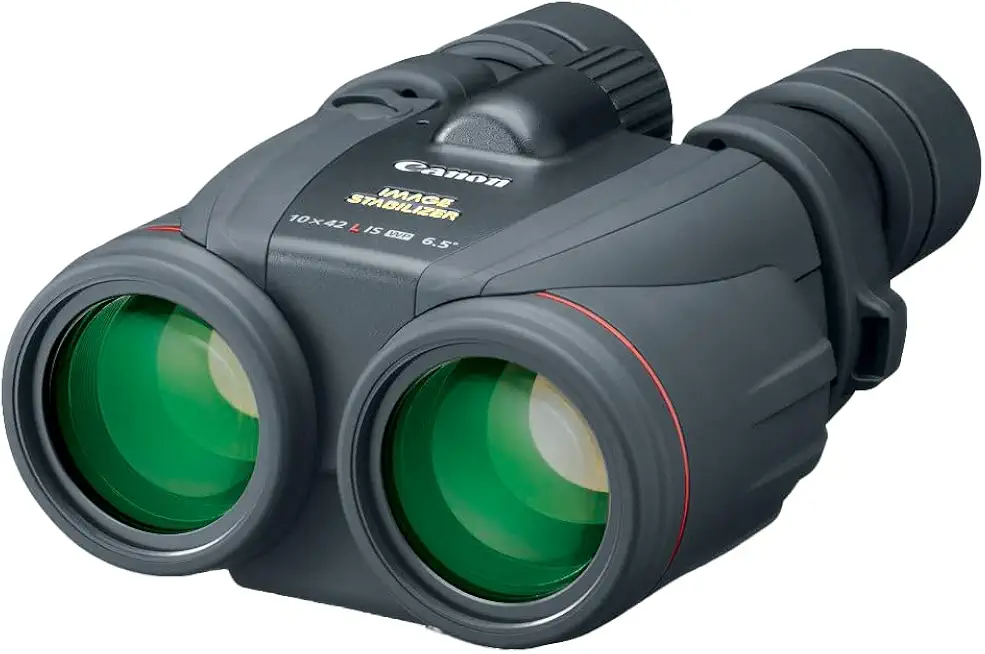
Canon 10x42 L IS WP
Premium 10× optics with image stabilization, rugged waterproof build, vivid low-light performance and comfortable handling for reliable field use.
Check PriceAs a photographer who spends nights under the sky, the Canon 10×42 L IS WP feels like carrying an invisible tripod in your hands. The stabilization is genuinely “rock‑steady” on the Moon, planets and star clusters, so you can hold high magnification without the usual tremor-induced blur.
The optics are a real highlight — very sharp with almost no chromatic aberration and colors that stay true to what the eye expects. That clean, contrasty image makes it easier to tease out subtle lunar craters and brighter deep‑sky hints without fighting color fringing.
Build-wise these Canon binoculars are reassuringly rugged: waterproof and fog‑proof, so they stand up to variable outdoor and night conditions that I often encounter on shoots. The stabilizer engages instantly via a simple button, giving you usable views right away when you raise them to your eyes.
There are practical trade‑offs to bear in mind. The battery drains faster in cold conditions, so bring spares for long winter sessions. Also, they’re on the heavier and bulkier side, which can be fatiguing if you’re holding them for extended observing or hiking to remote spots.
For anyone who prioritizes steady, high‑magnification handheld viewing and top‑tier optics in challenging conditions, this Canon is a compelling option. If you need ultra‑light gear or plan very long, cold sessions without spares, you’ll want to plan around those limits.
- Highly effective stabilization for comfortable high‑magnification viewing
- Exceptionally sharp optics with minimal chromatic aberration
- Rugged, waterproof and fog‑proof construction
- Comfortable eye relief and wide field of view
- Short battery life, especially in cold conditions
- Relatively heavy and bulky for extended handheld use
2. Fujinon 14×40 TSX Binoculars
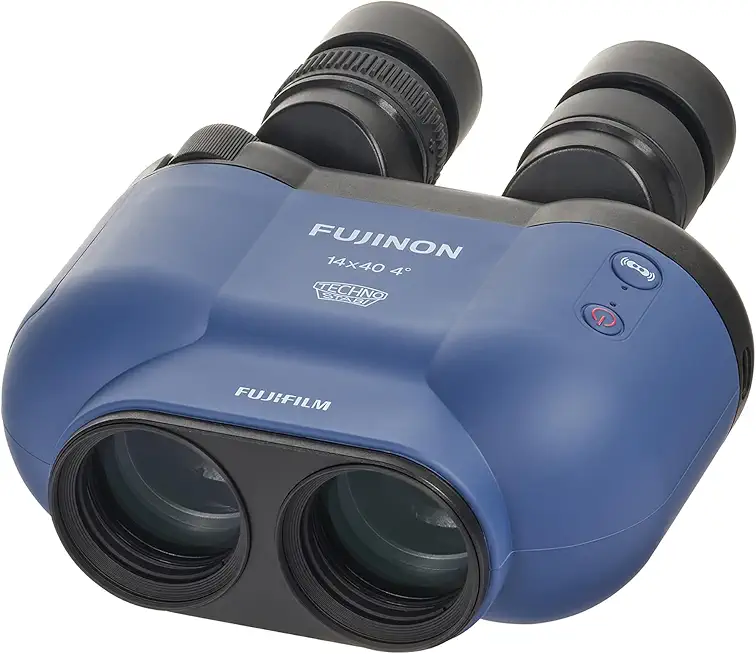
Fujinon TS-X 14x40 Techno-Stabi
High-power 14× viewing with advanced stabilization, compact lightweight design, sharp contrast and smooth tracking for distant observation.
Check PriceIn the field the Fujinon 14×40 TSX feels like a tool built for serious handheld stargazing. Users consistently describe the stabilization as “smooth” and “natural,” and the optics are regularly praised for sharp, faithful color rendition.
The 14x magnification is where these binoculars really shine—it’s ideal for teasing out planetary detail and resolving more structure in brighter deep‑sky objects. Because of the strong stabilization, that extra power becomes usable without a tripod, though the stabilizer can be slightly slower to engage at times; once active, it keeps the view steady and comfortable.
Build quality is another strong point: the housing is robust and well‑sealed, making the TSX suitable for humid or rainy conditions and frequent outdoor use. For long sessions the instrument sits well at the eyes thanks to good eye relief and a surprisingly wide field of view for a 14x instrument, reducing neck and eye fatigue compared with less ergonomic designs.
The main trade‑off is weight. These are relatively heavy and can become tiring to hold for very long handheld sessions, so plan short observing stints or bring a monopod if you expect marathon nights. For photographers and observers who prioritize high magnification, excellent optics and weather resistance in a portable package, the Fujinon 14×40 TSX is a compelling choice despite those ergonomic concessions.
- Excellent stabilization even at high magnification.
- High-quality optics with minimal chromatic aberration and strong color fidelity.
- Durable and weather-resistant.
- Comfortable for extended sessions with good eye relief and wide FOV.
- Relatively heavy; can be tiring to hold long periods.
- Stabilizer sometimes slow to engage.
3. Kite Optics APC 50 Binoculars

Kite Optics APC Stabilized 18x50 ED
Powerful 18× magnification with ED optics and gyro stabilization delivering crisp, high-contrast detail at extreme distances.
Check PriceAs a photographer who spends nights under the sky, the Kite Optics APC 50 stands out for one clear reason: its stabilization. Users call it “revolutionary” — in practice it can eliminate the small image movements that normally plague handheld stargazing, to the point the binoculars seem to “vanish” while you observe.
The optics are equally impressive. Reports point to low chromatic aberration and high light transmission, which means stars and planetary details look cleaner and brighter than with many handheld optics.
Build and usability also favor long sessions. The APC 50 is waterproof and designed with long battery life, so you can stay out longer without worrying about moisture or frequent battery swaps. Its compact design makes it easy to carry and less tiring to hold during extended observing stints.
In real use the stabilization is easy to engage and highly effective once active, smoothing tremor at higher magnifications and reducing eye fatigue. That steadiness helps resolve finer detail and makes tracking slow-moving objects far less frustrating.
A couple of caveats to consider: the stabilizer can be slow to engage for some users, which interrupts the instant‑on convenience you might expect. Also, the field of view is narrower than some competitors, so initially locating targets and sweeping star fields can take a bit more patience.
- Advanced stabilization eliminates small movements
- Low chromatic aberration; strong light transmission
- Long battery life for extended sessions
- Compact and lightweight
- Stabilization can be slow to engage
- Narrower field of view makes locating/tracking harder
4. Nikon Stabilized 12×25 S Binoculars

Nikon Stabilized 12x25
Pocketable 12× binocular providing steady, shake-free views, bright optics and quick autofocus for spontaneous outdoor adventures.
Check PriceAs a photographer who also enjoys night‑sky sessions, the Nikon Stabilized 12×25 S feels like the travel partner you’ve been waiting for. Its compact size and light weight make it effortless to slip into a daypack and carry to a dark‑sky site or rooftop observation spot.
Stabilization is the standout feature — users call it “fantastic” and it’s genuinely easy to engage with the top‑mounted button. That steady view at 12x means less eye strain and a surprisingly tripod‑like experience when scanning the Moon or bright star clusters.
Optically the 12×25 S delivers clear, sharp images with good color reproduction. For casual stargazing and quick field checks of planets and bright deep‑sky objects, the view is pleasing and usable straight away without heavy setup.
There are trade‑offs to be aware of. The binoculars are not waterproof, so they’re less suitable for damp or rainy evenings. Also, the relatively narrow field of view can make it harder to locate and track objects compared with wider‑angle models — something to expect if you’re used to larger objectives or lower magnifications.
In short, if your priorities are portability, easy stabilization, and crisp optics for travel or casual astronomy, the Nikon 12×25 S is a strong, mostly positive option. If you need rugged weather sealing or the widest possible fields for sweeping Milky Way views, you might find its limits noticeable.
- Compact, lightweight for travel
- Effective, easy‑to‑use stabilization
- Clear, sharp optics with good color
- Delayed auto shut‑off for longer sessions
- Not waterproof
- Relatively narrow field of view — harder to locate/track
5. Canon 12×36 IS Binoculars
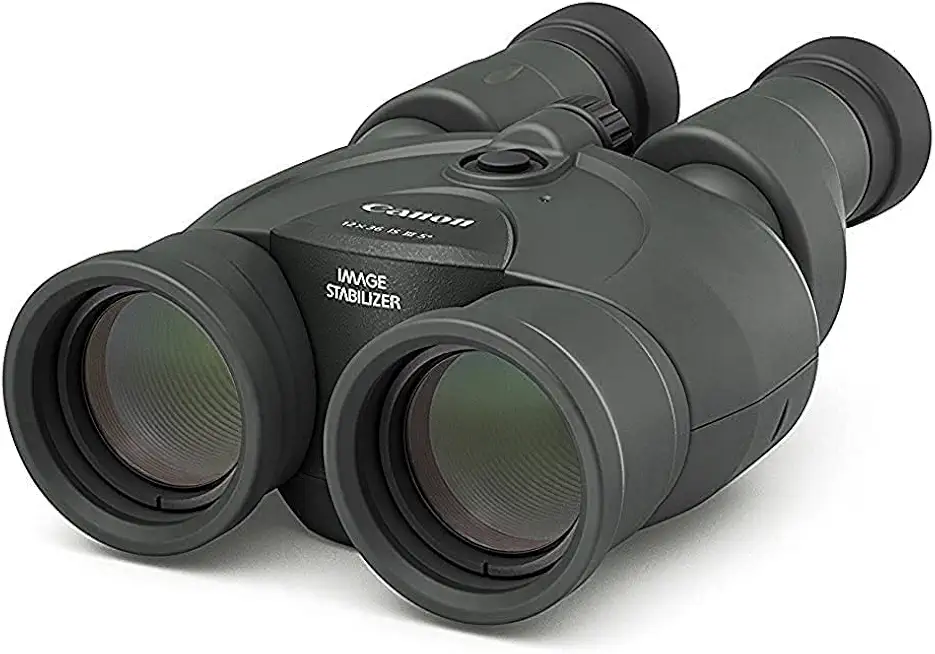
Canon 12x36 IS III
Compact 12× instrument with refined image stabilization, superior clarity in low light, and ergonomic controls for extended observation sessions.
Check PriceThe Canon 12×36 IS binoculars are a remarkably compact, travel‑friendly option for handheld stargazing. As a photographer who often switches between tripod work and quick, handheld observing, I appreciate how their lightweight design makes long sessions far less tiring.
Users describe the stabilization as “magic” and “effortless” — a single button instantly steadies the view. That instant activation makes it simple to pop them up on a tripod‑less night and immediately start picking out lunar craters, bright planetary features and small deep‑sky details.
Optically they deliver clear, sharp images with good color reproduction, so stars and star clusters appear natural and well‑defined. The combination of solid optics and effective stabilization means you’ll see more fine night‑sky detail than with unstabilized binoculars of the same size.
There are a few real‑world tradeoffs to bear in mind. Eyepiece lens caps have been reported as flimsy and can fall off, so plan to secure or replace them if you move around a lot. Also, the relatively narrow field of view can make initial locating and framing of objects a bit fiddly compared with wider‑angle instruments, but once locked in the stabilization keeps targets steady for comfortable viewing.
- Compact and lightweight for extended handheld use
- Very effective, easy‑to‑activate image stabilization
- Clear, sharp optics with good color rendition
- Stabilization helps reveal fine night‑sky details
- Eyepiece lens caps can be flimsy and fall off
- Narrow field of view can hinder locating/tracking
How Image Stabilization Works in Binoculars
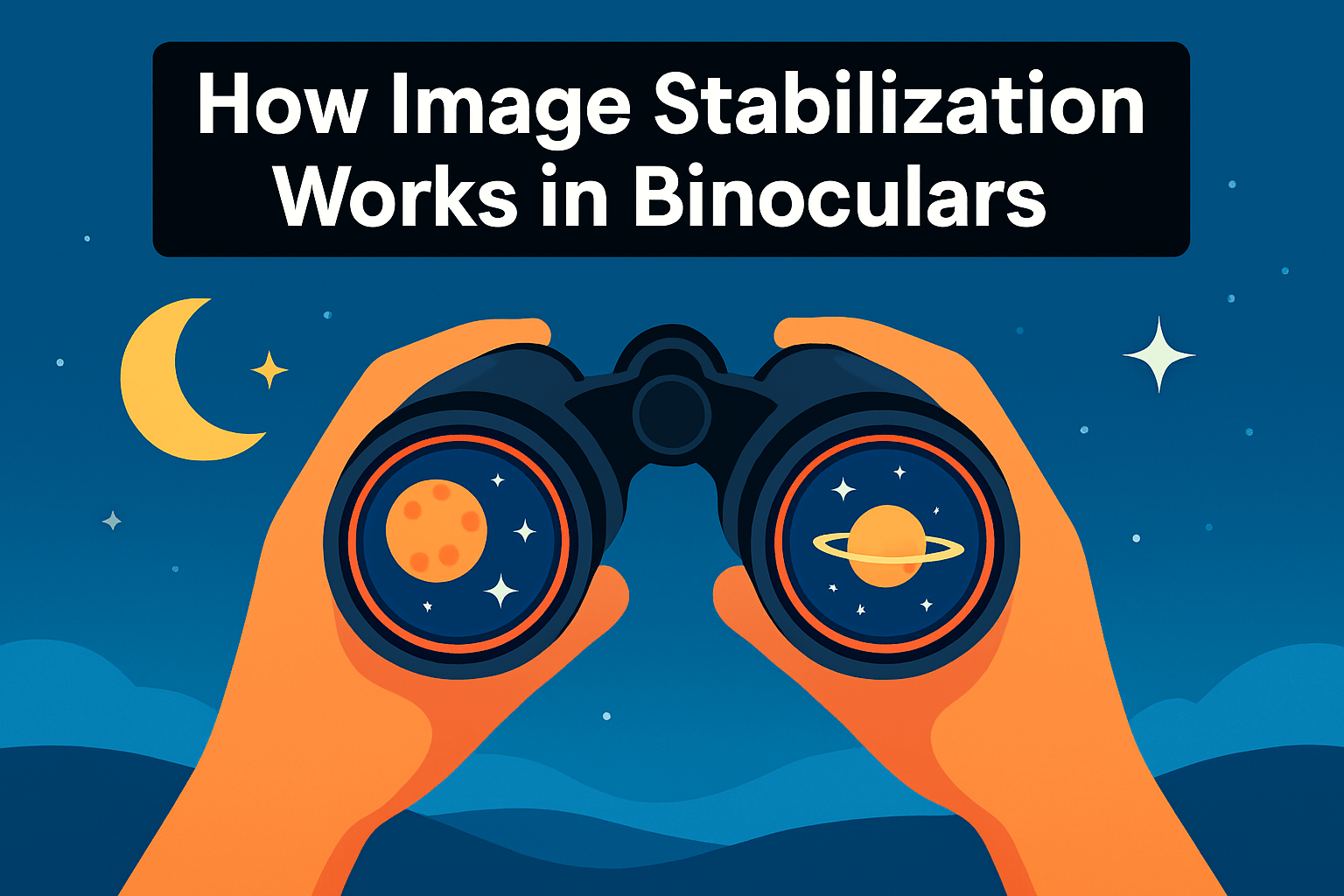
Think of image stabilization inside binoculars as a tiny, invisible tripod. Sensors watch minute hand movements and the system reacts to keep the view steady.
Those sensors are usually gyroscopes or accelerometers that feed motion data to a microprocessor. The processor analyzes that motion in real time and decides how to correct it.
Corrections happen by physically shifting or tilting optical elements — either dedicated lens groups or prisms — so the image stays aligned with your eye. The motion you perceive is countered by an opposite micro-movement inside the optics.
There are two broad approaches. Active systems combine electronic sensors, microprocessors and motors to deliver smooth, fine-tuned corrections, but they require battery power.
Passive systems work differently: they rely on mechanical gyroscopes and inertia to resist shake and do not need electronic feedback or batteries. They tend to be simpler and very reliable, though they can’t match the finest, fastest corrections of active designs.
Modern implementations blend these ideas. Roof-prism optical paths, accelerometer arrays and smarter onboard software squeeze higher performance and better energy efficiency into smaller, lighter bodies.
As a photographer I treat stabilization as a partner, not a replacement for technique. It removes the tiny jitters that blur fine detail, but for larger movements you still want a steady stance or light support; learning how your unit engages will pay off in sharper, more comfortable views.
Active systems run on batteries, so expect trade-offs between run time and correction power. Intelligent sensor arrays and software help conserve energy, but carrying spares or planning shorter sessions is a sensible habit.
Finally, remember stabilization is about perception. It compensates micro-shake so your eyes can tease out subtle detail, yet it won’t freeze a wildly swinging arm. Combine good posture with stabilization and you’ll get the most from your night-sky viewing.
Benefits of Image Stabilization for Astronomy
Image stabilization in binoculars is more than a convenience — it changes what you can see by hand. As a photographer I often rely on stabilization to freeze motion; in astronomy it acts like an invisible tripod, letting you stay handheld and still see fine surface detail and subtle structure.
Hand tremor is tiny, but magnification multiplies it. Stabilizers detect and cancel those micro‑movements so lunar craters, planetary bands and tight star clusters resolve without that constant jiggle that blurs detail.
A steadier image also improves perceived brightness and contrast. When the view isn’t wandering your eye can integrate faint light for longer, making nebulae, companions and subtle color differences pop that would otherwise wash out in a shaky image.
Less jitter equals less eye strain. You won’t spend half the session “chasing” objects; instead you can relax your grip, breathe slowly and study structure. That comfort translates into longer, more productive observing sessions.
Stabilization is a big help when tracking moving targets too. Satellites, the ISS and fast aircraft are far easier to follow with minimal hand correction, though smooth panning and a steady stance still make a difference at high magnifications.
Practical tips: many systems need a beat to settle and battery life drops in cold weather, so let the unit engage before fine‑tuning focus and carry spares for extended nights. If you want absolute rock‑steady views, you can still mount many stabilized binoculars on a tripod — the stabilizer simply makes framing and finding objects far less fiddly.
Bottom line: stabilization buys portability and flexibility. When a tripod is impractical—on a rooftop, a hike or a quick backyard session—stabilized binoculars let you get to the eyepiece faster, see more detail at magnifications above about 10x, and enjoy the sky without constant motion getting in the way.
What People Ask Most
What are the best image stabilized binoculars for astronomy?
Top choices cited by users include Canon 10×42 L IS WP, Fujinon 14×40 TSX, Kite Optics APC 50, Nikon Stabilized 12×25 S, and Canon 12×36 IS. Each model balances stabilization, optical quality, and portability differently, so pick based on your priorities.
How do image stabilized binoculars work for stargazing?
Sensors detect tiny hand movements and microprocessors compute real‑time corrections. Mechanical elements such as lens groups or prisms are shifted or tilted to counteract motion and keep the image steady.
Are image stabilized binoculars worth it for viewing planets and deep‑sky objects?
Yes, they reduce jitter and produce steadier, sharper images that help reveal fine planetary and deep‑sky detail without a tripod. They also reduce eye strain and make tracking moving objects easier.
Can image stabilized binoculars replace a telescope for astronomy?
They are not a full replacement for larger telescopes and mounts, which remain the ideal choice for serious deep‑sky work. Image‑stabilized binoculars make a useful, portable complement when mounting gear is impractical.
What magnification and objective size are ideal in image stabilized binoculars for astronomy?
Commonly used magnifications fall in the 10x–14x range with objective sizes from the mid‑20s to around 50 millimeters. Higher magnifications amplify hand tremor, which is why stabilization becomes particularly important in that range.
How effective is image stabilization at high magnifications for astronomy?
Many users report highly effective stabilization that makes high‑magnification viewing comfortable and stable. Effectiveness can vary by system, with some units engaging faster or eliminating small movements more completely than others.
Which brands or models of image stabilized binoculars are recommended for astronomy?
Recommendations commonly include Canon, Fujinon, Kite Optics, and Nikon models listed earlier in the article. Consider stabilization performance, optical quality, battery life, weight, and weather sealing when choosing.
Conclusion for Image-Stabilized Astronomy Binoculars
Image‑stabilized binoculars make handheld astronomy far more rewarding by cutting jitter, improving detail perception, and reducing eye strain so you can enjoy planets, star clusters and satellites without a tripod.
When choosing a pair, focus on the features that matter most to you—stabilization strength, optical clarity, battery life, weight and weather resistance—so the gear matches your observing style and conditions.
Remember to weigh real‑world trade‑offs such as field of view, how quickly stabilization engages, and practical battery performance when comparing the options covered here.
If you want to deepen your observing skills and equipment knowledge, browse more articles on the site to learn tips, techniques and practical advice that will improve every session.
Have questions or want to share your experiences with image‑stabilized binoculars? Leave a comment below and we usually reply within a few hours.


0 Comments