

Where will your growing archive of RAW files live five years from now — and how confident are you that every shot is safe?
If you’re a photographer or creative pro wrestling with terabytes of images, choosing the best computer for photo storage is as critical as picking a lens. This guide will cut through vendor jargon and help you choose systems that keep your work fast to access, secure against hardware failure, and protected for the long haul.
We compare five Synology NAS models that span budget to high‑performance setups, and we’ll explain which classes of device suit different workflows. We also cover local versus cloud backup strategies, real‑world pros and cons, common photographer pain points, and the FAQs creatives actually ask. No‑tech fluff — just practical guidance for protecting RAW files, metadata, and long‑term archives.
Whether you shoot weddings, portraits, landscapes, or commercial campaigns, smart storage choices affect editing speed, client delivery, and future reuse. You’ll find clear, no‑nonsense advice on matching capacity, speed, and redundancy to your budget and workflow, plus practical tips to minimize downtime and simplify restores. Stick with us and you’ll leave ready to pick the right class of system, implement simple backups, and establish routines that keep your archive safe and searchable for years.

Synology DiskStation DS923+ 4-bay, Ryzen R1600, 8GB DDR4, No HDD, 256GB NVMe SSD
1. Synology DS923+ Overview
Synology DiskStation DS923+ 4-bay, Ryzen R1600, 8GB DDR4, No HDD, 256GB NVMe SSD
High-performance 4-bay NAS with Ryzen processing, 8GB RAM and NVMe cache—optimized for virtualization, fast file sharing, and smooth media streaming.
Check PriceThe Synology DS923+ is a compact, high-performance NAS built for photographers who keep growing photo archives. It’s designed specifically for photo storage and running Synology Photos, so it fits neatly into a photographer’s workflow.
In my studio, quiet equipment matters, and the DS923+ earns top marks for silence — it’s reported to be exceptionally quiet and suitable for a home office or studio. That makes it easy to run 24/7 without distracting noise during shoots or editing sessions.
Performance is where this unit shines. It handles large libraries and RAW files without slowdowns, and you can amplify that with an SSD cache and a 10 GbE network card for much faster browsing and transfers. If you work with tethered shoots, bulk imports, or lots of high-resolution files, this keeps your pace steady.
Setup and daily use are friendly for those who know a little about NAS systems: installation is straightforward and DSM’s interface is intuitive. Still, complete beginners may find initial configuration a bit challenging, so plan for a learning curve or ask a tech-savvy friend to help the first time.
Reliability matters when you can’t afford downtime, and users praise the DS923+ for stability and minimal interruptions. It’s also expandable and supports multiple hard drives, so you can grow capacity as your archive expands — a practical choice for long-term storage planning.
- High performance for large libraries and RAW files.
- User-friendly DSM interface.
- Reliable and stable over time.
- Expandable — supports multiple hard drives.
- Initial setup/configuration can be challenging for NAS beginners.
- Premium cost may be a barrier.
2. Synology DS423 Overview

Synology DiskStation DS423 4-bay, diskless
Compact four-bay storage solution offering flexible RAID, cloud sync and energy-efficient performance for small offices and advanced home users.
Check PriceThe Synology DS423 is a budget-friendly NAS offering good performance for photo storage. As a photographer, I appreciate that it gives you a reliable home for RAW files without a premium price tag.
DSM provides a smooth experience for managing photos and files. Setting up shares and indexing images is straightforward, so you spend less time wrestling with software and more time editing.
In real-world use the DS423 strikes a solid balance of performance and affordability. It’s popular with home users and small studios who need dependable storage and simple file management.
That said, the unit can be slow when browsing large photo libraries. If you work with tens of thousands of images or do frequent large-folder browsing, you may notice lag compared with higher-tier options.
Where the DS423 shines is reliability and stability. Users report minimal downtime, which matters when you rely on your archive for client work and long-term projects.
It’s also expandable and supports multiple hard drives, so you can grow capacity as your archive expands. Combine that with automated backups and the DS423 becomes a very practical central hub for local backups.
In short, the DS423 is a smart choice if you want a cost-conscious, dependable NAS that’s easy to use and scales with your needs. If you’re a hobbyist, a small studio, or someone who prioritizes value and uptime over blistering performance, this is mostly a good fit.
- Affordable; good value.
- Easy to use via DSM.
- Reliable with minimal downtime.
- Expandable — supports multiple hard drives.
- Performance limits when browsing very large libraries.
- Limited RAM versus higher-end models can impact performance.
3. Synology DS223J Overview

Synology DiskStation DS223j 2-bay, diskless
Entry-level two-bay NAS delivering secure backups, easy setup and low power consumption for basic home storage and media sharing.
Check PriceThe Synology DS223J is a budget NAS built for basic photo storage and file management. It’s designed for photographers who want a simple, affordable place to centralize images without a lot of overhead.
As a working photographer, I appreciate gear that just works and doesn’t get in the way. The DS223J fits that bill — it’s suited for users seeking a simple, affordable solution and is especially friendly to NAS newcomers.
Synology’s DSM interface is intuitive and makes navigating folders and setting up shared albums straightforward. Setup and day-to-day management are simple, so you won’t spend hours wrestling with configuration when you should be editing.
In real-world use the unit is reported to be reliable and stable with few issues. That kind of dependability matters when you’re managing client shoots and need predictable access to archives.
The main trade-off is speed. The DS223J can be slow when browsing large photo libraries compared with higher-end models, so it’s less ideal if you keep massive catalogs you need to scroll through quickly.
For a photographer who needs an affordable central storage hub for completed shoots, backups, and easy sharing with clients, this is mostly a good fit. But if your workflow relies on frequent, fast browsing of very large archives or advanced NAS features, you’ll likely outgrow it.
In short, the DS223J is a practical, no-frills solution that delivers reliability and ease of use at a low price. It’s a smart starter NAS for photographers who prioritize simplicity and cost over top-tier performance.
- Very affordable
- DSM is intuitive and easy to navigate
- Reliable for basic use
- Simple to set up and manage
- Performance limitations with large photo libraries
- Lacks advanced features found in higher-end models
4. Synology DS423+ Overview

Synology DiskStation DS423+ Celeron 2.0GHz, 6GB RAM, 16TB HDD, 1TB NVMe SSD
Performance-focused NAS with Celeron CPU, 6GB memory, large HDD capacity and NVMe cache—perfect for multitasking, surveillance, and business file management.
Check PriceAs a working photographer, I want storage that keeps up when I’m offloading shoots and running Synology Photos on big RAW libraries. The Synology DS423+ is a high-performance NAS built for exactly that—handling large photo archives and demanding management tasks without flinching.
In real use it feels fast and efficient. Large libraries and RAW files load and browse smoothly, so I spend less time waiting and more time editing or cataloging.
Installation and setup are straightforward, and DSM gives a clean, predictable interface for managing backups, shares, and photo indexing. That smooth DSM experience means less time fighting software and more time organizing work.
Reliability matters when your client work depends on fast access, and the DS423+ is praised for minimal downtime. In my workflow that kind of stability reduces worry about missed deadlines and corrupted archives.
This unit is pricier, which is worth considering if your budget is tight. For demanding users who need speed, expandability, and advanced photo-management features, the cost is often justified by the time saved and the reliability gained.
If you want a centrally managed, high-throughput home studio storage hub that scales, the DS423+ is a solid choice. It’s best for photographers and small studios who prioritize performance and uptime over lowest upfront cost.
- High performance for demanding workflows
- Reliable and stable
- Expandable — supports multiple hard drives
- Advanced photo-management features
- Higher cost
- Initial setup may be challenging for beginners
5. Synology DS220+ Overview

Synology DiskStation DS220+ Celeron, 6GB RAM, 8TB HDD
Reliable two-bay solution with dual-core Celeron, 6GB RAM and spacious HDD—ideal for photo libraries, backups, and smooth 4K streaming.
Check PriceThe Synology DS220+ is a mid-range NAS built for photo storage and file management, and it’s often recommended for photographers who need a dependable home archive without breaking the bank. It’s noted for a good balance of performance and affordability, making it popular with home users and small studios who handle sizable libraries but don’t require enterprise hardware.
Synology’s DSM software provides a smooth experience for organizing, browsing, and serving photos, which matters when you want quick access to folders and previews across devices. Users praise the DS220+ for reliability and stability, so it’s a solid device to sit quietly in a studio and do the heavy lifting of centralizing your files.
That said, the DS220+ can slow down when browsing very large photo libraries compared with higher-end models, so if you’re constantly trawling through tens of thousands of RAW files you may notice lag. Limited RAM versus premium Synology units can affect how snappy the system feels under heavy catalog loads, so factor that into workflows that rely on fast thumbnails and large previews.
For many photographers the DS220+ hits the sweet spot: affordable, easy to use via DSM, expandable with multiple drives, and generally reliable. It’s a smart pick for a home studio or a small team that wants centralized storage and straightforward management, while pros with very large or performance-critical libraries might look higher up the range.
- Affordable for a mid-range device.
- Easy to use via DSM.
- Reliable with consistent performance.
- Expandable — supports multiple hard drives.
- Performance limitations with very large libraries.
- Limited RAM compared with higher-end models can affect handling large libraries.
Local Backup Strategies For Photo Storage
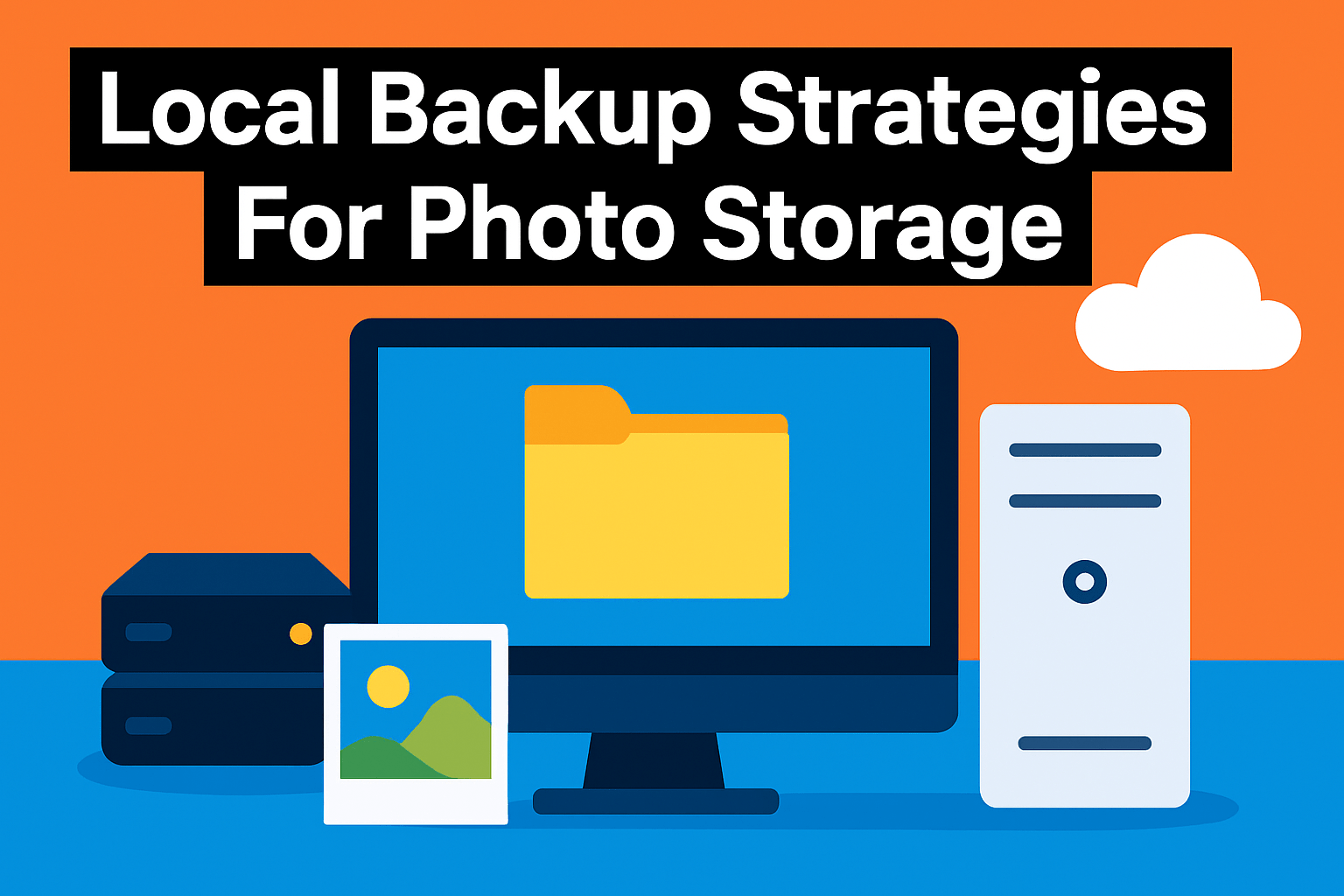
As a working photographer I treat backups like part of my toolkit, not an afterthought. The easiest rule to follow is the 3‑2‑1 method: three total copies, on two different media types, and one copy kept off-site.
Practically that means I keep a master archive drive and a second external drive that mirrors it. I automate the sync with tools like GoodSync or ChronoSync so the mirror updates without me having to remember it.
If you use RAID—RAID 1 for example—know what it does and doesn’t do. RAID protects you from a single drive failure, but it won’t save you from accidental deletions, file corruption, or ransomware, so it’s not a substitute for a true backup.
A NAS makes an excellent local backup hub because it gives network access, built‑in redundancy options, and scheduled syncing. When set up correctly you can restore projects quickly from the network without lugging drives around.
Some manual habits are worth enforcing: don’t format memory cards until you’ve verified at least two copies. I always check transfers visually and let a checksum or my sync job confirm files before erasing cards.
Keep drives reasonably underfilled—aim for under about 50% where practical—and refresh aging drives on a schedule. Mechanical disks accumulate wear; swapping them every few years reduces the chance of surprise failures.
For the off‑site copy physically store one backup at a different location, like a trusted friend’s house or another studio. Rotate that drive on a monthly or quarterly cadence so the off‑site copy stays current.
Local backups give you fast recovery and full control, and they keep you independent of internet outages. They do require discipline, so label drives, document your rotation, and automate as much as you can to avoid human error.
Finally, schedule regular restore tests. Once a quarter I pull a random folder and open a handful of RAW files to make sure my backups actually work when I need them.
Using Cloud Storage For Photo Backups
Cloud storage is your off‑site copy in a 3‑2‑1 plan. I treat it as insurance against theft, flood or drive failure. Geographic redundancy means a local disaster won’t destroy your archive.
Automation keeps backups honest. Desktop clients and NAS apps can sync chosen folders so backups happen without thinking; many NAS tools (including Synology’s Hyper Backup and Cloud Sync) integrate directly with cloud providers. Make sure the tools you use support versioning so you can roll back bad edits or accidental deletes.
Be selective about uploads. If your upload speed is limited, prioritize edited keepers, JPEG exports and your catalog before attempting to push every RAW file. Keep RAWs on a local NAS and trickle selected RAWs to the cloud when you have bandwidth.
Expect limits: initial seeding of terabytes is slow and internet restores take time. Some services offer seeding or import paths for large libraries, so check what they support before you commit. Also factor recurring subscription costs into your budget.
Secure your backups. Enable two‑factor authentication and use client‑side or app‑level encryption if privacy matters. Don’t forget to back up Lightroom catalogs and XMP sidecars — losing the catalog is more painful than losing a single photo.
For me the sweet spot is hybrid: a local NAS or external drive for fast recovery, plus cloud for off‑site redundancy. Schedule nightly or off‑peak syncs and test restores periodically so the process actually works when you need it. Automation reduces mistakes; periodic checks keep you confident.
Pick a provider that matches your workflow. Amazon Photos is excellent value for Prime members, Backblaze (and B2) suits backup‑first setups and Dropbox is handy for active syncing and sharing. Start small, test upload and restore speeds, check per‑TB cost, and then scale the folders you protect.
What People Ask Most
What is the best computer for storing large photo libraries?
The best computer is one that prioritizes reliable storage, easy expandability, and straightforward backup options. Choose a system that integrates well with your workflow and allows you to automate backups to reduce risk.
Should I use a desktop or laptop for photo storage?
A desktop typically offers better internal expansion and more storage options, while a laptop provides portability for editing on the go. Pick the form factor that matches how and where you work, and ensure it supports your preferred backup strategy.
Do I need an SSD or HDD for photo storage?
SSDs offer faster access and smoother performance for active editing, while HDDs are more cost-effective for long-term bulk storage. Many workflows combine both types to balance speed and capacity.
How much storage do I need for storing thousands of photos?
Storage needs depend on file formats, how many keepers you retain, and whether you keep multiple copies or archives. Plan for extra headroom and consider offloading older material to secondary storage or cloud archives.
What computer specs matter for a machine used primarily for photo storage?
Focus on reliable, ample storage capacity, sufficient memory for cataloging and editing tasks, and fast networking or drive interfaces for backups. Stability and compatibility with your backup workflow are more important than peak benchmark numbers.
Is a NAS better than a computer for photo storage?
A NAS provides centralized access, redundancy options, and easy sharing across devices, making it a strong choice for archives and backups. A computer is still useful for editing and local caching, and the two often work together in a hybrid setup.
How should I back up my photo library on a computer?
Use a disciplined strategy that creates multiple copies across different media and includes an off-site or cloud copy. Automate syncing where possible and verify backups before erasing original media.
Conclusion For Best Computer For Photo Storage
Whether you’re building a simple archive or a high-performance library, Synology offers options from budget to pro, and DSM’s ease of use and consistent reliability make the trade-offs between speed and cost straightforward to weigh.
For protecting large RAW libraries, the clearest path is the 3-2-1 rule combined with a hybrid approach that uses local NAS/external drives plus an off-site cloud copy for geographic redundancy.
Practical next steps are to match a model to your archive size and workflow needs, plan for expandability, and automate backups so routine tasks don’t rely on memory or manual steps.
Following those steps keeps day-to-day access fast, simplifies recovery after a failure, and gives you confidence that years of work are preserved.
If you’d like to deepen your storage and backup skills, read more articles on the site to explore strategies, real-world workflows, and decision-making frameworks that fit your needs.
Have a question or want to share your setup? Leave a comment below — we usually reply within a few hours.


0 Comments